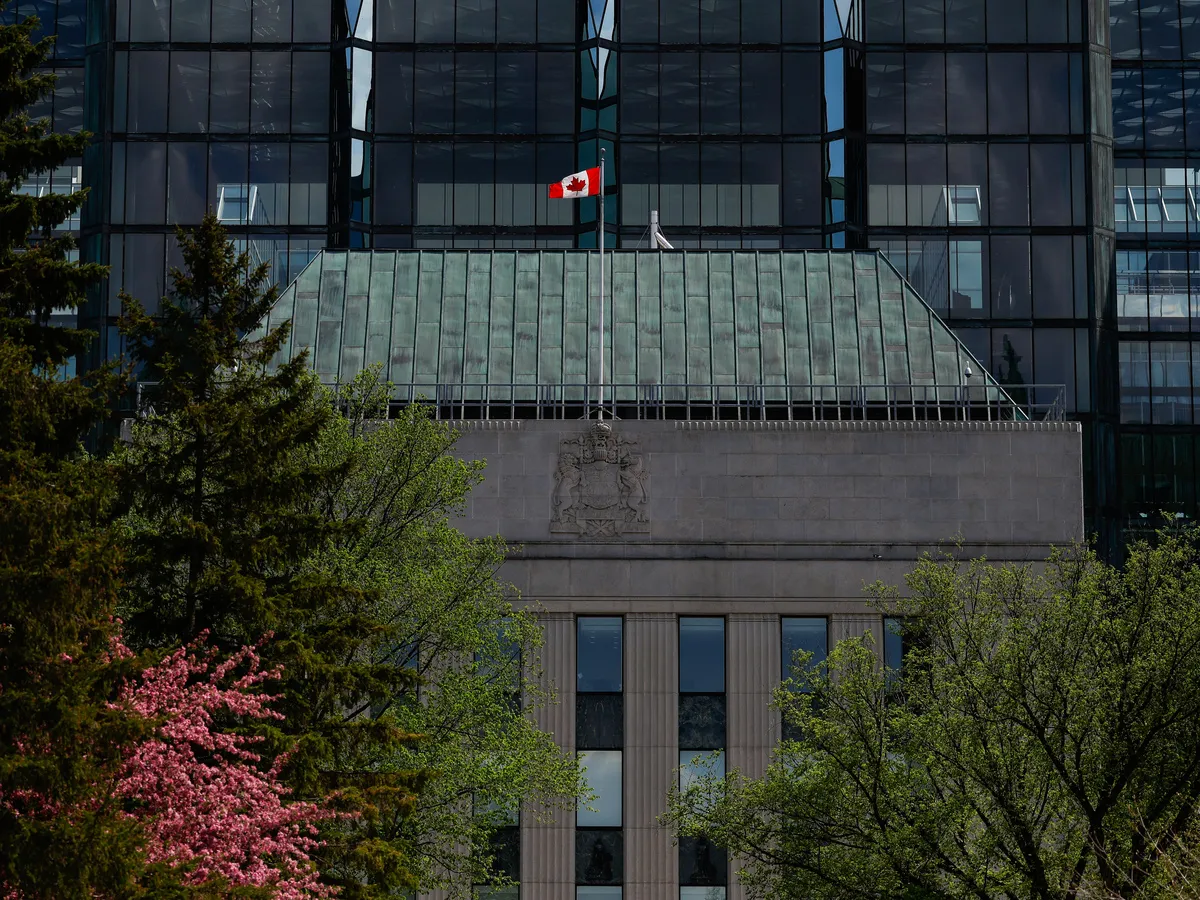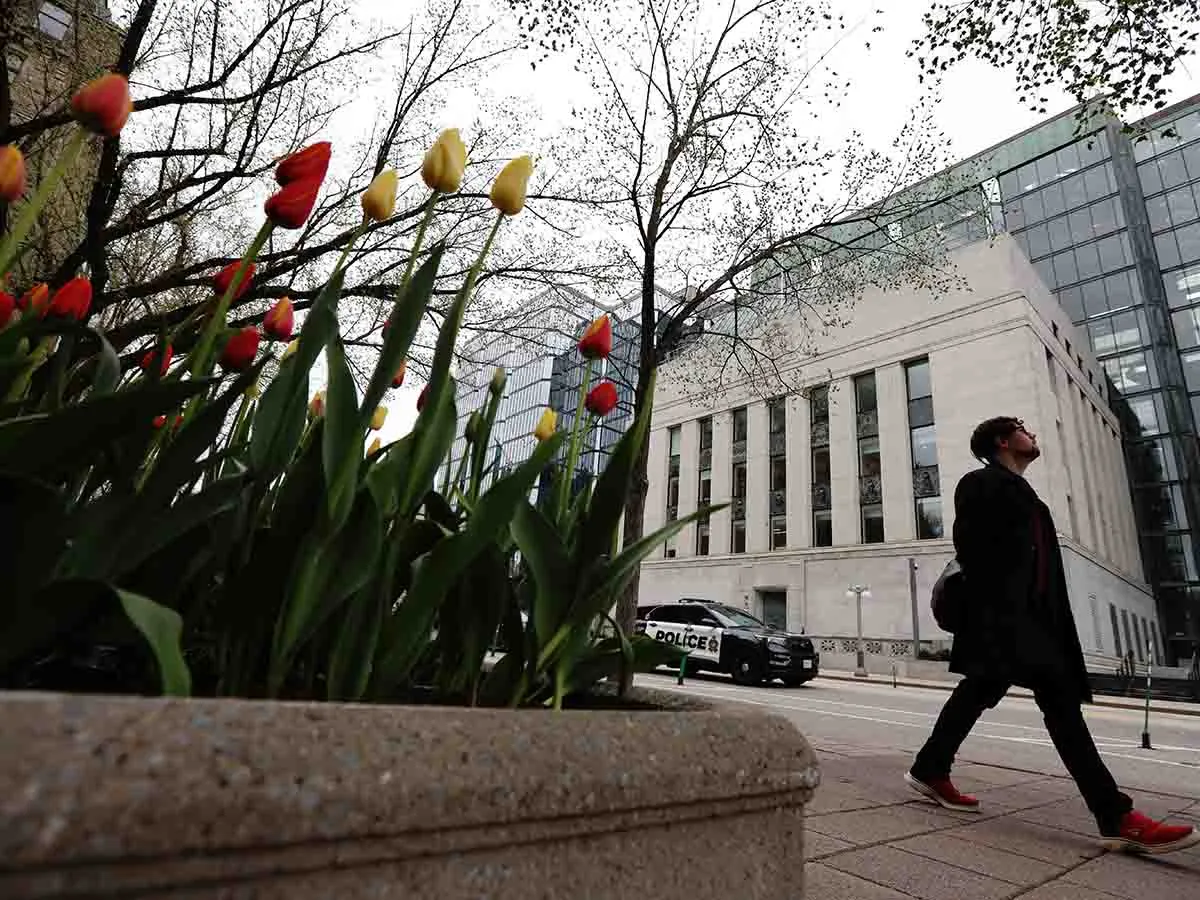
Skip to Content News Archives Economy Energy Oil & Gas Renewables Electric Vehicles Mining Commodities Agriculture Real Estate Mortgages Mortgage Rates Finance Banking Insurance Fintech Cryptocurrency Work Wealth Smart Money Wealth Management Investor Personal Finance Family Finance Retirement Taxes High Net Worth FP Comment Executive Women Puzzmo Newsletters Financial Times Business Essentials More Innovation Information Technology FP500 Podcasts Small Business Lives Told Tails Told Shopping Financial Post Store Obituaries Place a Notice Advertising Advertising With Us Advertising Solutions Postmedia Ad Manager Sponsorship Requests Classifieds Place a Classifieds ad Working Profile Settings My Subscriptions Saved Articles My Offers Newsletters Customer Service FAQ News Economy Energy Mining Real Estate Finance Work Wealth Investor FP Comment Executive Women Puzzmo Newsletters Financial Times Business Essentials HomeNewsEconomyBank of Canada to hold on rates as 33% gas inflation masks weak economy, say economists'Current conditions continue to support a patient approach from the Bank of Canada'Last updated 1 hour ago You can save this article by registering for free here. Or sign-in if you have an account.The Bank of Canada building in Ottawa. Photo by HYUNGCHEOL PARK/Postmedia filesInflation in May accelerated past the top end of the Bank of Canada‘s target range, but economists say it has likely peaked and the 33 per cent jump in gas prices masks an economy still struggling for footing.Subscribe now to read the latest news in your city and across Canada.Exclusive articles from Barbara Shecter, Joe O'Connor, Gabriel Friedman, and others.Daily content from Financial Times, the world's leading global business publication.Unlimited online access to read articles from Financial Post, National Post and 15 news sites across Canada with one account.National Post ePaper, an electronic replica of the print edition to view on any device, share and comment on.Daily puzzles, including the New York Times Crossword.Subscribe now to read the latest news in your city and across Canada.Exclusive articles from Barbara Shecter, Joe O'Connor, Gabriel Friedman and others.Daily content from Financial Times, the world's leading global business publication.Unlimited online access to read articles from Financial Post, National Post and 15 news sites across Canada with one account.National Post ePaper, an electronic replica of the print edition to view on any device, share and comment on.Daily puzzles, including the New York Times Crossword.Create an account or sign in to continue with your reading experience.Access articles from across Canada with one account.Share your thoughts and join the conversation in the comments.Enjoy additional articles per month.Get email updates from your favourite authors.Create an account or sign in to continue with your reading experience.Access articles from across Canada with one accountShare your thoughts and join the conversation in the commentsEnjoy additional articles per monthGet email updates from your favourite authorsSign In or Create an AccountorThe consumer price index (CPI) rose to 3.2 per cent in May year over year from 2.8 per cent in April and is above the central bank’s target range of one per cent to three per cent, Statistics Canada said on Monday.Here’s what economists think the latest inflation numbers mean for the economy and interest rates.SUBSCRIBER EXCLUSIVE: FP West: Energy Insider brings you behind the oilpatch’s closed doors with exclusive insights from insiders every Wednesday morning.By signing up you consent to receive the above newsletter from Postmedia Network Inc.A welcome email is on its way. If you don't see it, please check your junk folder.The next issue of FP West: Energy Insider will soon be in your inbox.We encountered an issue signing you up. Please try again“With oil and gasoline prices now well off their previous highs, this should prove to be the peak and, as such, viewed as old news,” Andrew Grantham, an economist at CIBC Capital Markets, said in a note.Excluding gasoline, inflation would have come in at 2.2 per cent, though that’s still higher than the two per cent recorded in April and is partly due to a jump in vacation tour prices and airfares on higher fuel charges.Grantham said he expects the CPI to slow to a three per cent increase year over year when the June numbers are released since gasoline prices have already come down as the United States and Iran negotiate a way out of the current conflict.The Bank of Canada prefers to focus on core inflation, but he said that measure could rise higher over the next few months due to summer travel and the World Cup.CIBC expects policymakers will hold rates for the rest of the year.“Inflation moved higher again primarily on energy and energy-related items and rising food prices,” Ali Jaffery, chief economist at KPMG Economics, said in a note.He said the increase in food prices was in line with that category’s trend and can be mostly attributed to bananas and tomatoes.Statistics Canada said prices for tomatoes rose 45.2 per cent in May as supply from Mexico was hit by a drought and higher transport costs.Otherwise, inflation continues to prove Canada’s economy is weak and suffering from excessive slack, meaning it has the capacity to produce more than it currently is.Jaffery said the pass-through from higher energy prices isn’t as broad as it could or ought to be, as evidenced by weaker rental inflation, falling home prices and weaker price growth on items such as clothing and appliances.“Businesses just aren’t in a position to quickly pass on higher costs to a stretched Canadian consumer, particularly when there are also fewer of them, with the population declining this year,” he said.Businesses outside the energy sector will likely be disappointed by the report, he said, predicting “margin compression” will continue forcing companies to pause any expansion plans they might have had.“The Bank of Canada can live with headline inflation elevated in a range of 2.5 per cent to three per cent, so long as core inflation remains around where it is, the economy looks soft and businesses’ expectations about future price increases aren’t excessive,” he said.KPMG expects the Bank of Canada to hold rates for the rest of the year.“There is reason to believe that rising energy prices and persistently high food inflation are forcing households to make difficult spending choices,” Matthieu Arseneau and Alexandra Ducharme, economists at National Bank of Canada, said in a note.Minus food and energy, inflation rose 1.6 per cent year over year, they said, but that’s the biggest jump in five months.However, that measure had come in very weak in the months prior to May, hitting one per cent annualized over the past three months.They said there are some signs of a nascent economic recovery after two quarters of negative gross domestic product, adding that the labour market appears a little stronger and so does the housing market, which in May recorded its first “meaningful” national gain in sales for 2026.But Arseneau and Ducharme said there is still slack in the economy, so workers are not in a position to negotiate wage increases on higher energy prices, something that could boost demand and inflation.“In our view, interest rates do not appear accommodative in an environment characterized by geopolitical uncertainty and ongoing trade tensions with Washington,” they said. “Overall, current conditions continue to support a patient approach from the Bank of Canada.” Join the Conversation This website uses cookies to personalize your content (including ads), and allows us to analyze our traffic. Read more about cookies here. By continuing to use our site, you agree to our Terms of Use and Privacy Policy.
Bank of Canada to hold on rates as 33% gas inflation masks weak economy, say economists
Here's what economists think Canada's latest inflation numbers mean for the economy and interest rates. Find out more.
1,223 words~6 min read