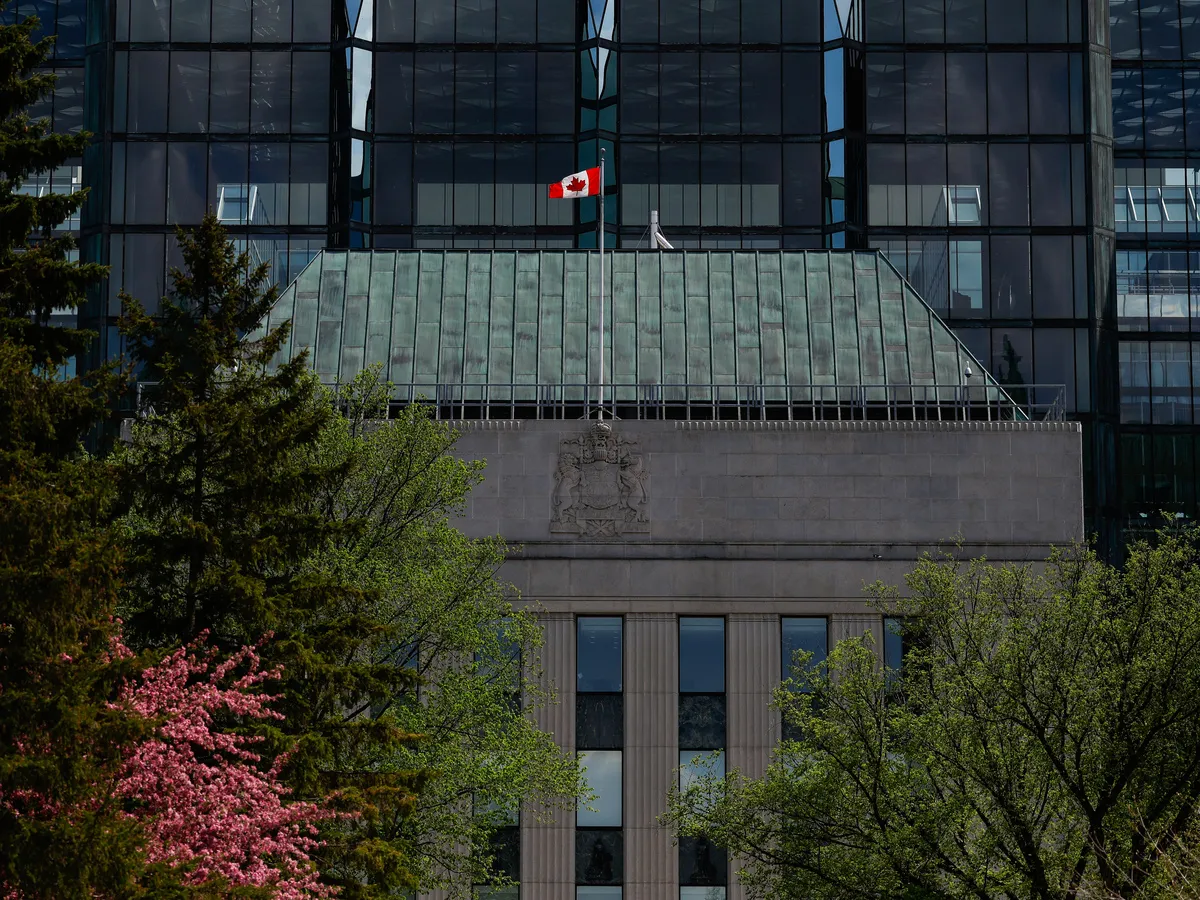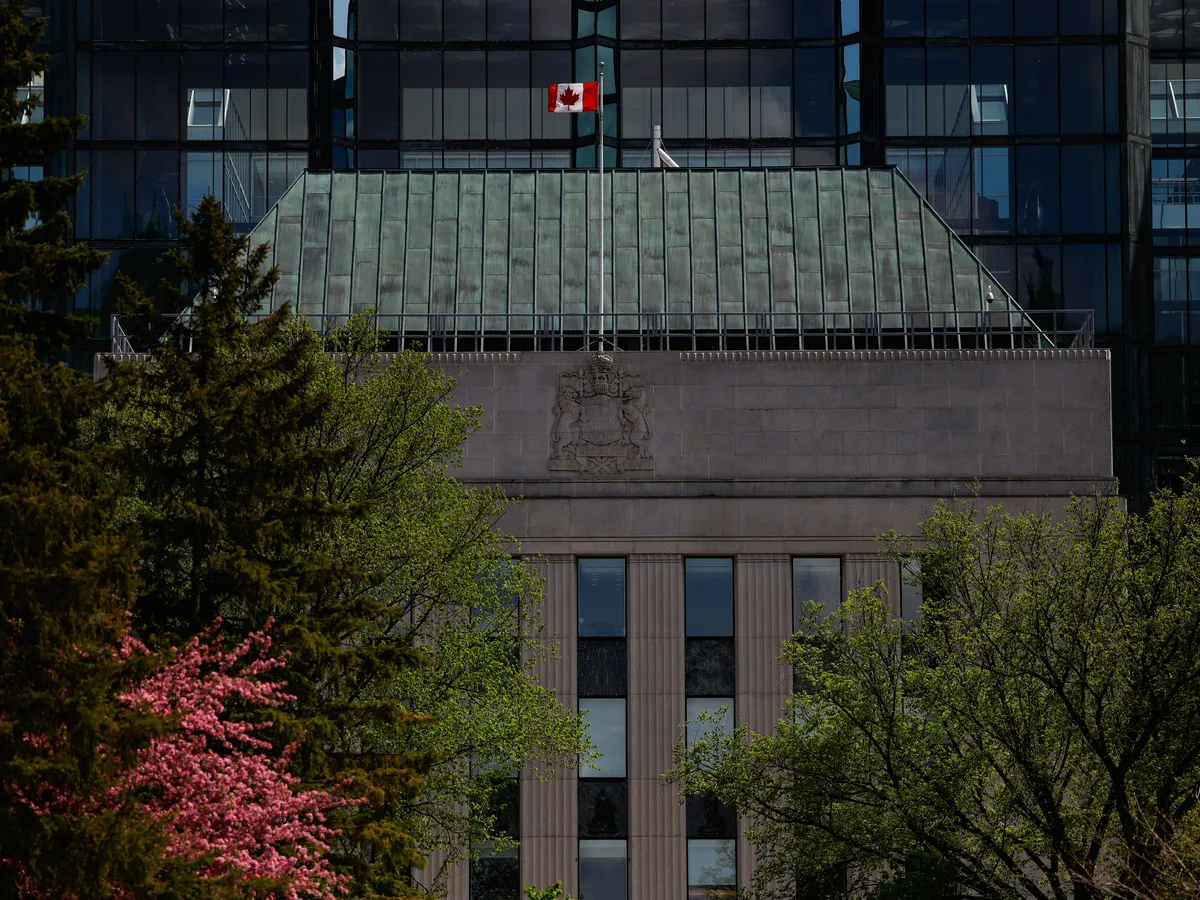
Skip to Content News Archives Economy Energy Oil & Gas Renewables Electric Vehicles Mining Commodities Agriculture Real Estate Mortgages Mortgage Rates Finance Banking Insurance Fintech Cryptocurrency Work Wealth Smart Money Wealth Management Investor Personal Finance Family Finance Retirement Taxes High Net Worth FP Comment Executive Women Puzzmo Newsletters Financial Times Business Essentials More Innovation Information Technology FP500 Podcasts Small Business Lives Told Tails Told Shopping Financial Post Store Obituaries Place a Notice Advertising Advertising With Us Advertising Solutions Postmedia Ad Manager Sponsorship Requests Classifieds Place a Classifieds ad Working Profile Settings My Subscriptions Saved Articles My Offers Newsletters Customer Service FAQ News Economy Energy Mining Real Estate Finance Work Wealth Investor FP Comment Executive Women Puzzmo Newsletters Financial Times Business Essentials HomeNewsEconomyInflation data gives Bank of Canada more flexibility to hold interest rates, economists sayThe big question for the Bank of Canada is how much of the energy price shock will spill over into core inflationLast updated 1 hour ago You can save this article by registering for free here. Or sign-in if you have an account.The head office of the Bank of Canada located at 234 Wellington Street in Ottawa. Photo by Adam Huras/Brunswick NewsWeakness in core inflation measures amid spiking oil prices points to the Bank of Canada having more flexibility to hold interest rates steady, economists say.Subscribe now to read the latest news in your city and across Canada.Exclusive articles from Barbara Shecter, Joe O'Connor, Gabriel Friedman, and others.Daily content from Financial Times, the world's leading global business publication.Unlimited online access to read articles from Financial Post, National Post and 15 news sites across Canada with one account.National Post ePaper, an electronic replica of the print edition to view on any device, share and comment on.Daily puzzles, including the New York Times Crossword.Subscribe now to read the latest news in your city and across Canada.Exclusive articles from Barbara Shecter, Joe O'Connor, Gabriel Friedman and others.Daily content from Financial Times, the world's leading global business publication.Unlimited online access to read articles from Financial Post, National Post and 15 news sites across Canada with one account.National Post ePaper, an electronic replica of the print edition to view on any device, share and comment on.Daily puzzles, including the New York Times Crossword.Create an account or sign in to continue with your reading experience.Access articles from across Canada with one account.Share your thoughts and join the conversation in the comments.Enjoy additional articles per month.Get email updates from your favourite authors.Create an account or sign in to continue with your reading experience.Access articles from across Canada with one accountShare your thoughts and join the conversation in the commentsEnjoy additional articles per monthGet email updates from your favourite authorsSign In or Create an AccountorThe consumer price index (CPI) accelerated to 2.8 per cent last month, according to Statistics Canada on Tuesday, but headline inflation was lower than economists’ consensus of 3.1 per cent and below the three per cent forecast by the central bank in its April monetary policy report.Here’s what economists think the latest data means for the Bank of Canada’s next interest rate announcement on June 10.Get the latest headlines, breaking news and columns.By signing up you consent to receive the above newsletter from Postmedia Network Inc.A welcome email is on its way. If you don't see it, please check your junk folder.The next issue of Top Stories will soon be in your inbox.We encountered an issue signing you up. Please try againCapital Economics Ltd. chief North America economist Stephen Brown said the “downside surprise” on headline inflation was partly because food prices came in weaker than expected. Overall food prices in the United States jumped 0.5 per cent between March and April to 3.2 per cent on an annualized basis, according to CPI data released last week. But food inflation in Canada slowed to 3.5 per cent in April from four per cent in March.However, Brown said the surprise was mainly because the potential indirect effects of higher fuel costs aren’t putting pressure on core inflation. Excluding food and energy, CPI slowed to 1.5 per cent in April, the lowest level since March 2021. He said the “even better news” for the Bank of Canada is that the average annual rate for its preferred measures, CPI-trim and CPI-median, is also at a five-year low of 2.1 per cent. That partly reflects the softness of the labour market and consumer demand and reduces pressure on the central bank “to follow through with the interest rate hikes that are priced into markets for the coming months,” he said in a note. Aside from energy, inflation was “nowhere to be found” in April, Robert Embree, vice-president and senior economist at Rosenberg Research & Associates Inc., said.“The key macro story is the broad-based cooling in all of the core inflation components, which gives the Bank of Canada plenty of room to consider cutting later in the year instead of hiking,” he said in a note. He said markets still see almost two hikes priced in by the end of 2026, but that’s a path that “relies on a much more inflationary outcome” than the data support.“With Canada’s jobs engine totally stalled out, the tighter-than-necessary financial conditions from the priced-in rate path are increasingly at odds with the underlying economic reality,” he said. Embree said prices for services fell 0.3 per cent from March, “even without excluding energy-sensitive transport components.” Year over year, service inflation grew 1.7 per cent. “Without any wage growth, we won’t see any burst of services inflation,” he said. “Unemployment is too high to get significant inflationary pass-through from this energy shock.” “Muted” core inflation supports the Bank of Canada’s “wait-and-see stance” on interest rates, Andrew Grantham, executive director and senior economist at Canadian Imperial Bank of Commerce, said.“While price pressures may accelerate further ahead, the weakness of core inflationary measures as oil prices were initially spiking is an indication of the slack that exists within the Canadian economy, which will continue to put downward pressure on inflation components that aren’t greatly affected by oil prices,” he said in a note. He said core measures of inflation are “likely to accelerate again over the summer” as airfare price increases show up in the data and higher transportation costs lead to prices rising in other areas, including food. “However, the slack currently in the economy will limit the extent of that acceleration, and we continue to forecast that the Bank of Canada will hold its overnight rate at 2.25 per cent throughout the remainder of the year,” he said. The big question for the Bank of Canada is how much of the energy price shock will spill over into core inflation and when, Ali Jaffery, chief economist and partner at KPMG Canada, said.“Based on our modelling work, the pass-through into core inflation from an oil supply shock, in and of itself, should be fairly modest and could take about a year to materialize,” he said in a note. While risks remain around the Iran war and the potential for broader supply chain disruptions, he said from an “inflation point of view,” it also matters that the energy shock is hitting an economy already facing a soft labour market, tepid growth and uncertainty around the state of Canada–U.S. trade relations. “Those forces matter a lot and will likely limit businesses’ ability to pass on price gains from the energy shock,” he said. “We continue to expect the Bank of Canada to remain on hold this year, assuming the conflict is resolved in the coming month or so.” Join the Conversation This website uses cookies to personalize your content (including ads), and allows us to analyze our traffic. Read more about cookies here. By continuing to use our site, you agree to our Terms of Use and Privacy Policy.
Inflation data gives Bank of Canada more flexibility to hold interest rates, economists say
Here’s what economists think the latest data means for the Bank of Canada’s next interest rate announcement on June 10. Find out more here
1,295 words~6 min read