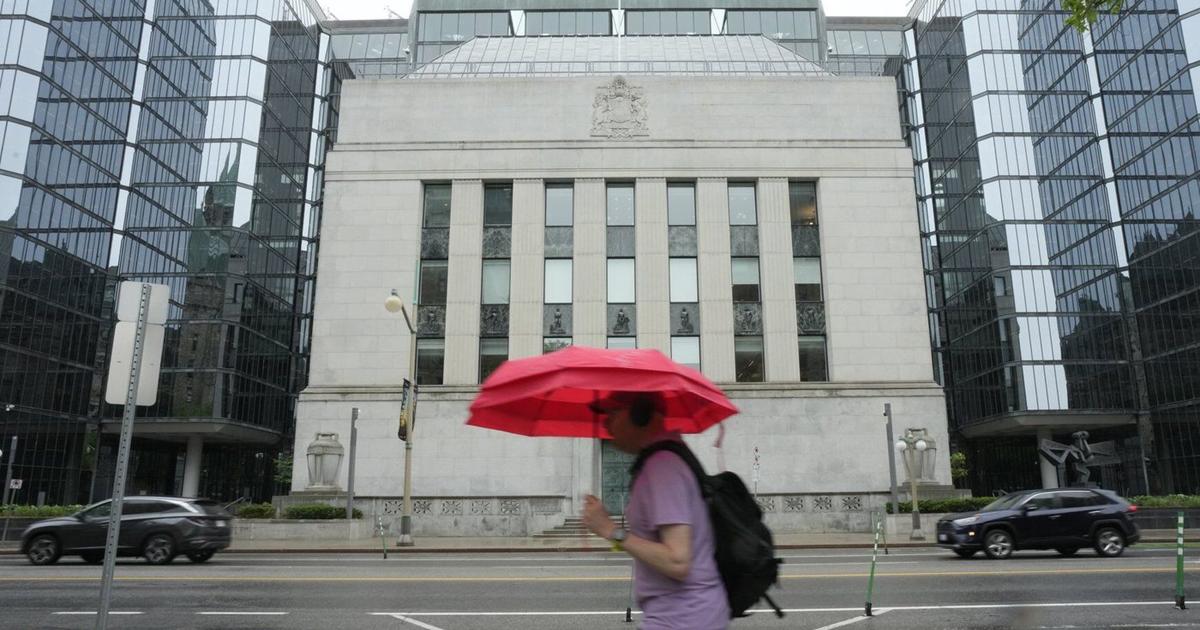
Skip to Content News Archives Economy Energy Oil & Gas Renewables Electric Vehicles Mining Commodities Agriculture Real Estate Mortgages Mortgage Rates Finance Banking Insurance Fintech Cryptocurrency Work Wealth Smart Money Wealth Management Investor Personal Finance Family Finance Retirement Taxes High Net Worth FP Comment Executive Women Puzzmo Newsletters Financial Times Business Essentials More Innovation Information Technology FP500 Podcasts Small Business Lives Told Tails Told Shopping Financial Post Store Obituaries Place a Notice Advertising Advertising With Us Advertising Solutions Postmedia Ad Manager Sponsorship Requests Classifieds Place a Classifieds ad Working Profile Settings My Subscriptions Saved Articles My Offers Newsletters Customer Service FAQ News Economy Energy Mining Real Estate Finance Work Wealth Investor FP Comment Executive Women Puzzmo Newsletters Financial Times Business Essentials HomeNewsEconomyWeak economy, rising inflation presented a dilemma for Bank of Canada's latest rate setting decision, deliberations showA summary of deliberations from the Bank of Canada governing council’s decision to hold interest rates on June 10 was released on Wednesday You can save this article by registering for free here. Or sign-in if you have an account.Bank of Canada Governing Council members noted that monetary policy needs to remain “nimble” because markets and events could shift unexpectedly. Photo by HYUNGCHEOL PARK/PostmediaCanada’s sluggish economy and rising inflation remained top of mind for the Bank of Canada’s governing council when the bank made its most recent decision on interest rates this month.Subscribe now to read the latest news in your city and across Canada.Exclusive articles from Barbara Shecter, Joe O'Connor, Gabriel Friedman, and others.Daily content from Financial Times, the world's leading global business publication.Unlimited online access to read articles from Financial Post, National Post and 15 news sites across Canada with one account.National Post ePaper, an electronic replica of the print edition to view on any device, share and comment on.Daily puzzles, including the New York Times Crossword.Subscribe now to read the latest news in your city and across Canada.Exclusive articles from Barbara Shecter, Joe O'Connor, Gabriel Friedman and others.Daily content from Financial Times, the world's leading global business publication.Unlimited online access to read articles from Financial Post, National Post and 15 news sites across Canada with one account.National Post ePaper, an electronic replica of the print edition to view on any device, share and comment on.Daily puzzles, including the New York Times Crossword.Create an account or sign in to continue with your reading experience.Access articles from across Canada with one account.Share your thoughts and join the conversation in the comments.Enjoy additional articles per month.Get email updates from your favourite authors.Create an account or sign in to continue with your reading experience.Access articles from across Canada with one accountShare your thoughts and join the conversation in the commentsEnjoy additional articles per monthGet email updates from your favourite authorsSign In or Create an AccountorA summary of deliberations from the Bank of Canada governing council’s decision to hold interest rates steady at 2.25 per cent on June 10 shows that members discussed an economic dilemma: Canada’s economy was weak and continued to operate below its potential, but rising energy prices due to the war in Iran were pushing inflation higher than the two-per cent target.If the central bank raised rates to contain high inflation and oil prices came down quickly, the higher interest rates would have further weakened the economy. However, if the central bank cut rates to support economic growth, it would increase the risk that inflation remains high and becomes embedded in pricing behaviour and inflation expectations.SUBSCRIBER EXCLUSIVE: FP West: Energy Insider brings you behind the oilpatch’s closed doors with exclusive insights from insiders every Wednesday morning.By signing up you consent to receive the above newsletter from Postmedia Network Inc.A welcome email is on its way. If you don't see it, please check your junk folder.The next issue of FP West: Energy Insider will soon be in your inbox.We encountered an issue signing you up. Please try again“For the time being, members were prepared to look through the near-term impacts of higher energy prices on inflation,” the report read.“Governing Council members agreed that holding the policy interest rate unchanged at 2.25 per cent at the June rate decision balances the risks described above.”The governing council’s decision came as the war in Iran entered its fourth month and shortly before the United States and Iran signed an agreement to re-open the Strait of Hormuz and to eventually end the war, resulting in a significant drop in global oil prices.It was also made after the economy contracted unexpectedly by 0.1 per cent year-over-year in the first quarter of 2026, far below the central bank’s predictions of 1.5 per cent growth in April’s Monetary Policy Report.The labour market remained soft, despite an unexpected jump of employment in May. Employment has not changed much since the start of the year, governing council members said, and the unemployment rate continued to hover between 6.5 to seven per cent.Uncertainty was also unusually elevated, and the war in the Middle East still ongoing when the governing council convened to discuss the overnight rate. The upcoming review of the Canada-U.S.-Mexico Agreement (CUSMA) and U.S. tariffs also remain a large source of uncertainty.Despite the sluggish economy, the governing council said Canada has not plunged into a recession. April’s headline inflation rate (2.8 per cent) was well within the central bank’s expectations, and measures of core inflation were close to the central bank’s two-per cent target. The proportion of Consumer Price Index components rising faster than three per cent has also declined.Recent economic data also suggests that the economy will resume growth in the second quarter, the report said. Members pointed to flash estimates from April that suggest real gross domestic product expanded by 0.4 per cent month-over-month, and exports rose by 0.2 per cent in April. Consumer spending is also expected to continue to grow, and businesses who participated in the Bank of Canada’s Business Outlook Survey have indicated some pickup in hiring intentions and investment.“While the economy shrank in the fourth quarter of 2025, GDP growth was barely negative in the first quarter of 2026, and more than half of industries recorded some growth. Members agreed that a recession is characterized by a deep, widespread and persistent decline in aggregate economic activity,” the report read.“Members were of the view that, outside of energy prices, inflationary pressures were generally contained.”Members noted that monetary policy needs to remain “nimble” because things could shift unexpectedly. If the U.S. imposes more tariffs and trade restrictions, the policy interest rate may need to be cut to support economic growth in Canada. However, if the Iran war persists and higher energy prices lead to ongoing generalized inflation, consecutive increases to the key interest rate may be needed.“It is also possible that both risks could materialize at the same time. Monetary policy will need to remain nimble,” the report concluded.“Governing Council agreed to emphasize in its communications that the Bank remains ready to respond to changing economic circumstances to fulfill its commitment to price stability.” Join the Conversation This website uses cookies to personalize your content (including ads), and allows us to analyze our traffic. Read more about cookies here. By continuing to use our site, you agree to our Terms of Use and Privacy Policy.
Weak economy, rising inflation presented a dilemma for Bank of Canada's latest rate setting decision, deliberations show
A summary of deliberations from the Bank of Canada governing council’s interest rate decision on June 10 was released on Wednesday. Read now
1,199 words~5 min read