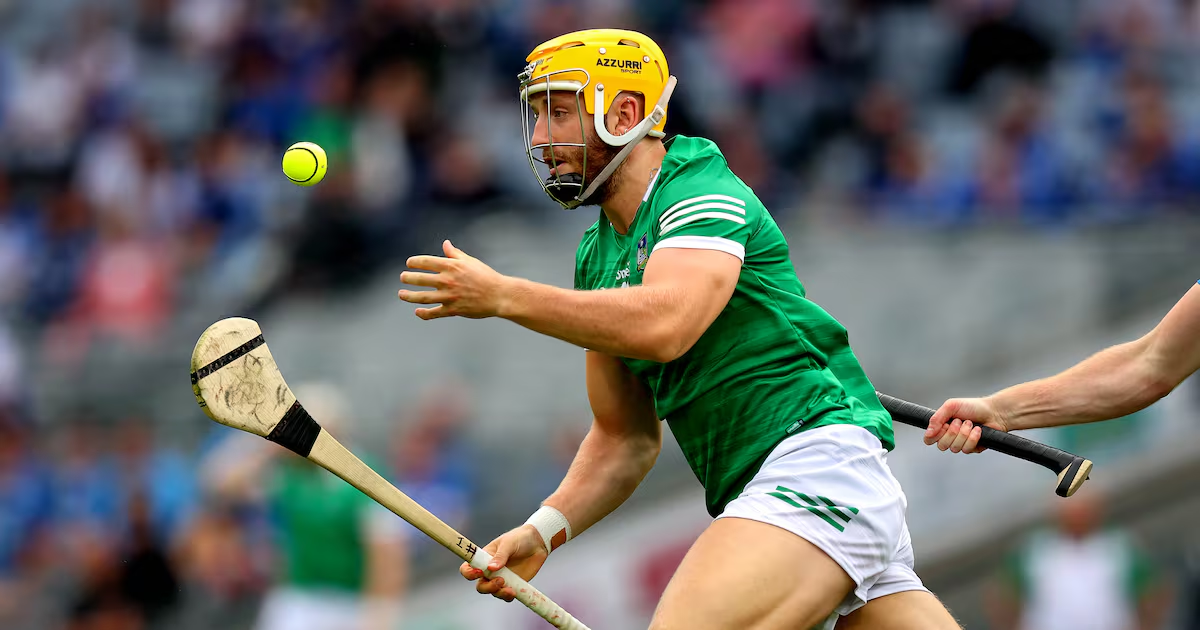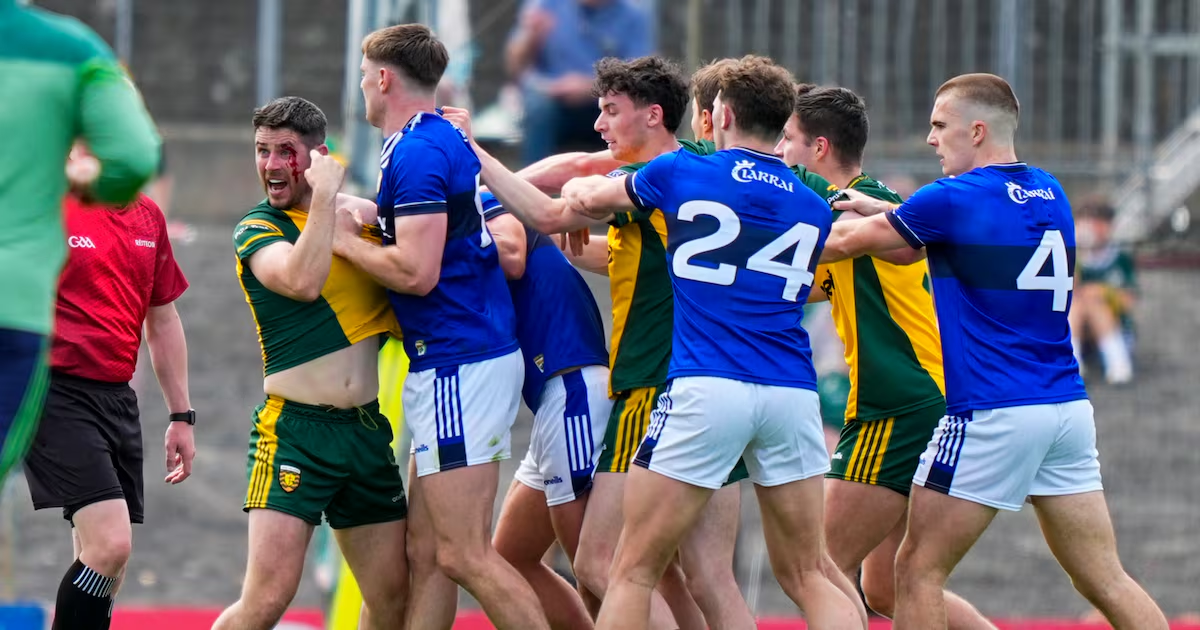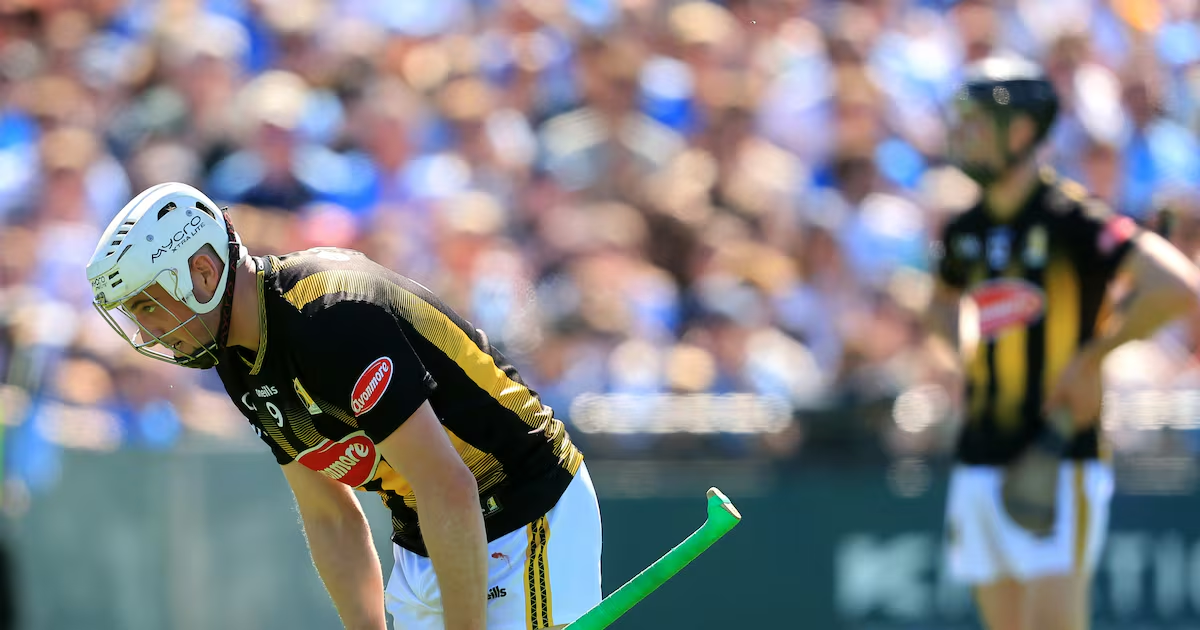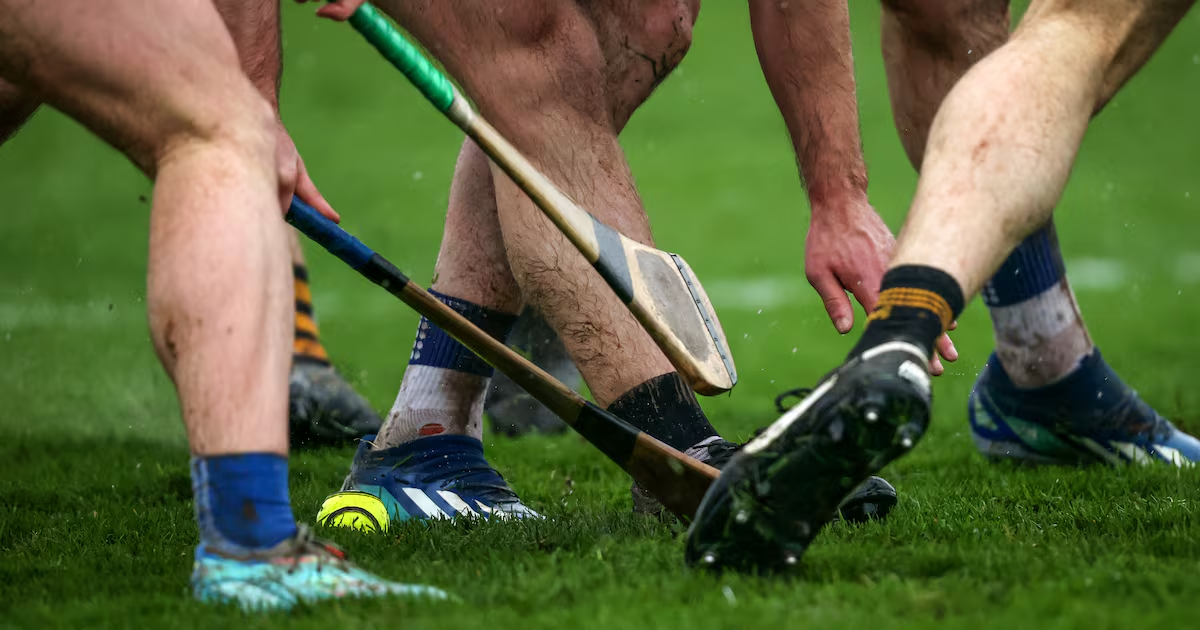
In the survey concluded last week by the Hurling Advisory Group, there was a question about the biggest problem faced by the game, replete with a menu of suggested replies. Three of them referred to rules enforcement, two referred to playing numbers and overall competitiveness and one referred to the nature of the game now and how it is played.The final option nodded to the large constituency of hurling protectionists: “I don’t think there is a major problem,” the answer read.When the formation of the advisory group was announced by the GAA president Jarlath Burns, he was at pains to stress hurling didn’t need a suite of rule changes or attitude adjustments in the way that football had done. Burns, who doesn’t always read the room, was acutely sensitive to hurling’s sense of itself as a thing of art and beauty. It was wise to assume that no other opinions were welcome. If Gaelic football was ultimately convinced of the need for plastic surgery, hurling was unlikely to even entertain Botox.At the root of all this is the perception that hurling has an institutional resistance to change. That it sees change as something wild and invasive, like Japanese knotweed. The unquoted reality, however, is that hurling has changed profoundly in front of our eyes, not by committee or by force of sandbox experiments, but organically. All the agents of change have come from within the game. Not by a process of consultation or with anyone’s express permission, but my means of new thinking. Far from resisting change, hurling has been swamped by it. Has the game been enhanced or disfigured? That is a matter of taste. The two elements that have changed the game more than any others are the increase in passing and the decrease in contests for the ball. It is not quite a zero- sum transaction but these elements are inextricably linked. If we were to take a small sample from the bloodstream of the game, how about the first 10 minutes from the All-Ireland finals of 1996, 2006 and last year. In the 1996 final between Wexford and Limerick there were just three passes in the opening 10 minutes and 28 contests for the ball; 10 years later, when Cork played Kilkenny, there were six passes in the opening 10 minutes and 21 contests for the ball. There is enough deviation in those numbers to suggest an evolutionary shift had started.There are fewer contests for the ball these days than there were in the 1996
Denis Walsh: Hurling has changed profoundly, without anyone giving or seeking permission
Has the game been enhanced or disfigured? That is a matter of taste
1,121 words~5 min read