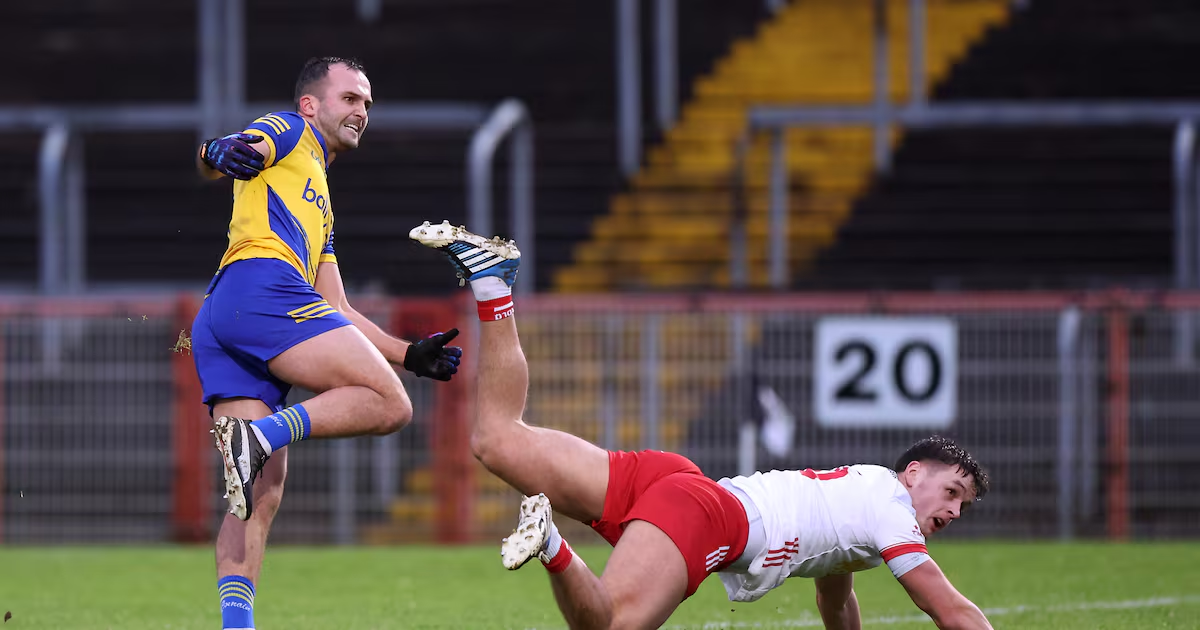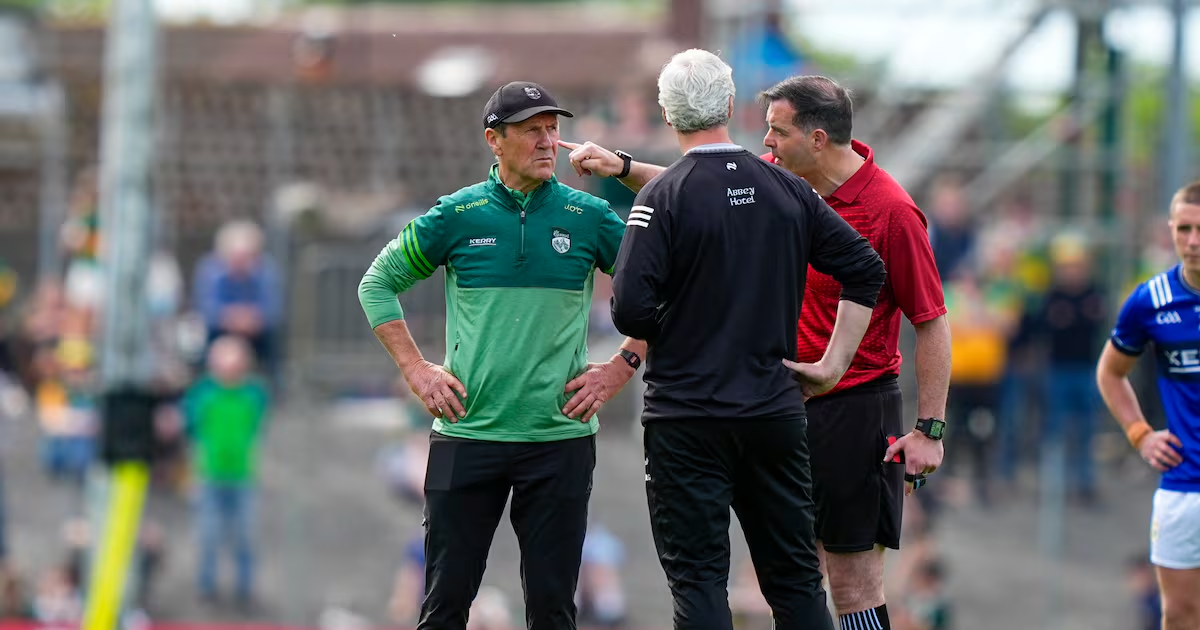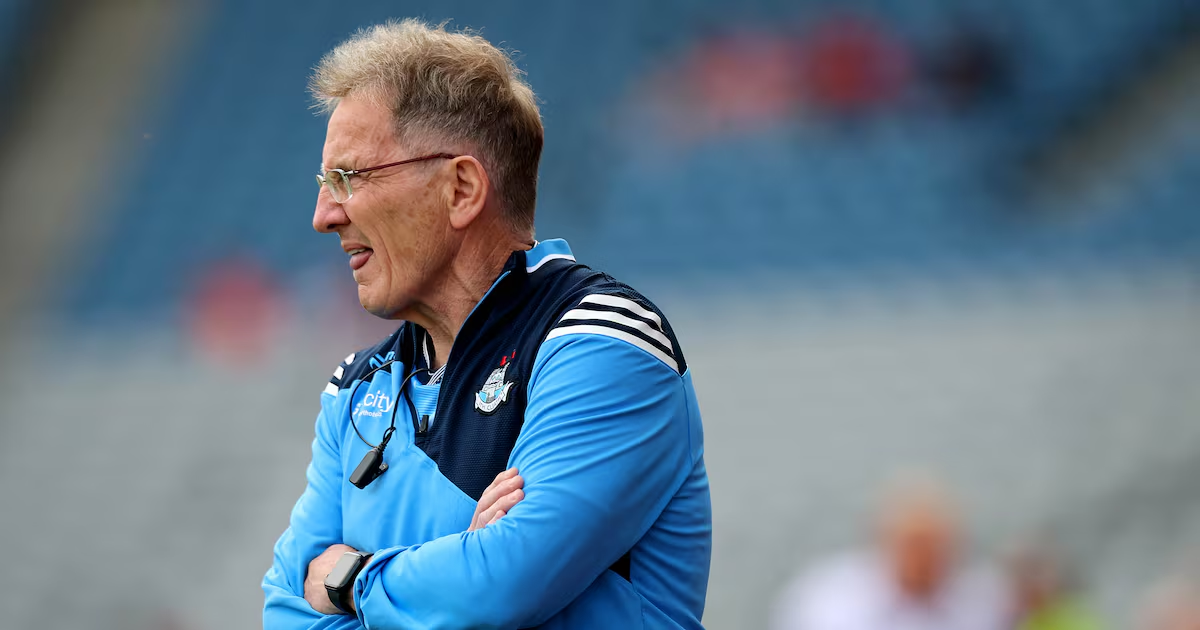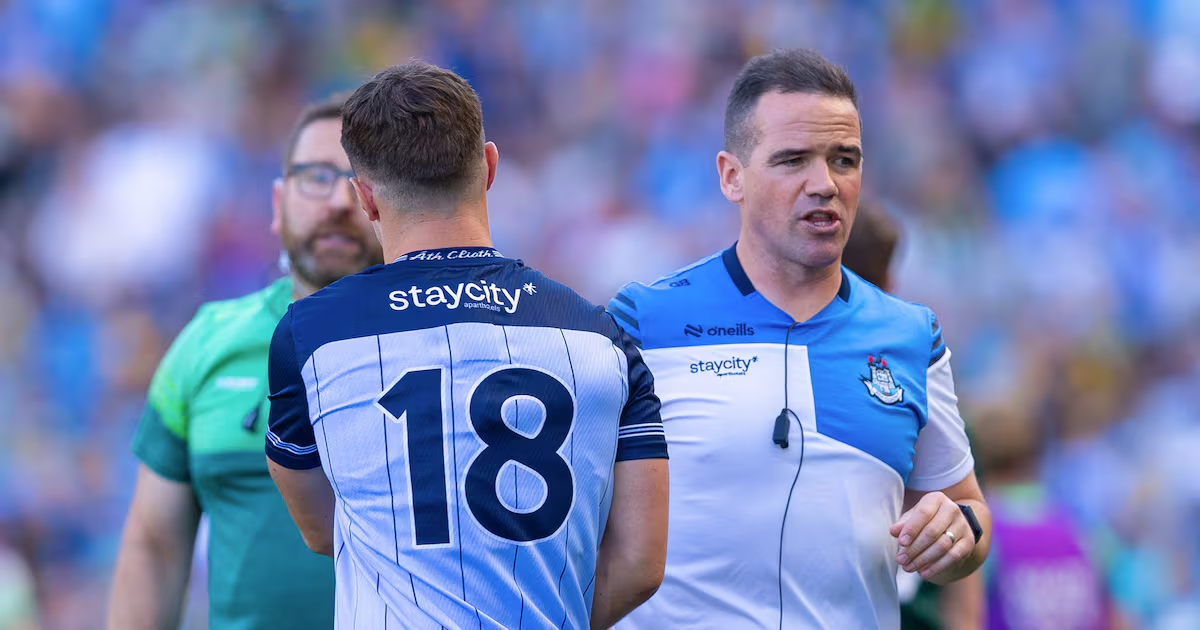
The eruption has passed, though there is still steam rising from the lava. Ger Brennan and Jim McGuinness will both be on the sideline with their teams next weekend, though not by the same route. The GAA’s disciplinary process is portrayed as a straight road, which always makes the turns harder to explain.The ins and outs of McGuinness’ escape from censure and Brennan’s 12-week ban for offences from the same family in the rule book have been well aired by now. In one case, the disciplinary system was decisive and strong, in the other it was decisive in its weakness.Whatever the Jesuitical explanations for the difference between one response and the other, the events of the last fortnight have been damaging for the GAA’s public image on law and order. In these matters perception trumps all manner of explaining.But it was also a classic GAA farrago. The McGuinness episode gave everybody another opportunity to say how draconian Brennan’s 12-week suspension had been, and in the short window before it became obvious that the Donegal manager was going to get away scot-free for his actions, there was just enough time to say how scandalous it would be if McGuinness was forced to miss the rest of the championship for shoving a Kerry footballer. As is often the case with GAA rules that are suddenly inconvenient, the 12-week penalty for “any type of physical interference with an opposing player or team official,” was characterised as an abomination, as opposed to a measure that was voted into the official guide, in a perfectly transparent process.Why did nobody object then? At GAA congress in 2023, motion number 38 escalated the seriousness of any interference by a member of a management team with an opposition player or another team official on to the same footing as interference with a match official. That is where the 12-week entry level suspension came into play. It appeared as part of a suite of 19 motions submitted by ard comhairle to deal with sideline behaviour. “I don’t know how long that sanction has been in place,” said the GAA president Jarlath Burns last week. It was introduced on the day he was elected president. Each motion was dealt with individually at congress, but, collectively, they were presented as a disciplinary crackdown. It was widely believed at the time that these motions were in response to a serious incident in Wexford a few months earlier that had generated national attention and general outrage.GAA president Jarlath Burns. Photograph: Tom O’Hanlon In a junior football game, a referee had been punched, and an umpire had been pushed. The chairman of Wexford GAA at the time, Micheál Martin, believed they had “a problem” with sideline behaviour at GAA matches across the county, and he said “more than a handful” of hefty bans for verbal and physical abuse had been doled out. The problem wasn’t unique to Wexford and other incidents had flared up in club games elsewhere that autumn. The GAA, though, were adamant that they had been preparing these motions since the previous June, before that spike in unacceptable behaviour. “Uachtarán Larry McCarthy wanted us to take a look at anything that might improve discipline,” said Matt Shaw to Seán Moran on these pages at the time; Shaw was chair of the GAA’s central appeals committee. “We had the chair of the CCCC [central competitions control committee], Derek Kent, the chair of the hearings committee Brian Rennick, myself and Liam Keane from rules advisory. Feargal McGill, the GAA’s director of games administration, sat in and Larry attended them all.”The clear message was that this crackdown was coming from the GAA’s leadership. A powerful thread through the package of motions was an escalation in penalties. The mood of that congress was that Something Must Be Done.Nobody ever opposes the idea of good discipline. All of these things are fine in theory. Squeamishness arises when something happens and the glass case housing the harsh measures that must be broken. Most of the 19 motions brought by ard comhairle were passed. Motion 38 received more than 98 per cent support from the floor. Did Dublin or Donegal vote against it? There was no voice of dissent.[ Let’s talk about the GAA and a dangerously stupid culture of violenceOpens in new window ]But this is what happens at GAA congress. A certain number of motions are liable to be passed without delegates dwelling on the consequences. If it seems so obvious now that a 12-week ban would be an inappropriate sanction for “any type of physical interference with an opposing player or team official,” why did nobody shout stop at the time?Because people weren’t paying attention. Because people didn’t think it would impact them or the team they supported. And because, in the context of a disciplinary clampdown, the mood was that Something Must Be Done.This is fine until something happens and something must be done. Buyer’s remorse is a common theme of GAA congress too. Stuff is passed into the official guide only to be amended at another time or removed altogether. Burns raised this possibility last week. “Regardless of the merits or otherwise of any of these events, it is wrong for a manager to go on to a field and touch any player or any official,” he said. “It does not matter what the circumstances are. Is 12 weeks an appropriate sanction? Well, congress can decide that and if they decide that it may be better that the suspension is cut to six weeks, and the majority of people vote for that, then that is okay.”[ Violence in GAA: ‘The doctors said if my son had continued playing he’d probably have had a heart attack’Opens in new window ]In the GAA, nobody knows all the rules and all the consequences for breaking the rules. There are too many. On the GAA’s website there is a useful disciplinary handbook which is designed to help you navigate the system; it runs to 40 pages. The rules are housed elsewhere. When it comes to discipline, most GAA people proceed on a need-to-know basis. They couldn’t quote you the rule until it hits them in the face. Not all rules are applied. Some of them are ignored in plain sight. One of the last motions passed at the 2023 congress was that in hurling matches, all players other than the centrefielders must be standing behind the two 45-metre lines for the throw-in. Week-to-week, how often is that implemented? Motion 38, though, became uncomfortable in recent weeks and months. Nobody stopped to think about that at the time. The mood has shifted again.Something Must Be Done.
Denis Walsh: The GAA has too many rules. Just look at the Ger Brennan and Jim McGuinness cases
When it comes to discipline, most GAA people proceed on a need-to-know basis. They couldn’t quote you the rule until it hits them in the face
TL;DRAI
**Articolo non rilevante per Warptech Tech News.** Questo pezzo di Denis Walsh riguarda la disciplina nel calcio gaelico (GAA) — non ha alcun collegamento a tech, business, AI, startup o temi di interesse per manager IT e CTO. Se intendevi condividere un articolo tech, invialo pure e farò il riassunto secondo il format richiesto.
1,108 words~5 min read