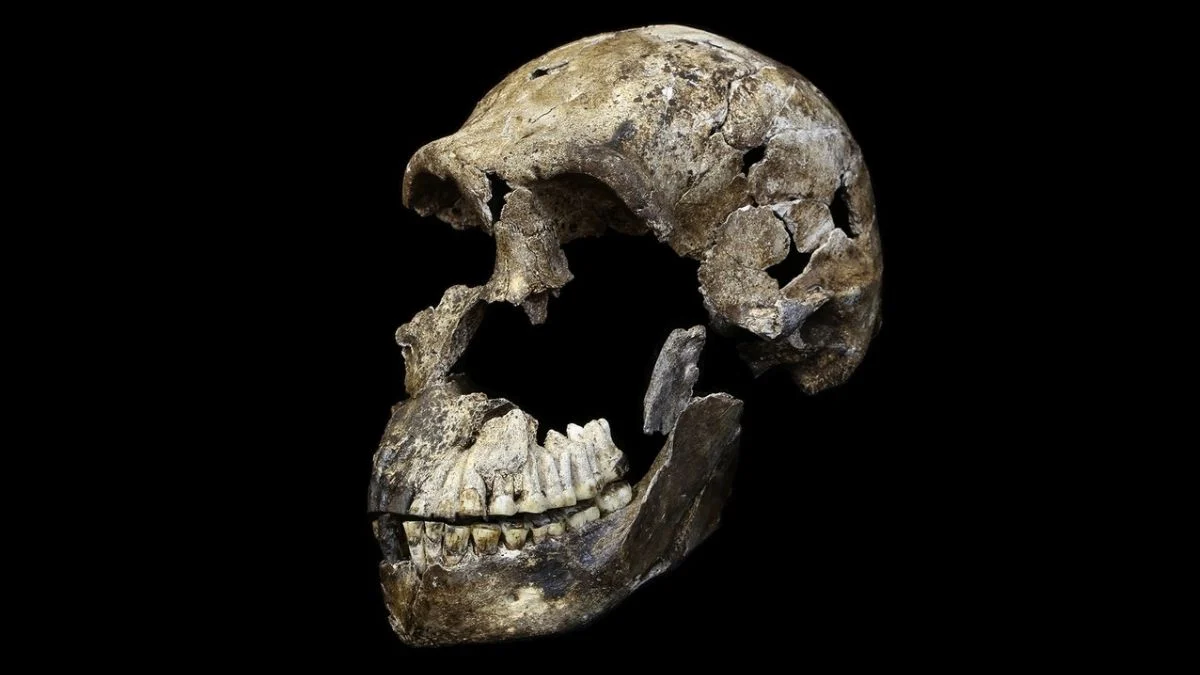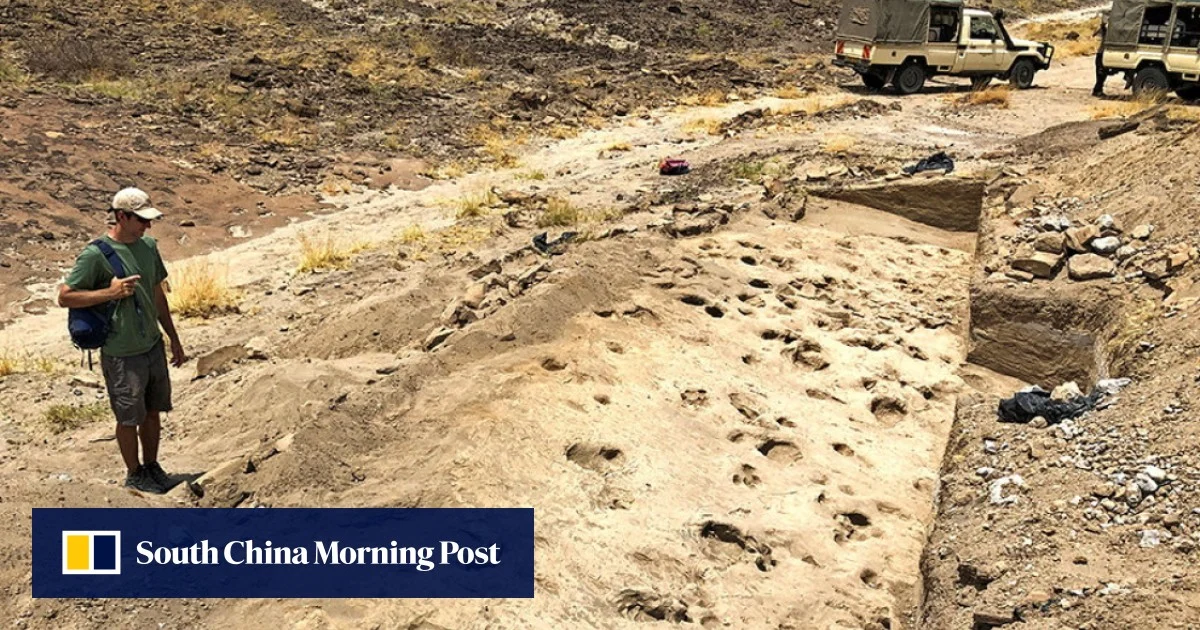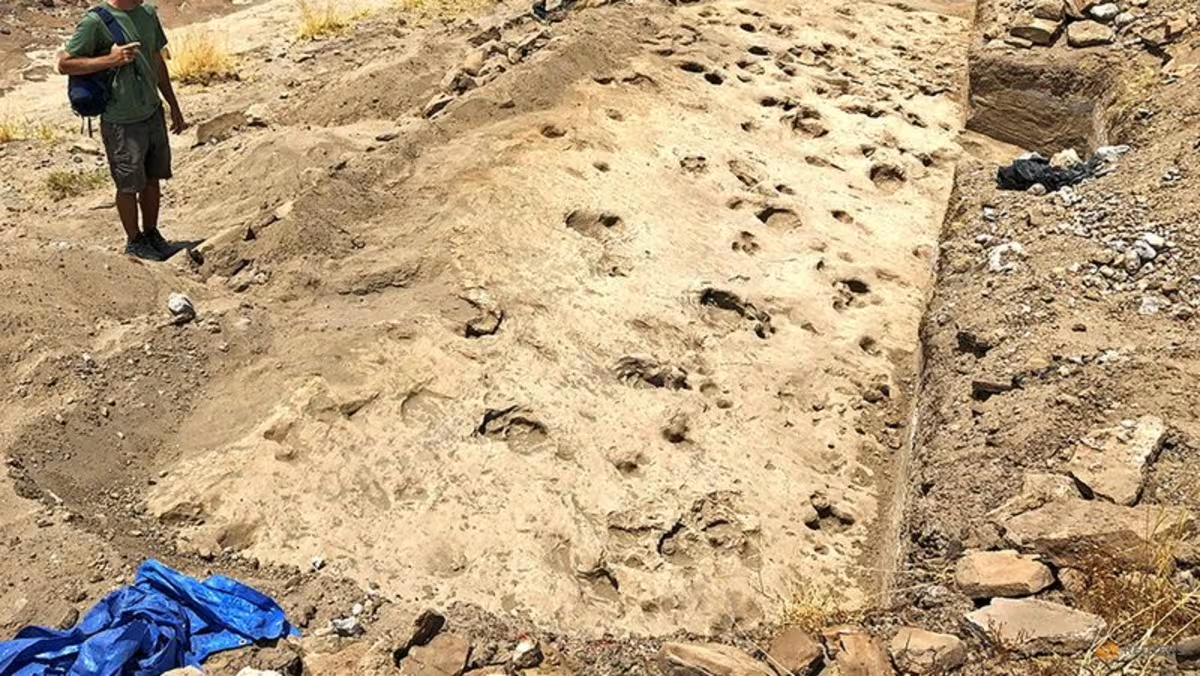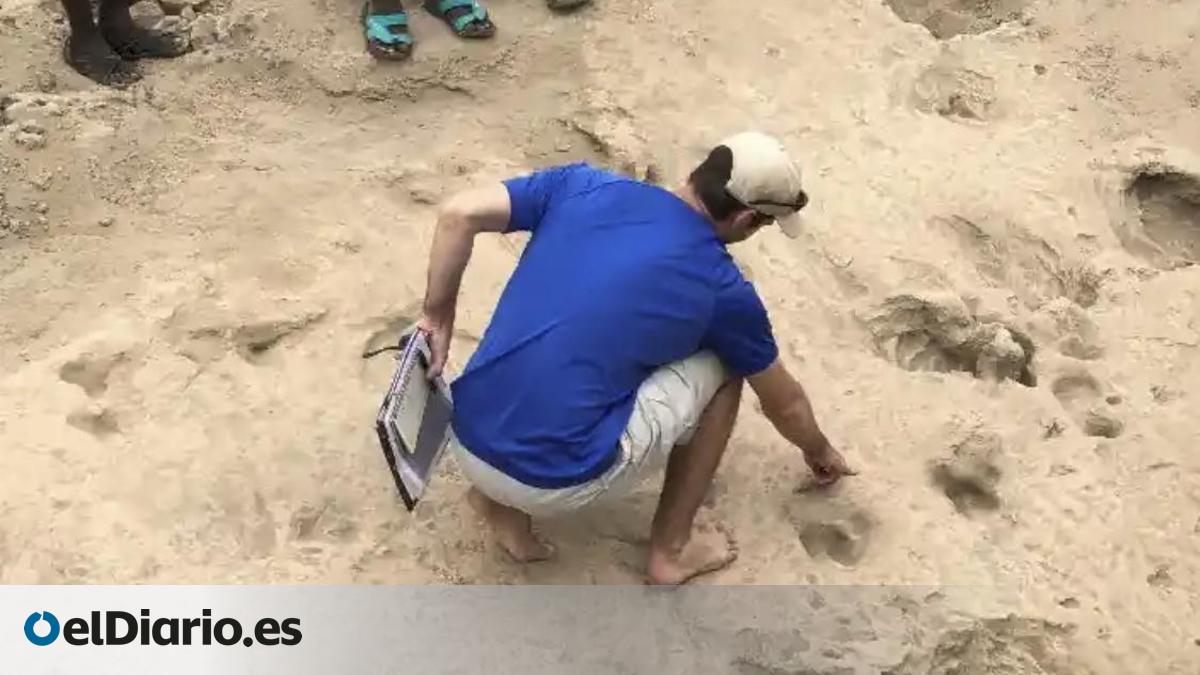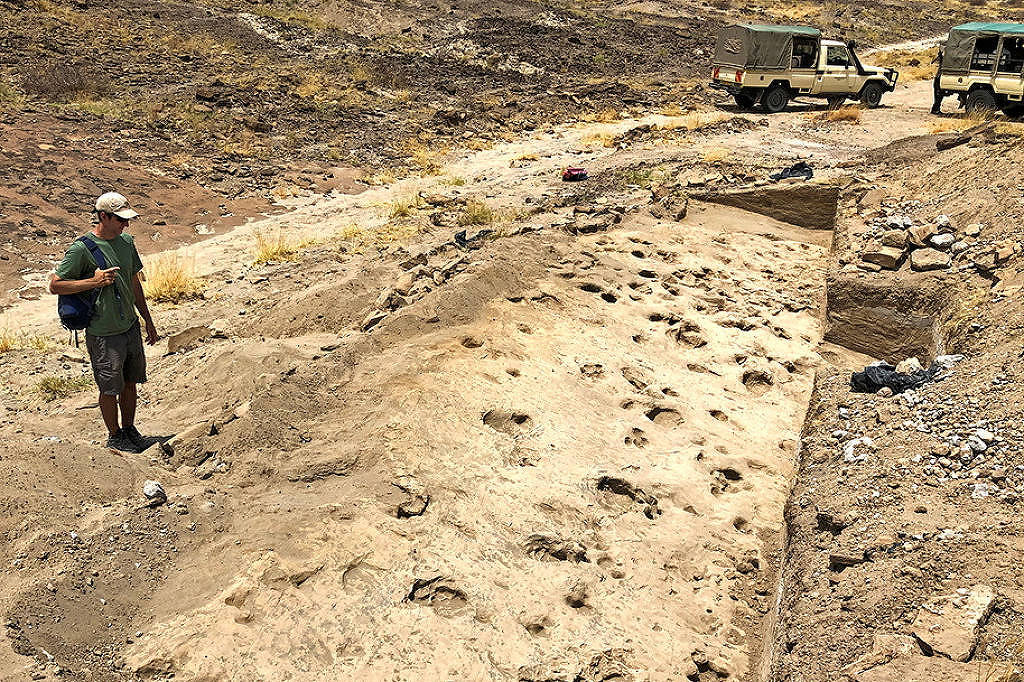
In 1969, Richard Leakey was surveying the harsh, wind-shaped landscape of Koobi Fora in northern Kenya when an ordinary day of fieldwork turned into a major paleoanthropological discovery. Walking through an eroded gully where ancient sediments had been exposed by natural weathering, Leakey and his colleague H. Mutua recovered fossil skull fragments that would later be cataloged as KNM-ER 406. Although the specimen was eventually classified as Paranthropus boisei rather than an early member of the genus Homo, the discovery played an important role in establishing Koobi Fora as one of the richest fossil regions ever studied. More importantly, it helped demonstrate how East Africa preserved a remarkable record of ancient hominin diversity. Richard Leakey | Wikimedia CommonsThe landscape itself guided the discoveryUnlike archaeological excavations that begin with trenches and carefully marked grids, many fossil discoveries in East Africa start with observation. Wind, rain, and erosion gradually expose ancient sediments, creating opportunities for researchers to spot fossils on the surface.The Smithsonian Human Origins Program identifies KNM-ER 406 as a cranium discovered at Koobi Fora in 1969 by Richard Leakey and H. Mutua. The find emerged from terrain that had been naturally cut open by erosion, allowing ancient fossils to become visible after remaining buried for nearly two million years. This type of discovery highlights an important reality of paleoanthropology. Researchers do not simply dig randomly. They learn to read landscapes, recognizing where geology is most likely to reveal evidence from the distant past. At Koobi Fora, those exposed sediments repeatedly proved extraordinarily productive.The skull helped reveal unexpected diversityWhen KNM-ER 406 was first recovered, scientists immediately recognized its significance because complete hominin skulls were still relatively rare. The specimen was later assigned to Paranthropus boisei, a species known for its powerful jaws and specialized chewing adaptations.The Smithsonian’s fossil record dates the skull to approximately 1.7 million years ago, placing it within a period when several hominin species may have existed in East Africa at the same time. This was an important realization because early human evolution had often been imagined as a simple linear progression from one species to another. Fossils from Koobi Fora increasingly suggested something more complex. Multiple hominin groups appeared to share the same landscapes, raising new questions about adaptation, competition, and evolutionary diversity. KNM-ER 406 became one of the fossils contributing to that broader picture.Koobi Fora quickly became a scientific hotspotThe significance of the 1969 discovery becomes even clearer when viewed alongside later finds from the same region. Stony Brook University’s Leakey archive describes KNM-ER 406 as one of the important early discoveries associated with Leakey’s work at Koobi Fora.The site’s reputation grew dramatically during the years that followed. In 1972, researchers recovered KNM-ER 1470, one of the most famous hominin skulls ever discovered. Smithsonian records identify this specimen as a key fossil often associated with Homo rudolfensis. Together, discoveries like KNM-ER 406 and KNM-ER 1470 transformed Koobi Fora from a promising field area into one of the most important paleoanthropological landscapes in the world. Each new fossil added another piece to an increasingly detailed record of ancient human relatives.Leakey’s work extended beyond a single fossilThe discovery of KNM-ER 406 was part of a broader effort to investigate the East African fossil record systematically. A scholarly review published through PMC describes Richard Leakey’s role in establishing major fossil research programs around Lake Turkana during the 1960s and 1970s. This larger context matters because important discoveries rarely emerge from luck alone. Fossils become visible because researchers spend years studying geological formations, surveying landscapes, and returning repeatedly to promising locations. The famous skull discoveries from Koobi Fora were possible because extensive fieldwork had already identified the region as a place capable of preserving ancient remains. Leakey’s contribution therefore extended beyond individual finds. He helped create a research framework that allowed the site’s scientific potential to be fully explored.The classification changed, but the importance remainedOne challenge with fossil discoveries is that interpretations often evolve as new evidence emerges. The headline description of KNM-ER 406 as an “early Homo” skull reflects how exciting the discovery seemed at the time, but later research classified it as Paranthropus boisei.This revision illustrates how science refines its understanding rather than weakening it. As additional fossils were discovered and compared, researchers gained a clearer picture of evolutionary relationships. The skull’s scientific value did not disappear because its classification changed; instead, it became part of a more accurate understanding of East African hominin diversity. Modern paleoanthropology depends on this process of continuous revision, where new discoveries help reinterpret older ones rather than replacing them entirely.KNM–ER—1813 was discovered at Koobi Fora | Wikimedia CommonsOne skull became part of a larger evolutionary mapKoobi Fora’s importance ultimately comes from accumulation rather than any single fossil. Over decades, the region produced a succession of discoveries that collectively transformed understanding of human evolution.Nature reviews and Smithsonian records consistently identify the Lake Turkana basin as one of the most significant sources of evidence for early hominin evolution. KNM-ER 406 occupies an important place within that history because it represents one of the discoveries that helped establish the area’s scientific importance. The skull was not the final answer to any evolutionary question, but it contributed to a growing record that allowed researchers to ask better questions and develop more sophisticated explanations about the human past.
In 1969, a fossil hunter followed an eroded gully in northern Kenya: It revealed ancient skull fragments and helped establish Koobi Fora as one of the world’s most important fossil sites
The 1969 fossil discovery by Richard Leakey and H. Mutua at Koobi Fora, Kenya, initially speculated to belong to an early Homo species, has been reclassified as Paranthropus boisei. Known as KNM-ER 406, this fossil emerged from an eroded gully, emphasizing the value of natural landscapes in uncovering ancient hominins. This find showcased East Africa's rich paleontological heritage, solidifying Koobi Fora's significance in the exploration of our evolutionary past.
881 words~4 min read