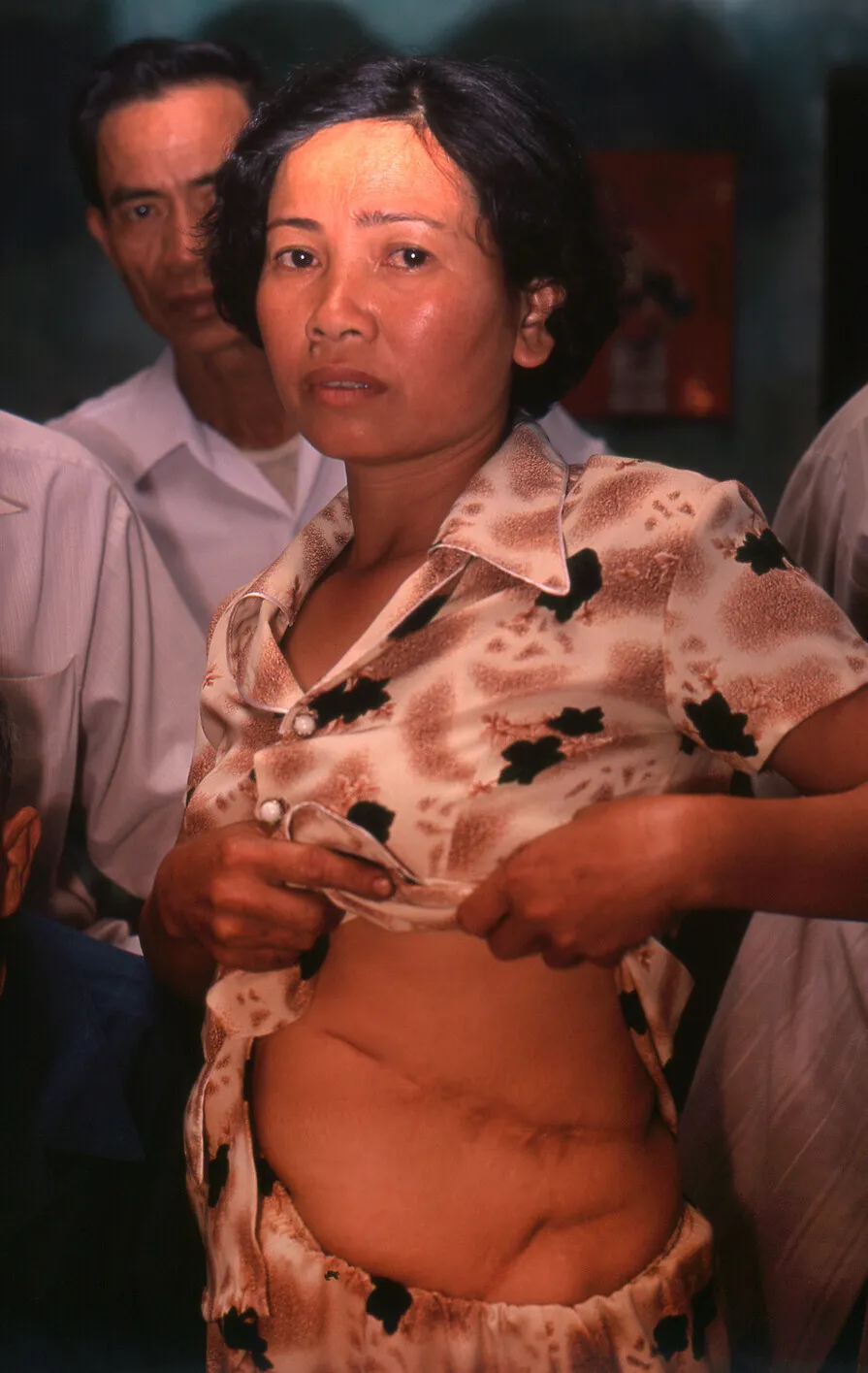
Nguyễn Thị Thanh, 41 at the time, shows her scars from the Feb. 12, 1968, massacre in her village to Hankyoreh 21 reporter Koh Kyoung-tae in March 2001 during the latter’s reporting there. (Koh Kyoung-tae/The Hankyoreh)
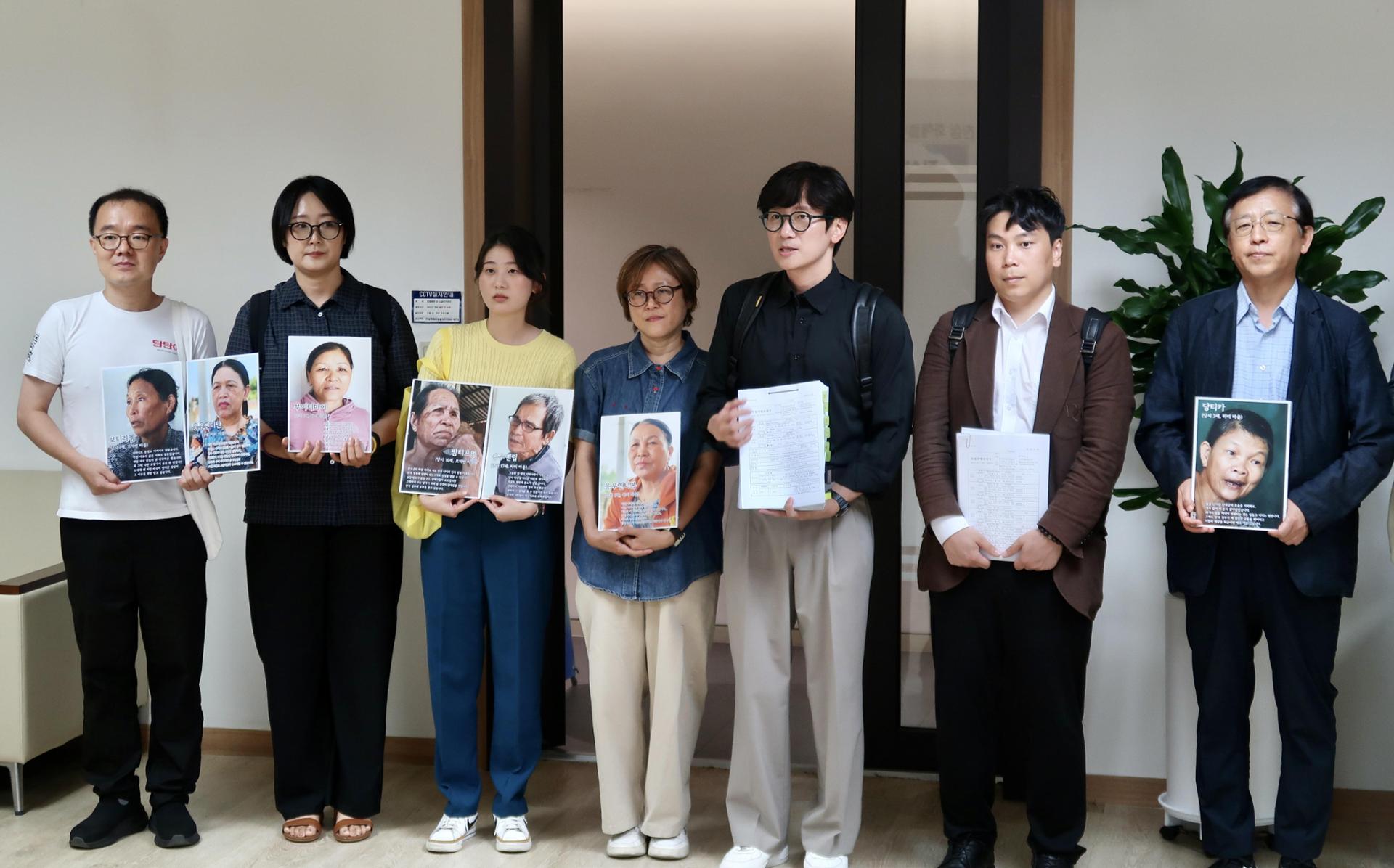
The photo was taken 23 years ago. In it, a 41-year-old woman lifts up her top to show a scar on her left side. One day in March 2001, the survivors of a massacre of civilians perpetrated by Korean soldiers in the small villages of Phong Nhị and Phong Nhất in Vietnam’s Quảng Nam Province gathered. Nguyễn Thị Thanh, the woman in the photograph, was one of them. Nguyễn Thị Thanh was only 8 years old when she said she holed up in a makeshift shelter with her family when her village was raided on Feb. 12, 1968. Neither Nguyễn Thị Thanh nor the reporter who took her picture that spring day in 2001 could have known that 22 years later, on Feb. 7, 2023, Thanh would win a compensation case against the South Korean government. Something she’d never dreamed would happen. Intentions and process of case are “seditious”That February day, the Seoul Central District Court judge presiding over the case ordered the Korean government to pay the victim 30 million won (US$22,403), plus additional compensation for the delay in compensation. This was the first instance that a South Korean court acknowledged the civilian massacres criminally perpetrated by South Korean soldiers during the Vietnam War. It was also the first instance of a Korean court ruling the government to pay compensation to a victim of any such massacre. Could the photographer and the woman with the scar have predicted such a thing 23 years ago? On Friday, ahead of the first arguments in the government’s appeal against the ruling that sided with Nguyễn Thị Thanh, the attorneys representing the state claimed that the plaintiff’s “intentions and the process of her plea were seditious.” The attorneys went even further in their accusations.“This case was not filed by the supposed plaintiff, but by reporters working for the Hankyoreh 21, who are relaying the story of another person they contacted in Vietnam. Nguyễn Thị Thanh is merely the facade they’re using to file the case against the Republic of Korea in a Republic of Korea court.” Setting aside that attorneys at law, people who should focus on the facts and legal principles, are talking about “seditious intentions,” what’s even more ridiculous, to the point of being surreal, is the suggestion that the reporter who traveled to Vietnam on a story 23 years ago did so with the intention of using it in a compensation case. The attorneys went on to make these wild assertions in court.