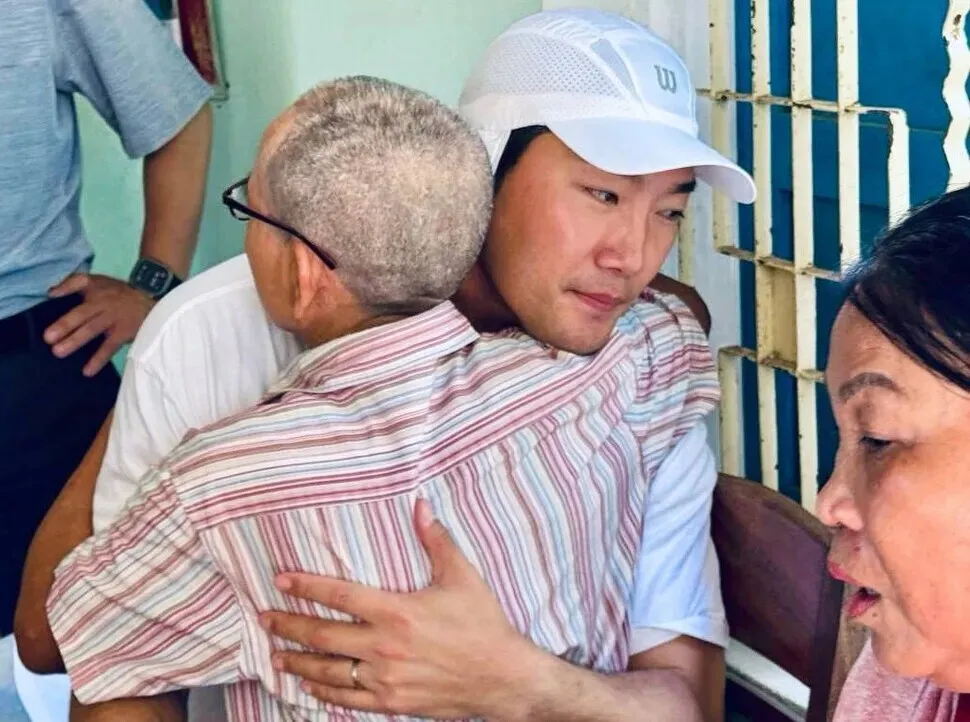
Hwang Ho-jun, one of the lawyers on the Minbyun task force seeking truth and justice for Korean soldiers’ civilian massacres in the Vietnam War, embraces a survivor of such a massacre after speaking to them about their experience. (courtesy of the author)
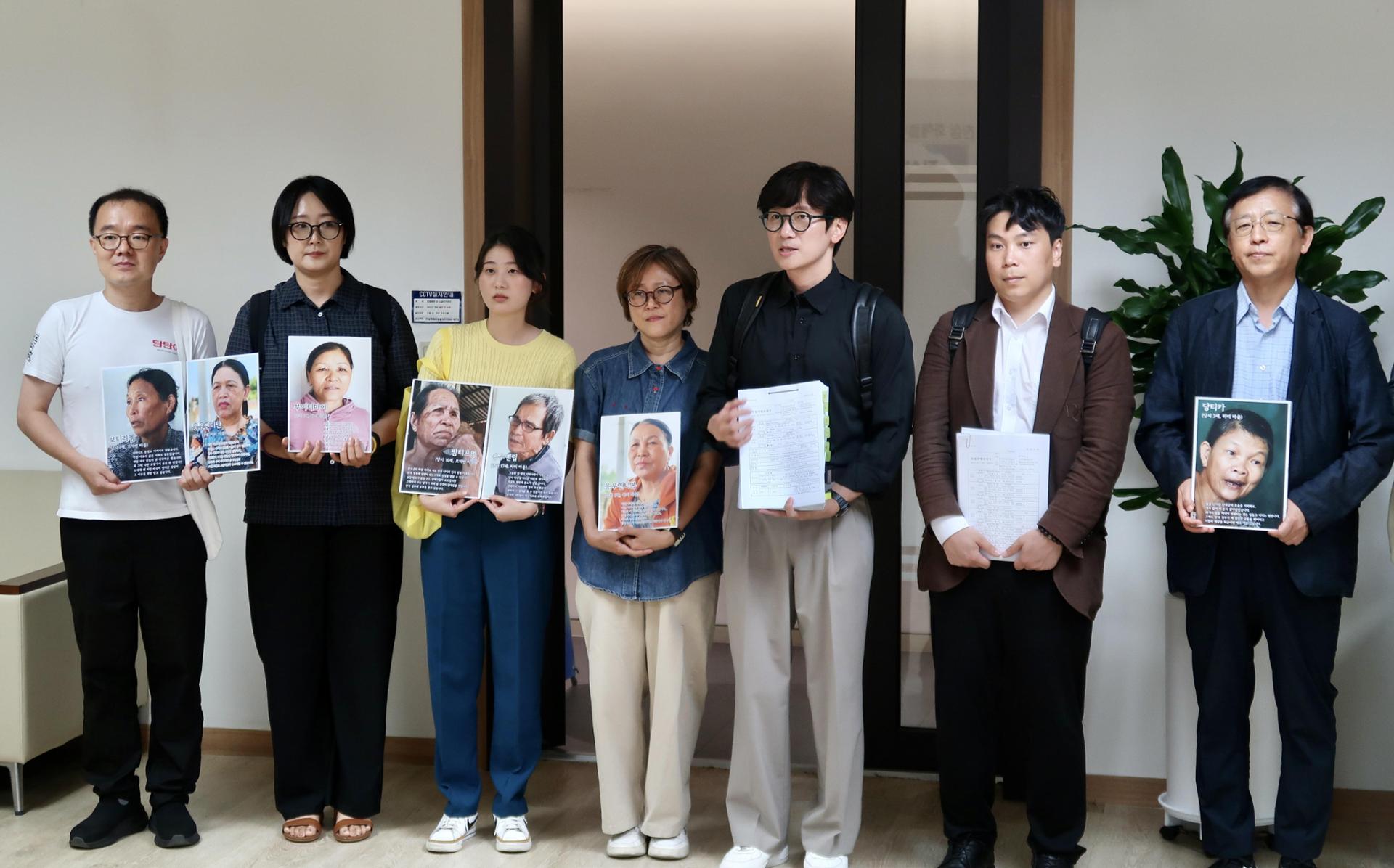
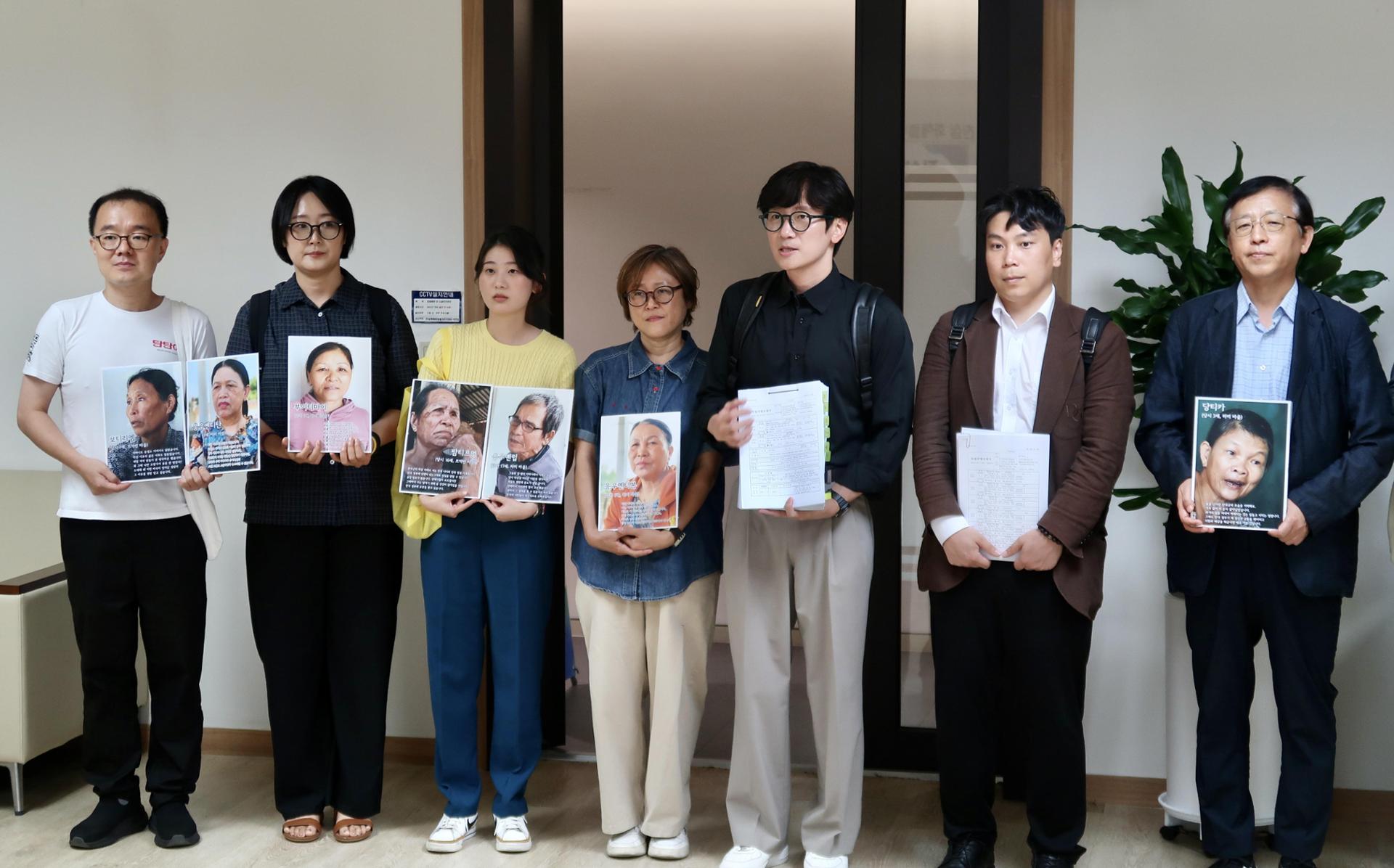
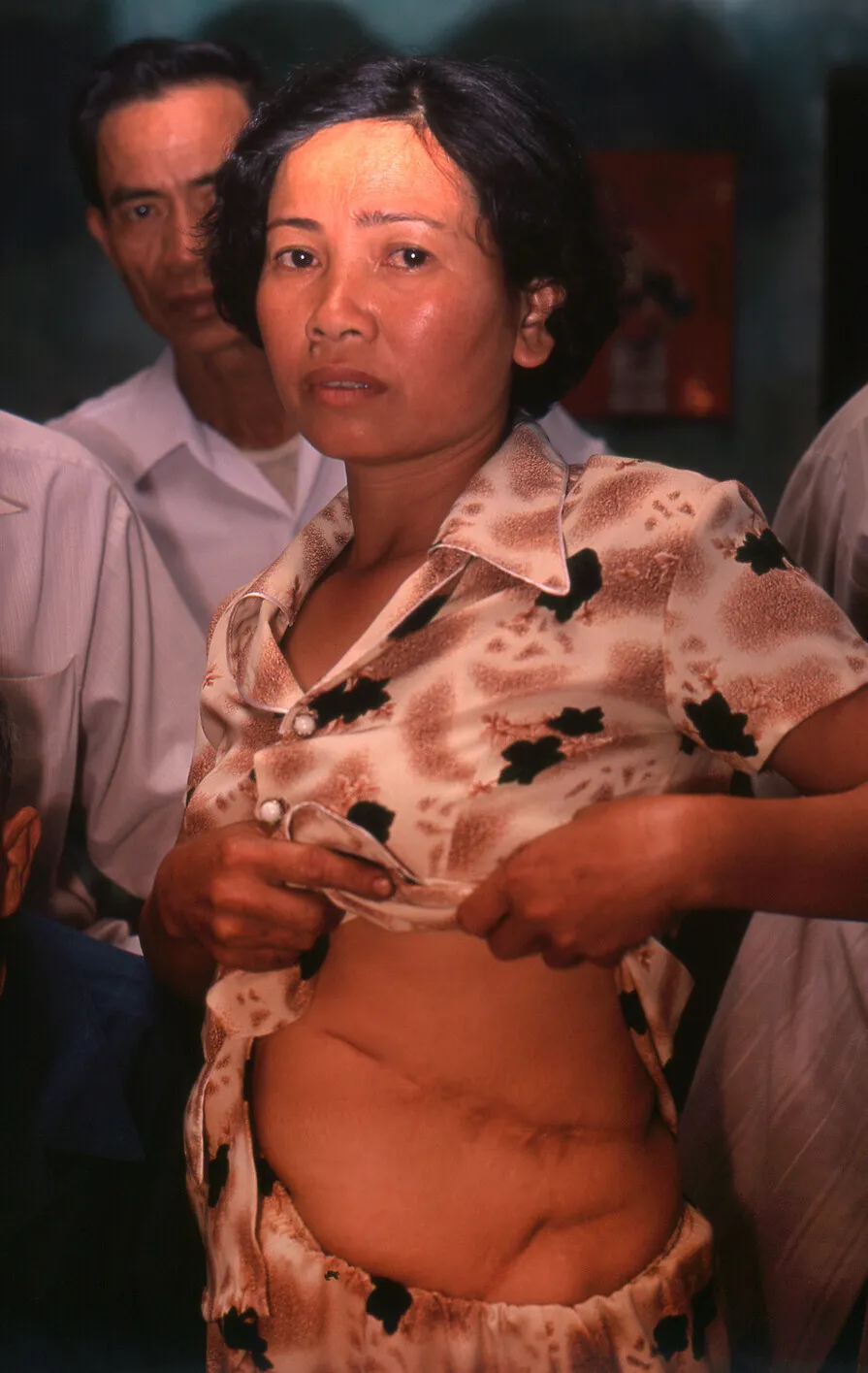
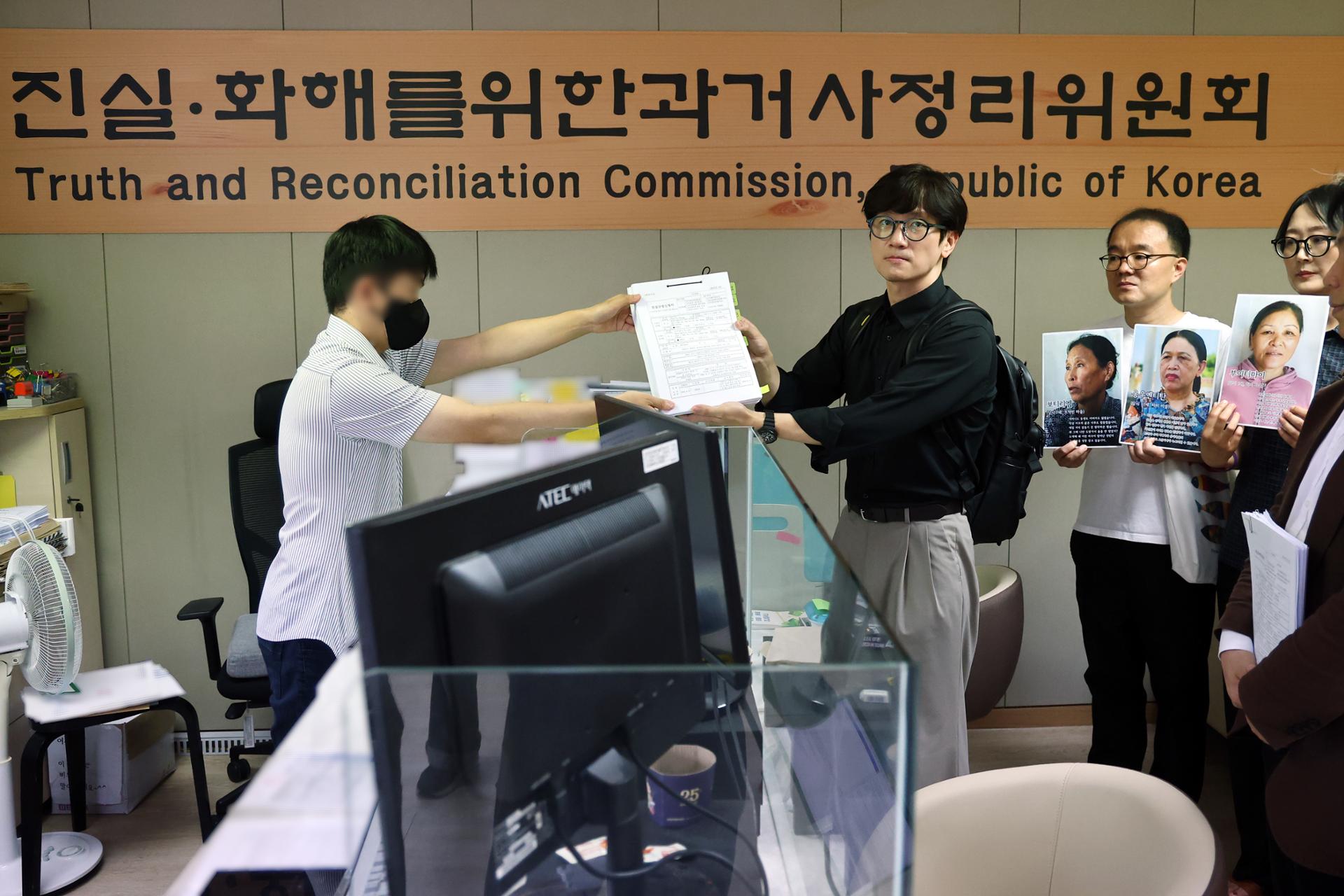
By Lim Jae-sung, attorney and sociologistIn June, I took a trip to Vietnam. My goal was to persuade Korea’s Truth and Reconciliation Commission (the third commission of that name) to investigate civilian massacres by South Korean troops during the Vietnam War.After I explained the application process to survivors of massacres perpetrated in Hà My and Phước Bình villages, the locals asked me to file applications on their behalf.When I asked Trương Thị Thú, a survivor of the massacre at Hà My village, whether she had a message for Korean President Lee Jae Myung, she said she would rather speak to him in person.“It’s not enough for somebody to deliver the message for me. The president ought to come here to meet me,” she said.“I want to speak to him in person so I can feel his heart and his conscience.”Trương went on: “Why won’t they admit it? I’ve been living like this for 60 years now. Even if I live to be 100, I still need to say my piece. I can’t forget all this. Why did they have to kill those innocent children?”Fifty years have passed since the Vietnam War, and more than 20 years since the atrocities committed by Korean troops were brought to the attention of the Korean public in 1999. But the Korean government has yet to apologize, or even acknowledge that they occurred.Even as Trương, born in 1938, seeks to get justice before she dies, many Koreans perpetuate the lie that the Vietnamese don’t want an apology.The Korean attorneys who heard Trương’s fervent appeal promised to do everything possible to make it come true. As one of those attorneys, I’m writing this piece as my way of keeping my word.In our latest meeting, the massacre survivors made some slightly different requests. As the aging survivors draw closer to the death they so narrowly escaped during the wartime slaughter, they find themselves wondering why they survived in the first place.On the morning of Nov. 9, 1966, the 10th Company of the 3rd Battalion of the 2nd Marine Division (called the Blue Dragons) butchered around 70 civilians in Phước Bình village in central Vietnam. Võ Thị Liêm, a survivor of the Phước Bình massacre, made the following request.“Why did such a tragedy have to happen to me? I don’t hate Korea, even so. As time has passed, I’ve come to wonder how I was able to survive amid that tragedy, and whether that Korean soldier spared me on purpose,” she said.“A Korean soldier grabbed me, a 5-year-old girl, by the hair but then let go. I took that opportunity to run away and survived,” Võ recalled.“Now that I’m older, I often think back to that moment. I wonder whether the soldier really meant to spare me. If that man is still alive, I’d like to ask him that.”Nguyễn Thị Hồng, who survived the massacre of Hà My village, said she wanted to express her gratitude.“There was a Korean soldier who warned my older brother of the danger, which is how we got away. I’d really like to thank him for that,” Nguyễn said.“We were the only family in the village that drove water buffalo. Presuming he’s still alive, he’d definitely remember us.”The other lawyers with Minbyun-Lawyers for a Democratic Society who had traveled to Vietnam with me intend to convey those requests to the Truth and Reconciliation Commission, that being the official body for handling such matters in the aggressor state.Here are my requests for the commission: Ask the chairperson of the commission to personally meet Trương and listen to her heartfelt words. The commission should also determine if anybody from the 10th Company of the 3rd Battalion of the Blue Dragons remembers seizing a 5-year-old girl by the hair and then, feeling pangs of conscience, letting her run away on the morning of Nov. 9, 1966.If such an individual can be found, tell him that the little girl whose life he spared has a question to ask of him.Another request: ask members of the unit that killed some 130 civilians in the Hà My village massacre on Feb. 24, 1968, whether they know of a soldier who told the Vietnamese boy he’d always given treats and candy to run away because the villagers were about to be killed.If such an individual can be found, let him know that the boy’s sister still feels grateful to him for sparing her big brother.Remorse and consolation would hardly be enough to reckon with the massacres and other tragedies of the past. But our present reality is rife with distortions and outright mockery. That should prompt reflection on whether we’ve done enough in the present to atone for the sins of the past.Ten years into this project, every year I see that the survivors don’t have many years of health remaining to them. Our atonement is already late enough as it is; let’s not delay it any further.Please direct questions or comments to [english@hani.co.kr]