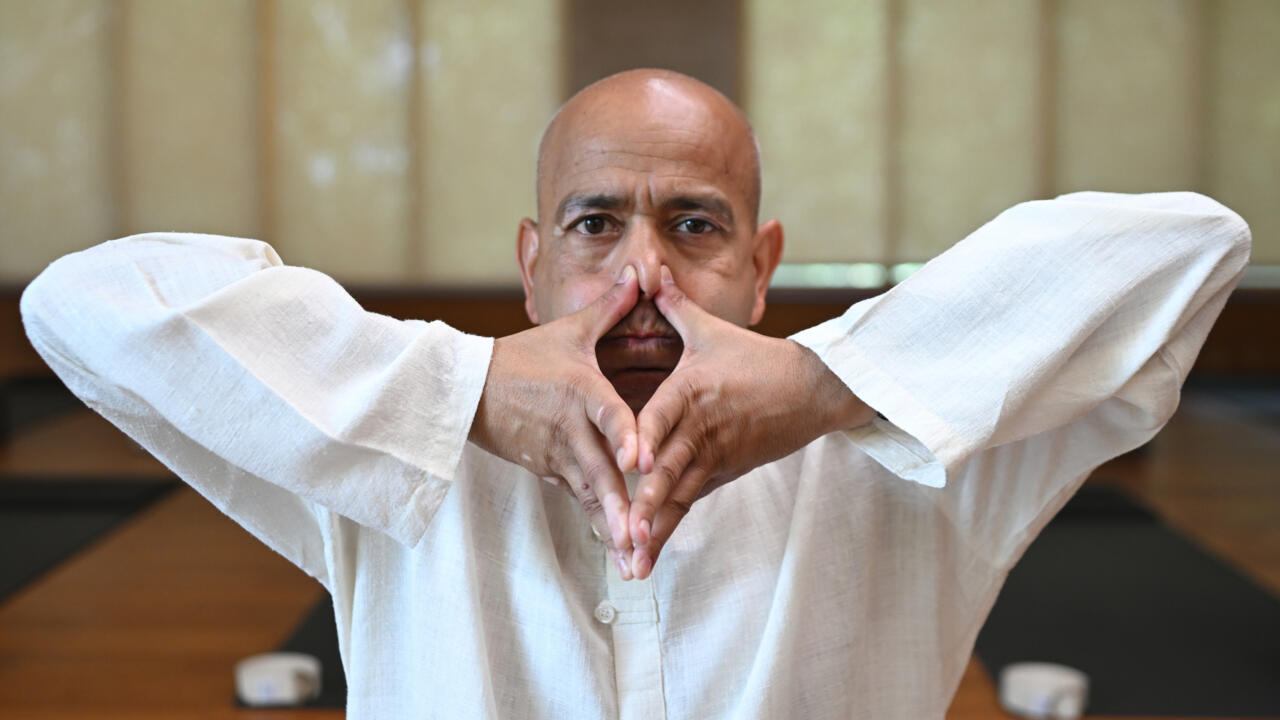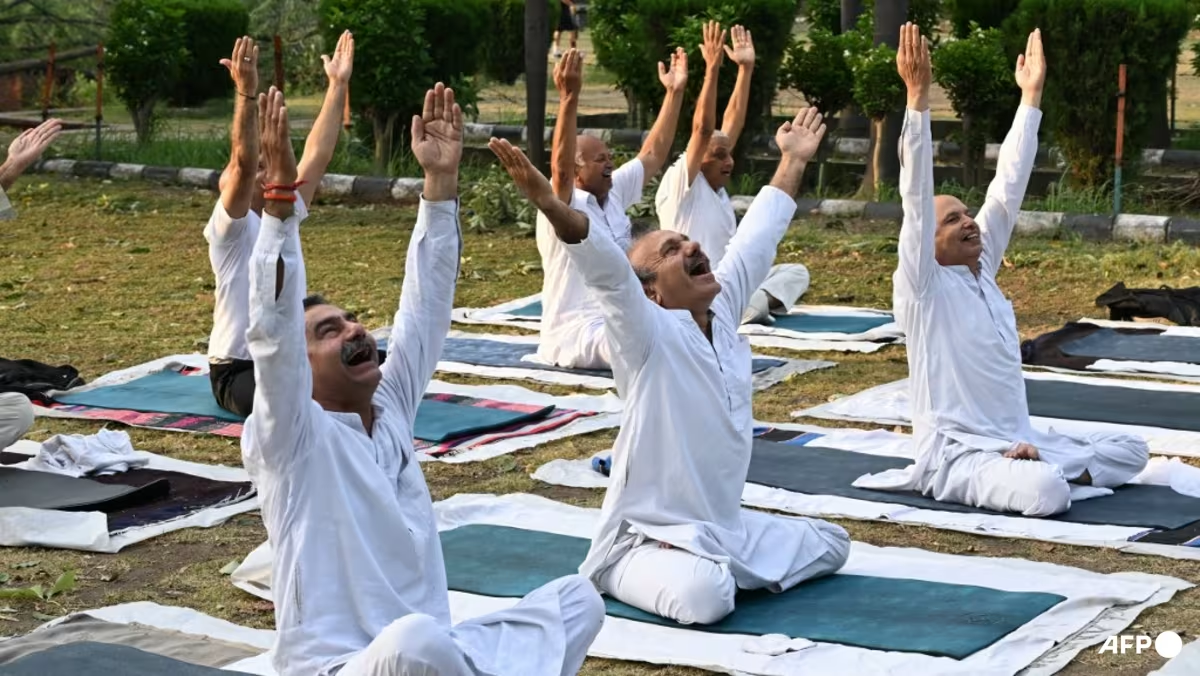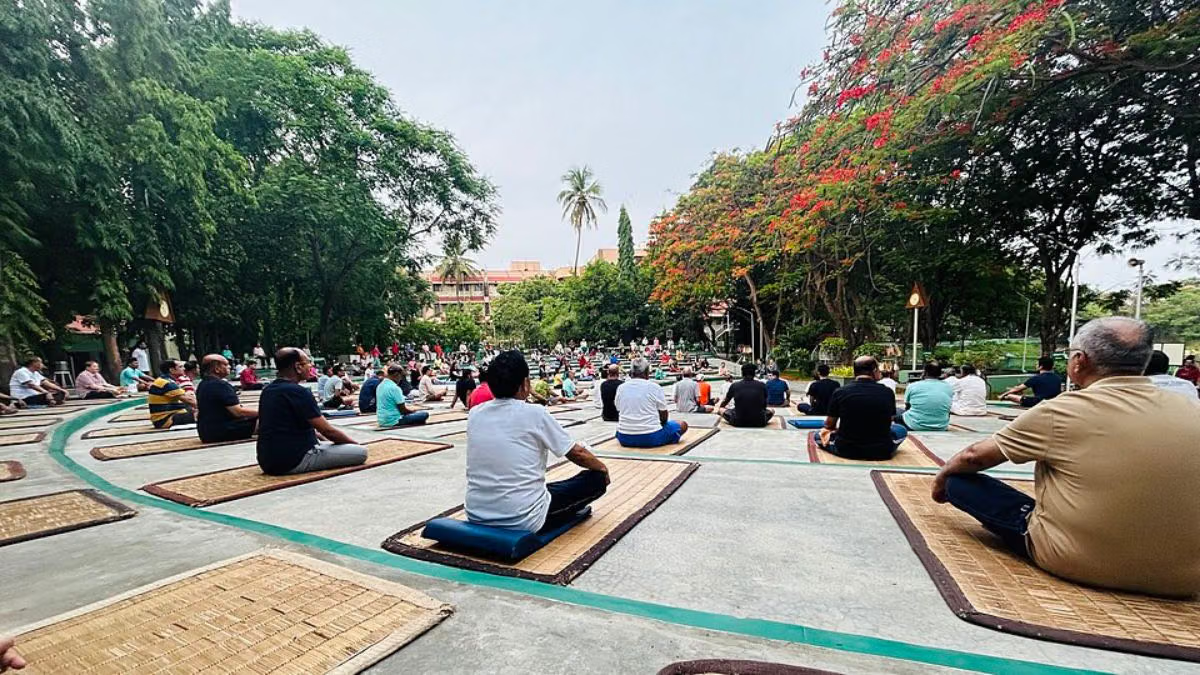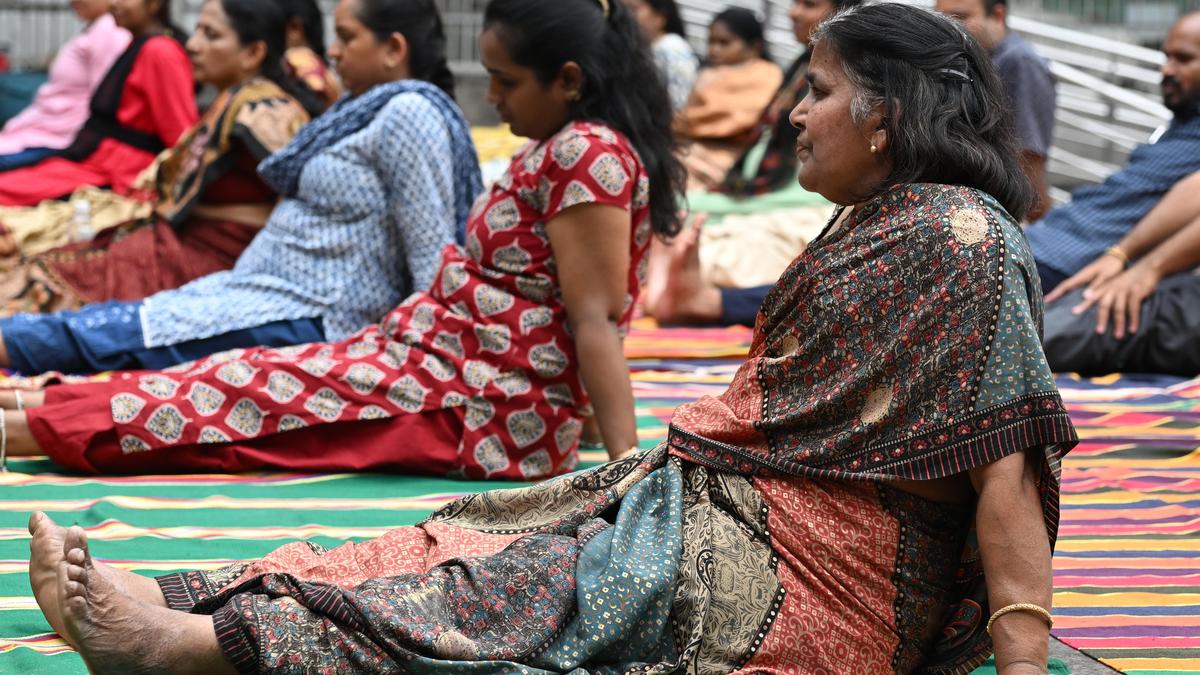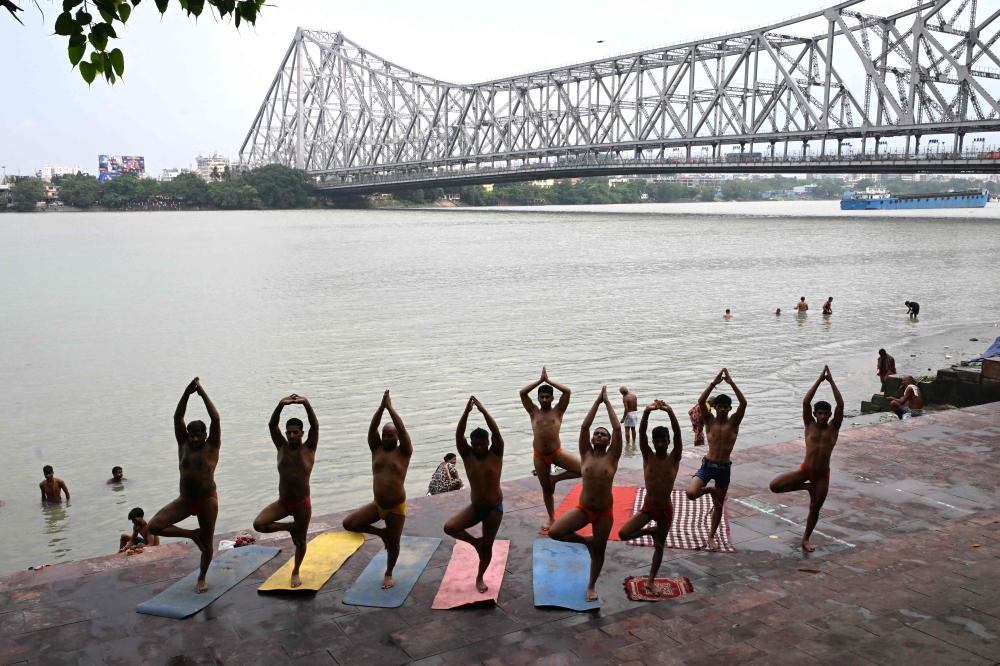
Traditional wrestlers practice yoga on the banks of the holy river Ganges with the backdrop of the iconic Howrah Bridge in Kolkata on June 19, 2026. — AFP pic Earn a fixed rate of up to 4.2%* p.a. for 210 days with Versa Save! Plus, enjoy an additional FREE RM10 when you sign up using code VERSAMM10 with a min. cash-in of RM100 today. T&Cs apply. Sunday, 21 Jun 2026 7:00 AM MYT NEW DELHI, June 21 — Indian yoga expert and teacher Varun Veer said ahead of International Yoga Day today that its Western form is often reduced to the physical dimension, but the millennia-old practice is also mental and spiritual.“In the Indian tradition, we work on the body, the breath, the mind...” he said, saying yoga in the West is “reduced 95 percent to asanas (postures) and very little to prana (breath)”.Veer, who opened a studio in New Delhi in 2023 after teaching the discipline everywhere from Greece, France and Canada to the United States and Hong Kong, said the history dates back more than 10,000 years.Initially, hatha yoga, the most traditional practice, was the “most widespread form in the West”, Veer said.Gradually, new methods such as Iyengar Yoga, Ashtanga and Sivananda—named after the masters who developed them—began to emerge.“The sequences and postures may differ, (but) they are all based on hatha yoga,” the 51-year-old yogi, who holds a doctoral degree on the origins and essence of the discipline, told AFP.He was introduced to the practice at the age of nine by his father.Still, he said he welcomed the worldwide enthusiasm for the discipline, which began to take off in the 1970s and 1980s in the United States where Indian teachers settled, before spreading to Europe and later to Hong Kong, Singapore and Japan. Varun Veer, founder of Lifeyoga, demonstrates 'Pranayama' at his studio in New Delhi on June 19, 2026. Yoga is a millennia-old practice that is physical, mental and spiritual. But Indian yoga expert and teacher Varun Veer warned ahead of International Yoga Day, set for June 21, that its Western form is often reduced to the physical dimension. — AFP pic ‘Dedicated practice’ According to Veer, many Indians practice yoga daily, though not necessarily in the way it is understood abroad.“If you look at Indian culture, Indian traditions and family values, we are taught meditation from the beginning,” he said.“If I speak in Hindi at home, we always say ‘dhyan se khao’, which means when you are eating, you should focus on your food. ‘Dhyan se padho’ means when you study, focus on your studies. ‘Dhyan se chalo’ means when you walk, focus on your walk. So everywhere we add ‘dhyan’. ‘Dhyan’ means meditation.”Veer, a disciple of the Indian yogi and philosopher Sri Aurobindo, said he is pleased to see yoga become even more popular in India, where it is now part of school and university curricula.He hopes this will encourage more people to engage in physical activity and to recognise its health benefits.He said Prime Minister Narendra Modi, who in 2014 initiated the UN resolution that made June 21 the International Day of Yoga, has contributed significantly to promoting the practice.Since coming to power in 2014, the Hindu nationalist leader has made India’s ancient culture a central pillar of his cultural policy.He has even created a ministry dedicated to yoga and traditional medicines such as Ayurveda.However, Veer warned yoga teacher training should be more closely supervised and regulated worldwide.“It’s not good for yoga culture, it’s not good for the teacher, it’s not good for the students and it’s not good for humanity.”“You need dedicated practice,” said Veer, noting that he recruits instructors who have graduated from India’s many yoga universities.After more than 40 years of practice, Veer, who devotes between 90 minutes and two hours a day to the discipline, urged “the West to rethink the way it trains and teaches yoga”. — AFP
More than asanas: Indian guru urges broader view of yoga
NEW DELHI, June 21 — Indian yoga expert and teacher Varun Veer said ahead of International Yoga Day today that its Western form is often reduced to the physical dimension, but...
TL;DRAI
**Out of scope for Warptech News.** This article covers yoga tradition and wellness—not tech, AI, business, or market trends relevant to IT managers and CTOs. If assigned: Yoga expert criticizes how the West reduces 10,000-year practice to 95% postures, ignoring breath and spiritual dimensions. Training quality matters—superficial frameworks without foundational rigor, in yoga or tech, undermine strategic outcomes.
650 words~3 min read