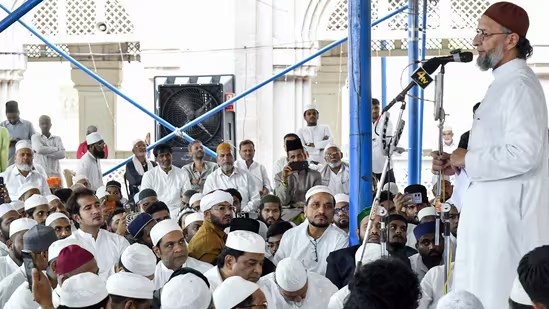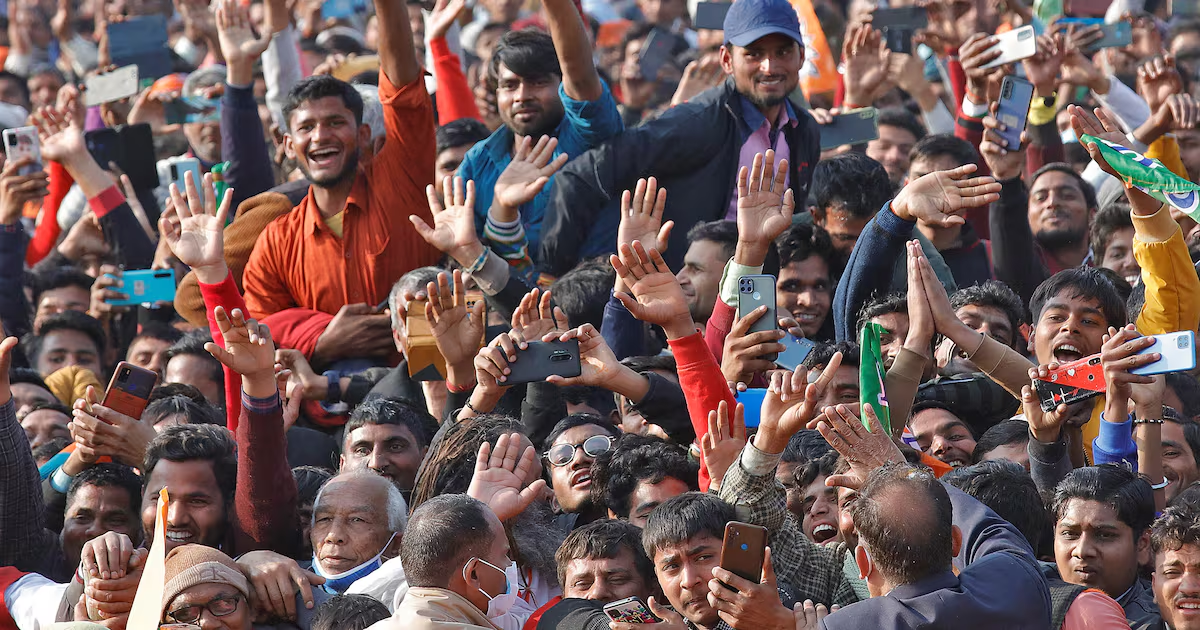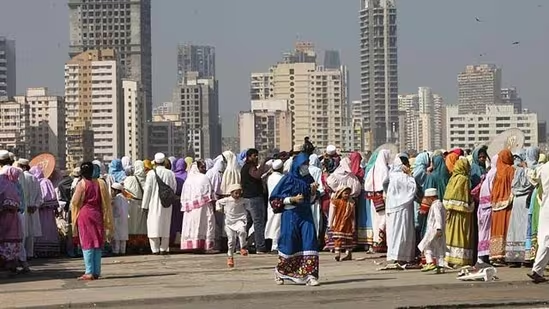
What about the relation between politics and Muslim representation though? The first part of this series looked at the overall share and regional distribution of India’s Muslim MLAs and MPs. It showed that Muslim representation is disproportionately skewed in pockets with higher population share of Muslims. What about the relation between politics and Muslim representation though?Muslim representation is disproportionately skewed in pockets with higher population share of Muslims. (Representative photo)Congress has the highest share of Muslim MLAs and MPs; BJP has the lowest 46% of India’s all Muslim Lok Sabha MPs and 39% of Muslim MLAs have been elected from the Congress. Less than one percent of them have been elected from the Bharatiya Janata Party (BJP) or its predecessor, the Bharatiya Jan Sangh. The fact that the BJP has had only 19 Muslims MLAs and four MPs despite having 15% of all MLAs and 20% of all MPs in India means that every other political group has a higher relative share among Muslim MLAs and MPs in India.More interesting is the temporal churn in Muslim representation across parties The fact that overall representation of Muslim MLAs and MPs is broadly stable across time in India does not mean that the relation between Muslims and politics has been stagnant. This is best seen in the party-wise composition of India’s Muslim MLAs and MPs across different phases of politics in India. The most commonly used classification of political epochs in post-independence India is the party-system categorization which is inspired by the concept of the Congress system of political scientist Rajni Kothari.
Muslim representation and political parties in India | Number Theory
What about the relation between politics and Muslim representation though?
676 words~3 min read