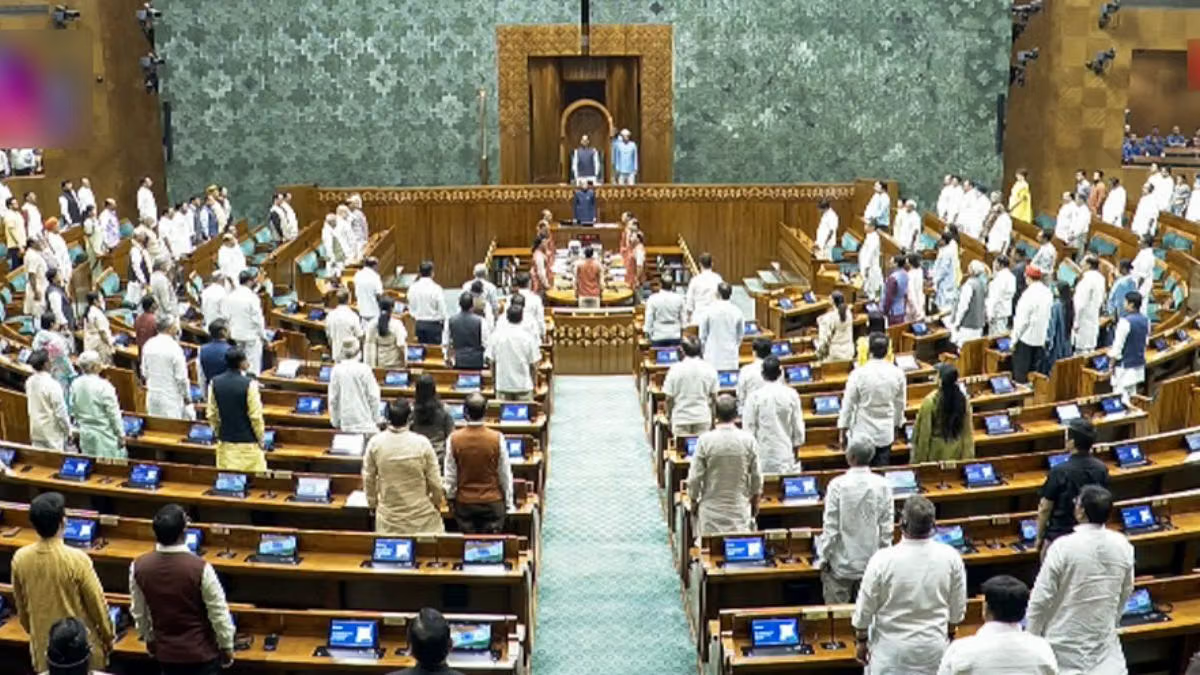
The answer, based on data from 1,50,000 starred questions filed across the 16th, 17th, and 18th Lok Sabhas, is no.The reason reveals something important about how Indian parliamentary democracy works.
Also read: The math behind India’s elections—Why proximity matters
What ideal points measure
A “starred question” is one of the most direct forms of parliamentary accountability available to an Indian MP. It is a formal, numbered question that a minister must answer in the chamber, on the record. Unlike unstarred questions answered in writing, starred questions can generate supplementary exchanges on the floor. They are, in effect, the vocabulary of parliamentary scrutiny.The method I used mirrors NOMINATE but substitutes vocabulary for votes. We turn each MP into a list of the words they use most distinctively in their questions, then use a standard statistical method to reduce those thousands of words to the two underlying patterns that best separate one MP from another. In the US model, Dimension 1 almost always captures the liberal-conservative axis. I wanted to see what it captures in India.The answer: Not party.
Also read: 2026 election results show power is rarely defeated by rivals. Credibility matters more