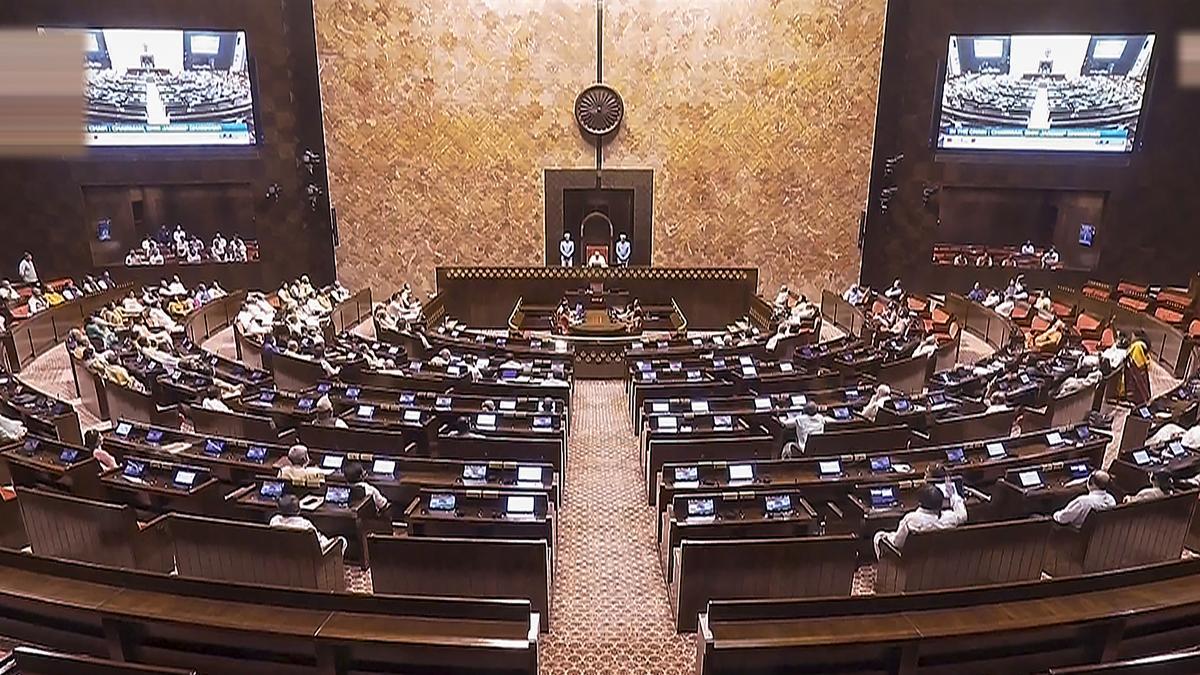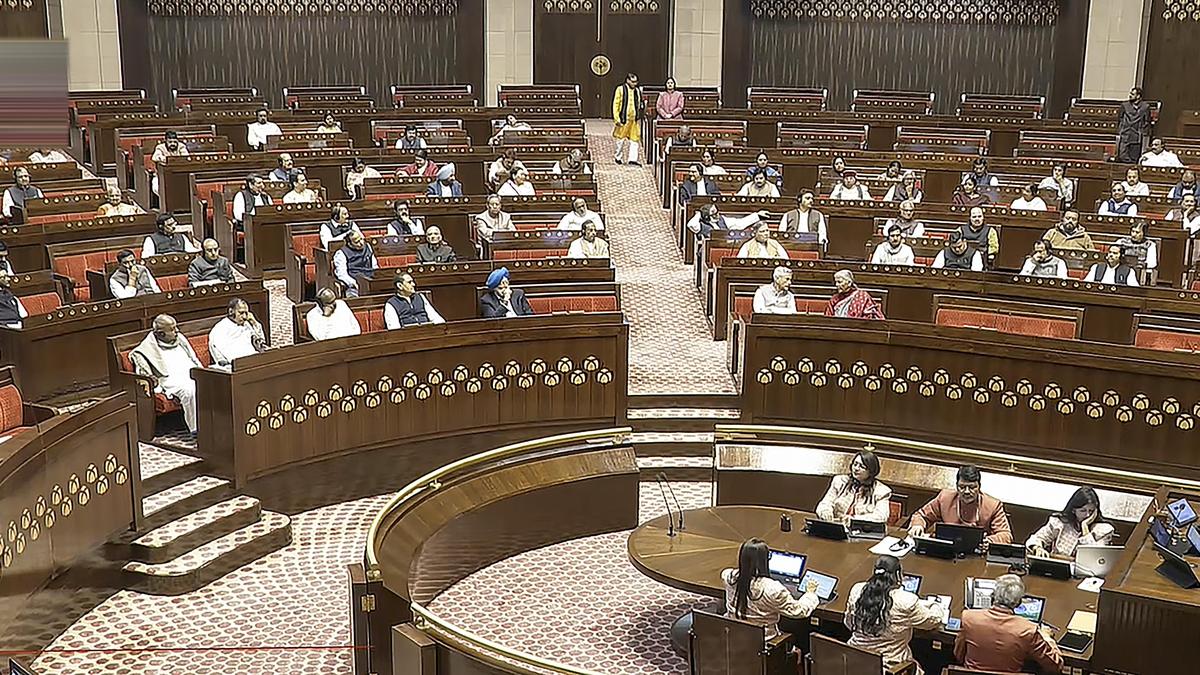
The people who built India’s upper house had something grander in mind. Members would serve six-year staggered terms, elected by state legislatures, shielded from the daily arithmetic of individual constituencies and electoral cycles. The thinking was that such insulation would produce different legislative behaviour: Calmer, more principled, less hostage to the immediate demands of any particular district or voter bloc. A chamber of deliberation, not transaction.I wanted to know whether the data bears that out.The short answer is: Partly, and not in the ways that matter.I looked at 9,315 starred questions filed in the Rajya Sabha between 2014 and 2025, by 264 members across 14 party groups, and ran the same analysis on them that I’d earlier applied to the Lok Sabha. The comparison turned out to be more interesting than I expected.
Also read: India doesn’t have Left-Right divide in Lok Sabha. MP concerns are tied to geography
The experiment
The earlier Lok Sabha analysis found that Indian MPs’ question vocabulary is driven by geography, not party ideology. BJP and Congress members sit almost on top of each other in vocabulary space. What actually separates MPs is the kind of constituency they come from: Agrarian districts versus urban ones, flood-prone versus drought-prone, infrastructure-poor versus relatively developed. Party ideology gets drowned out by local demand.That finding has an obvious explanation. MPs ask what their voters need. A BJP member from a flood-prone district in Assam and a BJP member from a Mumbai suburb represent different problems, so they ask about different things. The party manifesto barely registers.The Rajya Sabha takes that mechanism away. No constituency. No individual voter base to answer to. The same parties, the same Parliament building, but the one variable that seemed to explain everything in the lower house is simply absent. It is about as close to a controlled experiment as parliamentary data allows.If constituency pressure was really what was suppressing party ideology in the Lok Sabha, the Rajya Sabha should look different. BJP and Congress should diverge. Ideological patterns should surface.What the numbers say