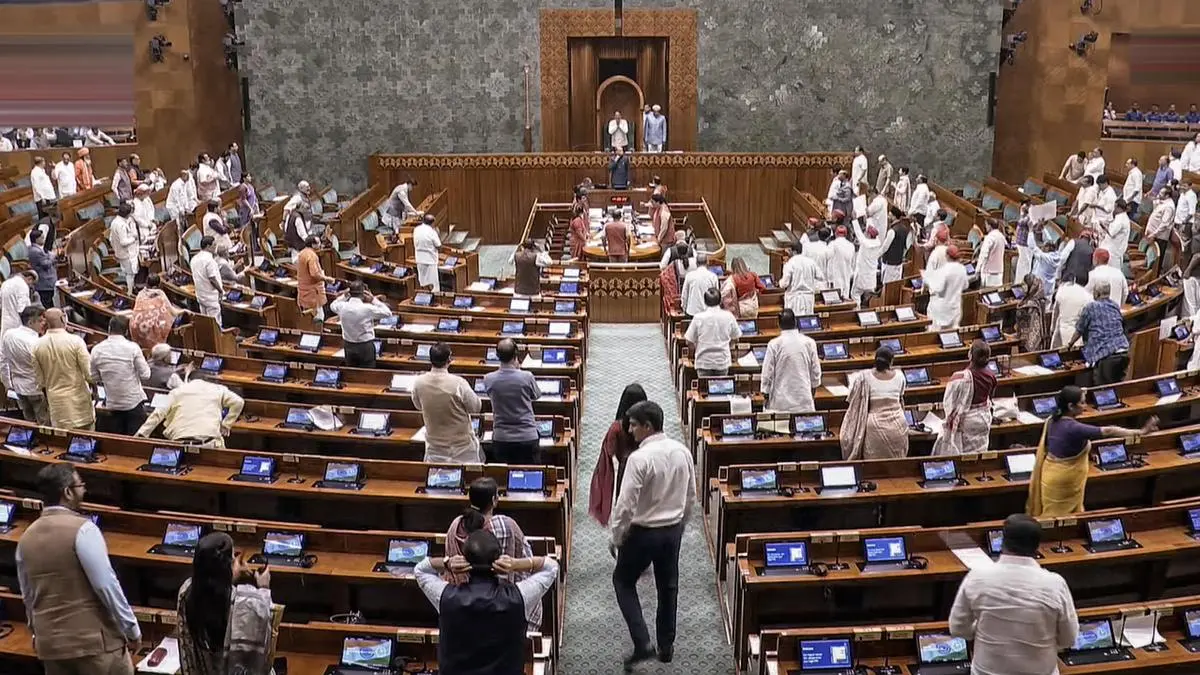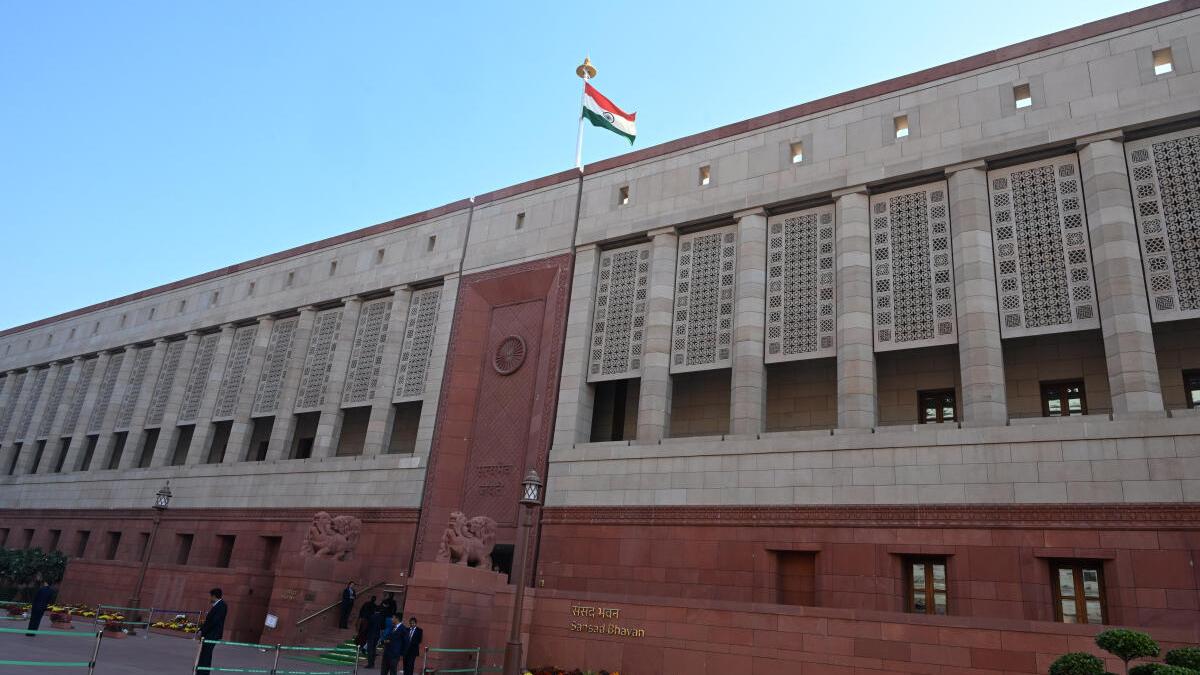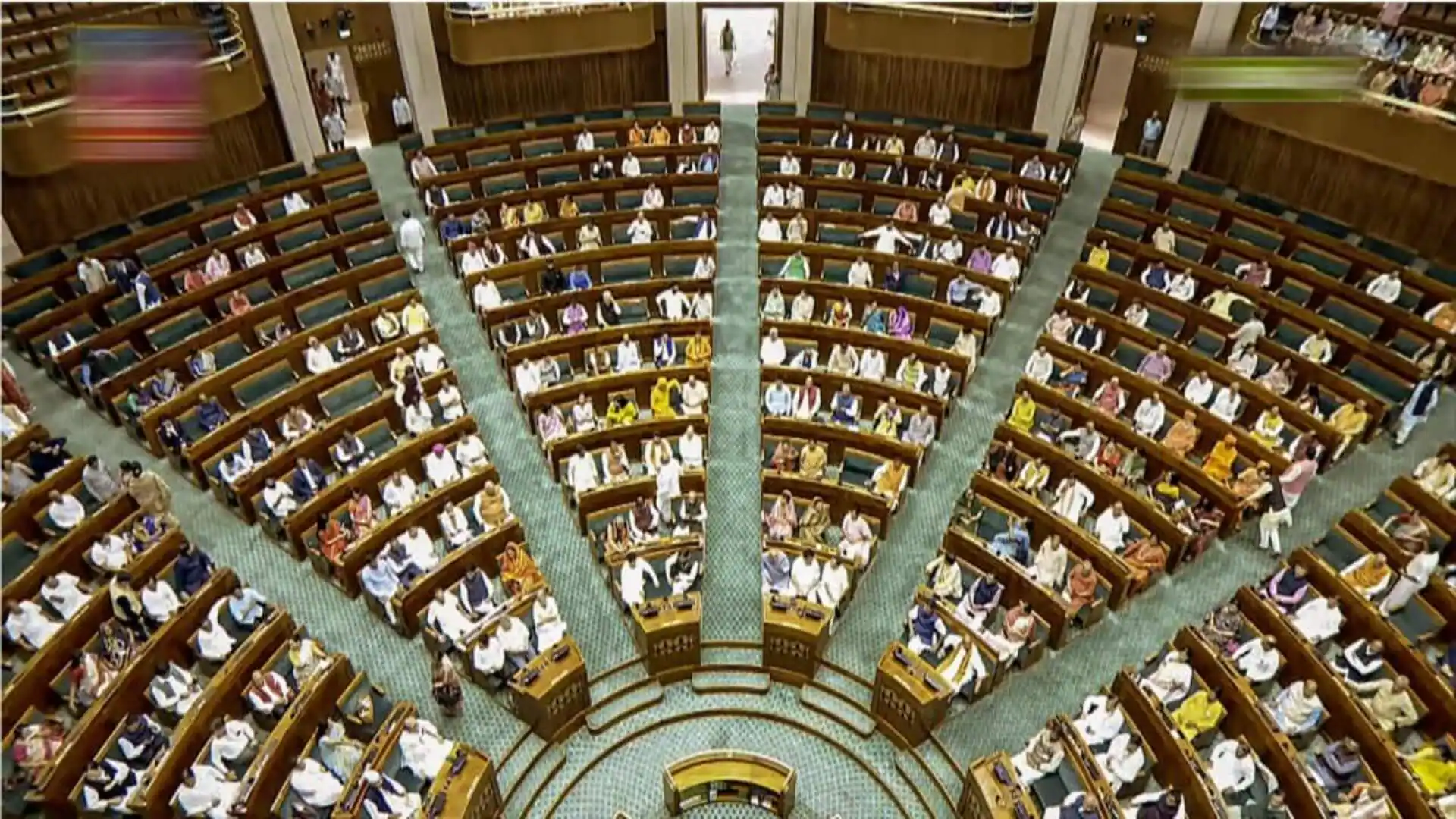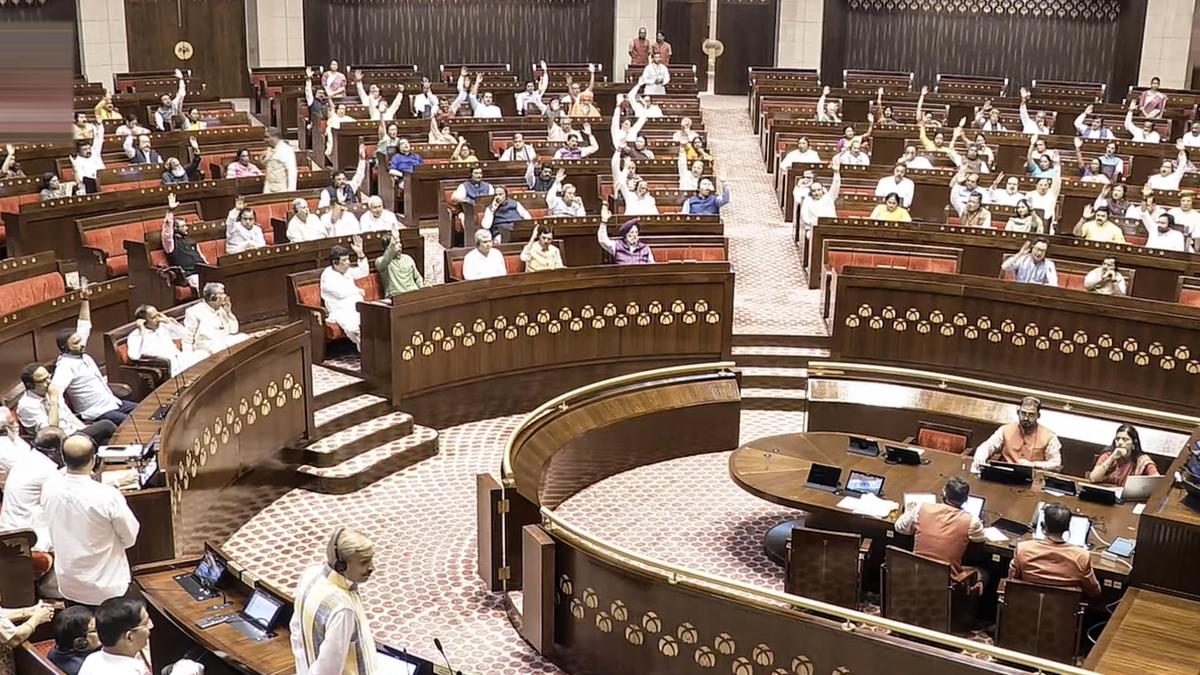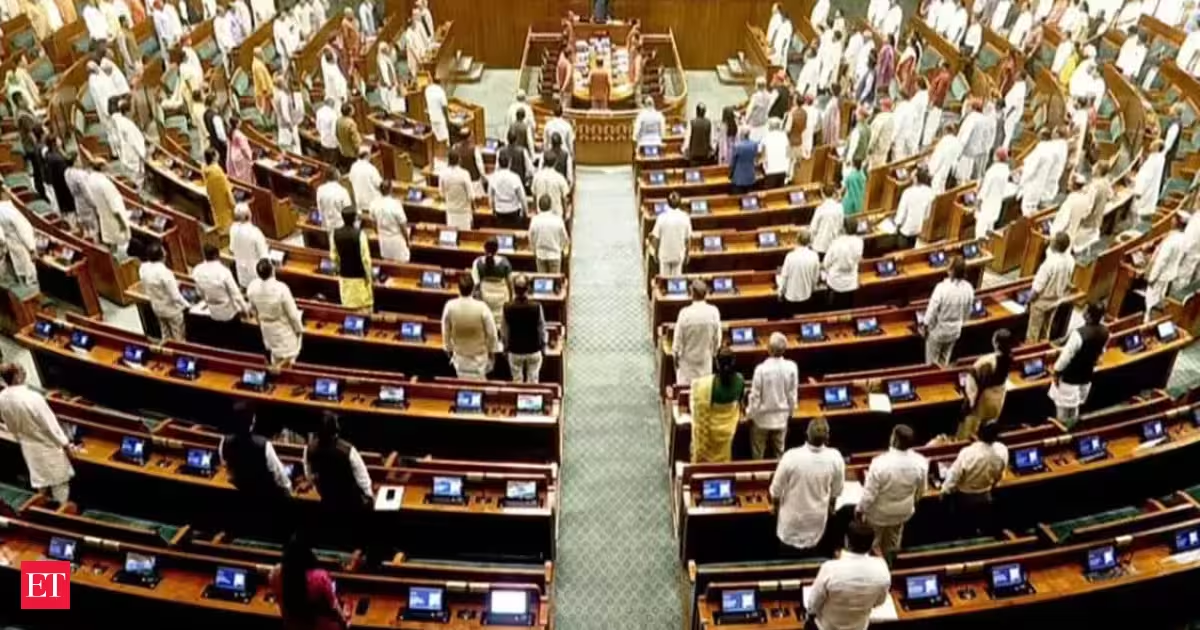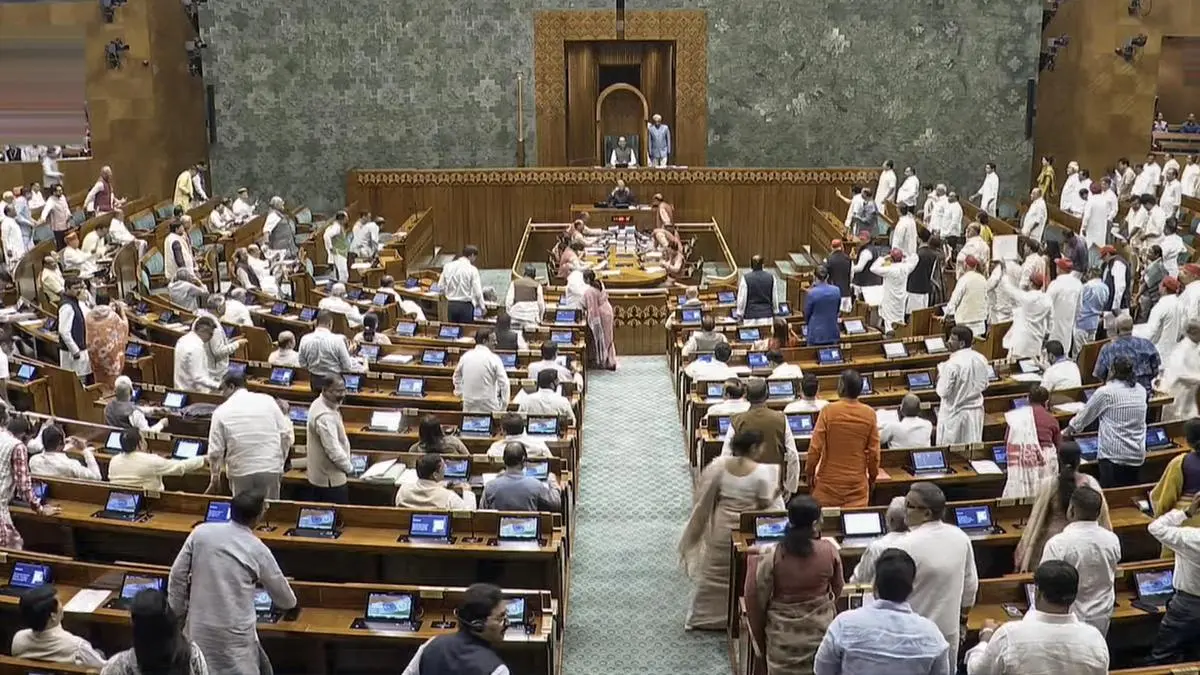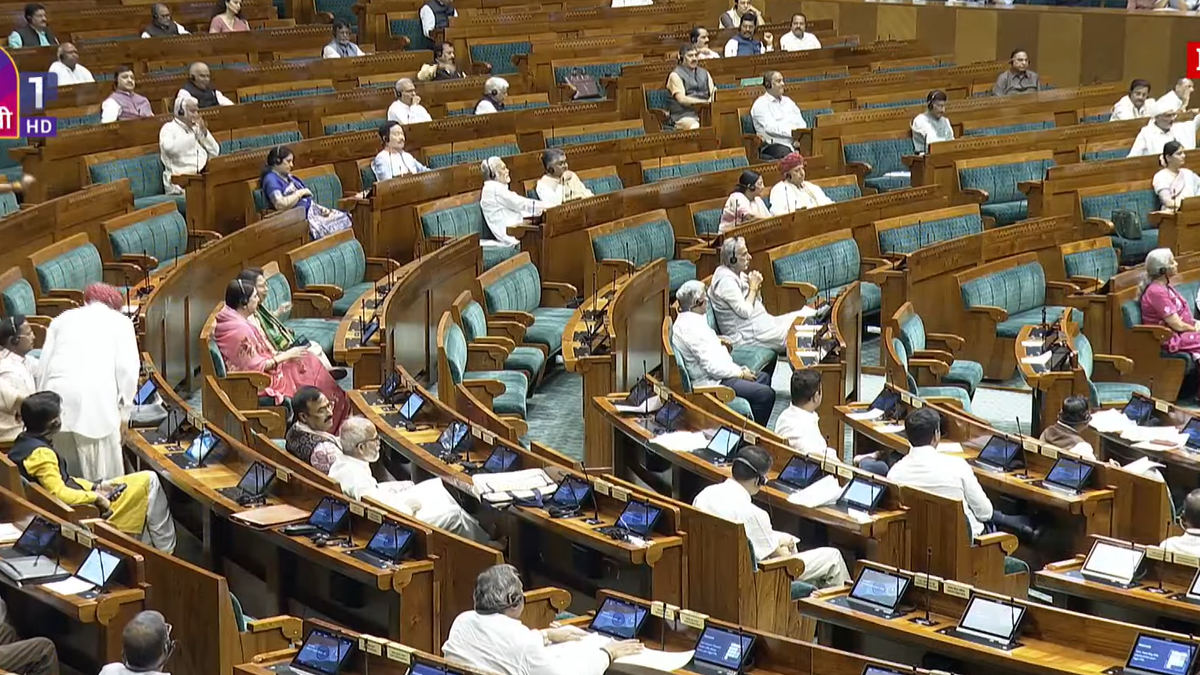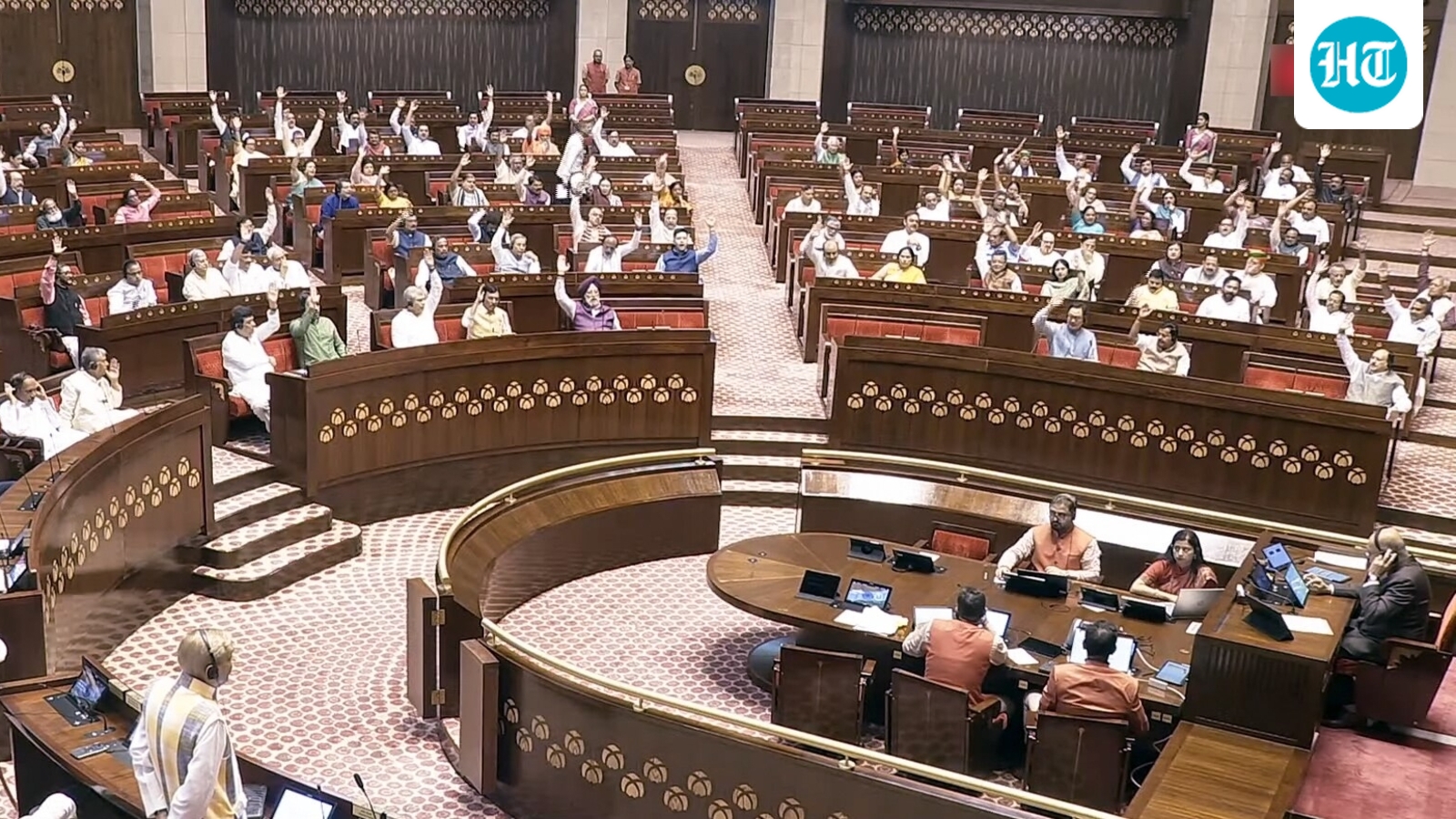
Nine bills passed without discussion, one cleared in just two minutes and only two of 380 questions listed for oral answers were responded to – these are the key findings in a think-tank's analysis of Parliament's Monsoon Session, underscoring the disruption and paralysis that characterised sittings that ended on Thursday.A view of the Rajya Sabha proceedings during the Monsoon Session of Parliament, in New Delhi on Thursday. (Sansad TV)The session, which began on July 20, was largely defined by the Opposition's demand for a statement by Union home minister Amit Shah on the Jantar Mantar crackdown and a series of disruptions over issues such as the alleged theft of Ram temple donations.The data, released by PRS Legislative Research, showed the Lok Sabha functioned for just 15% of its scheduled time; the Rajya Sabha managed 33%.Minimal work, maximum adjustmentsThe Lok Sabha passed 11 bills in all, but nine went through without any discussion, beyond the minister's introductory remarks, according to PRS Legislative Research. A separate tally from the Ministry of Parliamentary Affairs put the figure at 12 bills passed by the Lok Sabha — the difference is the Appropriation (No. 3) Bill, 2026, which the ministry's count includes but PRS's does not, since appropriation bills follow a different, largely pro-forma passage process and are typically left out of PRS's bill-by-bill tracking of debate time and MP participation.The nine bills took minutes to receive the Lower House's nod – the Registration of Births and Deaths (Amendment) Bill was passed in the Lok Sabha in just two minutes, and the Supreme Court (Number of Judges) Amendment Bill in four, according to PRS data.The only exception was the Public Examinations (Prevention of Unfair Means) Amendment Bill, 2026, which was debated for nearly 11 hours and saw 48 lawmakers participate. It was, in effect, the session's only substantive legislative debate, with an afternoon sitting on July 28 and a session running until 2pm on July 29.The remaining sittings followed a divergent path — the House convened, sat for a few minutes, and was adjourned over and over again. Two members spoke on The Prevention of Insults to National Honour (Amendment) Bill, but it was passed in 14 minutes, including the minister's explanation.Rajya Sabha manages more groundThe Rajya Sabha put up a better show on paper, with lawmakers speaking on most bills, but the time allotted for each was limited. Sixteen members spoke on the Bill amending the Registration of Births and Deaths Act, but the debate lasted just 50 minutes — an average of about three minutes per speaker.The Public Examinations Bill was again the exception, with 35 members taking part in a debate that stretched over six-and-a-half hours.Two bills that were listed for consideration and passing — the Viksit Bharat Shiksha Adhishthan Bill, 2025, and the Foreign Contribution (Regulation) Amendment Bill, 2026 — did not clear the House. The former was not introduced and the FCRA Bill was referred to a Joint Parliamentary Committee.Private members' business was not discussed for the second consecutive session — a category of legislative work, introduced by individual MPs rather than the government, that has increasingly been squeezed out of the calendar.Worst Question Hour showing since 2019The PRS data showed the Question Hour – the daily slot meant to hold ministers accountable – was held for only nine minutes in the Lok Sabha and two hours in the Rajya Sabha.The Question Hour in the Lok Sabha functioned for 1% of the scheduled time – the lowest utilisation since 2019 so far. Of 380 questions listed for oral answers, only two were actually answered on the floor.The Question Hour period in the Rajya Sabha was also weak, at 12%, though well above the Lok Sabha figure. Sixteen of 285 listed questions were answered orally.Seven years, still no deputy speakerThe report also highlighted a long-standing gap – the Lok Sabha has been without a Deputy Speaker for more than seven years. The post, which according to convention usually goes to the main opposition party, has been vacant in the Lower House since 2019. The last Deputy Speaker was M. Thambidurai.
9 bills go through without discussion, another cleared in 2 minutes: Monsoon Session of Parliament, in numbers
The Lok Sabha functioned for just 15% of its scheduled time; the Rajya Sabha managed 33%.
679 words~3 min read