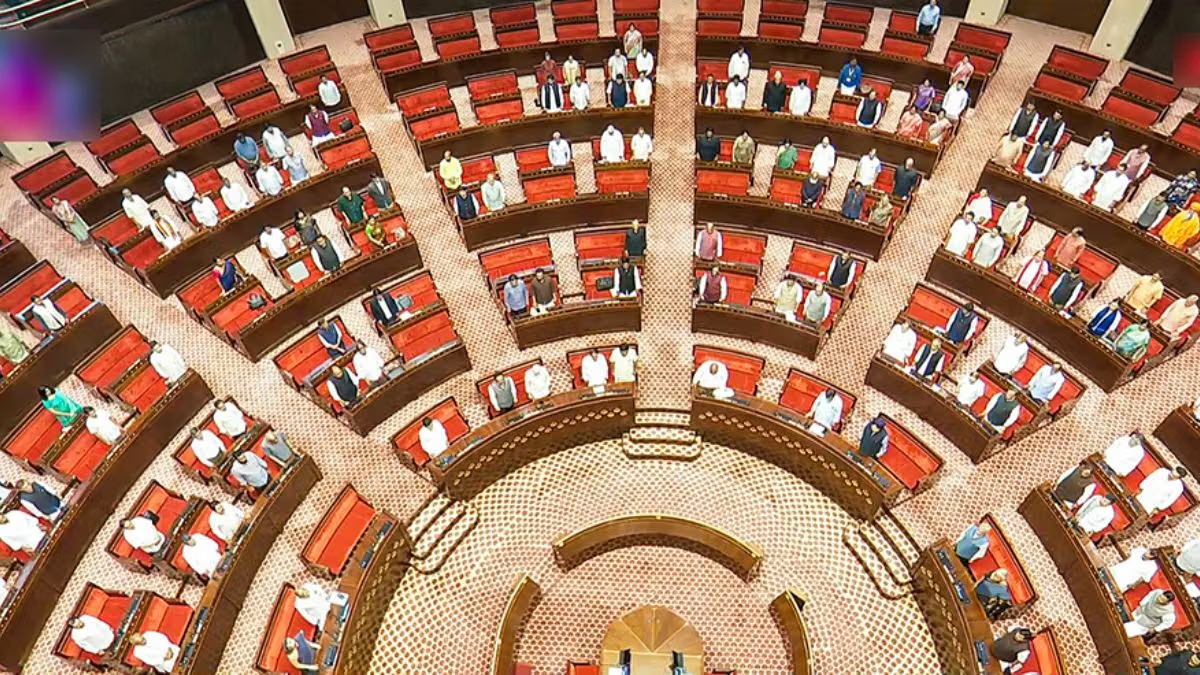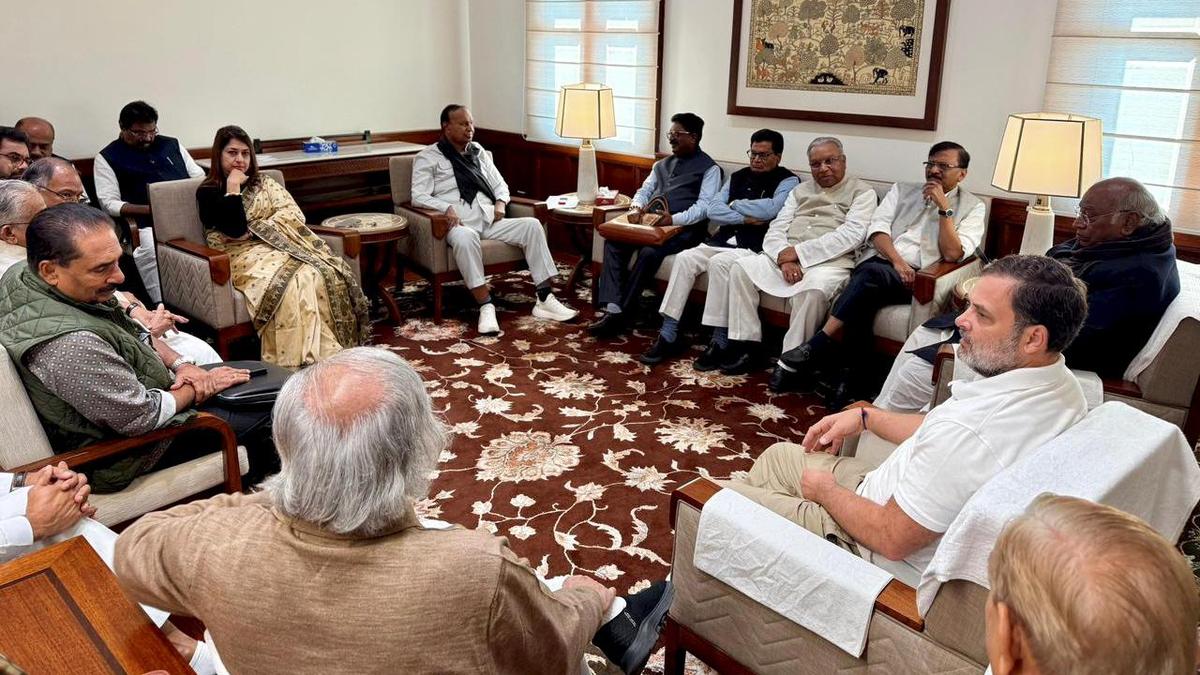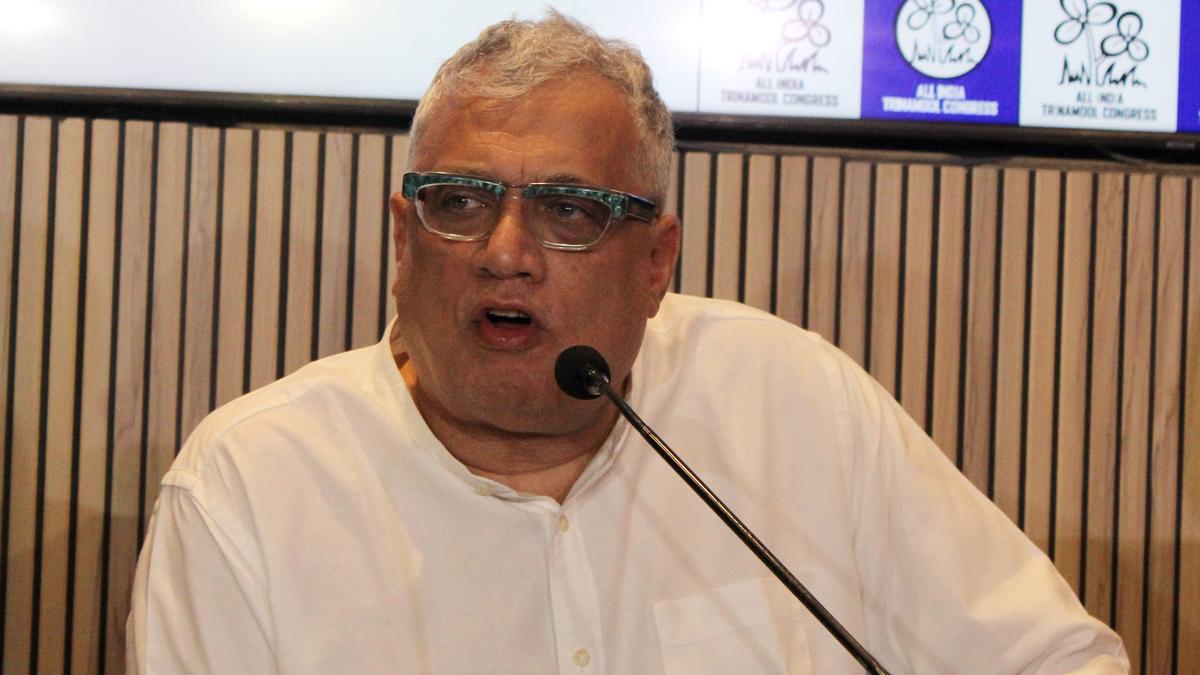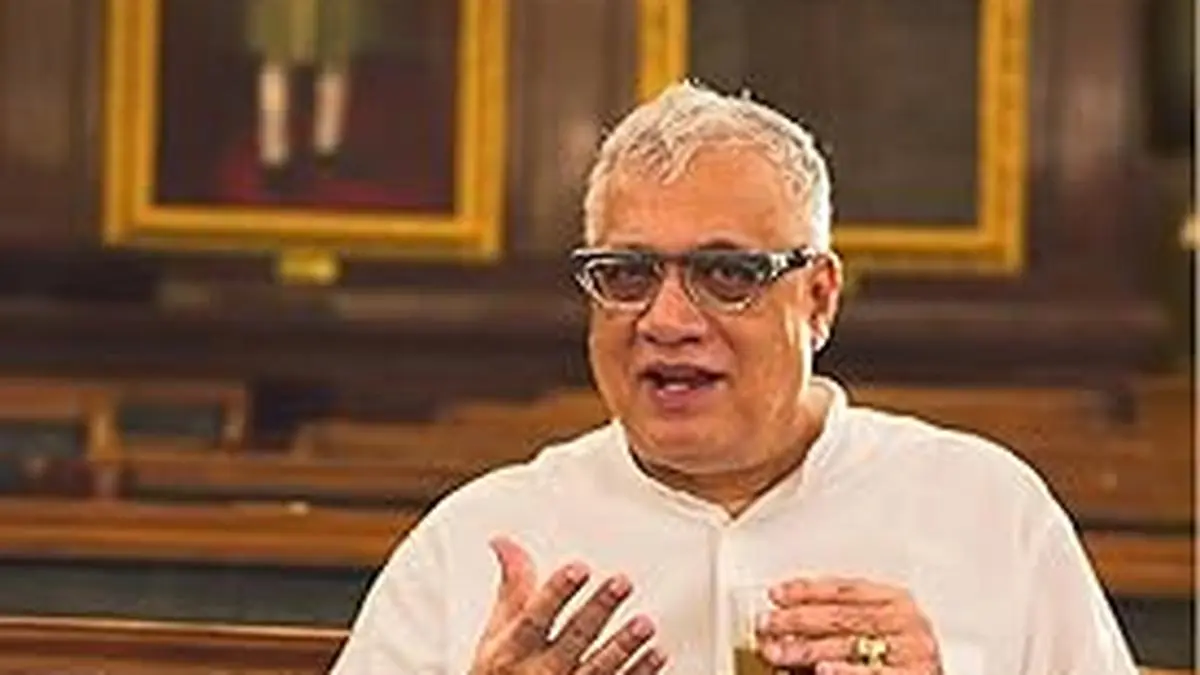
It has been a smooth transition from the world of corporate communication to the fiery floor of the Rajya Sabha for Derek O’Brien. Known nationwide to an older generation as Asia’s premier quizmaster, he has spent the last decade and a half as a twice-serving Member of Parliament and the leader of the All India Trinamool Congress (AITC) in the Upper House. In his book, Politics, Policy and Predictions: Views from the Front Row of Parliament, O’Brien positions himself as a “politician-journalist” and not a mere opposition dissenter.That’s the primary reason why his book should have a wide audience. Reading this book as an active participant in public life, I found myself in a unique position. In our home state of West Bengal, O’Brien and I occupy opposite sides of the political spectrum. Our regional mandates, grassroots priorities, and local political battles often place us at sharp variance. Yet, as I turned the pages of this book, I found a powerful truth emerging: when we look beyond regional binaries to the national level, his critique of our eroding democratic structures is one I fundamentally agree with. On matters of national policy, institutional integrity, and the preservation of our federal structure, O’Brien speaks a language that any conscious defender of Indian democracy must endorse. His central thesis is chilling yet vital: India’s democratic crown jewel - its Parliament -- is systematically and chillingly being hollowed out, from what used to be a sacred space of vibrant deliberation into a tightly controlled, bureaucratic echo chamber.Stifling dissentThe initial chapters of the book provide an insider’s autopsy of how the structural norms of the Lok Sabha and Rajya Sabha are being systematically dismantled. O’Brien focuses on the technical mechanisms used to stifle dissent, particularly the drastic drop in legislative scrutiny. He highlights how bills are rushed through voice votes without being referred to Parliamentary Standing Committees - a process traditionally meant to allow multi-partisan experts to dissect laws before they affect over a billion citizens.O’Brien approaches this structural decline with a sharp analytical focus. He laments the diminishing lead time between the issuance of an official summons and the actual commencement of a parliamentary session. He points out that while schools, colleges, and corporations map out their annual calendars months in advance to maximise productivity, the Indian Parliament meets sporadically, often with barely two weeks’ notice.But O’Brien ventures beyond mere complaints to offer concrete policy fixes. He outlines specific legislative reforms, such as reducing the government’s mandatory response window for committee recommendations from six months to 60 days (modelling it after the British House of Commons). He also advocates for extending MP tenures on standing committees to 30 months to foster genuine institutional expertise. These are necessary structural reforms that I believe are essential to restoring the dignity of the house.Where Politics, Policy and Predictions truly shines, and where my alignment with his national policy perspective is strongest, is in its data-driven dismantling of state-sponsored narratives. O’Brien leans heavily on his background as a communicator to show how the current ruling party operates in a state of “permanent propaganda”. The book contrasts lofty public relations campaigns against cold, hard institutional data sourced directly from Comptroller and Auditor General (CAG) reports, parliamentary unstarred questions, and reserve data.In a brilliantly biting chapter titled “Less Welfare, More PR,” O’Brien exposes the reality behind flagship government schemes. He cites a CAG audit of the Ayushman Bharat health insurance initiative, revealing that an astonishing 7.5 lakh beneficiaries were found linked to a single, fake mobile number, leading to systemic fund leakage. Turning his lens to the Beti Bachao, Beti Padhao campaign, he uses budgetary data to show that nearly 80 per cent of the allocated funds between 2016 and 2019 were spent entirely on media blitzes and advocacy, rather than direct educational infrastructure or welfare for young girls.O’Brien builds a compelling case that complex public policy has been replaced by a continuous marketing strategy.Federalism under SiegeA running thread throughout these essays is the defence of Indian federalism. Representing West Bengal - a state historically locked in tense gridlock with the Central government - O’Brien details how the financial and political autonomy of state governments is systematically squeezed. While he and I may disagree on how West Bengal should be governed internally, I stand shoulder-to-shoulder with his national argument: policies like the push toward “One Nation, One Election” are less about administrative efficiency and more about flattening India’s complex, regional political landscape into a centralized system.Importantly, the book serves as a vital counterweight to the prevailing media narrative that the political opposition in India is scattered, weak, or non-existent. O’Brien directly blames mainstream television news channels and newspapers for making the opposition “invisible” by selectively muting or ignoring parliamentary debates, and who would know that better than me who faces the brunt of the invisibilisation of the opposition every single day at every National media debate or any symposium.To bridge this gap, the latter section of the book includes transcripts and excerpts of landmark parliamentary speeches from a broad coalition of opposition leaders - including Rahul Gandhi, Abhishek Banerjee, Mallikarjun Kharge, and Akhilesh Yadav. By documenting these speeches within the book, O’Brien preserves an alternative historical record, demonstrating that despite ideological differences, a collective opposition has consistently challenged the executive on everything from rising household debts to soaring food inflation.O’Brien’s prose is highly accessible, crisp, and conversational. He avoids the dense, opaque legalese typical of political memoirs. Instead, he structures his chapters like tightly packaged arguments, utilizing brief asides, bulleted takeaways, and structured numbers to keep the reader engaged.However, readers must approach the book recognizing the author’s clear positionality. This is fundamentally a work of opposition literature. While O’Brien’s statistics are grounded in real, verifiable government audits, he naturally glosses over the complex internal fault lines, historic policy failures, and political contradictions within the opposition space itself.Busting a mythFor me, the absolute high point of the book is Chapter 4, where O’Brien takes aim at the heavily mythologized ‘Gujarat Model,’ aptly recharacterising it as a ‘Glasshouse Model.’Reading his account of how the Gujarat model’s corporate-backed economic illusion was constructed and subsequently sustained through brilliant perception management is eye-opening. He systematically throws stones at this glass structure, using baseline data on human development, healthcare gaps, and rural distress to show how hollow the foundation actually is. I deeply appreciated his refusal to rely on generic political rhetoric here; instead, he uses a clinical, diagnostic approach that makes the chapter an essential read for anyone wanting to understand the mechanics of modern Indian political spin.The true vulnerability of the book lies not in what it says, but in how its insights contrast with real-world execution. While O’Brien accurately tracks the decade-long erosion of institutional norms, his sharp predictive frameworks seem to have been entirely absent from the TMC’s localised campaign playbook in Bengal.The election results serve as a harsh reminder that elite narrative management in New Delhi does not automatically secure constituencies in Malda or Midnapore. Had the TMC elevated O’Brien to the role of a chief electoral strategist allowing his analytical foresight to dictate state-level alignments and counter-strategies -- the West Bengal verdict would likely have told a completely different story.(The reviewer is an Educator, Left political Activist and the author of Comrades and Comebacks by Penguin Random House)
An insider’s autopsy of the hollowing out of Parliament
Derek O'Brien's book critiques India's Parliament's decline, offering insights and reforms essential for safeguarding democracy.
1,246 words~6 min read