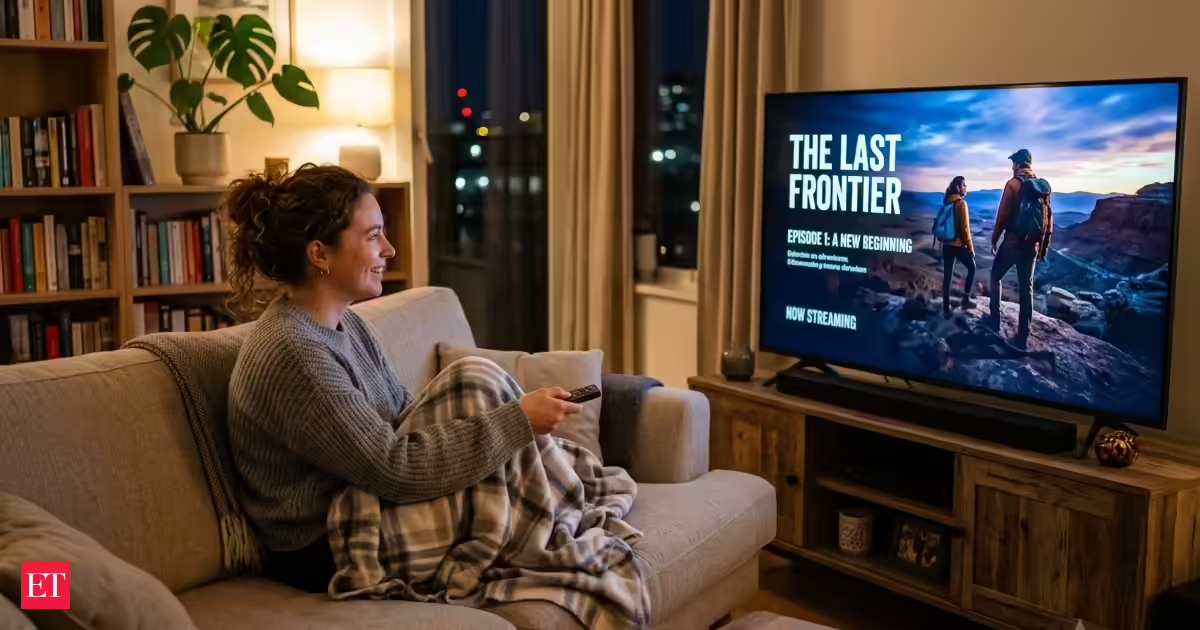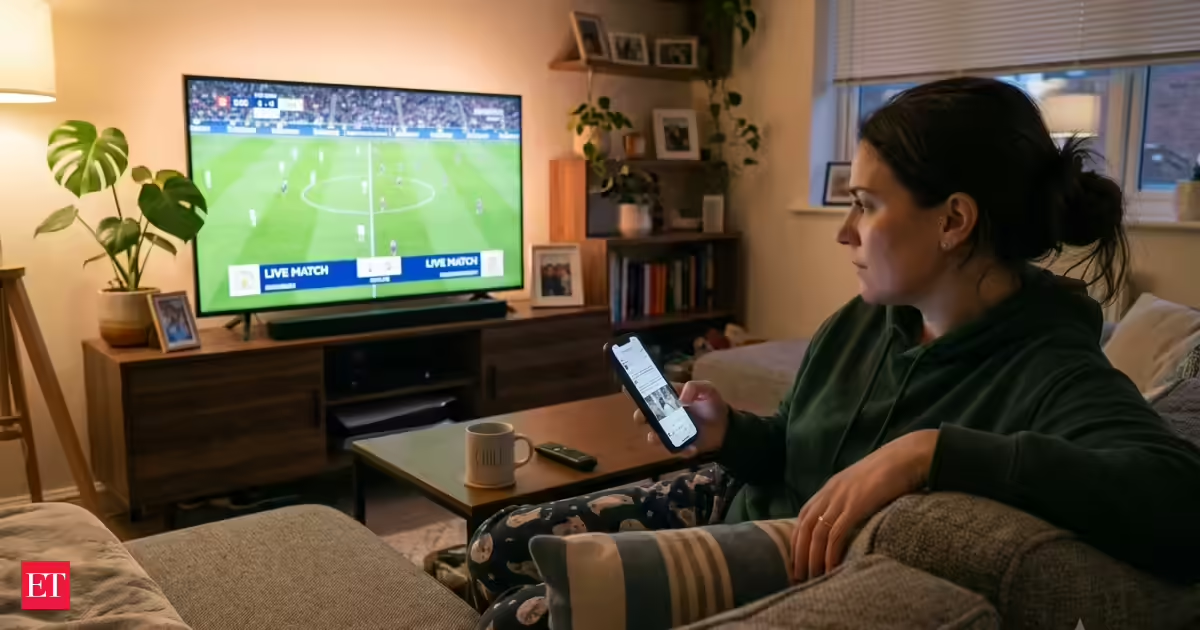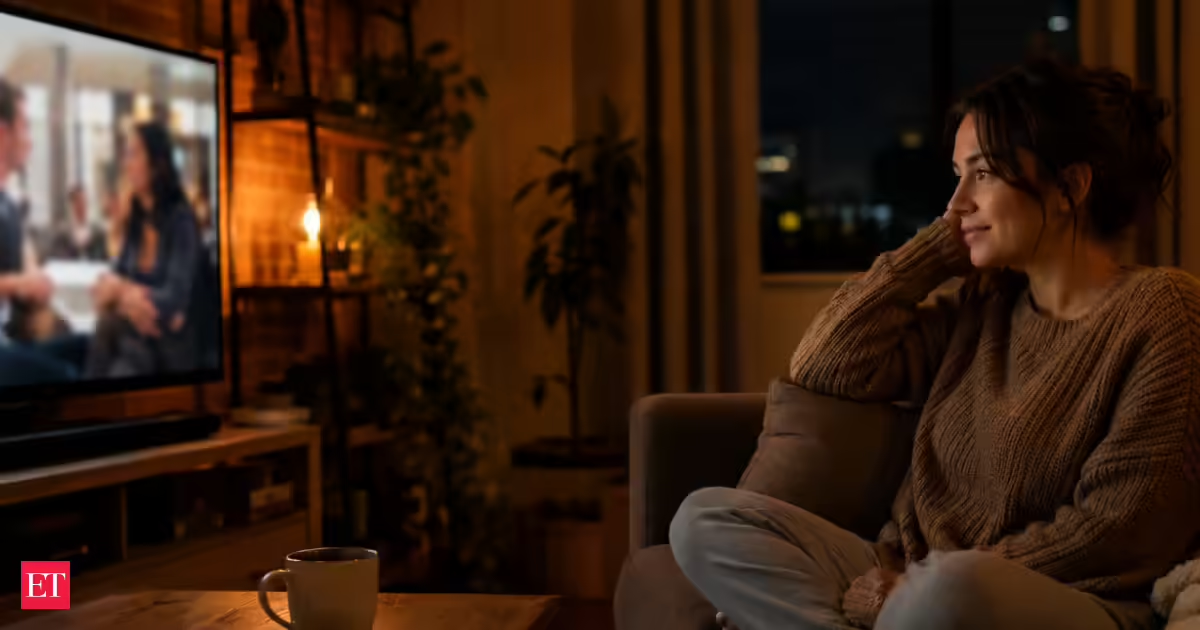
You walk into an empty apartment, drop your keys, and grab the remote before you even take off your shoes. The TV turns on some familiar show, perhaps one you’ve seen before, and suddenly the silence isn’t quite so loud. If this sounds like you, you are not alone. And what you’re doing, psychologists say, is not just a quirky habit. It may be one of the most quietly humane things you do all day.In a landmark study, ‘Social surrogacy: How favored television programs provide the experience of belonging,’ published in the Journal of Experimental Social Psychology, researchers Jaye L. Derrick, Shira Gabriel, and Kurt Hugenberg found that people actively seek out their favorite TV shows when they are lonely and, in turn, feel measurably less alone while they are watching. They called this the “social surrogacy hypothesis”: the idea that television can serve as a kind of emotional surrogate when no real human relationships are available.Your brain might not always know the differenceIn four studies with hundreds of participants, Derrick, Gabriel, and Hugenberg found that people whose sense of belonging had been experimentally threatened spent more time mentally ruminating on their favorite TV shows than on shows they passively watched. Just thinking about a favorite show helped people buffer against drops in self-esteem and mood even after social rejection. In other words, the comfort was not imaginary. It could be measured.This goes much deeper, into the psychology of humans. According to ‘The need to belong: Desire for interpersonal attachments as a fundamental human motivation,’ a foundational paper published in Psychological Bulletin by Roy F. Baumeister of Case Western Reserve University and Mark R. Leary of Wake Forest University, the need to belong is one of the most powerful and basic of human motivators. Baumeister and Leary argued that people are wired to seek frequent, positive social connections and that the psychological toll is real when those connections are missing. They discovered that social isolation is nearly incompatible with sustained well-being.That’s the sweet spot for the TV. It is not just noise. It is a social world of alternatives.When the room feels too empty, the TV fills the silence. Image Credits: ChatGPTThe voices in the roomThis is what makes it more interesting than just a distraction. According to research by Wendi L. Gardner and Megan L. Knowles, published in the paper ‘Love makes you real: Favorite television characters are perceived as 'real' in a social facilitation paradigm’ in the journal Social Cognition, people unconsciously process their favorite TV characters with the same cognitive mechanisms they use for real people. In a social facilitation paradigm, a well-established experimental setup that tests whether the presence of others changes our behavior, beloved TV characters had the same effects as actual human observers. The brain in some way sees a face on a screen that we know well as a real social entity.And that’s important because it tells us why background TV is so different from, say, running a fan. It's not ambient sound. It's a background company.The millennial experienceBut for a generation that grew up in the midst of an epidemic of loneliness, and then spent time in a pandemic where physical isolation was the law, this phenomenon hits differently. For the first time in history, millennials and young adults are now living alone at record rates. U.S. Census data shows that the number of single-person households in America has nearly tripled since the 1960s. The social networks that used to connect people, such as multigenerational households, neighborhood communities, and stable long-term workplaces, have been steadily eroded.Streaming took care of that. And with it, the parasocial relationship: that one-sided bond you develop with a TV character who has no idea you exist but somehow still makes you feel less alone.It's not the show they're watching. It's the feeling of not being the only one in the room. Image Credits: ChatGPTIs it healthy?That's where it gets nuanced. Researchers are cautious not to characterize TV-as-companion as either good or bad. As Jaye Derrick points out in the University at Buffalo’s coverage of her research, social surrogacy on television can be a real source of comfort for people who face physical or environmental obstacles to in-person interaction. But it can also become a surrogate that quietly discourages people from investing in the more difficult, more rewarding work of authentic relationships.The difference appears to be consciousness. Turning on Friends when you’re tired after a long day isn’t the same as structuring your evenings around imaginary company because real connection feels too hard or too far away. The first is a psychological comfort mechanism. The second may disguise instead of relieve isolation.What the remote control really meansTurning on the TV in an empty house isn’t so much a sign of loneliness as it is a sign of being human. That’s not something technology invented: the need to feel surrounded by familiar voices, familiar faces, familiar rhythms. Technology learned to serve that.Your hand reaches for that remote. Your brain reaches for belonging, automatically. Instinctively, almost before you realize you’re doing it. That understanding might be the first step in making sure the shows you put on fill the gap, not hide it.
Psychology suggests people who keep the TV on in an empty house aren't simply avoiding silence; familiar voices can provide a sense of social presence that helps reduce feelings of isolation
Discover how watching familiar TV shows can alleviate feelings of loneliness and provide a sense of social presence. Learn about the psychological effects of background TV and its role in human connection.
863 words~4 min read