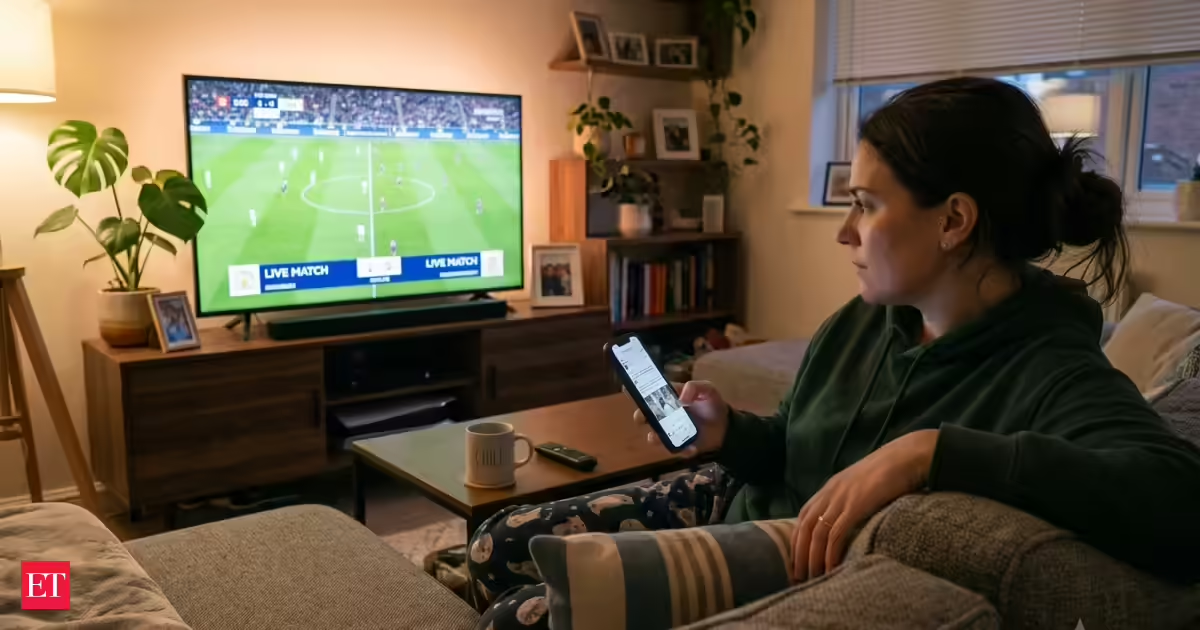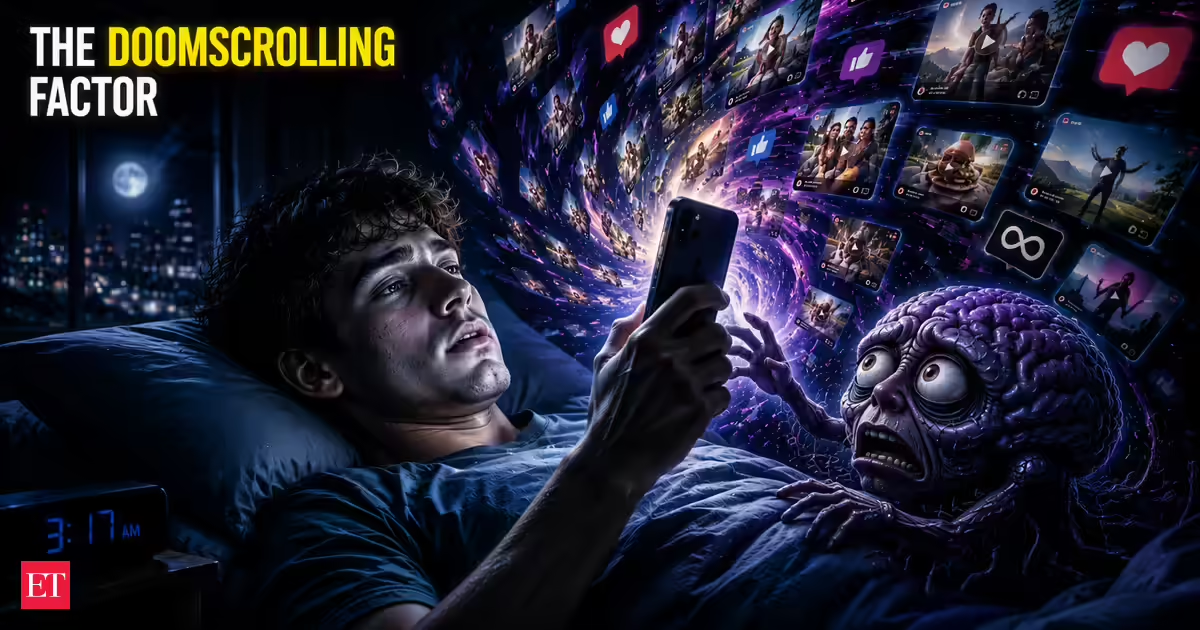
For many adults, dinner no longer starts with food. It starts with a remote control. They sit down with a meal, turn on the television and open a streaming app. Then something interesting happens. Five minutes pass. Ten minutes pass. They scroll endlessly through dozens of options but still cannot decide what to watch. Sometimes the meal is finished before they even choose something. At first glance, this may seem silly or indecisive. But psychology suggests something much deeper is happening. People are often not looking for entertainment. They are looking for emotional comfort after a mentally exhausting day. Several psychological theories help explain why this habit has become increasingly common.Choice Overload Is Quietly Exhausting The BrainOne of the biggest explanations comes from Choice Overload Theory. Humans enjoy having options, but only to a certain point. Too many choices can overwhelm the brain instead of empowering it. Research from Columbia University has explored how excessive choices can reduce satisfaction and increase indecision. Streaming platforms now offer thousands of possibilities. The brain suddenly has to answer multiple questions. Should it be funny? Should it be relaxing? Should it be educational? Should it be familiar?What was once entertainment becomes another decision-making task.Decision Fatigue Makes Even Small Choices Feel DifficultBy evening, the brain is already tired. Psychologists call this decision fatigue. Throughout the day, people make hundreds of decisions. They manage work, family, finances, emails, schedules and responsibilities. By dinnertime, their mental energy is depleted. Research from Columbia University has repeatedly explored how prolonged decision-making can reduce confidence and increase avoidance behaviors. This is why choosing a show suddenly feels harder than it should. The brain quietly says:Psychology says people who start the TV while having a meal but can't decide what to watch are not looking for entertainment, they want comfort and familiarity"I don't want another responsibility."You Might Also Like:People Are Often Searching For A Mood, Not A ProgramAnother explanation comes from affect regulation, which refers to how people manage emotions. Many adults do not know exactly what they want to watch because they are not searching for content. They are searching for a feeling. The brain may be asking:Do I want comfort?Do I want laughter?Do I want to escape reality?Do I want background noise?Do I want something familiar?Modern example: Many people repeatedly rewatch shows like Friends, The Office or Brooklyn Nine-Nine because predictability often feels emotionally rewarding after stressful days. The show becomes less important than the feeling it creates.The Paradox Of Choice Makes Commitment DifficultPsychologist Barry Schwartz introduced the concept of The Paradox of Choice. The theory suggests that more options can create more anxiety. Every choice automatically eliminates countless alternatives. The brain starts wondering:"What if another show would have been better?" As a result, people delay making any decision at all.You Might Also Like:Modern streaming services unintentionally encourage this behavior because recommendations never end. The brain remains stuck in comparison mode.Background Noise Has Become A Source Of Emotional SafetyMany adults no longer use television solely for entertainment. They use it as an emotional companion.Psychologists sometimes connect this to ambient belonging, where background voices reduce feelings of loneliness. Even when people are eating alone, familiar voices can make environments feel warmer. For example: People often turn on cooking videos, podcasts or familiar sitcoms without actively paying attention. The goal is not immersion. The goal is comfort.Social Media Has Shortened Attention SpansDigital culture has also changed expectations. Short-form videos on TikTok, Instagram Reels and YouTube Shorts constantly train the brain to expect rapid novelty. Research from University College London has explored how digital habits influence attention and information consumption. Long-form content now requires more commitment. The brain unconsciously resists making that commitment. Scrolling becomes easier than choosing.The Meal Itself Has Become A Transition RitualFor many adults, dinner is no longer just about eating. It marks the transition between productivity and relaxation. Psychologists call these decompression rituals. Small routines help the brain switch states.Examples include:Changing clothesTaking a showerSitting on the couchTurning on the TVThe confusion about what to watch is sometimes evidence that the brain has not fully left work mode yet. It is still unwinding.Why This Habit Is More About Emotional Recovery Than EntertainmentPsychology suggests people are rarely struggling to choose a television show. They are trying to recover from a mentally demanding world. The endless scrolling is often a search for peace rather than content. Of course, occasionally taking ten minutes to choose a show is perfectly normal. But if it becomes a nightly routine, simplifying choices can help. Many people benefit from creating a small list of favorite programs instead of relying on endless browsing.Sometimes, the brain does not need more options. It needs fewer decisions. Because after an exhausting day, the greatest luxury may not be entertainment at all. It may simply be mental relief.FAQsWhy do people spend more time choosing what to watch than actually watching?Psychology suggests choice overload and decision fatigue make even simple entertainment decisions feel exhausting.Why do people rewatch the same TV shows repeatedly?Familiar shows provide emotional comfort, predictability and reduce mental effort.
Psychology says people who start the TV while having a meal but can't decide what to watch are not looking for entertainment, they want comfort and familiarity
Psychology suggests that people are rarely just struggling to pick a television show. More often, they are trying to decompress after navigating a mentally exhausting world. The endless scrolling is often less about finding something to watch and more about searching for a moment of comfort, calm, and mental relief.
TL;DRAI
People scrolling endlessly on streaming during meals seek emotional comfort, not entertainment—driven by choice overload and decision fatigue. For platforms, the lesson is clear: mood-based curation with fewer options increases engagement more than catalog expansion.
839 words~4 min read