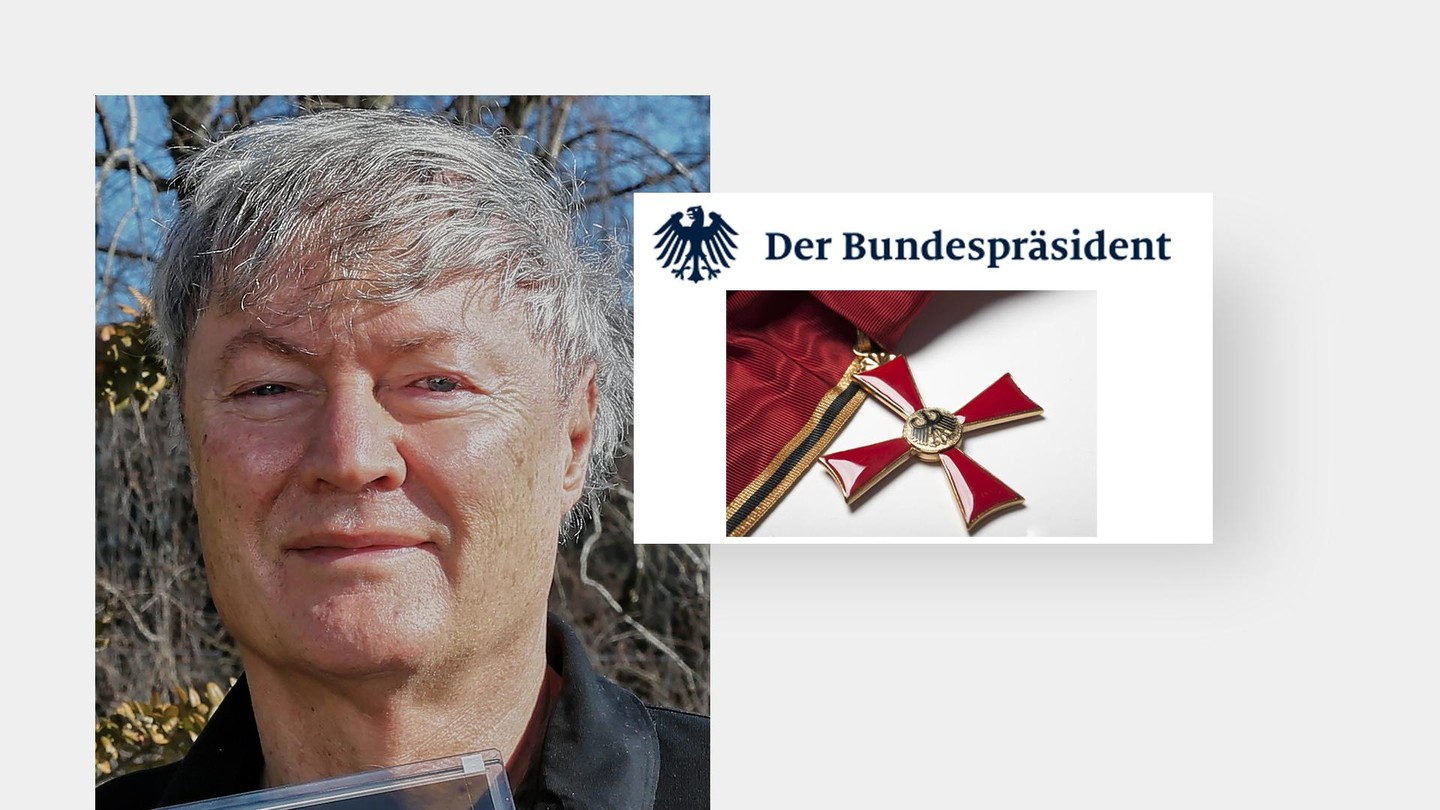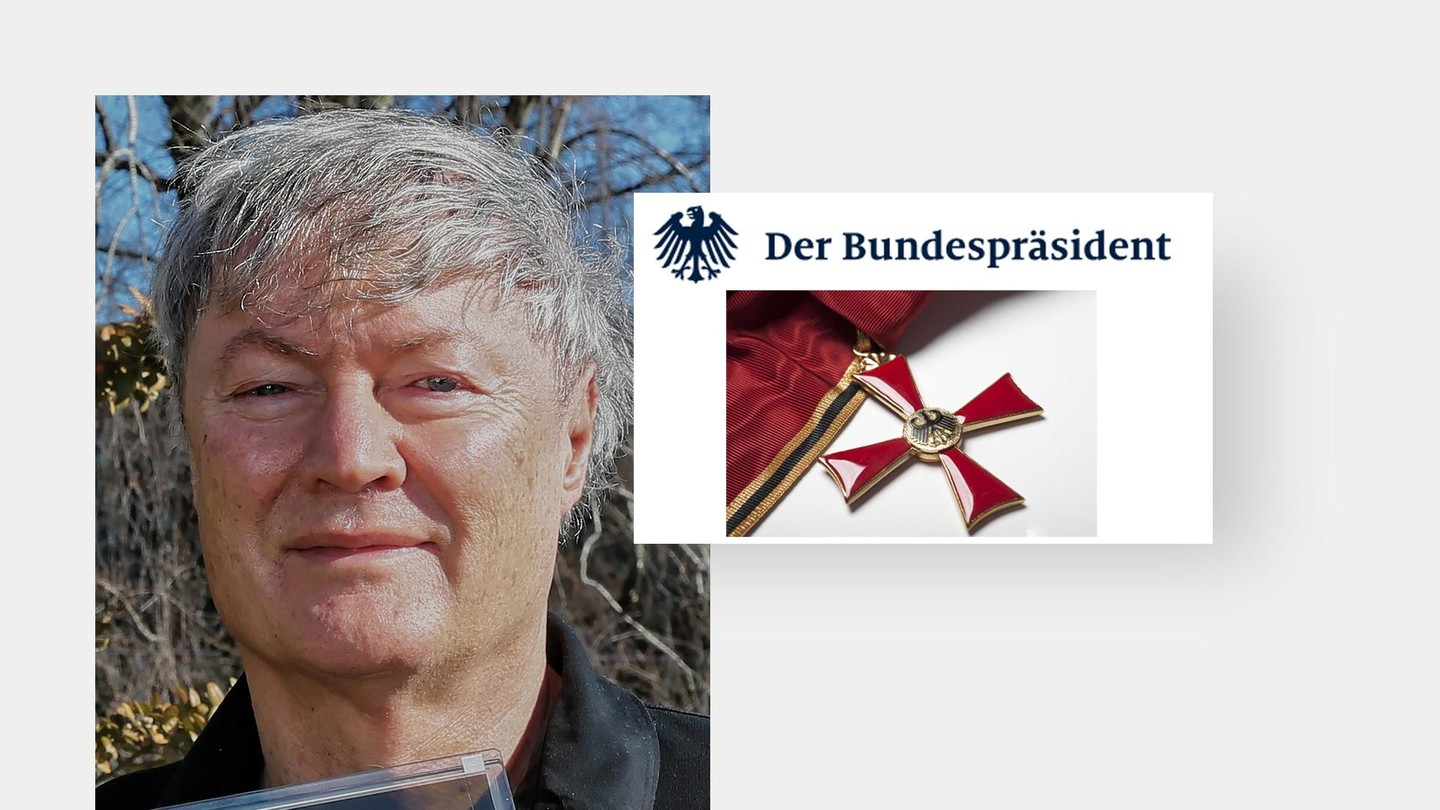
EPFL Professor Michael Grätzel has received the Grand Cross of Merit with Star of the Order of Merit of the Federal Republic of Germany, one of the country’s highest civilian honors, in recognition of his outstanding scientific achievements and international impact.Michael Grätzel, Professor at EPFL’s School of Basic Sciences and head of the Laboratory of Photonics and Interfaces (LPI), has received the Grand Cross of Merit with Star of the Order of Merit of the Federal Republic of Germany. The decoration was presented by German President Frank Walter Steinmeier during a ceremony held at the Presidential residence in Berlin on 31 May 2026.The Grand Cross of Merit with Star is among Germany’s highest civilian distinctions. It recognizes individuals whose contributions have had an exceptional impact on society, science, culture, public service, or international cooperation.The award follows another distinction bestowed on the same day, when Grätzel was formally admitted to the Order Pour le Mérite for Sciences and Arts during a separate ceremony in Berlin. Membership of the historic order is reserved for individuals who have made outstanding contributions to science, the humanities, and the arts.About Professor Michael GrätzelProfessor Grätzel is world-renowned for inventing the first dye-sensitive solar cell in 1991 with chemist Brian O’Reagan. Just as plants use chlorophyll to turn sunlight into energy, the “Grätzel cells” use industrial dyes, pigments or quantum dots stimulated by sunlight to transmit an electrical charge. Within fifteen years of the original invention, Grätzel evolved the cells into an applied technology that is now being developed in universities and companies worldwide.Having discovered molecular photovoltaics, Grätzel’s research has focused on designing mesoscopic photosystems based on molecular light harvesters that convert light very efficiently to electricity. He is credited with moving the photovoltaic field beyond the principle of light absorption via diodes to the molecular level. Recently his research engendered a second revolution in photovoltaics prompting the advent of perovskite solar cells. In just a single decade, their power-conversion efficiency increased from 3% to over 26%, rivaling and even exceeding the performance of conventional photovoltaics.Grätzel also applied his innovative mesoscopic design concept to enhance the power of lithium-ion batteries and to create photoelectrochemical cells that efficiently generate chemical fuels from sunlight, opening a new path to provide future sources of renewable energy that can be stored.Grätzel currently directs EPFL’s Laboratory of Photonics and Interfaces within the Institute of Chemical Sciences and Engineering (ISIC). His more than 1,800 publications have received over 500,000 citations and have an h-index of 321. In 2019, Stanford University ranked Grätzel first of 100,000 top scientists across all fields. According to the Web of Science, he is currently the most highly cited chemist in the world.Read more about Professor Michael Grätzel
Michael Grätzel receives Germany's Grand Cross of Merit with Star
EPFL Professor Michael Grätzel has received the Grand Cross of Merit with Star of the Order of Merit of the Federal Republic of Germany, one of the country’s highest civilian honors, in recognition of his outstanding scientific achievements and international impact.
TL;DRAI
Grätzel (EPFL) receives Germany's highest honor for dye-sensitized solar cells and perovskite breakthrough reaching 26% efficiency. Clean-energy research momentum signals European infrastructure shift reshaping enterprise data center sustainability and energy procurement strategy.
449 words~2 min read