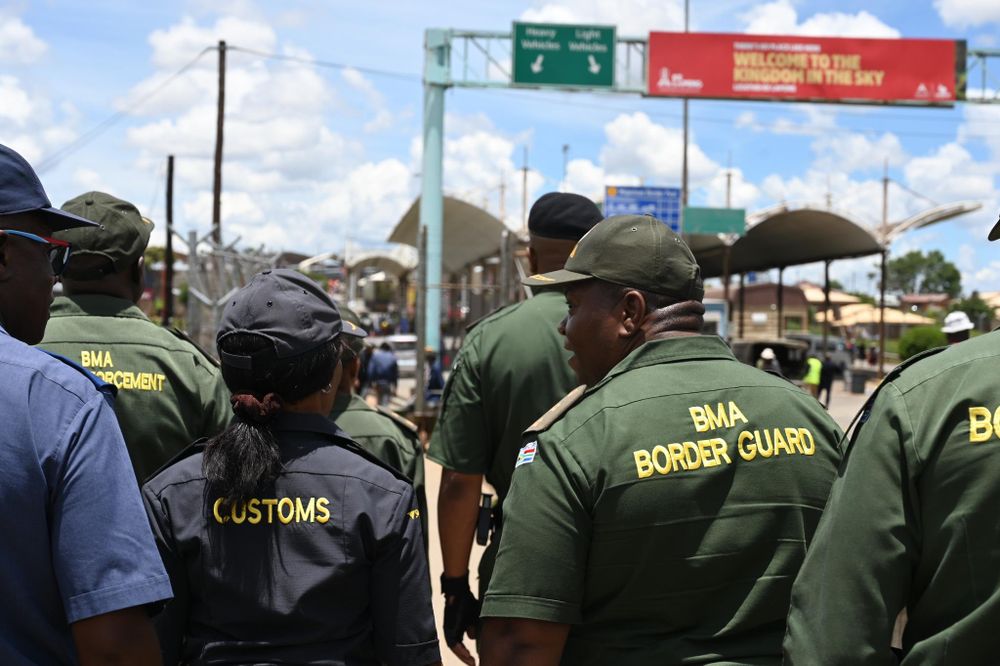
Few issues in South Africa generate as much heat and as little light as immigration. In the present climate a foreign national is the all-purpose explanation for unemployment, crime and a broken clinic queue. It’s a simple story: if we just closed the border, everything would be fine.But here’s the problem. While we are arguing about building higher fences, the rest of the continent is building a highway. The African Continental Free Trade Area (AfCFTA) is not a distant dream. It is here. It brings together 1.4-billion people and a combined GDP of more than $3-trillion. For South Africa, the continent’s most industrialised economy, it should be a huge opportunity. Our banks, retailers and logistics firms are poised to expand. Yet our immigration policy is still stuck in a fantasy that we can be an economic superpower while pretending we are an island.Goods do not move across borders by themselves. They are moved by people. Entrepreneurs, engineers, truck drivers, IT specialists and investors. You cannot have the AfCFTA’s free movement of goods without a parallel need for a managed movement of people. The EU didn’t start with open borders; it started with coal and steel. But as the economy integrated labour mobility followed. It turned out that you can’t build a continental supply chain if every time a specialist crosses a border they are treated like a criminal.South Africa wants the benefits of selling our products in Lusaka, Nairobi and Accra. But we are terrified of the mechanic, the nurse or the small-scale trader coming in the opposite direction. This is not just hypocritical; it is self-defeating.Let’s clear the air. According to demographic estimates South Africa’s foreign-born population is about 2.4-million out of 62-million – a relatively small proportion. The wild claims of 15-million undocumented migrants are not supported by any credible evidence. You would see it in the schools, the hospitals and the housing data. You don’t.The EU didn’t start with open borders; it started with coal and steel. But as the economy integrated labour mobility followed. It turned out that you can’t build a continental supply chain if every time a specialist crosses a border they are treated like a criminal.Does that mean we have no governance problem? Of course not. Our borders are porous, our permit system is a disaster and corruption at home affairs is endemic. But the solution to a broken home affairs department is not xenophobia, but a capable state.We must reject these two extremes. The first is xenophobic populism (dressed in ethnocentrism) ― the easy politics of blaming the outsider for Eskom’s failure or our 32.9% unemployment rate. That path doesn’t fix the economy; it just burns our standing in the region. The second is a naive open border idealism that ignores the very real pressures on our labour market, especially for young South Africans who can’t find work.We need managed migration. That means secure borders, digital systems and harsh penalties for employers who exploit undocumented workers. It means knowing who is here and why. But it also means preparing for the future.Long-term solutionThe long-term solution to unmanaged migration is not a wall. It is a prosperous, stable, integrated Africa. If the AfCFTA succeeds ― if we actually build regional value chains and create jobs in neighbouring countries ― people will move by choice, not desperation. The economic push factors that drive irregular migration will shrink.But that requires us to act like leaders, not victims. We cannot demand access to African markets while denying African professionals access to ours. That is not sovereignty; it is short-sightedness.South Africa has a choice. We can retreat behind a laager, blame the foreigner for our own governance failures, and slowly become irrelevant as the rest of Africa trades around us. Or we can build a state that is strong enough to manage migration, confident enough to embrace integration and smart enough to turn the AfCFTA into jobs for South Africans.Compassion and control are not opposites. A capable democracy delivers both. But that requires growing up and looking beyond the border.• Maxon, a chartered development finance analyst, is a member of the national leadership collective of Rise Mzansi.
CHRIS MAXON | SA’s immigration debate is stuck in the past
We want to build a border wall, but Africa is constructing a highway
690 words~3 min read