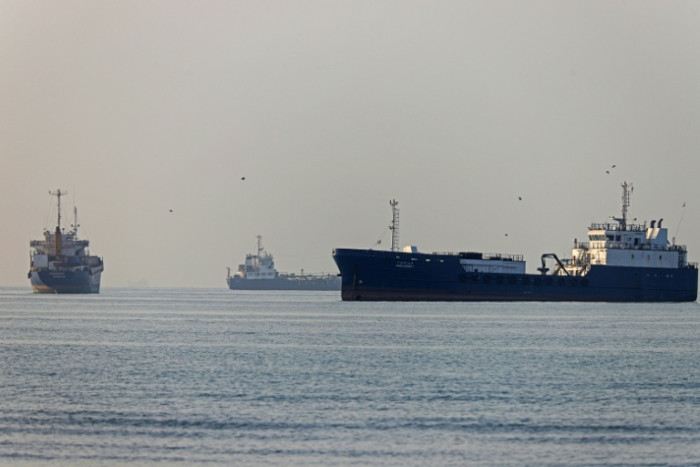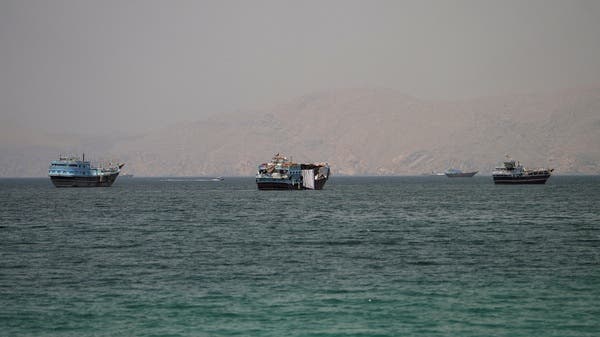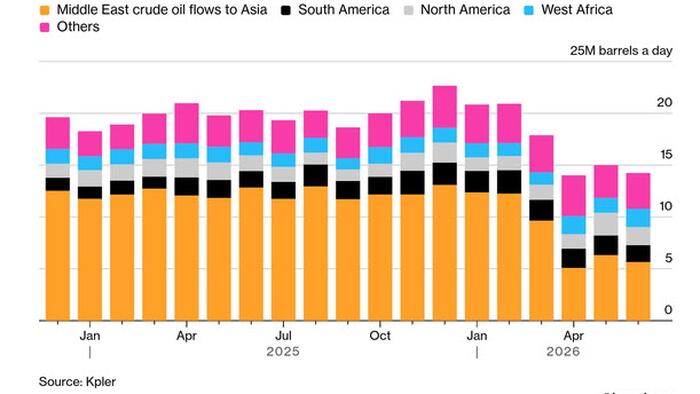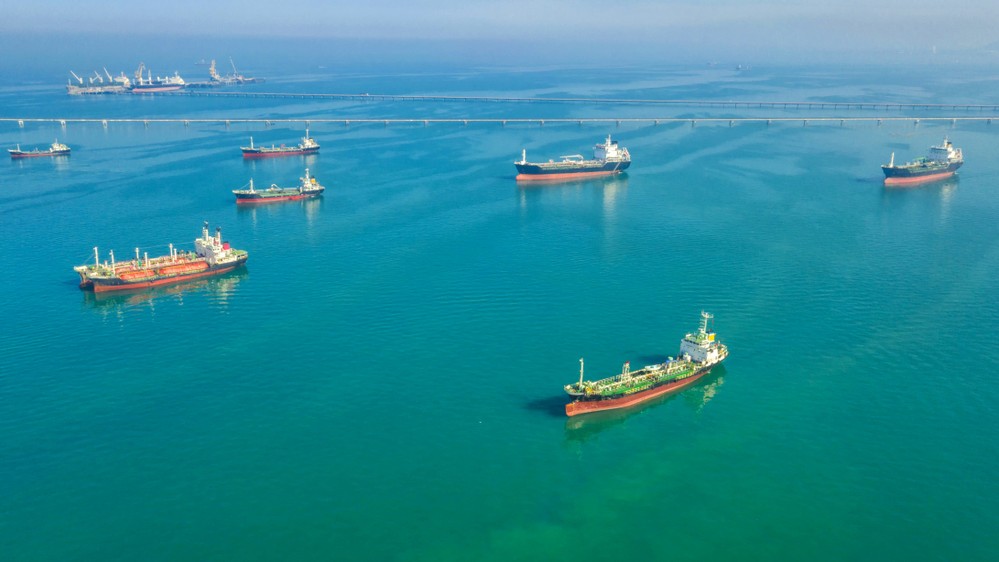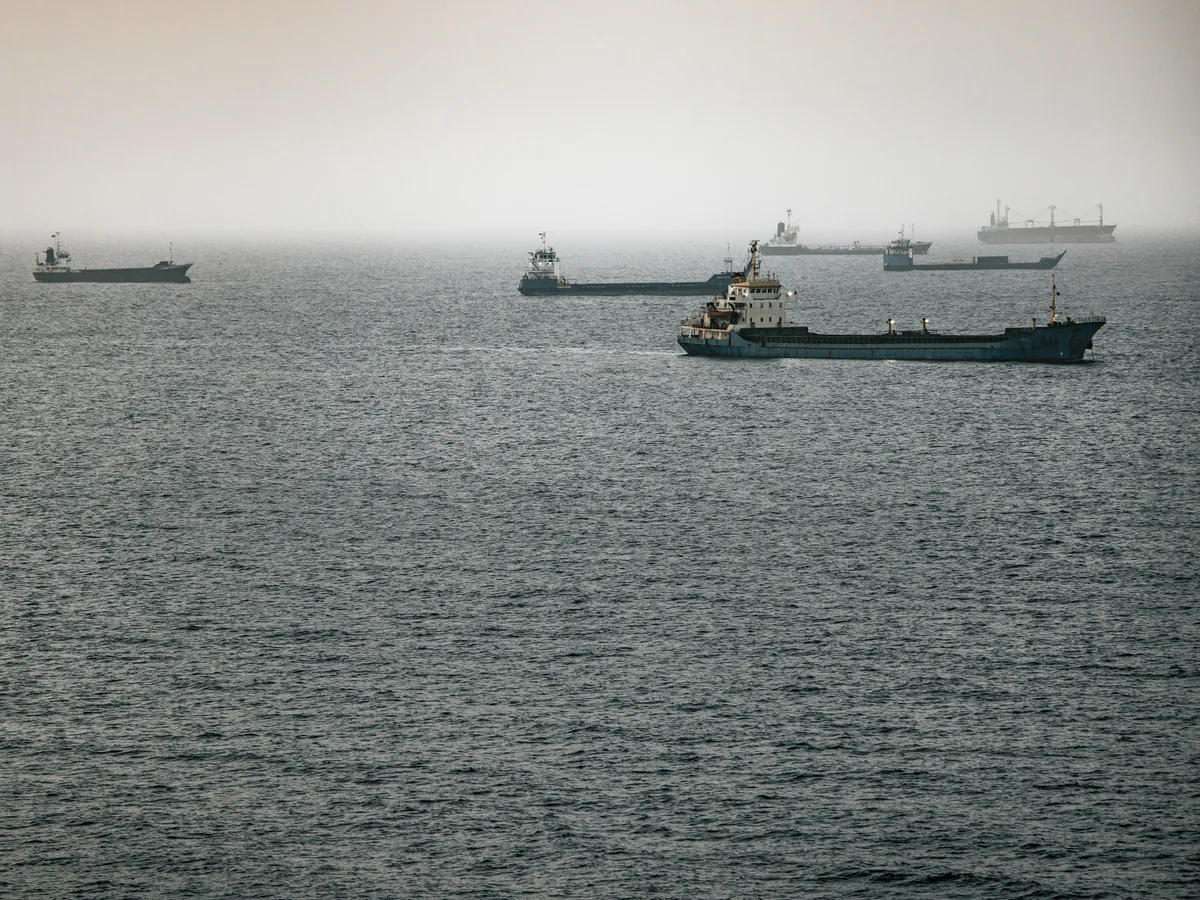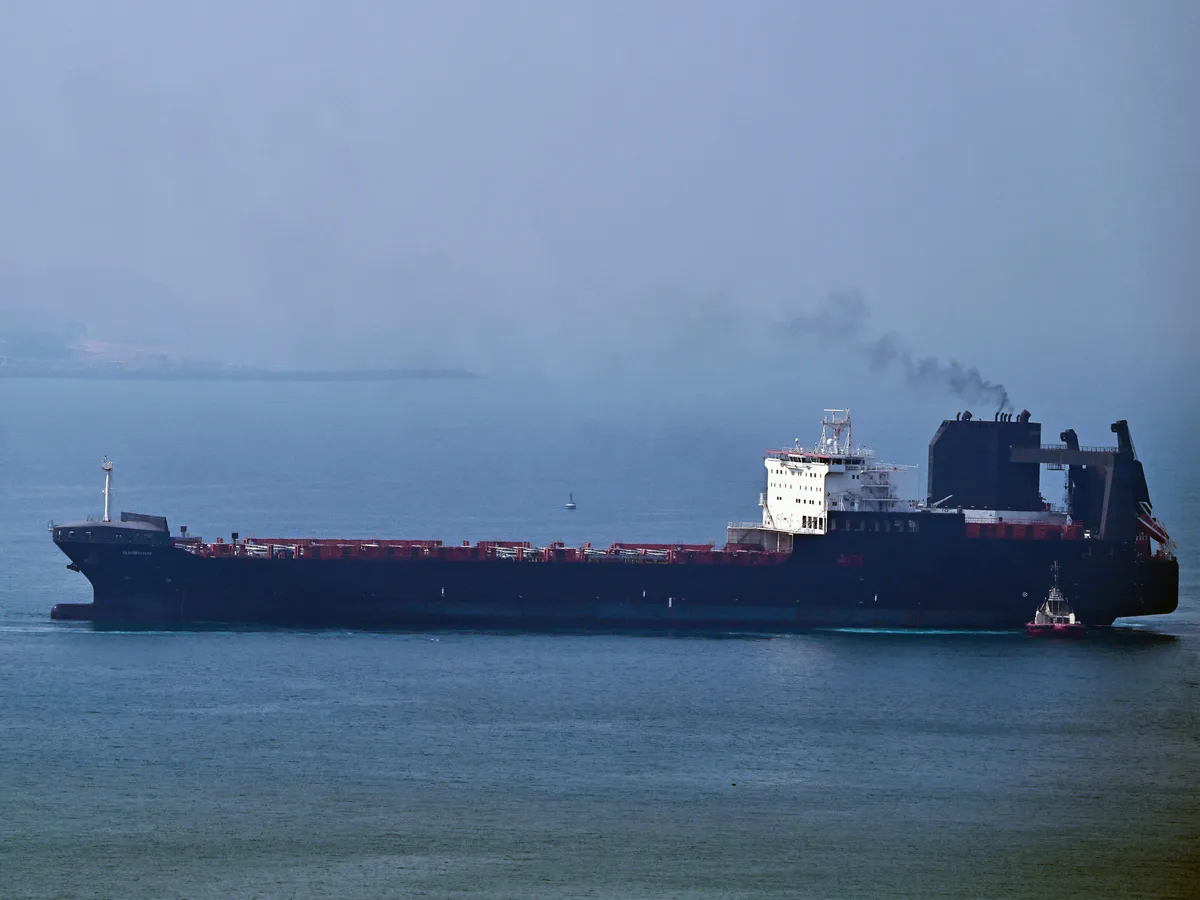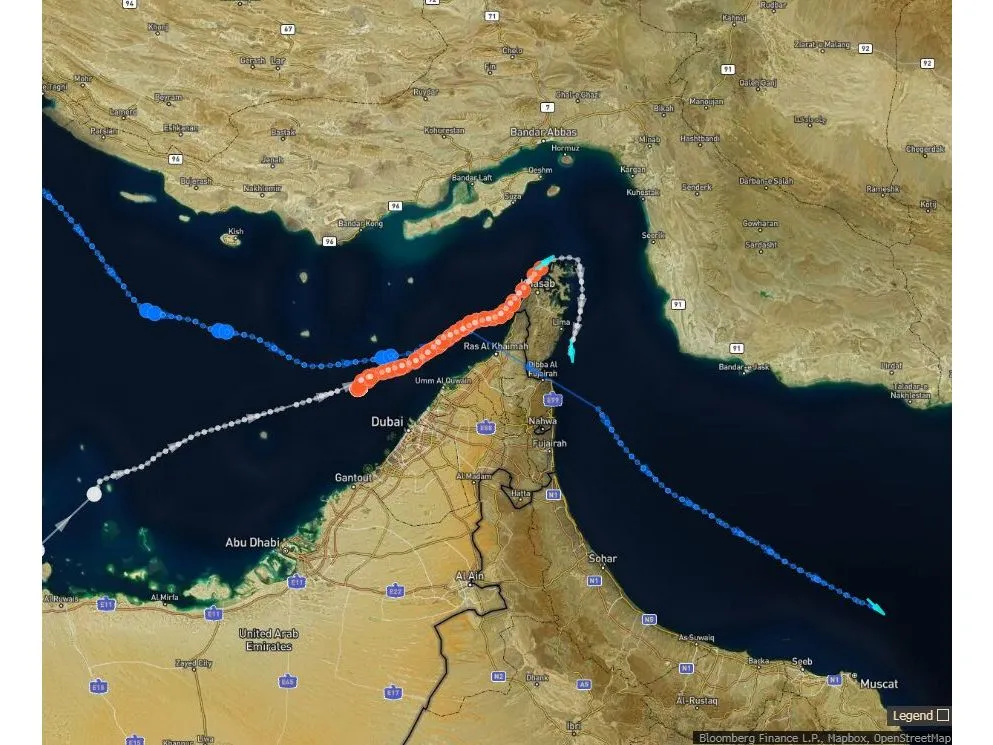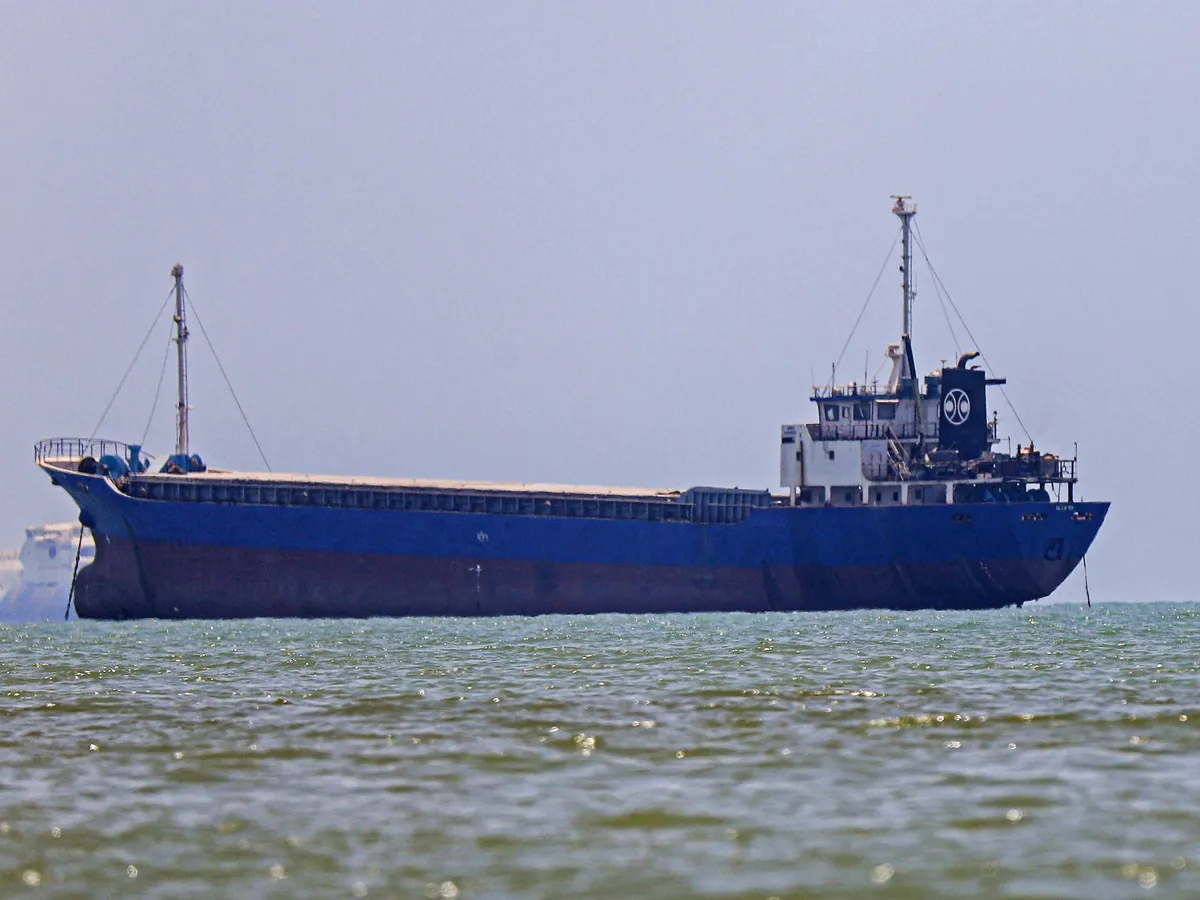
Skip to Content News Archives Economy Energy Oil & Gas Renewables Electric Vehicles Mining Commodities Agriculture Real Estate Mortgages Mortgage Rates Finance Banking Insurance Fintech Cryptocurrency Work Wealth Smart Money Wealth Management Investor Personal Finance Family Finance Retirement Taxes High Net Worth FP Comment Executive Women Puzzmo Newsletters Financial Times Business Essentials More Innovation Information Technology FP500 Podcasts Small Business Lives Told Tails Told Shopping Financial Post Store Obituaries Place a Notice Advertising Advertising With Us Advertising Solutions Postmedia Ad Manager Sponsorship Requests Classifieds Place a Classifieds ad Working Profile Settings My Subscriptions Saved Articles My Offers Newsletters Customer Service FAQ News Economy Energy Mining Real Estate Finance Work Wealth Investor FP Comment Executive Women Puzzmo Newsletters Financial Times Business Essentials HomeOil & GasNewsStranded oil starts streaming out of Hormuz as deal takes effectTrade associations warned that their members needed more clarity on mines and other practicalitiesAuthor of the article:Last updated Jun 18, 2026 You can save this article by registering for free here. Or sign-in if you have an account.The emergence of three Saudi supertankers that had been stuck inside the Persian Gulf since the start of the war suggests a potential shift in traffic. Photo by AMIRHOSSEIN KHORGOOEI/ISNA/AFP via Getty ImagesA growing stream of stranded oil is making its way out of the Strait of Hormuz while Kuwait said it will start ramping up production, as the United States-Iran interim peace deal sparks a flurry of activity that is already pushing Middle East flows toward pre-war levels.Subscribe now to read the latest news in your city and across Canada.Exclusive articles from Barbara Shecter, Joe O'Connor, Gabriel Friedman, and others.Daily content from Financial Times, the world's leading global business publication.Unlimited online access to read articles from Financial Post, National Post and 15 news sites across Canada with one account.National Post ePaper, an electronic replica of the print edition to view on any device, share and comment on.Daily puzzles, including the New York Times Crossword.Subscribe now to read the latest news in your city and across Canada.Exclusive articles from Barbara Shecter, Joe O'Connor, Gabriel Friedman and others.Daily content from Financial Times, the world's leading global business publication.Unlimited online access to read articles from Financial Post, National Post and 15 news sites across Canada with one account.National Post ePaper, an electronic replica of the print edition to view on any device, share and comment on.Daily puzzles, including the New York Times Crossword.Create an account or sign in to continue with your reading experience.Access articles from across Canada with one account.Share your thoughts and join the conversation in the comments.Enjoy additional articles per month.Get email updates from your favourite authors.Create an account or sign in to continue with your reading experience.Access articles from across Canada with one accountShare your thoughts and join the conversation in the commentsEnjoy additional articles per monthGet email updates from your favourite authorsSign In or Create an AccountorShips carrying nearly 10 million barrels of oil have either emerged outside the strait or are sailing through, including the first Saudi-owned tankers since the start of the war. Qatar sent a cargo of liquefied natural gas through the waterway with its signal on, while another LNG vessel last seen outside the Persian Gulf appeared at a Qatari berth. Five Iran-linked ships have also entered the waterway, according to vessel tracking data compiled by Bloomberg.When combined with millions of barrels already flowing through bypass pipelines, Thursday’s activity in Hormuz would put the shipments from the Middle East as close to normal levels as they have been since the war began. It’s not clear if elevated volumes can be sustained or will be a one-off gush, but more ships are already attempting to leave and others are expected to do so in the coming days. The number could be even higher if some vessels have moved through without signals on.Breaking business news, incisive views, must-reads and market signals. Weekdays by 9 a.m.By signing up you consent to receive the above newsletter from Postmedia Network Inc.A welcome email is on its way. If you don't see it, please check your junk folder.The next issue of Posthaste will soon be in your inbox.We encountered an issue signing you up. Please try againThe exits represent the first step in what would be a months-long process to unwind the effects on global energy markets from the near-closure of Strait of Hormuz, through which a fifth of the world’s oil and natural gas typically flows. There were already signs that Middle Eastern producers are moving to restart shuttered output, as Kuwait said it’s started ramping up oil production.Crude futures tumbled to around US$77 a barrel, touching the lowest level since the earliest days of the war. Energy prices spiked at the start of the conflict as industry experts warned the world was facing the biggest supply shock in history. However, markets had retreated even before the peace deal as China reduced its imports and U.S. exports surged.In recent weeks, millions of barrels a day had already been transiting dark prior to the signing of the deal and Thursday’s increase in flows will mean that even more barrels from more than 100 stranded tankers inside the gulf are now gushing to markets.Speaking privately, one major western tanker owner said they expected their ships to start moving out in the coming days.Dozens of tankers have been gathering outside the strait in anticipation of a reopening, and on Thursday at least four Saudi oil supertankers that had been idling in the Indian Ocean for weeks set sail toward the Gulf of Oman.Still, some parts of the shipping and oil industries remained cautious on Thursday, warning that it’s still not clear how traffic would be managed and when or how any mines in the strait would be cleared. While both sides have said that the waterway would be fully opened without tolls for the 60 days covered in the memorandum of understanding between the U.S. and Iran, Tehran has repeatedly indicated its intention to retain some level of management over the strait.For now, the exiting traffic is focused on laden ships that had been stranded for months. Once those have cleared, the key question will be whether traders start booking new cargoes, and whether owners are willing to send empty vessels back into the Gulf. The majority of inward journeys on Thursday appeared linked to Iran, and several shipbrokers and owners said that there’s little sign of fresh cargoes being booked for loading yet.Trade associations warned that their members needed more clarity on mines and other practicalities, a stance that was echoed privately by several shipowners.Still, the emergence of three Saudi supertankers that had been stuck inside the Persian Gulf since the start of the war suggests a potential shift in traffic.The vessels, which turned on their signals in the Gulf of Oman on Thursday, are owned by Saudi Arabia’s Bahri, which is notable as it is one of the shippers that took a conservative approach through the war, even as a growing number of more risk-tolerant owners moved tankers through the strait under cover of darkness. Saudi Arabia is usually the world’s biggest crude exporter, and has managed to keep selling significant volumes by rerouting oil via pipeline to the Red Sea.A fourth supertanker carrying oil from the United Arab Emirates, a ship carrying Qatari liquefied natural gas and a Chinese fuel tanker were also seen crossing the strait with their signals on, while a second LNG tanker appeared off Qatar after last signalling outside the strait.Several Iranian ships, including two supertankers were making their way into Hormuz with their satellite signals on. Iran’s oil exports have been squeezed in recent weeks by the U.S. blockade of its ports, which Washington agreed to lift as part of the interim peace deal. More than 100 oil tankers were trapped inside the Persian Gulf prior to the signing of the interim peace deal. Photographer: Andreea Campeanu/Getty ImagesThe ships that transited Thursday with their signals on followed the northern corridor along Iran’s waters — one of two key routes that has emerged over the course of the conflict, with a number of dark transits in recent weeks having travelled a southern path that hugs the coast of Oman.“The central part of the Strait is mined and un-navigable, and only the inshore traffic zones close to Oman and Iran are reportedly free of mines,” shipowners trade group Bimco said in a statement on Thursday.Even though anticipation built up toward the agreement signing in recent days, a number of shipowners have said this week they were seeking clarity on how the reopening would work before deciding whether to sail through.The Joint Maritime Information Center, which liaises between merchant shipping and the military, earlier this week lowered its threat level for the Strait of Hormuz, and waters either side of it, from severe to substantial. It said at the time that overall risk has decreased due to the deal, which has created a more stable operating environment.Lloyd’s Market Association, which represents managing agents at Lloyd’s of London, expressed caution in a statement on Thursday, warning that the MoU doesn’t offer shipowners and their insurers the full assurance needed to restore traffic through Hormuz.“The main requirement for recovery is stability and certainty for shipowners and insurers,” it said. “It will take months for some sort of normality to return to international shipping with vessels in the wrong place and supply chains distorted.”Intertanko, the top trade group for tanker owners, said that a range of issues still need to be addressed before Hormuz can get back to normal. It also cited mine clearance, as well as the need for a “command-and-control” system to manage traffic.QatarEnergy and Bahri didn’t immediately respond to a request for comment on its ships.—With assistance from Julian Lee. Join the Conversation This website uses cookies to personalize your content (including ads), and allows us to analyze our traffic. Read more about cookies here. By continuing to use our site, you agree to our Terms of Use and Privacy Policy.
Stranded oil starts streaming out of Hormuz as deal takes effect
A growing stream of stranded oil is making its way out of the Strait of Hormuz as Kuwait said it will start ramping up production. Read on
1,665 words~8 min read