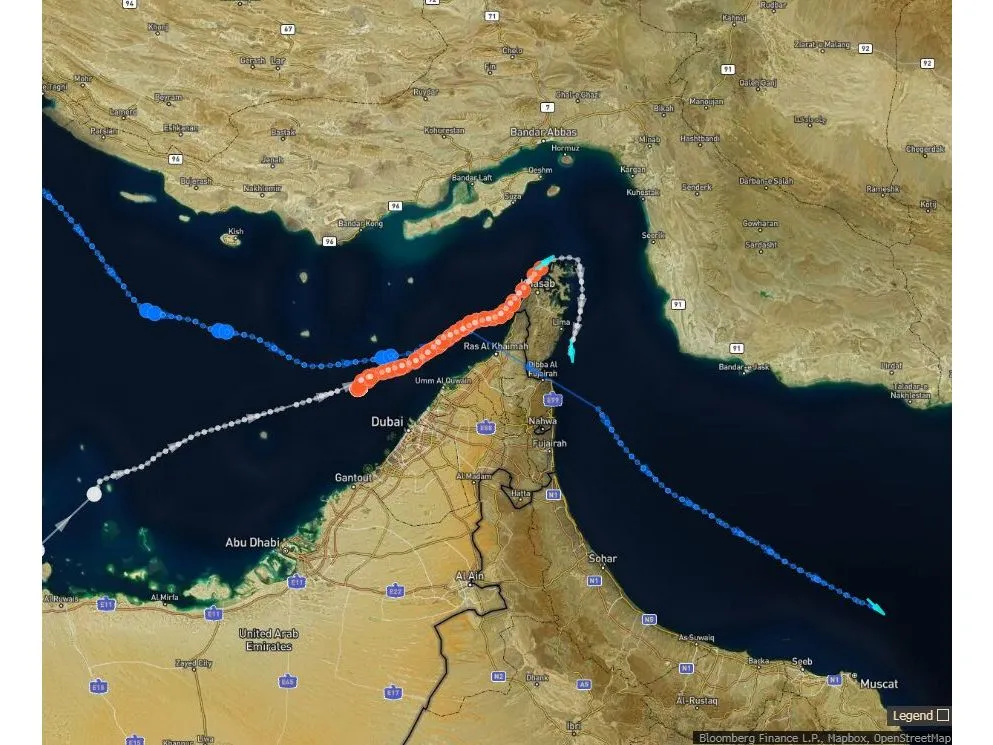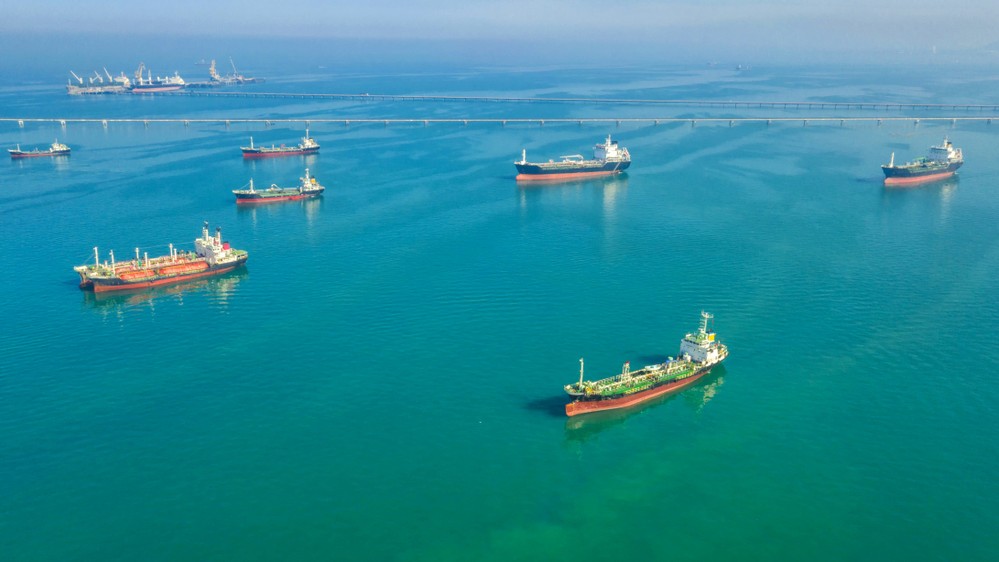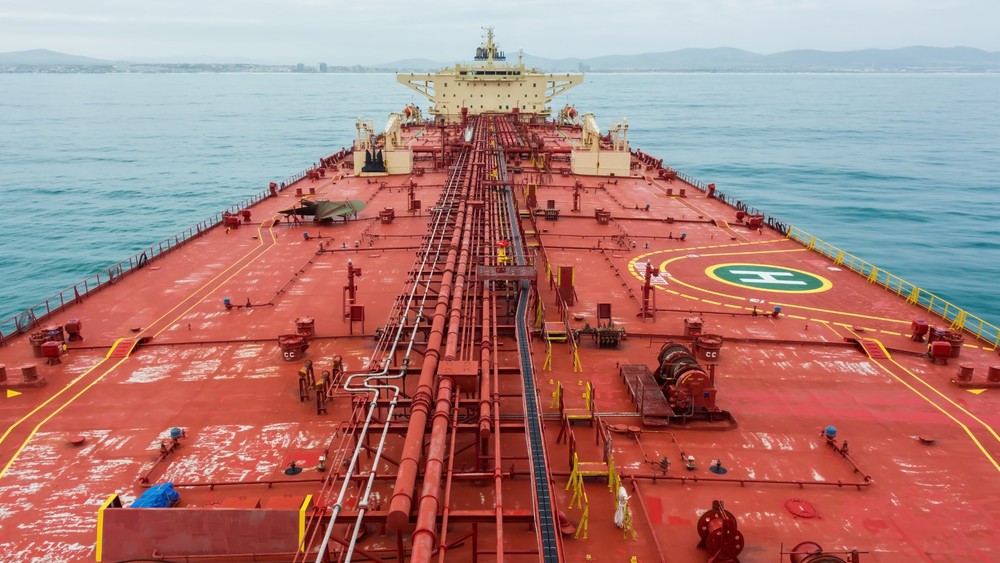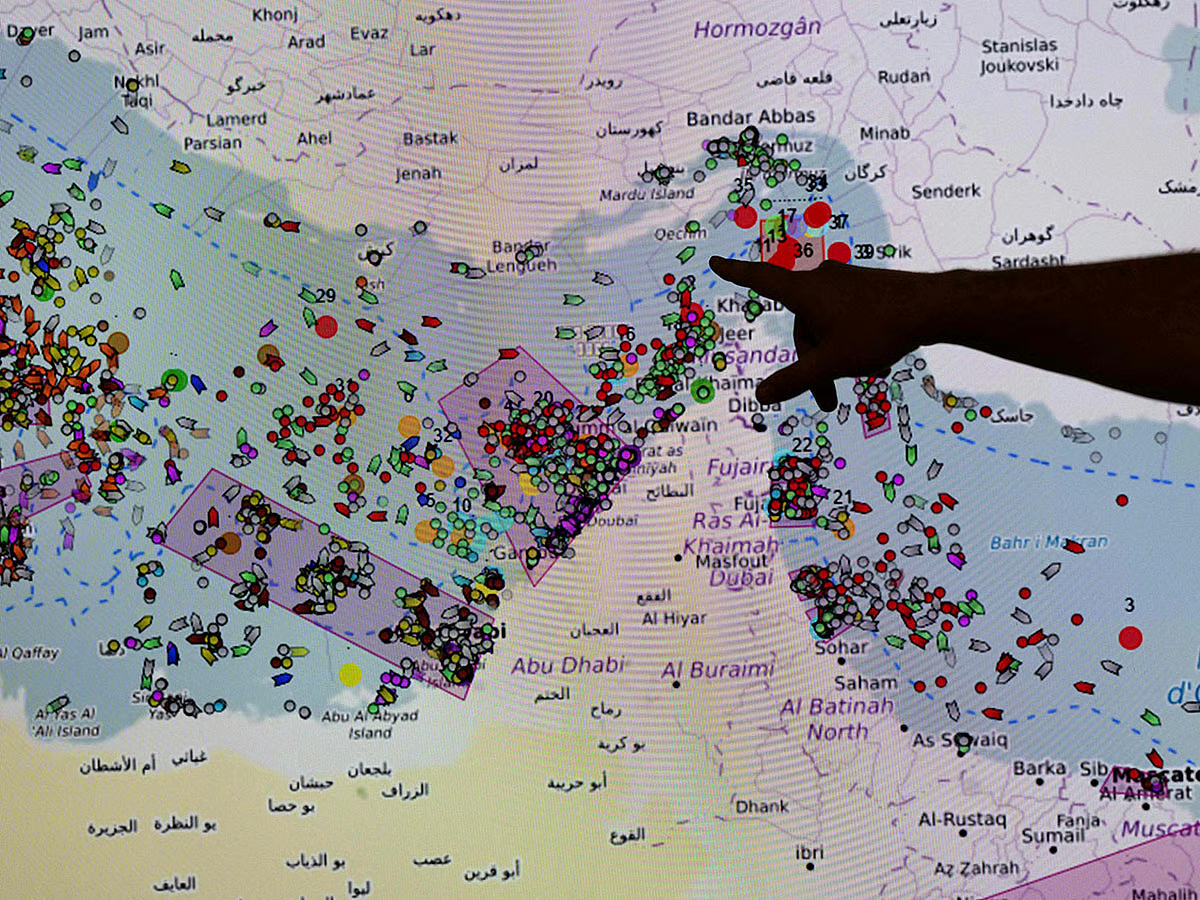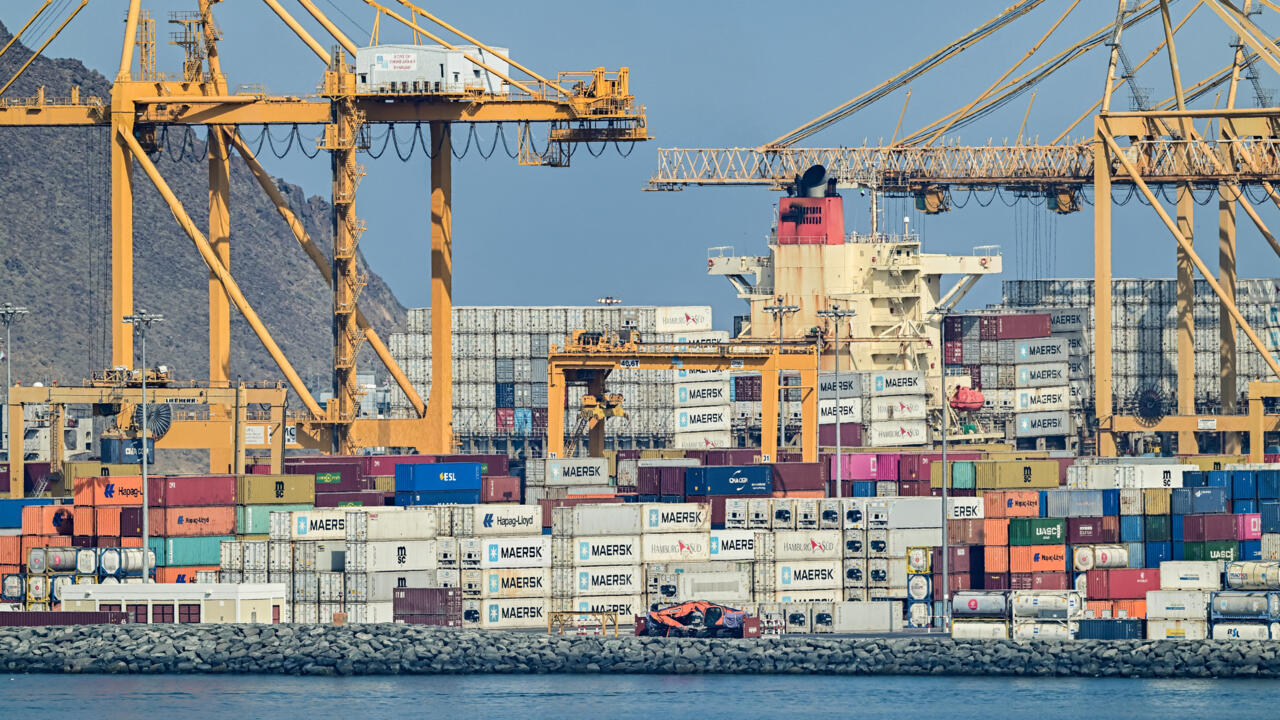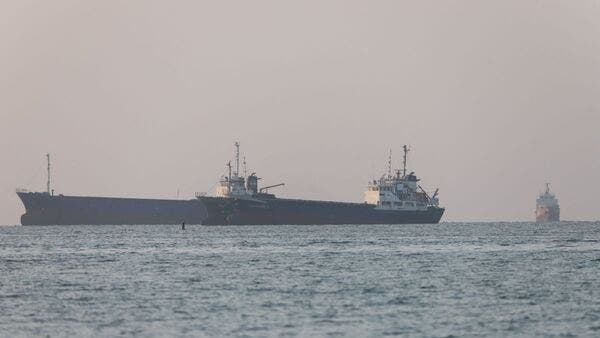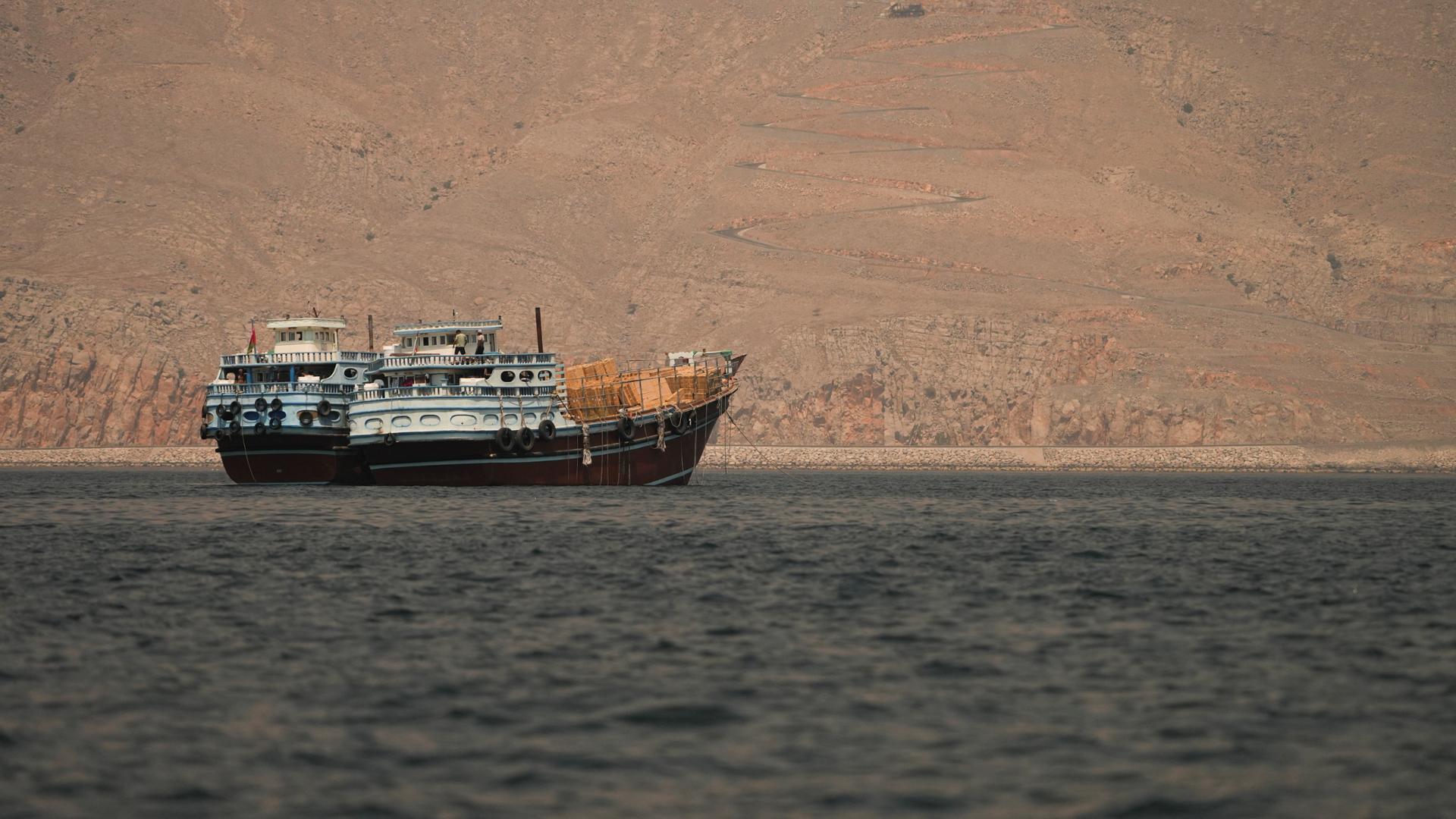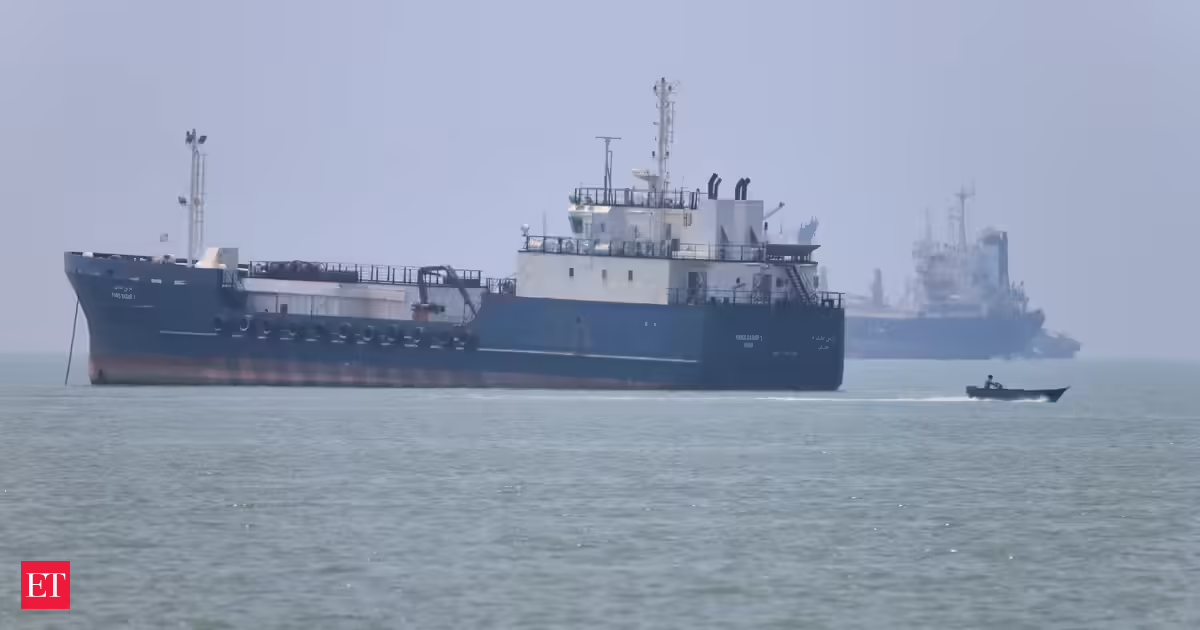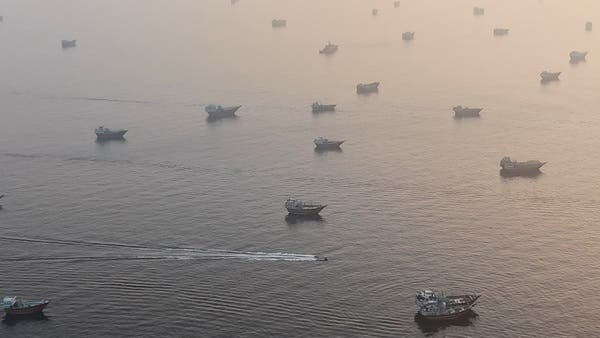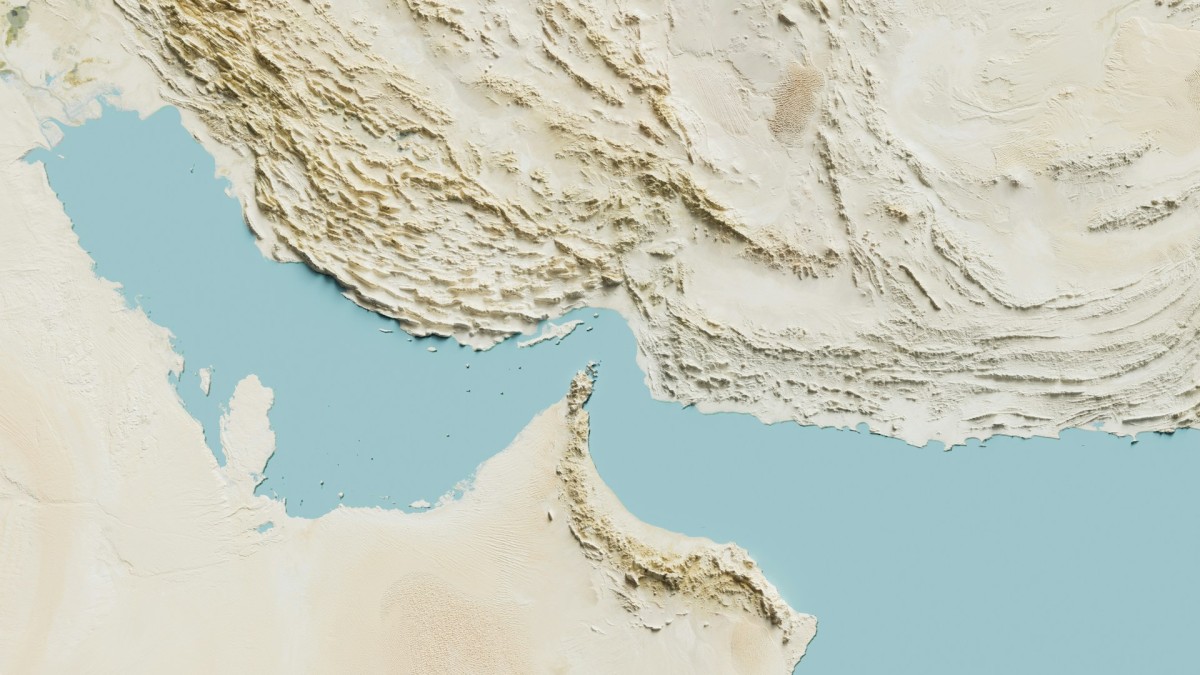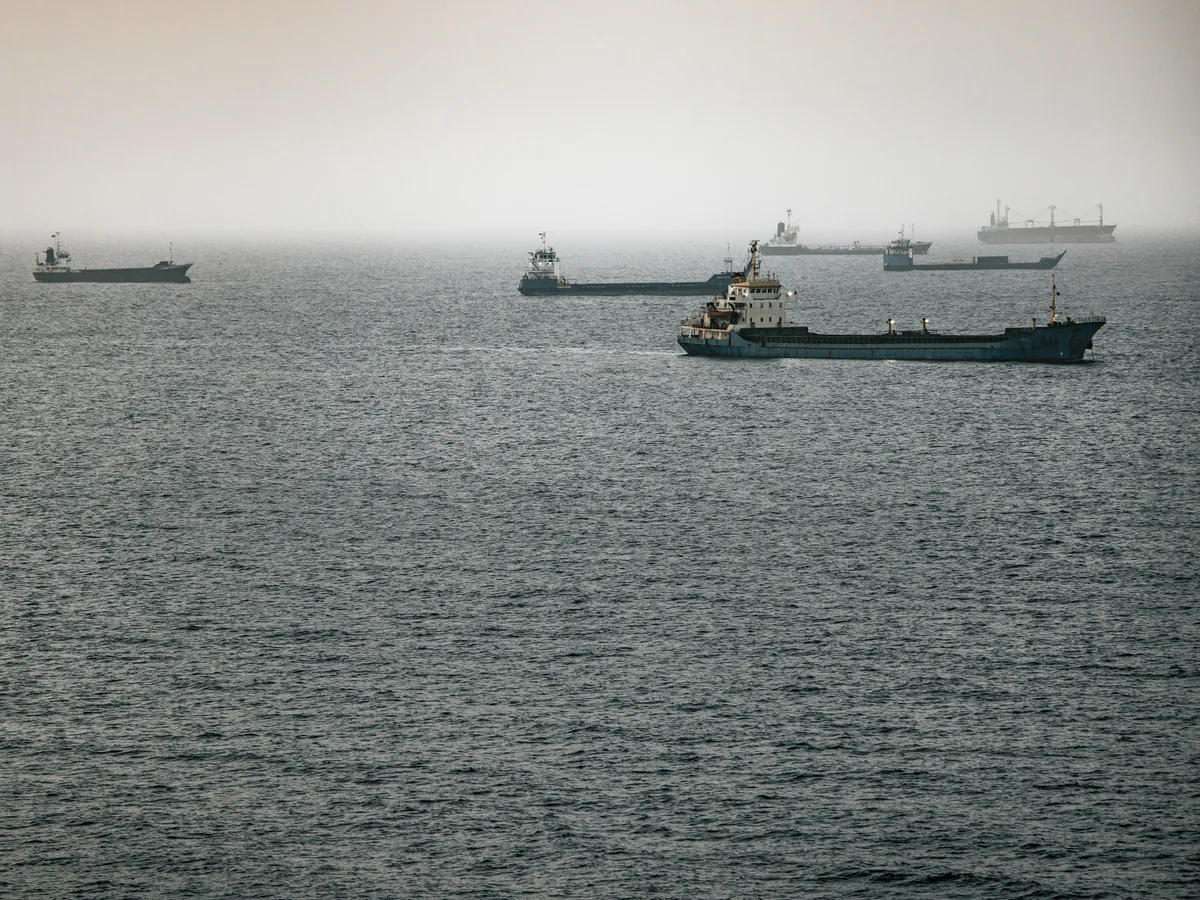
Skip to Content News Archives Economy Energy Oil & Gas Renewables Electric Vehicles Mining Commodities Agriculture Real Estate Mortgages Mortgage Rates Finance Banking Insurance Fintech Cryptocurrency Work Wealth Smart Money Wealth Management Investor Personal Finance Family Finance Retirement Taxes High Net Worth FP Comment Executive Women Puzzmo Newsletters Financial Times Business Essentials More Innovation Information Technology FP500 Podcasts Small Business Lives Told Tails Told Shopping Financial Post Store Obituaries Place a Notice Advertising Advertising With Us Advertising Solutions Postmedia Ad Manager Sponsorship Requests Classifieds Place a Classifieds ad Working Profile Settings My Subscriptions Saved Articles My Offers Newsletters Customer Service FAQ News Economy Energy Mining Real Estate Finance Work Wealth Investor FP Comment Executive Women Puzzmo Newsletters Financial Times Business Essentials HomeCommoditiesEnergyOil & GasHormuz traffic picks up as more tankers broadcast crossingsOil prices are down almost 40% from their peak during the conflictAuthor of the article:Last updated 16 minutes ago You can save this article by registering for free here. Or sign-in if you have an account.Crude oil tankers, bulk carriers and vessels sit anchored around Qaboos Port on June 22, 2026 in Muscat, Oman. Photo by Elke Scholiers/Getty ImagesMore ships are transiting the Strait of Hormuz with their satellite signals switched on, pointing to growing confidence among shipowners and traders about sending vessels through the world’s most important energy chokepoint.Subscribe now to read the latest news in your city and across Canada.Exclusive articles from Barbara Shecter, Joe O'Connor, Gabriel Friedman, and others.Daily content from Financial Times, the world's leading global business publication.Unlimited online access to read articles from Financial Post, National Post and 15 news sites across Canada with one account.National Post ePaper, an electronic replica of the print edition to view on any device, share and comment on.Daily puzzles, including the New York Times Crossword.Subscribe now to read the latest news in your city and across Canada.Exclusive articles from Barbara Shecter, Joe O'Connor, Gabriel Friedman and others.Daily content from Financial Times, the world's leading global business publication.Unlimited online access to read articles from Financial Post, National Post and 15 news sites across Canada with one account.National Post ePaper, an electronic replica of the print edition to view on any device, share and comment on.Daily puzzles, including the New York Times Crossword.Create an account or sign in to continue with your reading experience.Access articles from across Canada with one account.Share your thoughts and join the conversation in the comments.Enjoy additional articles per month.Get email updates from your favourite authors.Create an account or sign in to continue with your reading experience.Access articles from across Canada with one accountShare your thoughts and join the conversation in the commentsEnjoy additional articles per monthGet email updates from your favourite authorsSign In or Create an AccountorSeven tankers, including two fully-laden non-Iranian supertankers, were either in the strait or had already crossed on Tuesday, according to vessel-tracking data compiled by Bloomberg. All of them were broadcasting their location, the data show.The shift “reflects a degree of strengthening confidence among shipowners, as Iran is expected to refrain from targeting vessels,” said Muyu Xu, senior crude oil analyst at Kpler Ltd.Still, it remains to be seen whether safe and unrestricted passage will indeed materialize, Xu cautioned. One other supertanker made its way into the Persian Gulf with its signal turned off, the vessel-tracking data show.The reopening of Hormuz has been a bumpy process, but more oil has been able to move through the waterway after an interim peace deal between Iran and the U.S. fell into place. Iran said on Tuesday that the strait is fully open to commercial shipping and that large volumes of oil have been transiting, according to the semi-official Iranian Students’ News Agency. That followed a period over the weekend where domestic media said it had been closed.Oil prices are down almost 40 per cent from their peak during the conflict as a result of the thaw in tensions that’s paved the way for a resumption in traffic. In recent days, millions of barrels a day have made their way out at the fastest pace since the war erupted and U.S. President Donald Trump said on his Truth Social platform that bumper volumes were flowing. The Universal Glory (in white) and six other tankers were observed sailing into the Strait of Hormuz on Tuesday. via BloombergWith more vessels willing to broadcast their locations, oil and shipping markets — as well as global investors — are likely to get a better sense of traffic flows through the strait.In peacetime, about 135 vessels traversed the waterway daily, including vessels carrying oil, crude products, and natural gas, as well as other cargoes like bulk products, containers and livestock. They typically used a so-called automated identification system, or AIS, to broadcast their locations. The tankers observed Tuesday all used that system.The transmissions are normally required by mainstream insurers, financiers and lawyers, who require the visibility to support trading.Among the current transits, the VLCC Universal Glory entered the strait on Tuesday morning from inside the Persian Gulf, hauling 2 million barrels of Saudi crude. It’s taking a route near the middle of the strait, and lists South Korea as its destination.Trailing it are two products tankers, while a Norwegian-flagged vessel, and another VLCC hugged the Omani coast. A day earlier, three VLCCs with Iranian crude openly signaled crossings.In the reverse direction, Suezmaxes Sarak and Sobar are making inbound transits from waters near Pakistan. On Monday, a non-Iranian VLCC and four liquefied natural gas carriers broadcast their crossings into the gulf.Even though more ships have begun signaling their transits, some still opt to turn off their transponders for a portion of the crossing. Hours before Universal Glory began its transit, a Taiwan-bound VLCC entered the strait but then went dark, laden with Saudi and UAE crude cargoes. Hours later, it reappeared in the Gulf of Oman.Similarly, an empty Liberia-flagged VLCC has re-appeared in the Persian Gulf on Tuesday, according to its AIS signal. Earlier, it had broadcast that it was off Khor Fakkan in the Gulf of Oman late Monday before going dark.Universal Glory’s operator HMM Co. Ltd., as listed on the South Korean company’s website, didn’t immediately respond to emailed requests for comment. An email sent to the account listed on database Equasis as belonging to Sobar’s India-based manager, Vaniya Ship Management Pvt Ltd., failed to get through.With assistance from Alex Longley Join the Conversation This website uses cookies to personalize your content (including ads), and allows us to analyze our traffic. Read more about cookies here. By continuing to use our site, you agree to our Terms of Use and Privacy Policy.
Hormuz traffic picks up as more tankers broadcast crossings
Ships are transiting the Strait of Hormuz with their satellite signals switched on, pointing to growing confidence. Read more.
1,095 words~5 min read