The CETA provides zero-duty access on 99 per cent of India’s exports to the UK, covering nearly 100 per cent of trade value
| Photo Credit:
atakan
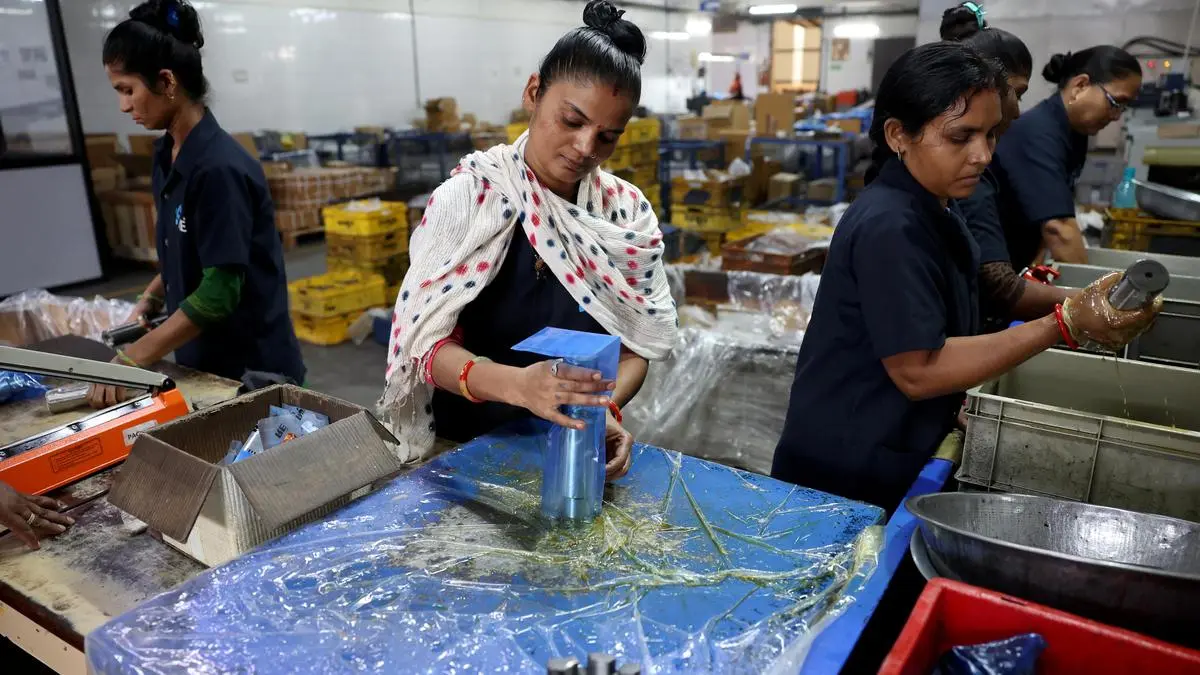
The India-UK Comprehensive Economic and Trade Agreement (CETA) is set to give a boost to key export sectors in India — many of them labour-intensive, such as textiles, footwear, leather, marine products, processed food, engineering goods, chemicals, and pharmaceutical items — as tariffs get eliminated in the UK market on July 15.“A number of labour-intensive exporters, who suffered high tariffs in the UK and lost out to competitors benefitting from zero duties either from LDCs or countries that had free trade pacts with Britain, will now get a level playing field. They are expected to make big gains,” an official said.For instance, tariffs of up to 70 per cent on processed food products, up to 21.5 per cent on marine products, up to 18 per cent on engineering goods and auto components, up to 16 per cent on leather and footwear products, up to 12 per cent on textiles and clothing, and up to 8 per cent on chemicals and pharmaceutical products will be reduced to zero, the Commerce Department noted in a statement. Zero-duty accessThe CETA provides zero-duty access on 99 per cent of India’s exports to the UK, covering nearly 100 per cent of trade valueIndia’s textile and apparel exporters are optimistic of making significant gains as they would no longer have to face a duty handicap vis-à-vis competitors like Bangladesh in the “highly promising” UK market. “The India-UK CETA will change that, providing us with a level-playing field so that our products can find more willing buyers as they can now be priced more attractively relative to competition. The agreement will enable our companies to significantly improve their market share not only in the top product categories of the UK’s textile and apparel imports but across the broader textile and apparel segment as well,” pointed out Ashwin Chandran, Chairman, Confederation of Indian Textile Industry.CITI is working closely with industry and local authorities to ensure that Indian companies can effectively leverage opportunities opening through the India-UK CETA, he said.“The immediate duty-free access secured under CETA is expected to significantly enhance the competitiveness of Indian exports in the UK market, generate new opportunities for farmers, fishermen, workers, MSMEs and manufacturers, and strengthen India’s integration into global value chains,” the Commerce Department pointed out.The bilateral CETA fits in with the India–UK Roadmap 2030, which set the goal of increasing bilateral trade to $100 billion by 2030. Bilateral trade between India and the UK reached $25.12 billion in the 2025-26 fiscal year, marking an 8.62 per cent increase from the $23.13 billion recorded in the previous period. Indian exports to the UK stood at $13.44 billion, while imports from Britain totaled $11.68 billion.Published on June 18, 2026