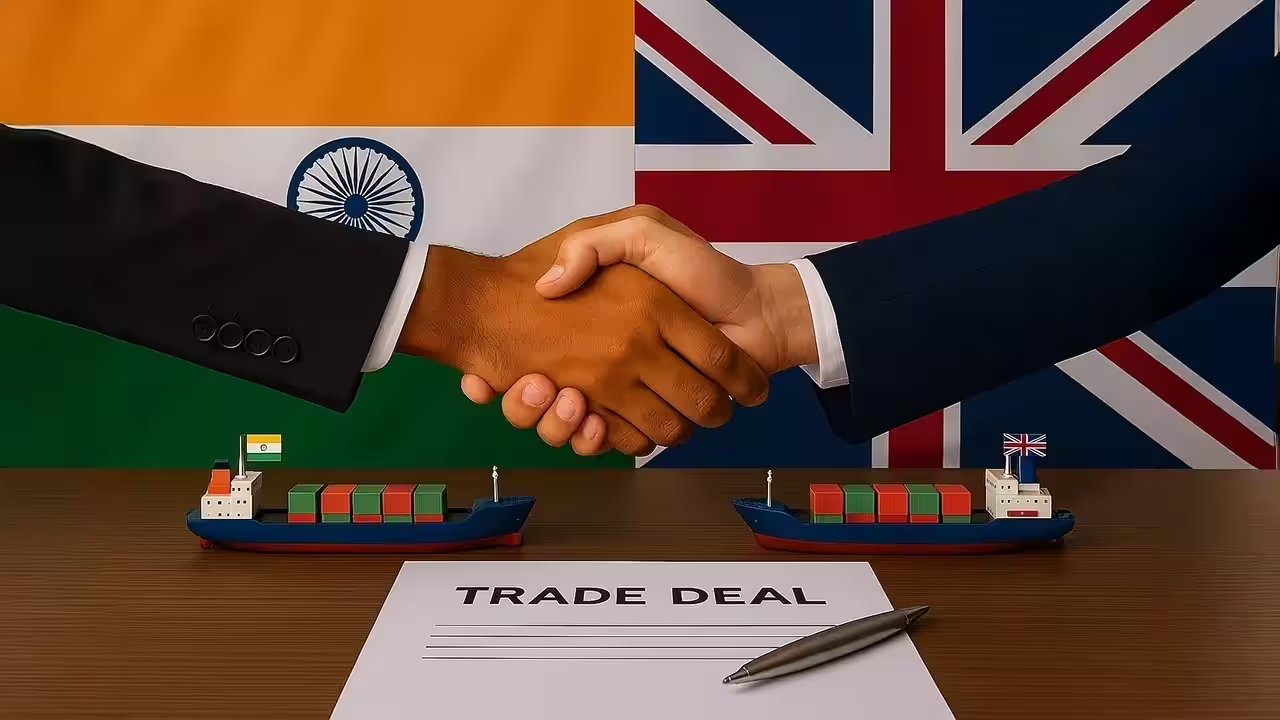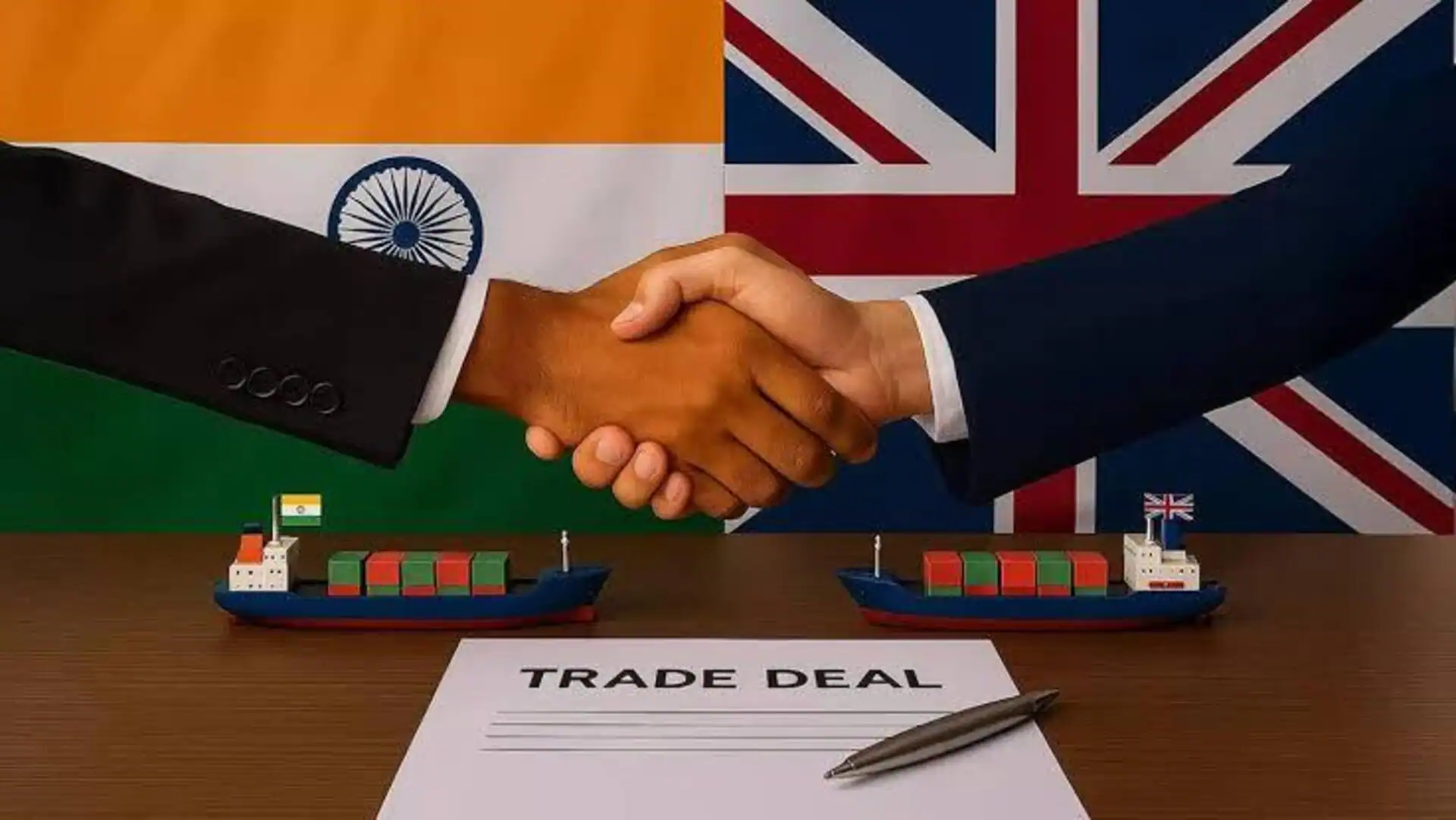
The India-Britain Comprehensive Economic and Trade Agreement (CETA) that comes into force today has overwhelmingly been welcomed for its potential to open huge export opportunities for India, and facilitate greater integration of its firms into global value chains.Even without CETA, Britain already allows duty-free imports of almost 53% of products from across the world. So, the agreement creates new export opportunities for India for remaining products, especially seafood, grapes, textiles and clothing, leather and footwear, and gems and jewellery.Also Read: India-UK trade pact comes into force on Wednesday; bilateral trade to hit USD 100 bn by 2030On account of comprehensive liberalisation by Britain of its services sectors and enhanced mobility for Indian professionals, additional gains are likely to accrue to India's services economy. Agreement on Social Security Contribution, which is not part of CETA, could also help about 75,000 Indian professionals working in Britain save around $450 mn a year.By how much would CETA enhance India's exports? A study by Britain's Department of International Trade provides a reality check. It estimates that by 2040, CETA could cumulatively increase India's bilateral exports of goods and services to Britain by £9.8 bn (₹12.55 lakh cr), and that of Britain to India by £15.7 bn (₹20.1 lakh cr). This could translate into a small annual increase compared to India's current annual global exports of $863 bn (₹72 lakh cr).In the light of these sobering numbers, claims that the India-Britain CETA would be a significant contributor to India's export growth appears to be exaggerated. Even these modest export numbers may not easily materialise as small exporters, farmers and fishers are likely to struggle to comply with Britain's strict regulatory provisions, health standards and traceability requirements.While India can hope to make modest export gains in Britain, CETA substantially curtails GoI's policy space to pursue development objectives in 4 crucial areas:India has substantially opened its government procurement market whereby British suppliers will be treated at par with Class 2 Indian suppliers. India's small manufacturers would now have to compete with British suppliers even for low-value government contracts of ₹5.5 cr. This could undermine Aatmanirbhar Bharat and Make in India.Annual procurement by Britain from sources outside its territory and the EU has historically been less that £10 bn (₹12.81 lakh cr). So, Indian exporters are unlikely to make any substantial export gains in British government procurement.Also Read: Decoding the India-UK CETA: Check what's changing in terms of tariffs, import duty & moreCertain provisions of CETA undermine access to affordable medicine by chipping away at compulsory licensing. If the price of a patented medicine is very high, or the product is not available in sufficient quantities, a government can issue a compulsory licence to an entity to manufacture it, or import its generic version often at a fraction of the price of the patented medicine.On the other hand, voluntary agreements of patent holders often artificially limit production and supply, enabling them to charge high prices and profit from multiple health crises. Voluntary licensing, therefore, doesn't provide a reliable basis for ensuring access to affordable medicines.CETA recognises that the preferable and optimal route to ensure access to medicines is through voluntary licensing. On paper, India retains the right to use compulsory licensing. But the CETA provision signals that GoI's future policy direction could bend in favour of voluntary licensing arrangements of pharma patent holders, thereby undermining use of compulsory licensing.When CETA negotiations started in 2022, high-level Indian trade negotiators had publicly opined that the template of developed countries on non- trade issues like labour, environment and gender represented the gold standard. Hence, they had little option other than acquiescing to core British demands on these issues.Consequently, India's implementation of its domestic laws and regulations on these issues will now be subject to joint monitoring and scrutiny by Britain through various committees under CETA, a clear case of loss of sovereignty for little obvious gains.Under CETA, India has ceded crucial ground to regulate key aspects of the digital economy. For example, the agreement could restrict India's ability to demand advance access to source code when regulating AI. It also encourages India to make more government data digitally available in the public domain. This could open the door for India's valuable public data being treated as global public resource, rather than as exclusive strategic national asset to be used to create Indian digital champions.For these reasons, current projections of benefits from the India-Britain CETA need to be realistic, not hyped.Dasgupta was India's ambassador to WTO, and Das is an international trade expert.(Disclaimer: The opinions expressed in this column are that of the writer. The facts and opinions expressed here do not reflect the views of www.economictimes.com.)
India-UK CETA, not quite the king's ransom expected from a landmark trade deal - The Economic Times
Under the India-Britain CETA, Indian exporters could tap into new market avenues, with Britain's Department of International Trade predicting significant growth in trade by 2040. Nevertheless, small export businesses may struggle with adherence to British regulations. Additionally, this agreement may restrict India's policy-making abilities concerning critical development aims, igniting worries over access to affordable medications and control over the digital economy landscape.
775 words~4 min read