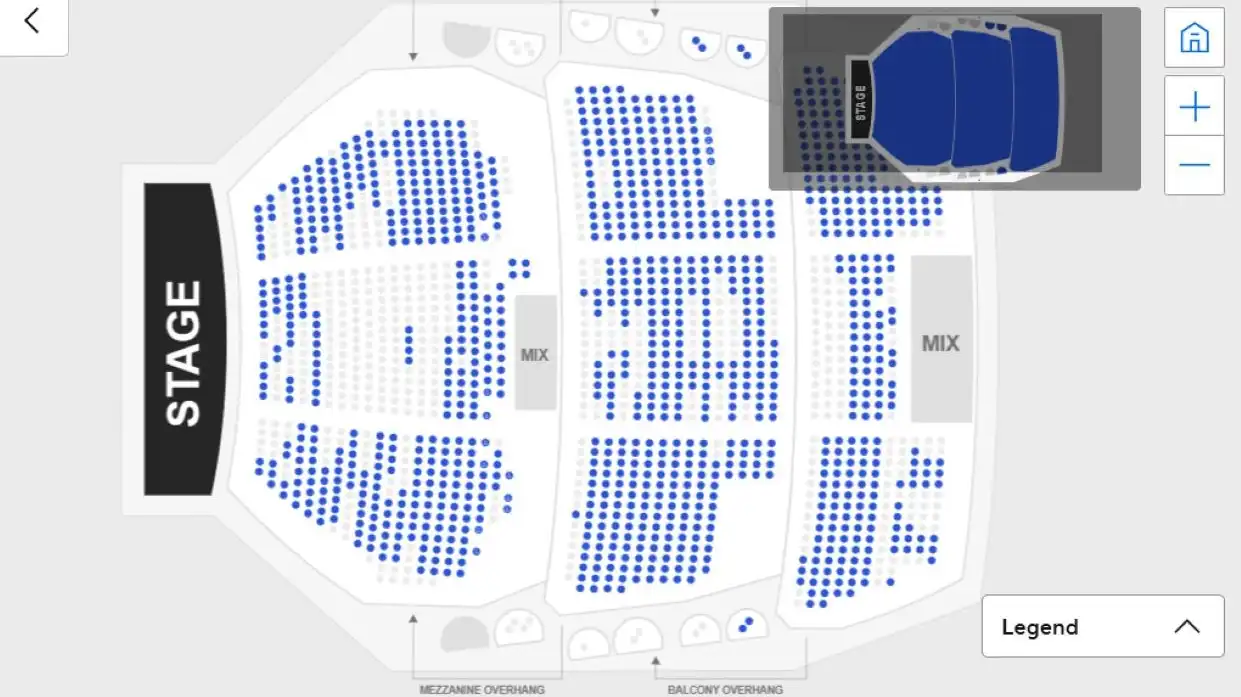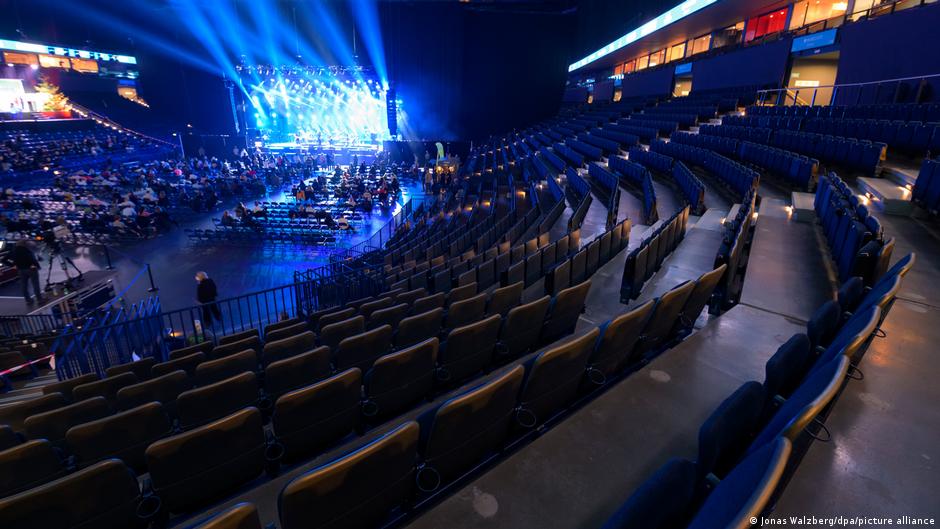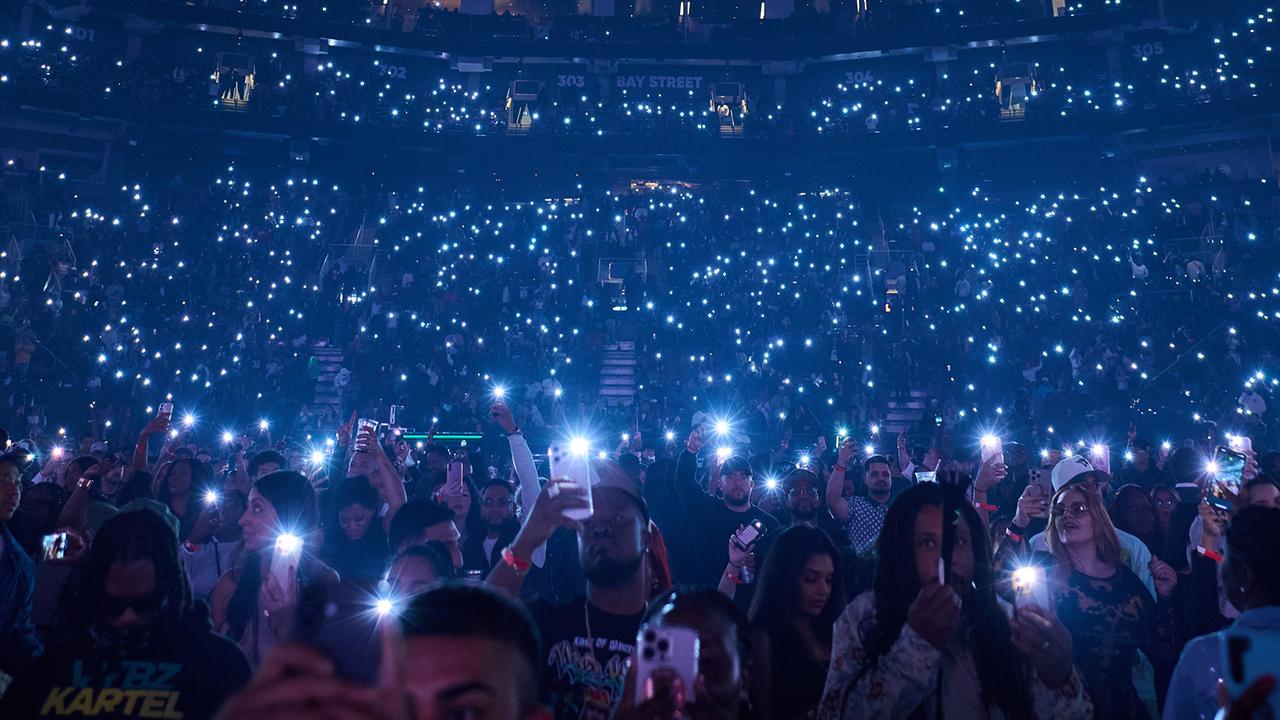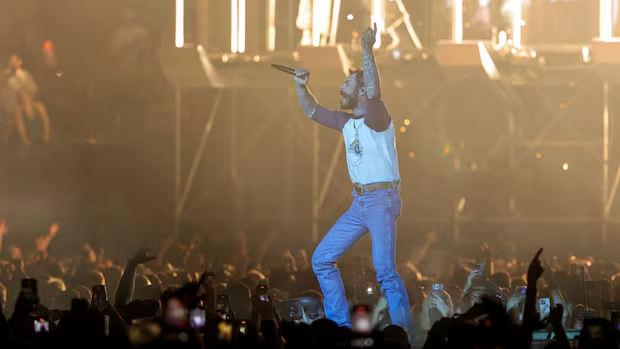
BusinessThe name "blue dot fever" comes from the blue dots on Ticketmaster's website, indicating unsold seats. Some fans say they're going to fewer shows because of the high price tag.The term refers to the blue dots on Ticketmaster's website, indicating unsold seatsAbby Hughes · CBC News · Posted: Jun 18, 2026 4:00 AM EDT | Last Updated: 1 hour agoListen to this articleEstimated 6 minutesThe audio version of this article is generated by AI-based technology. Mispronunciations can occur. We are working with our partners to continually review and improve the results.Post Malone performs during a stop of The Big Ass Stadium Tour at Allegiant Stadium on May 03, 2025 in Las Vegas, Nevada. The rapper turned country artist cancelled some dates of the tour earlier this year and concertgoers cited it as an example of blue dot fever, though Malone gave other reasons for the cancellation. (Ethan Miller/Getty Images)Fans are diagnosing big musical acts with "blue dot fever" — with some saying it's due to high ticket prices.The term comes from the blue dots on Ticketmaster's website for any given show, representing unsold seats. Some upcoming concerts have lots of them, as fans have been quick to point out — which they speculate has led to cancellations of concerts or whole tours in extreme cases.Post Malone, Meghan Trainor and the Pussy Cat Dolls have all cancelled shows or entire tours in recent months — and while some of them have cited other reasons for doing so, fans have still pointed to their tours as part of the trend.The problem comes down to the cost, said Eric Alper, a music publicist and industry expert — tickets are more expensive and fans are already contending with a high cost of living.Indeed, ticket prices for the top 100 worldwide tours increased by 37 per cent between 2019 and 2025, according to data from Pollstar, a leading entertainment industry publication.Here's what it would take for concert tickets to be accessible againFans weren't as fussed by high prices right after the COVID-19 pandemic, Alper said, because they were so eager to be in the crowd again. But that feeling is wearing off, and higher prices for necessities like food and gas have made people pickier with which shows they're willing to pay for."If they spend a lot of money on Rush, that doesn't leave them a lot of money to go, say, see Oasis or Nine Inch Nails," Alper said.From left to right, Kimberly Wyatt Nicole Scherzinger and Ashley Roberts of the Pussycat Dolls participate in the ceremonial lighting of the Empire State Building in celebration of their global reunion PCD Forever tour on March 19 in New York. The group later cancelled all but one of their North American reunion tour dates. (Evan Agostini/Invision/The Associated Press)Concert demand 'sharpening,' not decliningVeronica Avila decided to attend Post Malone's show at Toronto's Rogers Stadium, she said from outside the venue on Tuesday night. But that meant she couldn't get tickets to see Morgan Wallen or Chris Brown, who are also touring right now."I've wanted to see other celebrities, and I can't afford it," she said.These days, Avila says she usually picks one concert a year to attend, mainly due to the price. While plenty of fans like Avila turned out to see the rapper-turned-country artist perform on Tuesday, there were still lots of blue dots visible on the seating map hours ahead of the concert.Post Malone cancelled the first month of his stadium tour with Jelly Roll earlier this year, saying he wanted to finish his upcoming album before hitting the road, which led to the blue dot fever comments by some online.A seat map of tickets for Post Malone's Toronto tour stop taken at about 9:30 a.m. on the day of the concert shows many blue dots indicating seats still available to buy. Concertgoers have pointed to Post Malone's tour as an example of blue dot fever. (CBC via Ticketmaster)And in May, the Pussycat Dolls cancelled all but one of their North American dates, after taking an "honest look" at that section of their reunion tour.The group didn't explicitly name low ticket sales as the reason, but multiple outlets reported that many tickets were available for a number of the U.S. and Canadian dates before the cancellation.Meanwhile, some fans are waiting until closer to the day of a show to buy tickets, said Melissa Vincent, a music journalist and researcher, in hopes that ticket prices might come down. That could, in theory, leave more blue dots on a seat map.Jays fans swing — and miss — at securing face-value tickets to the World SeriesTickets for Punjabi pop concerts are selling fast — especially in CanadaSeatGeek spokesperson Cameron Papp said roughly a third of summer concert ticket orders are now placed within days of an event, a slight increase compared to last few seasons.But Ticketmaster said it rejects the idea that concerts aren't selling."Of all the shows Live Nation has on the books this year, less than one per cent have been cancelled. That’s not ‘blue dot fever’ — it’s a normal touring year," a Live Nation spokesperson said in an emailed statement, adding that ticket sales increased in the first quarter of this year.WATCH | Some resale sites still sell tickets above face value despite new Ont. rules:StubHub says it obeys Ontario's markup ban, but CBC found tickets over face valueMay 14|Duration 2:02Ontario has begun cracking down on ticket resellers to make sure they comply with the province's ban on reselling tickets at prices above face value. But CBC News found tickets on StubHub that appeared to violate the ban.Spokespeople for both SeatGeek and StubHub told CBC News that demand for tickets overall isn't waning.Even if cancellations are not widespread, both resale companies say that fans are making more conscious decisions about which concerts they spend their hard-earned money on."We’re seeing a sharpening of demand, but when fans decide a show is worth it, the demand signal is as strong as it’s ever been," said Jack Sterne, a spokesperson for reselling site StubHub.Ontario starts crackdown on ticket resale above face valueElaborate tours mean more costs for artistsAs ticket prices have risen, so have fans' expectations, said Alper, the music publicist."They want to see the choreography. They want to see the pyrotechnics.… They want to feel like they are at an event."Touring has always been expensive, said tour manager Jen Ochej, who has worked with Canadian artists like Lights and Jessie Reyez. But elaborate productions have caused touring costs to go up, she said, because they require more people, trucks and fuel to get big set pieces and more equipment from city to city.Live Nation executive Dan Wall told CBC News in a May interview that all of that extra production value has added to the price of tickets in recent years.WATCH | Live Nation executive Dan Wall speaks with CBC News about ticket prices:Exclusive interview with Ticketmaster/Live Nation executive Dan WallMay 21|Duration 24:06Entire interview with Ticketmaster/Live Nation senior executive Dan Wall, in which he addresses dynamic pricing and calls for the company's breakup following U.S. anti-trust verdict.It also means that more mid-sized artists are having a tougher time on tour, Ochej said, and she worries about what could happen to live music if ticket prices keep climbing."My fear is that it's going to become something that only … the people with a lot of money can afford, on both sides," Ochej said. "That only the artists with a lot of money can afford to go on the road and only the fans with a lot of money can afford to be in the audience." Can banning scalpers fix the ticketing industry?Even if touring doesn't guarantee a payout, Alper says it has become a big part of how some artists make their money, given how little streaming pays.And if live shows were to become less lucrative, it's possible artists will prioritize other revenue streams, he said, like trying to have their music played in TV or movies, or selling more merch."They are going to diversify their brands into doing things that have to do very little [with] the recorded part of the music."ABOUT THE AUTHORAbby Hughes is a writer with CBC News based in Toronto. Originally from Orillia, Ont., she studied journalism at Toronto Metropolitan University. She covers news from the worlds of business, entertainment, health, science and education, and her favourite stories focus on the real people in those areas — the customers, fans, patients, citizens and students. You can reach her with story ideas at abby.hughes@cbc.ca.With files from CBC's Griffin Jaeger and Shawn Benjamin
Some artists feeling 'blue dot fever,' fans say, as high ticket prices make concertgoers more selective | CBC News
The name "blue dot fever" comes from the blue dots on Ticketmaster's website, indicating unsold seats. Some fans say they're going to fewer shows because of the high price tag.
1,429 words~6 min read