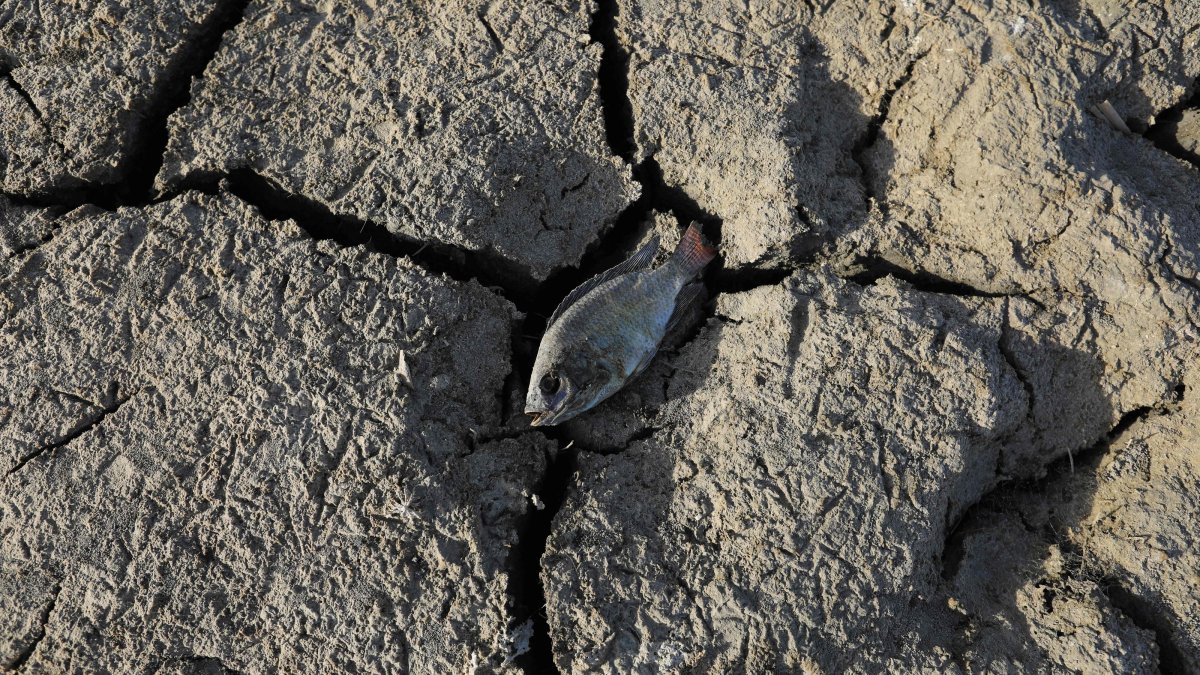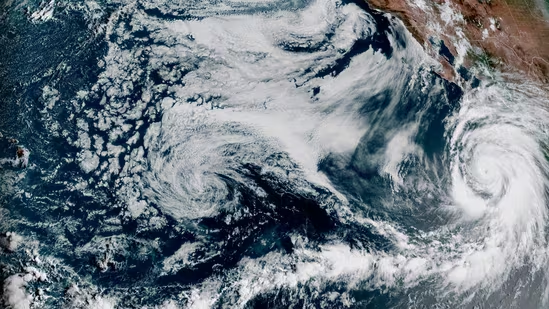
The scientific consensus on anthropogenic climate change is unequivocal: Rising global temperatures, driven primarily by greenhouse gas emissions, are altering atmospheric and oceanic patterns with profound implications for hydrological cycles worldwide. As the Intergovernmental Panel on Climate Change (IPCC) has documented, these shifts manifest not only in gradual warming but in heightened variability and extremity of weather events. For nations like India, whose economy, food security, and social stability remain closely tethered to the rhythms of the Indian Summer Monsoon (ISM), such changes pose both existential risks and opportunities for adaptive governance. Climate crisis (Shutterstock)India's agriculture, which employs nearly half the workforce and contributes significantly to its gross domestic product (GDP), is particularly vulnerable to monsoon variability. The ISM typically delivers over 70% of the country's annual rainfall, sustaining rainfed farming across vast regions. Projections indicate that while overall seasonal rainfall may increase modestly (around 5-10% or more under certain warming scenarios), the distribution is becoming more erratic: fewer moderate rainy days, intensified extreme events, and greater year-to-year variability. Recent patterns, including delayed onsets and deficits, like, notable shortfalls in early June in regions like Maharashtra, exemplify this. A below-average monsoon can cascade into reduced sowing of kharif crops like rice, maize, and cotton, lower reservoir levels, heightened water stress in urban centers such as Mumbai, and inflationary pressures on food prices. Beyond agriculture, it disrupts livelihoods, rural migration patterns, and basic services like drinking water and hydropower. Unpreparedness risks amplifying inequality, as smallholder farmers, often with limited irrigation or insurance, bear disproportionate burdens. Yet, with proactive measures, these risks can be mitigated, turning potential crises into demonstrations of adaptive capacity.Comparative cases from major economies illustrate the high costs of inadequate or reactive preparedness. In China, climate change has exacerbated a whiplash of extremes: Severe floods, just one example of which is typhoons like Doksuri, alongside prolonged droughts and heatwaves. These events have inflicted substantial economic losses, averaging tens of billions annually, with agriculture and infrastructure heavily impacted. Attribution studies link a significant portion of drought and storm damages directly to warming, straining even China's centralised response systems and highlighting challenges in balancing rapid urbanisation with environmental resilience. In the US, intensified hurricanes (stronger, wetter, and slower-moving due to warmer seas) and expanding wildfire seasons have driven escalating costs, exceeding hundreds of billions in recent decades. Events like Hurricane Harvey's record rainfall underscore how sea-level rise compounds storm surges, while wildfires in the West reveal the interplay of drought, heat, and vegetation changes. Despite advanced forecasting, fragmented governance and uneven infrastructure investment have sometimes hindered equitable recovery, revealing limits to preparedness in complex federal systems.These examples contrast with more targeted adaptations in smaller, highly exposed economies. Taiwan has advanced integrated strategies through its National Climate Change Adaptation Action Plan and scientific reports, emphasising early warning systems, nature-based coastal defences, agricultural resilience (e.g., adjusted crop varieties and insurance), and cross-sectoral collaboration. Its focus on localised risk assessments for aquaculture, water management, and urban planning demonstrates how dense data, technology, and public-private partnerships can build agility against typhoons, sea-level rise, and temperature extremes. Southeast Asian nations, facing similar monsoon and flood-drought cycles, offer complementary lessons. Countries like Vietnam and Thailand have strengthened hydro-meteorological forecasting, community-based early warning, flood-proofing, and ecosystem-based approaches (e.g., mangrove restoration and sustainable agriculture). Regional frameworks under ASEAN promote knowledge-sharing, integrated water management (notably in the Mekong basin), and anticipatory action, reducing casualties despite rising hazard frequency. These models highlight the value of blending top-down policy with bottom-up participation.India has not been passive. The 2008 National Action Plan on Climate Change (NAPCC) established eight missions addressing solar energy, water, sustainable agriculture, Himalayan ecosystems, and strategic knowledge, providing a foundational framework for both mitigation and adaptation. Initiatives include expanded irrigation under schemes like Pradhan Mantri Krishi Sinchayee Yojana, crop insurance (PMFBY), weather-based advisories via mobile platforms, and afforestation drives that have enhanced carbon sinks and soil moisture. Renewable energy scaling, surpassing initial targets with massive solar and wind additions, reduces long-term emissions while building energy resilience. Past successes are evident: Improved forecasting has enabled better drought management in some states, cyclone preparedness along coasts has drastically cut mortality, and community watershed programs have buffered rainfall variability. During previous deficient monsoons, targeted interventions like contingency cropping and fodder banks mitigated worst-case agricultural losses.Nevertheless, gaps remain, implementation varies by state, smallholders need better access to finance and technology, and urban water infrastructure requires urgent upgrading. Lessons from Taiwan (data-driven localisation) and Southeast Asia (regional cooperation and community early action) are instructive. India could enhance AI-powered forecasting, scale climate-resilient seeds more aggressively, integrate nature-based solutions (e.g., wetland restoration), and foster public-private partnerships for infrastructure hardening. Federal-state coordination, drawing on India's democratic strengths, allows tailoring to diverse agro-climatic zones, unlike more uniform approaches elsewhere.The climate crisis demands long-term, adaptive solutions rather than one-size-fits-all remedies. Case studies from China, the US, Taiwan, Southeast Asia, and India's own record reveal that preparedness hinges on integrating science, policy, technology, and equity. By comparing vulnerabilities and responses, nations can tweak strategies to their unique geographies, economies, and cultures: India's scale and diversity necessitate decentralised innovation alongside national missions, emphasising resilience for its billion-plus population. As monsoons grow unpredictable, bolstering agricultural insurance, early warning, sustainable water use, and inclusive governance will not only safeguard development but position India as a global leader in climate adaptation. The imperative is clear: Proactive, context-sensitive action today secures prosperity tomorrow.(The views expressed are personal)This article is authored by Sriparna Pathak, professor, China Studies and International Relations, Jindal School of International Affairs, OP Jindal Global University, Sonipat.
Building climate resilience in an age of uncertainty
This article is authored by Sriparna Pathak.
923 words~4 min read