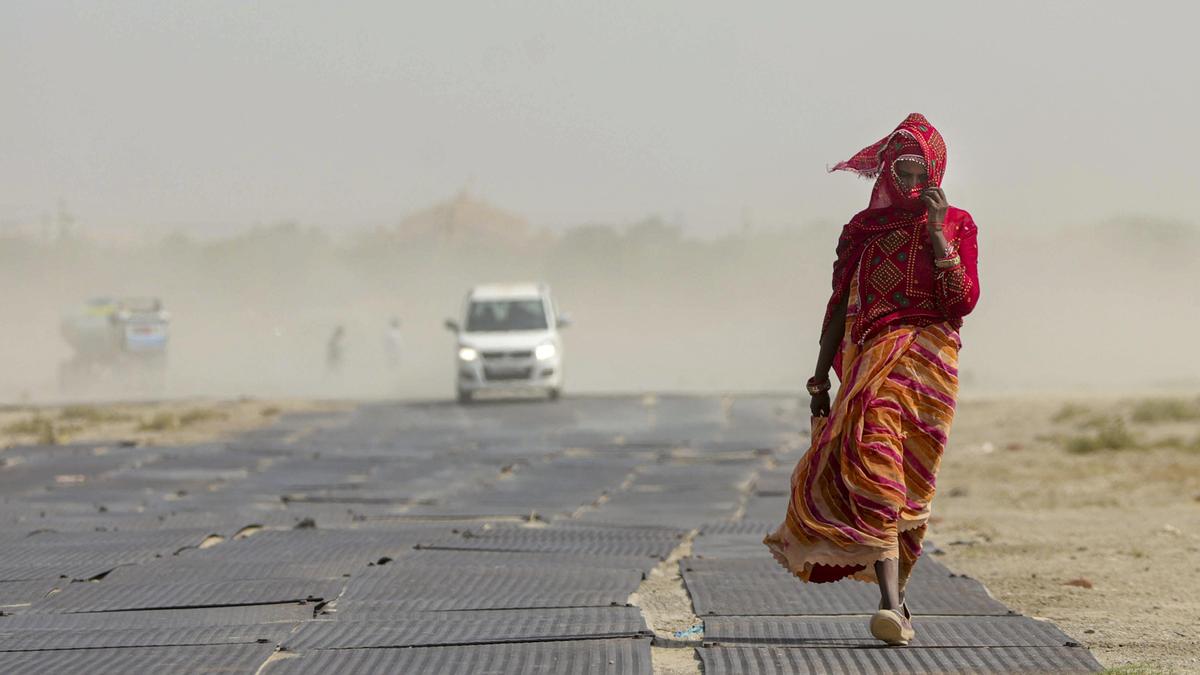
Some challenges redefine the boundaries of responsibility and climate change is one of them. When India recorded extreme weather events on 270 of the first 273 days of 2025, it became impossible to view climate risk as someone else's problem. This is not a distant threat unfolding in the future. Its consequences are already visible around us, in overcrowded hospitals, vulnerable communities, and households struggling to adapt.World Environment Day (Unsplash)Across the country, clinicians are seeing cases of heat exhaustion arrive before noon. Respiratory admissions rise with every pollution surge. Dengue is appearing in seasons and regions where it was once uncommon. The climate crisis is no longer a distant environmental concern. It is a public health reality that is reshaping how we live, work, and care for one another.Hospitals may be where the consequences arrive, but they are not where the story begins. Therefore, the responsibility for building climate resilience cannot rest with health care alone. It belongs equally to governments, businesses, researchers, communities, and citizens. The health of our future will depend on how well all of us work together today. This is because the impact extends far beyond acute emergencies. Heat stress and deteriorating air quality are accelerating India's non-communicable disease burden, which already accounts for a significant share of healthcare costs and lost productive years. Cardiovascular patients are reaching crisis points faster than expected. People living with diabetes are finding it harder to maintain glycaemic control amid environmental pressures that did not exist at this scale a generation ago. At the same time, the reproduction number for dengue-carrying mosquitoes has nearly doubled since the mid-20th century.The climate crisis magnifies many of the challenges we already face, making health care more complex, less predictable, and more costly. Building resilience needs to start long before a patient reaches a hospital. It is shaped by our infrastructure, our institutions, our businesses, and our everyday choices. Climate resilience is not the responsibility of one sector. It is a shared national effort.It is commendable that India has already taken important steps. The ministry of health and family welfare demonstrated foresight in establishing the National Programme on Climate Change and Human Health ahead of many global peers. In addition, 80% of India's projected 2070 building footprint has not yet been constructed. Every hospital, clinic, school, office, and public facility that is built from this point onward represents a choice. This I believe is a valued opportunity to embed climate resilience into design from the beginning. Reliable backup power, water security, and ventilation systems capable of handling extreme heat should no longer be considered optional. Accreditation bodies in health care such as JCI and NABH are already integrating sustainability into their standards. This creates an important pathway for change, but meaningful progress will require commitment from every stakeholder involved in planning, financing, constructing, and operating health care facilities.The same principle applies to people. Health care workers are already on the frontlines of climate-related health challenges, but they need stronger support, clearer protocols, and better preparedness systems. Surge plans for extreme heat events and disease outbreaks should become standard practice. Finally, we must be mindful that this is a challenge no organisation can solve alone. So, research institutions can come forward to generate the insights needed to anticipate outbreaks. Health-tech innovators can turn data into early warning systems. Government can strengthen surveillance and climate-health research. Private health care networks can bring scale and expertise. Citizens, too, have a vital role, in adopting healthier and more sustainable practices. Small individual actions, when multiplied across millions, can drive meaningful changeIndia has repeatedly demonstrated what is possible when people come together around a common purpose. We saw it during the pandemic. We have seen it in moments when government, industry, institutions, and communities aligned behind a shared goal. The challenge before us today is different, but the spirit required is the same. Climate resilience is everyone's business because its consequences touch everyone. The air we breathe, the water we depend on, the health of our families, and the strength of our communities are all interconnected. The choices before us are still ours to make and the time to act is now.(The views expressed are personal)This article is authored by Dr Preetha Reddy, executive vice chairperson, Apollo Hospitals Group.
Climate resilience is everyone's business
This article is authored by Dr Preetha Reddy, executive vice chairperson, Apollo Hospitals Group.
710 words~3 min read