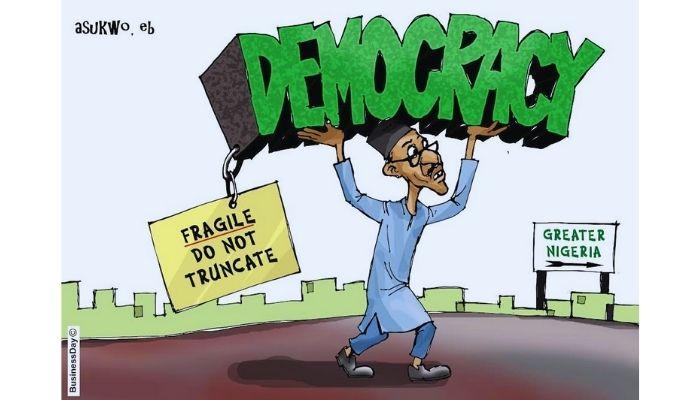
It is always a delight to test the ideas of a politician against those of the political scientist. Both are concerned with politics and the political, and especially on the question of how a state ought to be governed, and the dynamics of a government vis-à-vis the lives and flourishing of the citizens. And what better contribution can one possibly make as the nation once again casts a searchlight on politics and governance, to mark the June 12 Democracy Day? I have argued in another piece that there is a tendency to want to favour the active politician over the academic political scientist, given the reasoning that the politician is more concerned with the practical, and hence the more critical, dimensions of politics and politicking than the academic who is more given to theorising the essence of politics. However, the equation becomes even better if the politician is a political scientist.
When this permutation is juxtaposed with the persistent predicament of the postcolonial Nigerian state and the task of national integration and national development, we immediately see how huge the challenge for the politician and the political scientist becomes. Since independence, the governance of the fundamentally divided multinational Nigerian state has remained a fundamental challenge for consecutive governments. The question is how the state should be governed to articulate and effectively implement a development plan that will elevate the betterment of Nigerians. Or, to put it in more seminal terms: how can Nigeria become a developmental state with an ideological direction for governance?