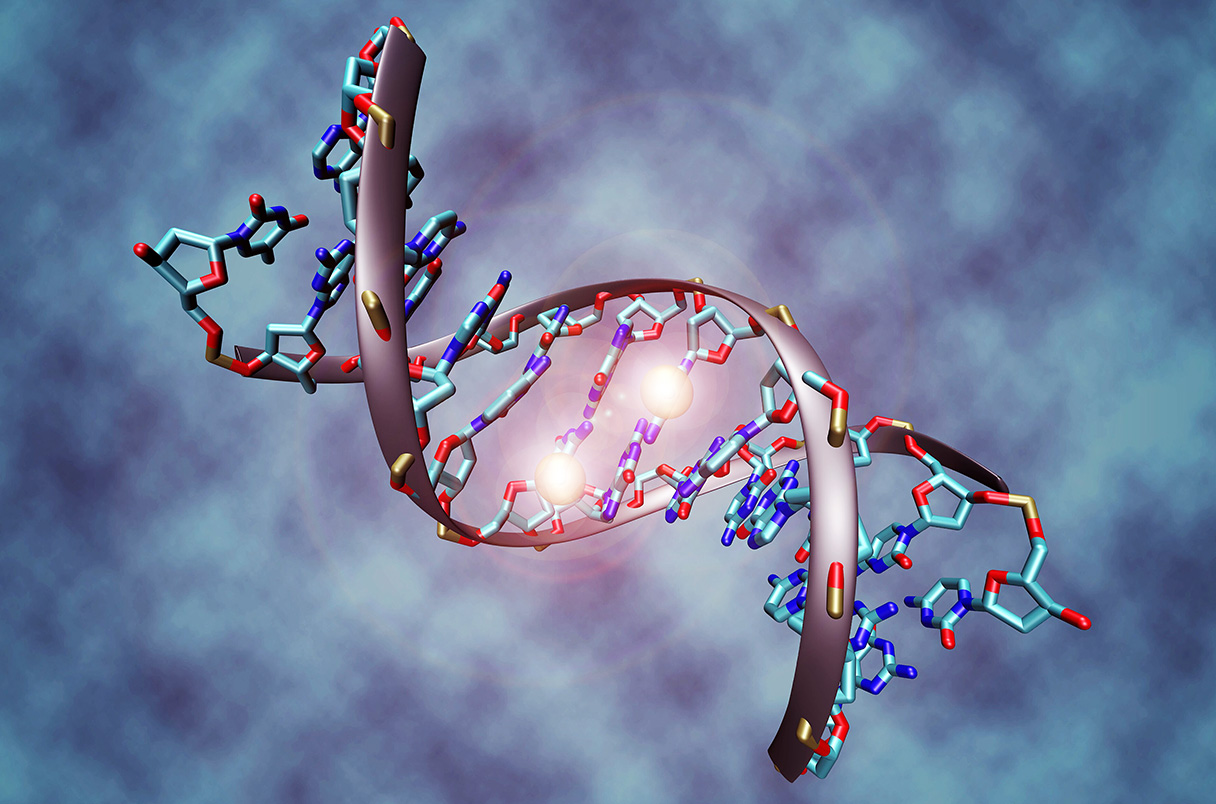
What if a single sentence could carry two completely different meanings, one when read forward and another when read backward? In a new study, researchers at Arizona State University have discovered a biological version of this idea. Working with the mitochondria of a tiny insect called the citrus mealybug, the team found that the same stretch of DNA can carry two different genes—sets of genetic instructions used by the cell—with one encoded on each strand of the DNA's ladder-like structure.
The finding expands scientists' understanding of how DNA can store genetic information and helps solve a mystery that has puzzled researchers for years. The findings are published in the journal Proceedings of the National Academy of Sciences.
"This kind of paper is what makes running a lab so fun. Born from a spark of individual brilliance—not mine—but accomplished as a collective effort," says John McCutcheon. "The idea that these two critically important genes could be mirrored on the same piece of DNA has been around a long time, and so it's a thrill to be part of the team that proved this speculative idea was, in fact, reality."
McCutcheon is associate director of the Biodesign Center for Mechanisms of Evolution at ASU, a professor with ASU's School of Life Sciences and an investigator with the Howard Hughes Medical Institute.