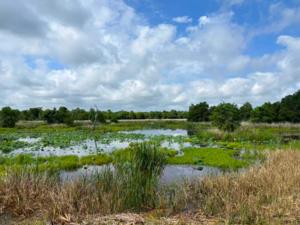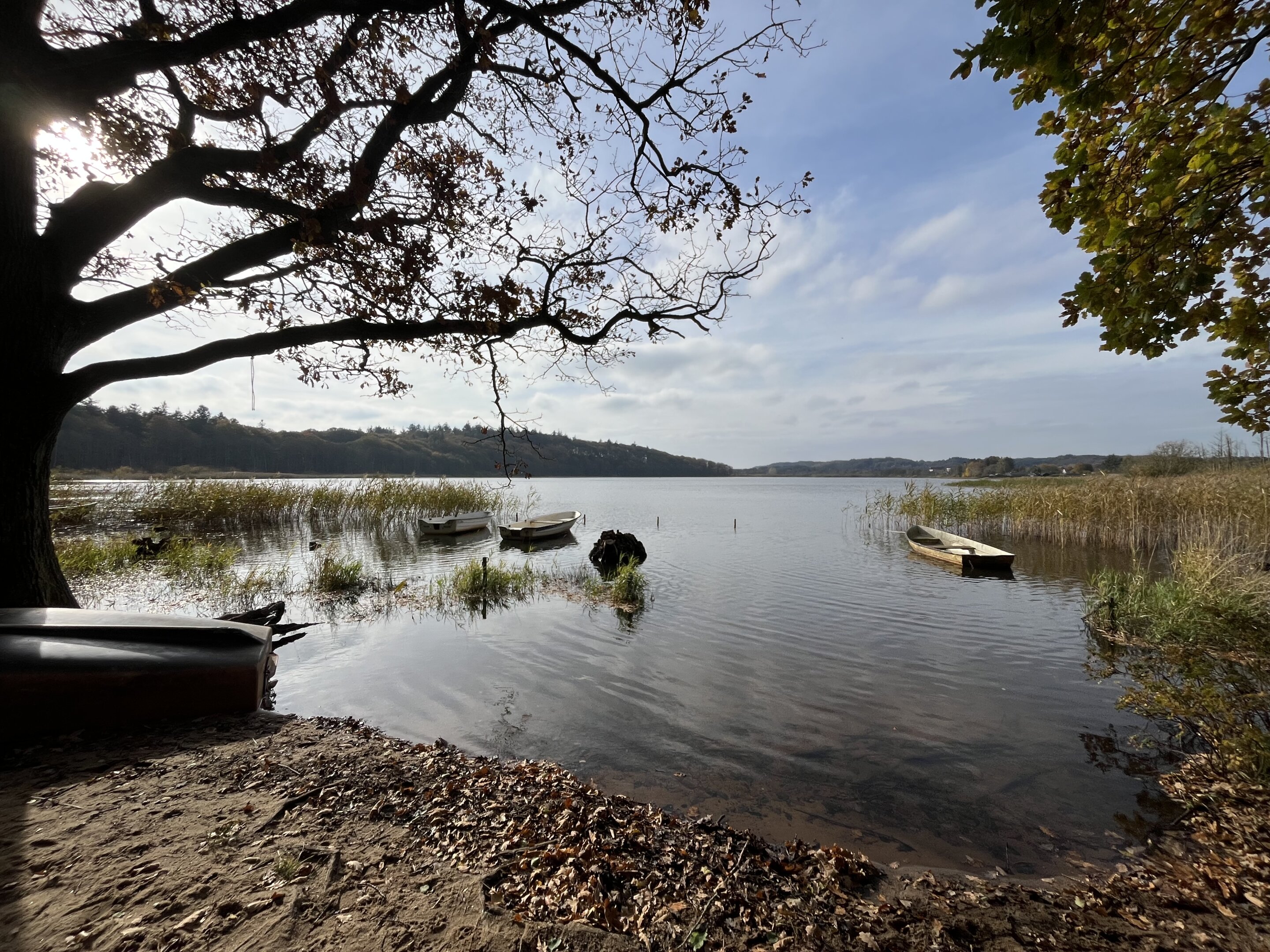
Lake Ørn in Denmark, where the study was done. Credit: Professor Bo Thamdrup/University of Southern Denmark
Methane is one of the most powerful greenhouse gases, and lakes and wetlands are among its largest natural sources. In many lakes, methane can be seen bubbling up from the bottom and escaping directly into the atmosphere.
However, considerable amounts of methane can be consumed by microorganisms living in the sediment before it reaches the surface. A new study, published in Limnology and Oceanography, provides fresh insight into the environmental factors that control this natural methane removal.
The research was carried out in the research group of Professor Bo Thamdrup, Department of Biology, and led by postdoctoral researcher Alina Mostovaya and Ph.D. student Michael Wind-Hansen, who were both based at SDU during the study. Both are now at Aarhus University: Mostovaya in the Department of Ecoscience and Wind-Hansen in the Department of Biology.
Lake Ørn in Denmark, where the study was done. Credit: Professor Bo Thamdrup/University of Southern Denmark