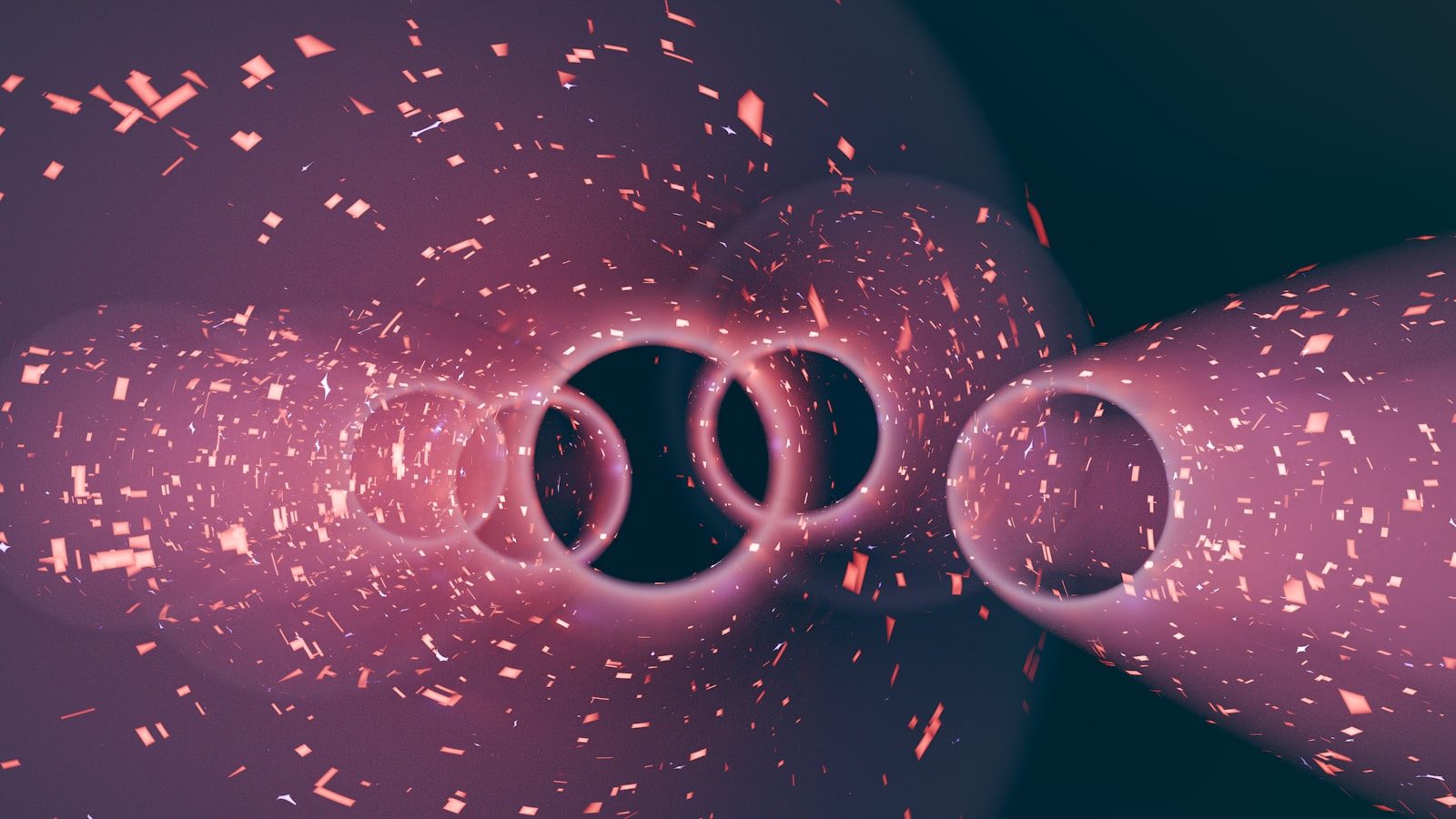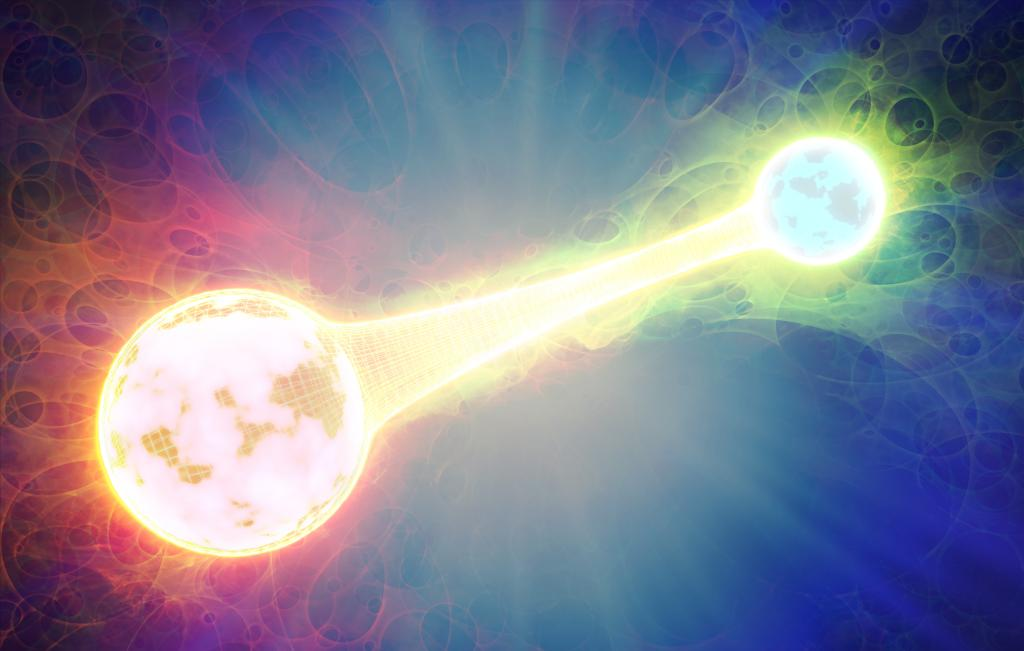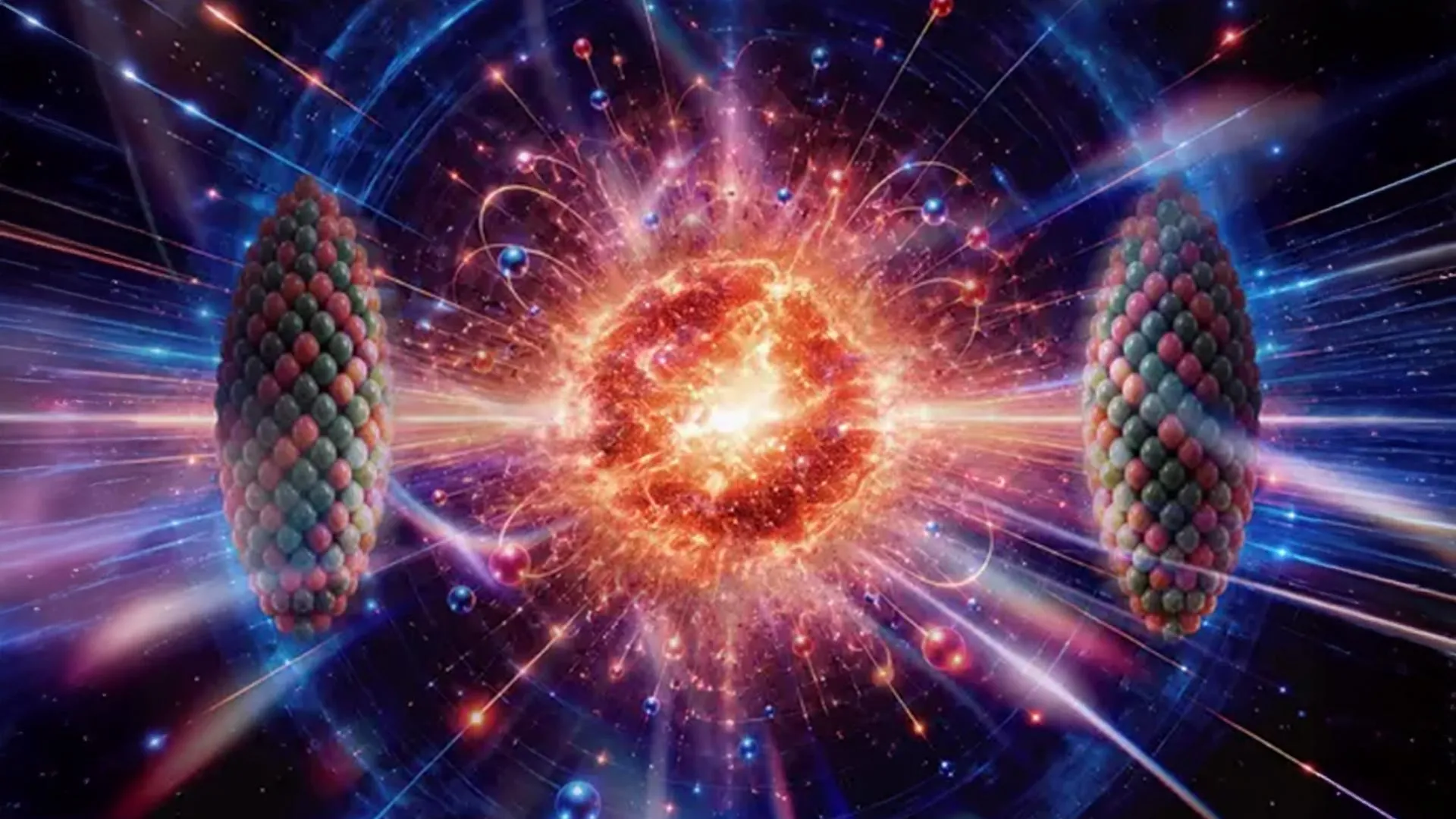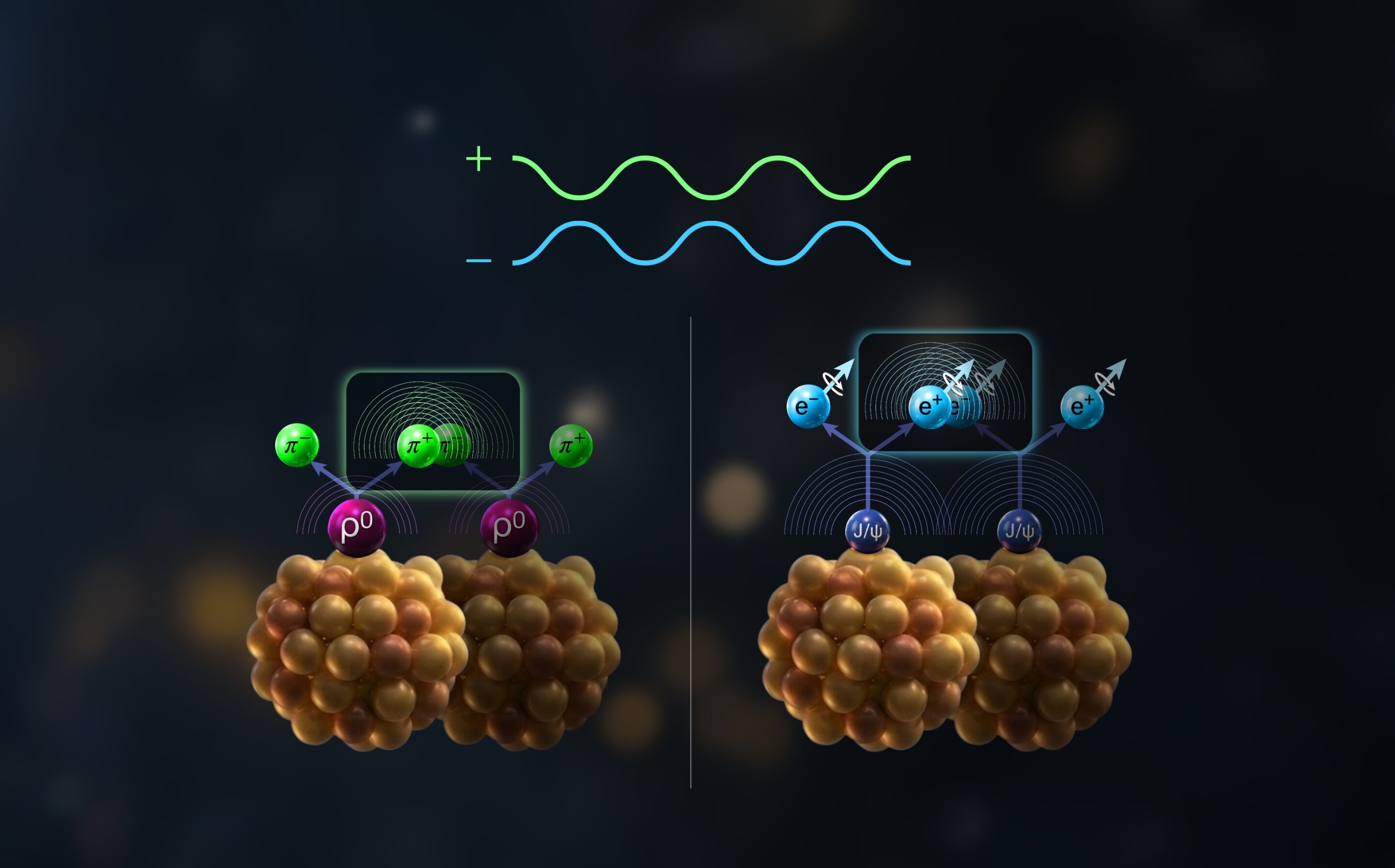
Spin reveals a sharper way to image nuclei: In near-miss gold-ion collisions at RHIC, photons from one nucleus can briefly transform into particles that probe the gluons inside the other nucleus. This image compares two such probes. Credit: Joanna Pendzick/Brookhaven National Laboratory
Scientists studying particle collisions at the Relativistic Heavy Ion Collider (RHIC) usually capture what happens when atomic nuclei smash into one another at nearly the speed of light. But even when the nuclei don't collide, interesting things can happen. In a new paper just published in Physical Review Letters, members of RHIC's STAR collaboration describe a new way to use near-miss collisions at RHIC to study what's going on inside the nucleus. The approach advances the reach of RHIC, a U.S. Department of Energy (DOE) Office of Science user facility at DOE's Brookhaven National Laboratory, into the next frontier in nuclear physics—a journey into the inner workings of the building blocks of matter.
The technique relies on particles of light, known as photons, that surround the nuclei as they speed around the 2.4-mile (3.9-kilometer) RHIC racetrack. Acting something like the beam of a giant X-ray machine, the photons around one nucleus can interact with particles called gluons inside a nucleus whizzing by in the opposite direction. By tracking the signals produced by those interactions, scientists can map out the distribution of the gluons—the glue-like particles that hold the nucleus together.