Insider Brief
A Berkeley Lab scientist used IBM quantum hardware accessed through ORNL’s Quantum Computer User Program to simulate a simplified version of hadronization, a key particle-physics process that remains difficult for classical computers to model.
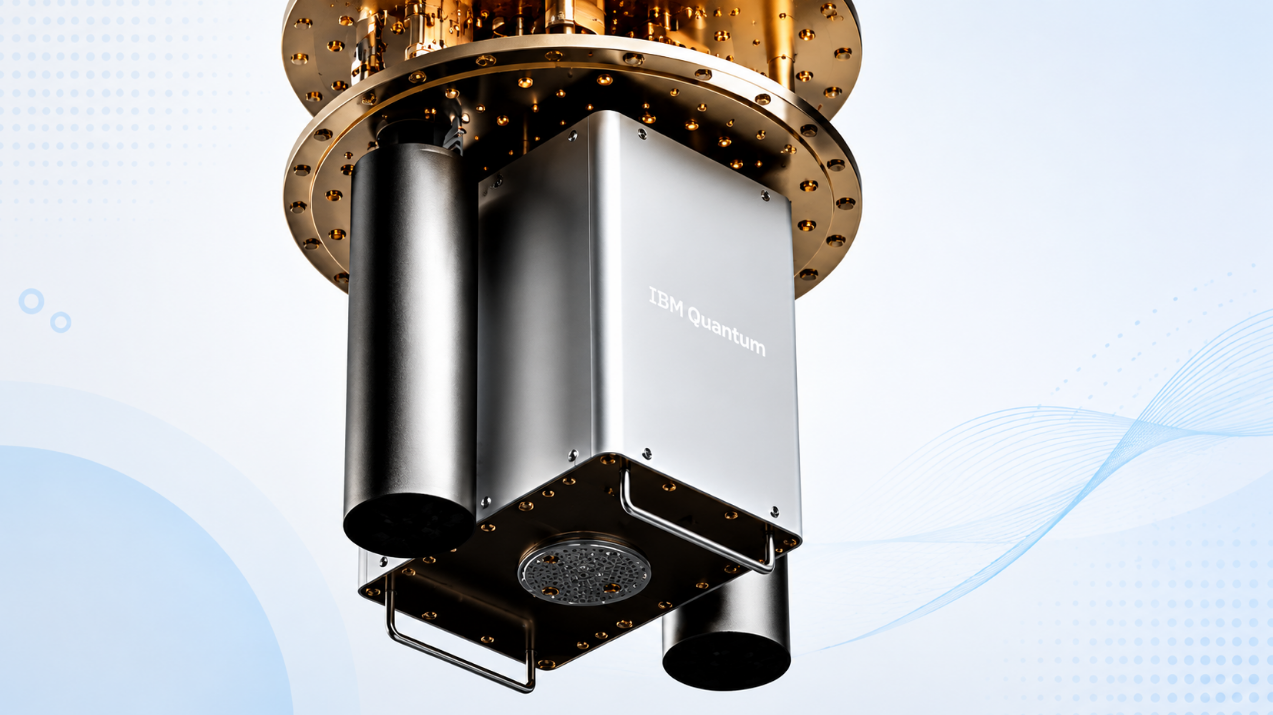
The project used 104 qubits on IBM’s 156-qubit Heron processor to study string breaking, the process in which gluon strings between quarks snap and form new quark-antiquark pairs.
The results matched earlier classical supercomputer work and suggested that part of the gluon string may behave like a finite-temperature gas before separation, though the model was limited to one dimension and simplified heavy-quark behavior.
PRESS RELEASE — By remotely accessing an IBM quantum computer through the Quantum Computer User Program (QCUP) — a quantum computing access program managed by the Oak Ridge Leadership Computing Facility, a Department of Energy Office of Science user facility located at DOE’s Oak Ridge National Laboratory — a research scientist at Lawrence Berkeley National Laboratory successfully simulated a key process in particle physics: hadronization. Although based on a simplified model of quantum mechanics, the project lays the groundwork for how physicists can leverage the power of quantum computers to make large scientific calculations beyond the capabilities of classical supercomputers.