Skip to content
GQINewsNews Archive 2025News Archive 2024News Archive 2023News Archive 2022News Archive 2021News Archive 2020News Archive 2019News Archive 2018News Archive 2015-2017AnalysisQnalysisPlayersPublic CompaniesPrivate/Startup CompaniesUniversitiesGovernment/Non-ProfitVenture CapitalVenture Capital – Sorted by Quantum CompanyResourcesConferencesToolsOther Websites and Industry AssociationsEducationBooksScorecardsGate Level Software PlatformsIBM Qiskit, Rigetti Forest, Microsoft QDK, Project QReview of the Cirq Quantum Software FrameworkQubit Implementation DashboardQubit CountQubit QualityQubit TechnologySoftware/Startup PartnersCloud Platform Hardware PartnersPodcastsAboutQCR Alerts Sign-Up FormAdvertising InquiriesQCR in the NewsContactPrivacy PolicyMembership
Duke University and IonQ Demonstrate Tripartite Entanglement of Remote Atomic Qubits
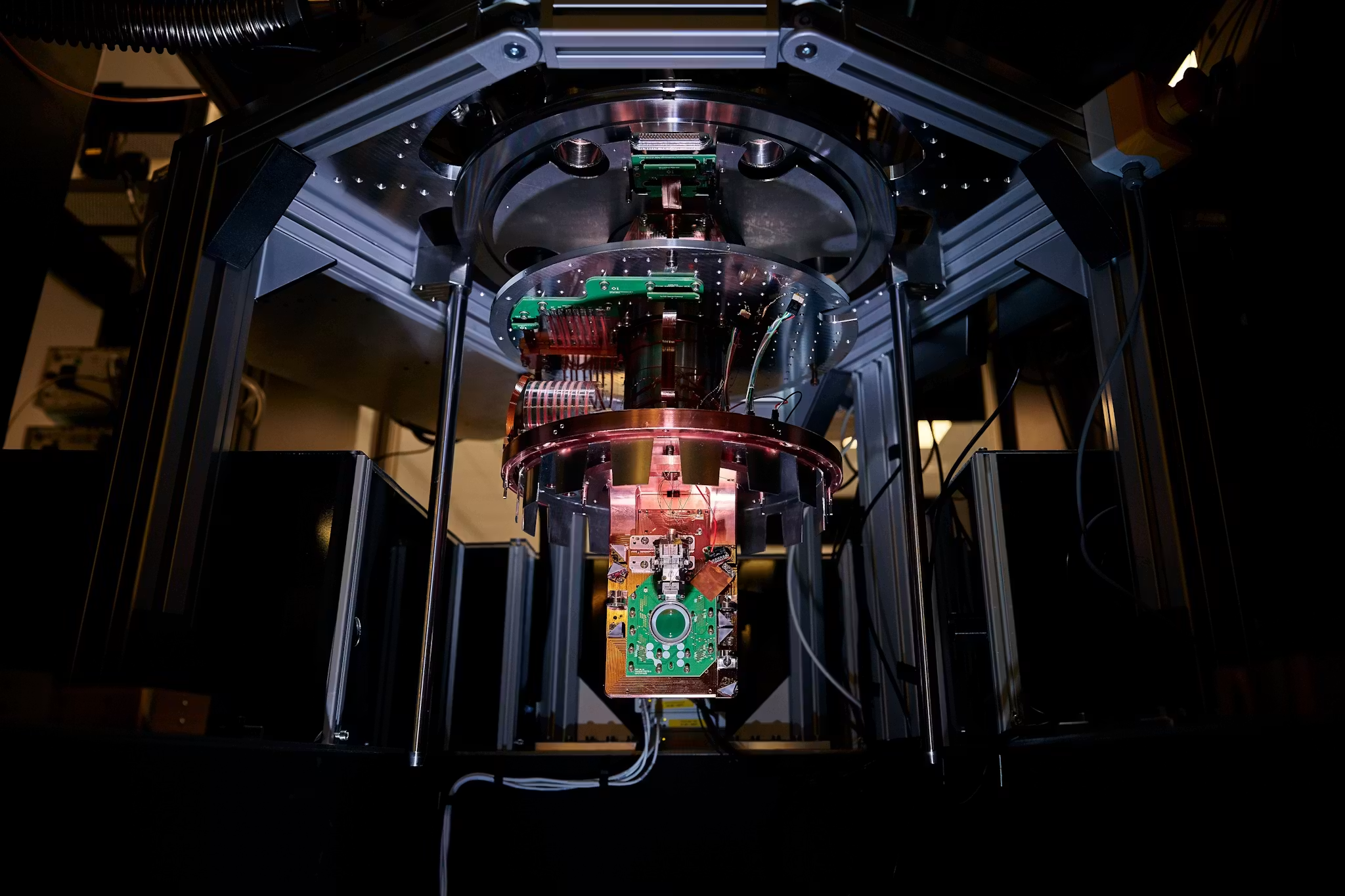
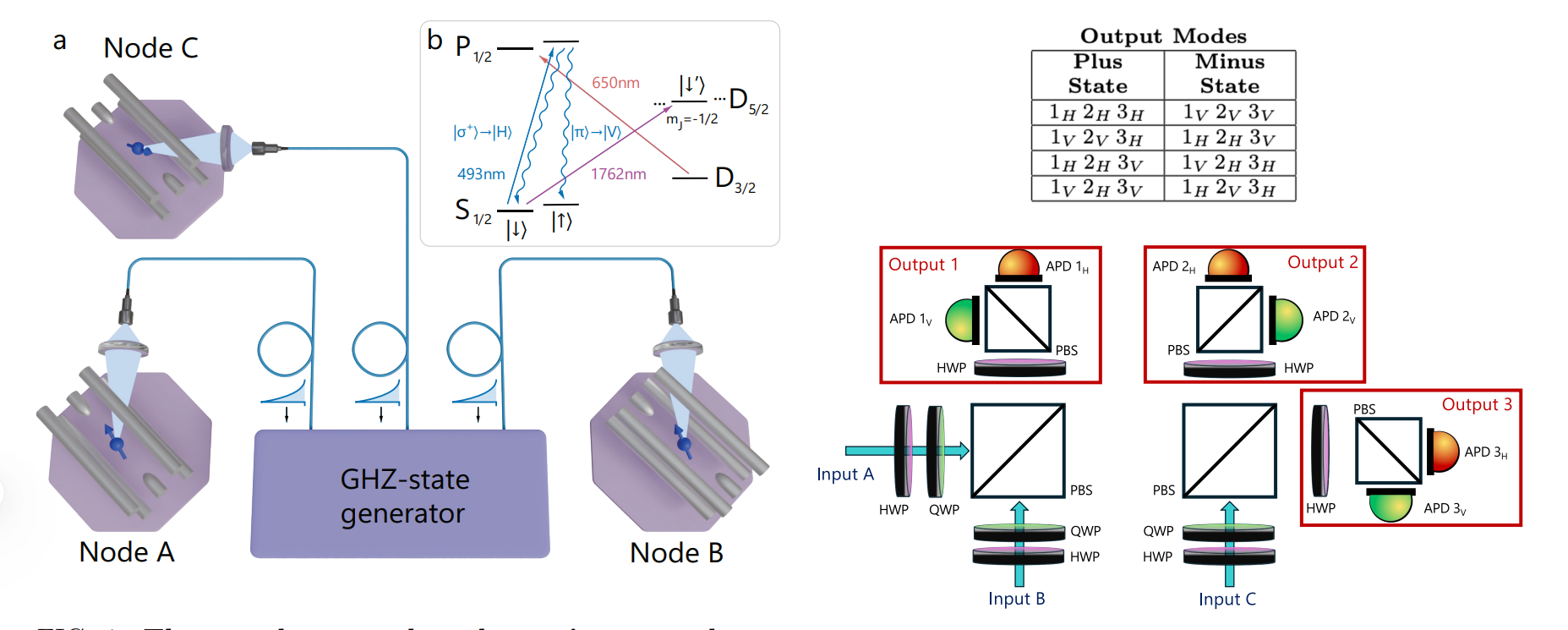
Researchers from the Duke Quantum Center and IonQ have demonstrated the distributed generation of a Greenberger–Horne–Zeilinger (GHZ) state across a three-node quantum network using individual trapped atomic ions. The experimental configuration consisted of three spatially separated hardware modules positioned approximately 2 meters apart, linked by 3-meter single-mode optical fibers to a centralized, free-space GHZ-state generator. The networking setup achieved remote tripartite entanglement without requiring local two-qubit gates or post-selection protocols, establishing a bounded atomic state fidelity between 0.841(17) and 0.881(17) at an entanglement generation rate of 0.095(5) s−1.