Home
Storia in 1 fonti
Duke University and IonQ Demonstrate Tripartite Entanglement of Remote Atomic Qubits - Quantum Computing Report
Researchers from the Duke Quantum Center and IonQ have demonstrated the distributed generation of a Greenberger–Horne–Zeilinger (GHZ) state across a three-node quantum network using individual trapped atomic ions. The experimental configuration consisted of three spatially separated hardware modules positioned approximately 2 meters apart, linked by 3-meter single-mode optical fibers to a centralized, free-space GHZ-state generator. The networking setup achieved remote tripartite entanglement without requiring local two-qubit gates or post-selection protocols, establishing a bounded atomic state fidelity between 0.841(17) and 0.881(17) at an entanglement generation rate of 0.095(5) s−1. Ion-Photon Entanglement Mechanics and Centralized Interference Each hardware node isolates a single 138Ba+ (barium) [...]
Raccontata da quantumcomputingreport.com
Timeline cronologica
- ·

Atom Computing and Nu Quantum Form Transatlantic Alliance to Network Neutral-Atom QPUs - Quantum Computing Report
Neutral-atom hardware pioneer Atom Computing and quantum networking infrastructure category-leader Nu Quantum have entered into a strategic collaboration to co-develop modular,…
- ·
ID Quantique and IonQ Introduce Clavis XG Multiplex to Deploy Quantum Key Distribution Over Metro Networks - Quantum Computing Report
ID Quantique and IonQ (NYSE: IONQ) have expanded their secure networking offerings with the release of Clavis XG Multiplex, a hardware solution designed to implement Quantum Key…
- ·
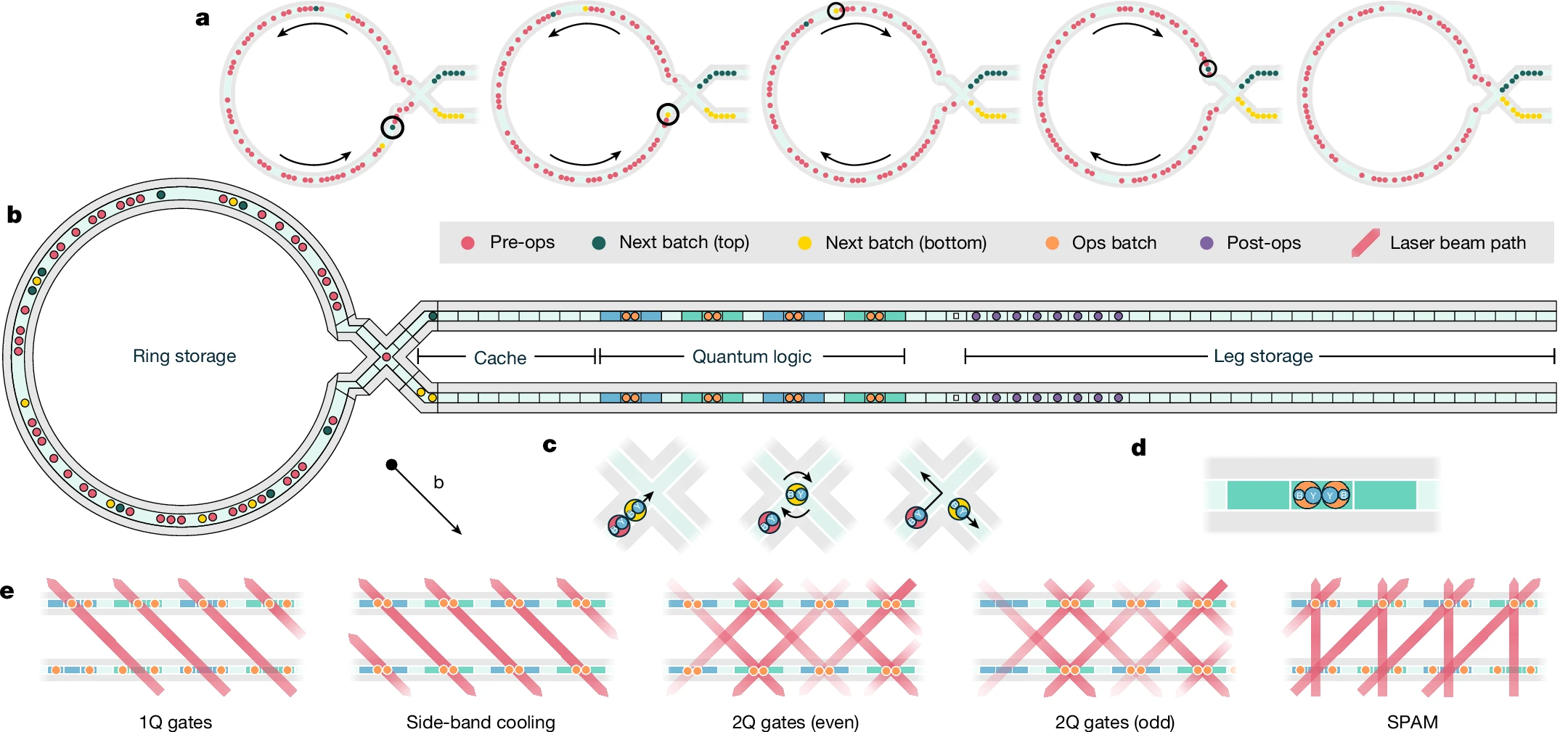
Sandia National Laboratories and Quantinuum Validate 98-Qubit Helios Trapped-Ion Framework - Quantum Computing Report
Sandia National Laboratories and Quantinuum have published peer-reviewed performance data in the journal Nature detailing Helios, a 98-qubit commercial trapped-ion quantum…
- ·
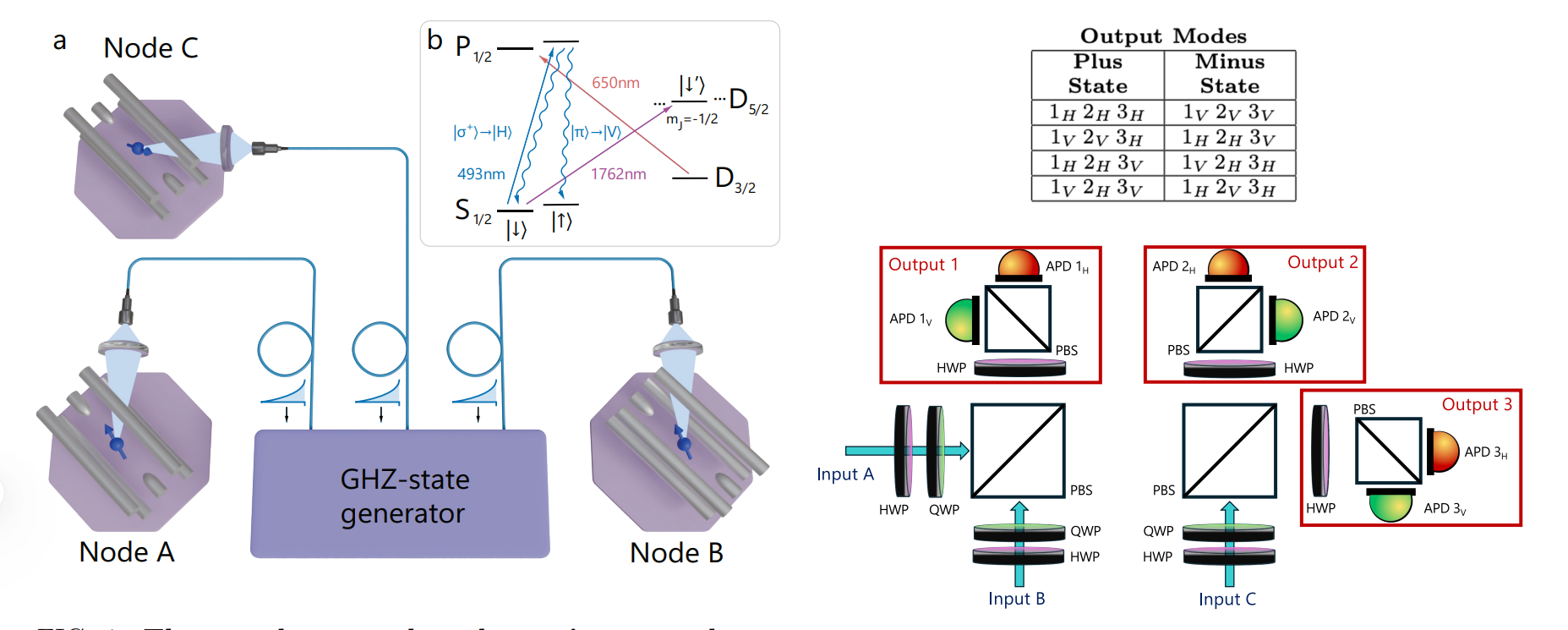
Duke University and IonQ Demonstrate Tripartite Entanglement of Remote Atomic Qubits - Quantum Computing Report
Researchers from the Duke Quantum Center and IonQ have demonstrated the distributed generation of a Greenberger–Horne–Zeilinger (GHZ) state across a three-node quantum network…