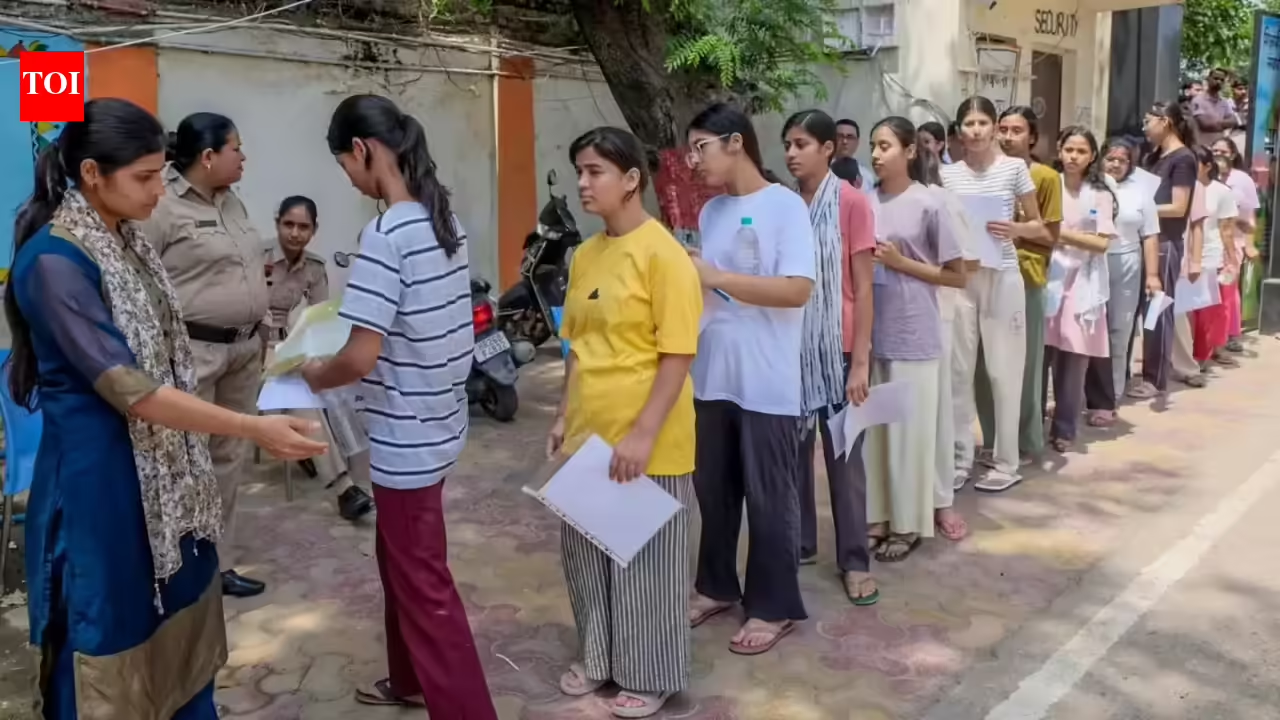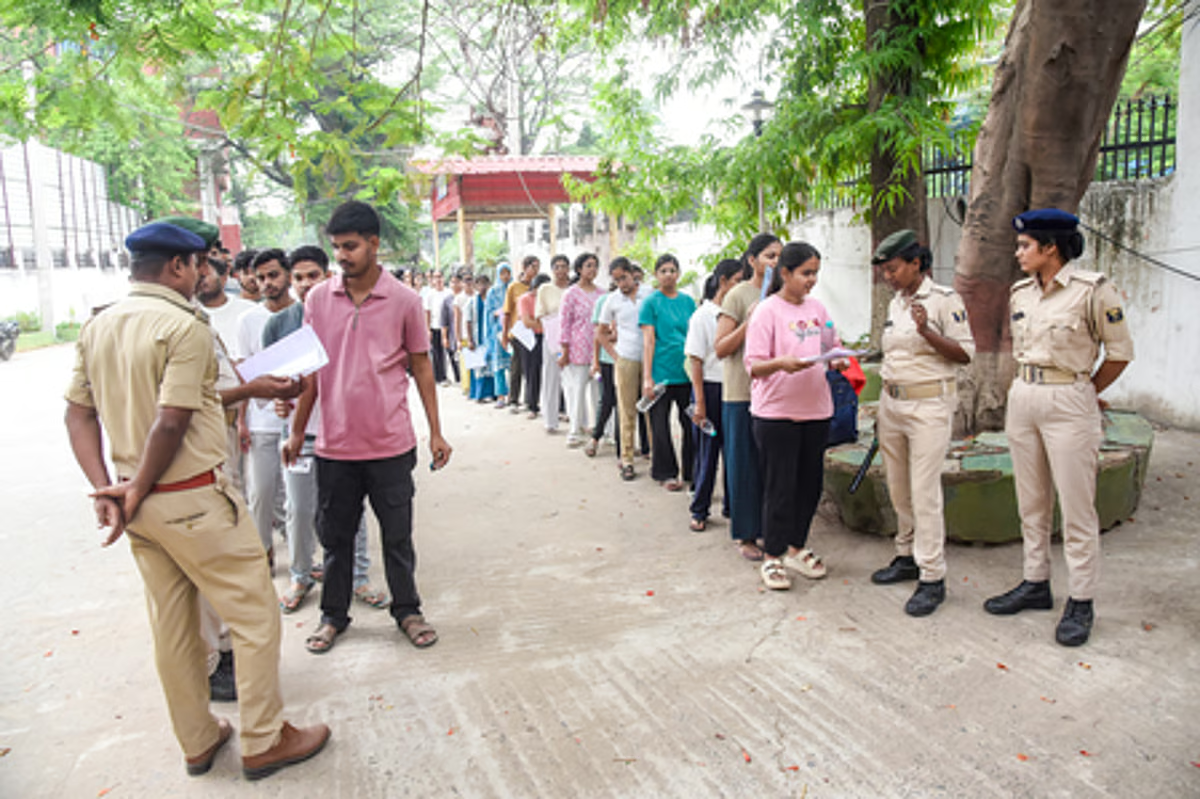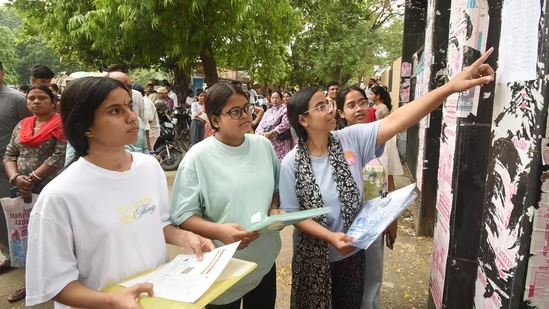
The Centre’s decision to block Telegram across India until June 22 and order the platform to disable its message-editing feature until June 30 are the latest instalments of a broader effort directed at managing public perception after a botched attempt to hold the National Eligibility cum Entrance Test (NEET) this summer. After asking the air force to deliver question papers for the June 21 re-examination, asking the paramilitary force to escort the papers, and putting the question setters in isolation, the government explained its latest diktat on two grounds: First, to disrupt organised fraud ahead of the exam, and second, to prevent the retroactive fabrication of paper-leak evidence and forestall false rumours of advance leaks.After asking the air force to deliver question papers for the June 21 re-examination, asking the paramilitary force to escort the papers, and putting the question setters in isolation, the government explained its latest diktat. (Reuters)Telegram has been embroiled in scandals around the world related to exploitation, scams and illegal activities. And the government is justified in taking every precaution to safeguard the future of the 2.3 million students who appear for the medical entrance test. But the latest orders not only fail the test of proportionality — after all, students, coaching groups, teachers, professionals, journalists, small businesses all use the platform — but also point to an unfortunate tendency to treat the symptoms of a problem instead of the problem itself. The problem with NEET isn’t just misinformation around paper leaks but that the question paper has leaked twice in three years and neither NTA nor investigative agencies have managed to prevent it. The Telegram block also raises questions about the guardrails supposedly baked into Section 69A of the Information Technology Act, which were meant to prevent the government from using the provision as a blunt instrument. The authorities will be better served addressing the lacunae in the paper-setting process, increasing transparency and countering misinformation with a structured, long-term plan that doesn’t rely on headline-grabbing tactics.
Blocking Telegram won’t solve the bigger digital governance problem
The problem with NEET isn’t just misinformation around paper leaks but that the question paper has leaked twice in three years
331 words~2 min read