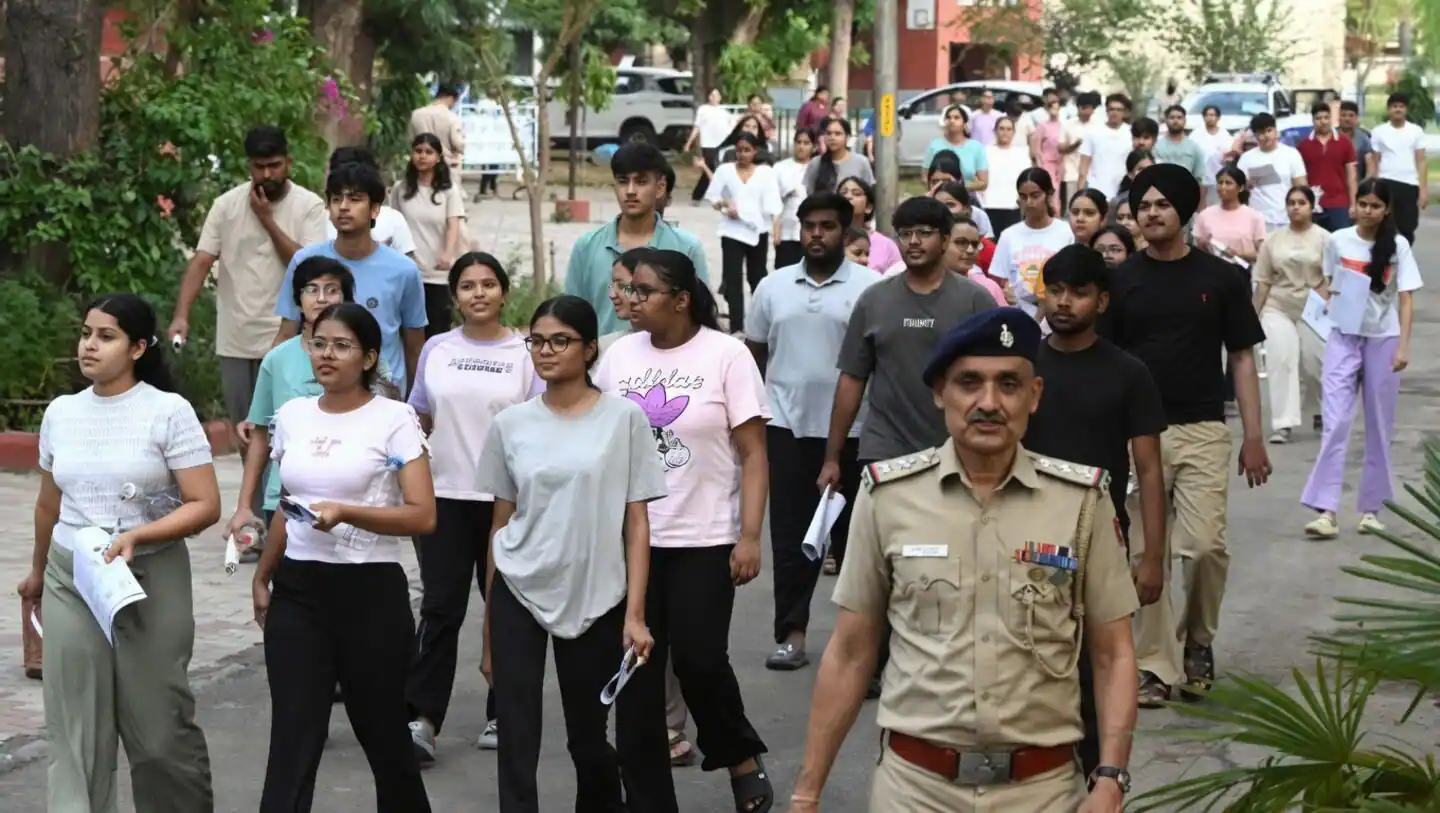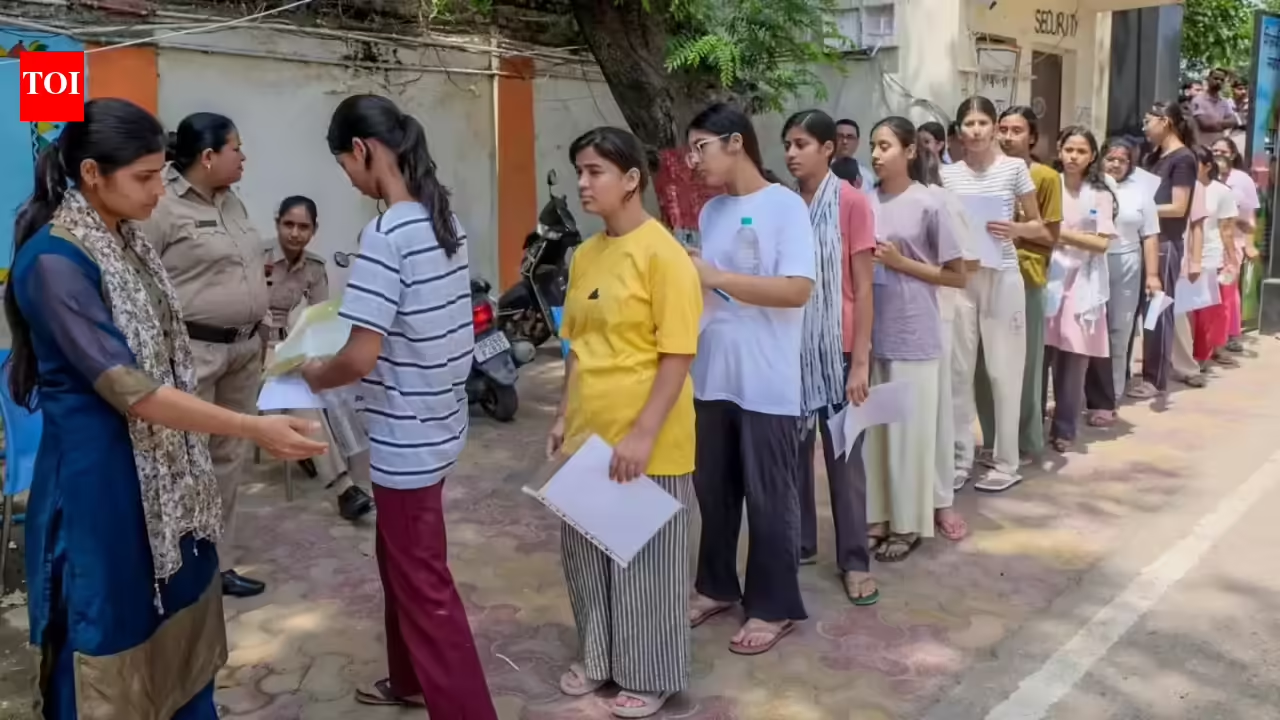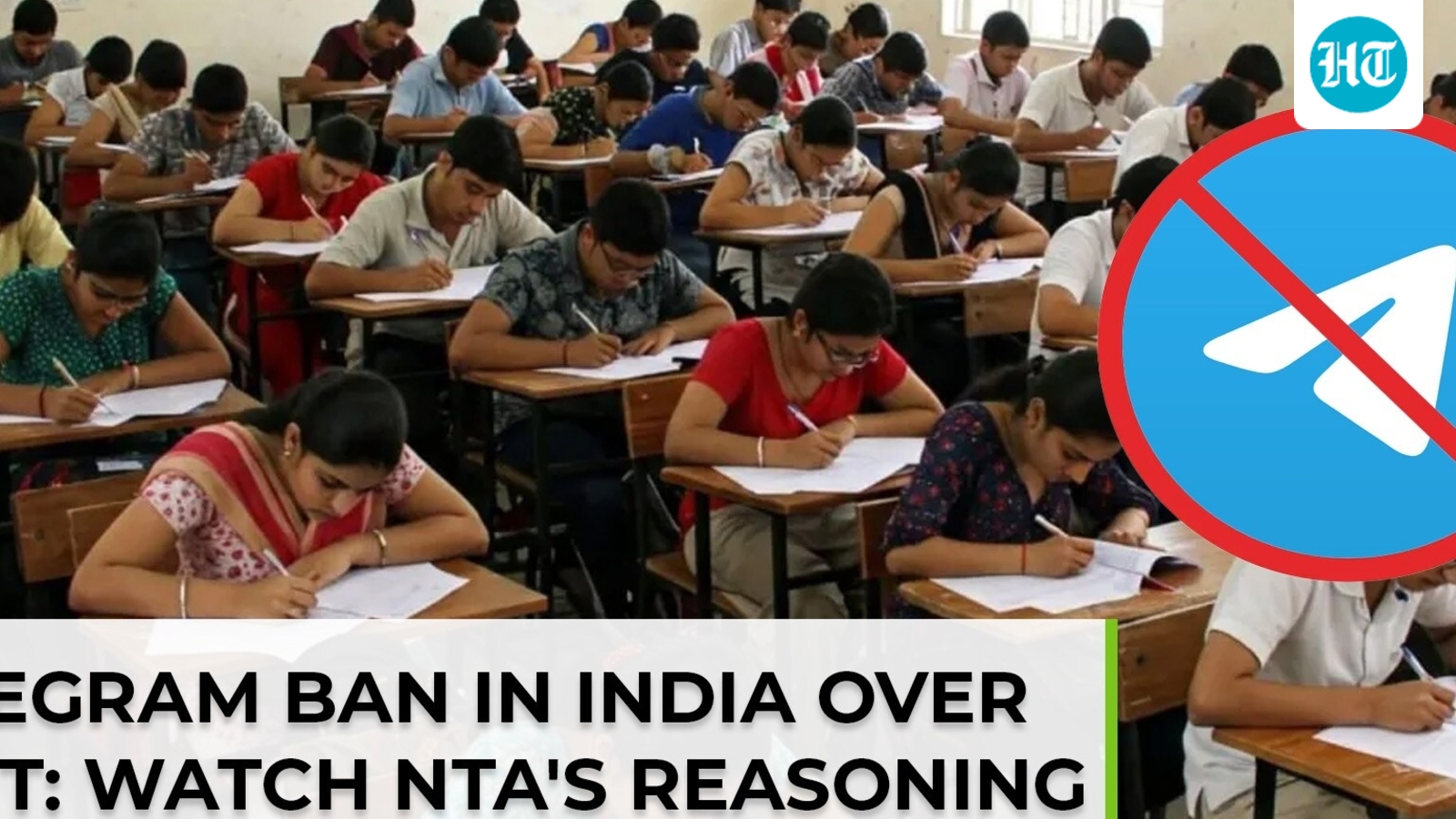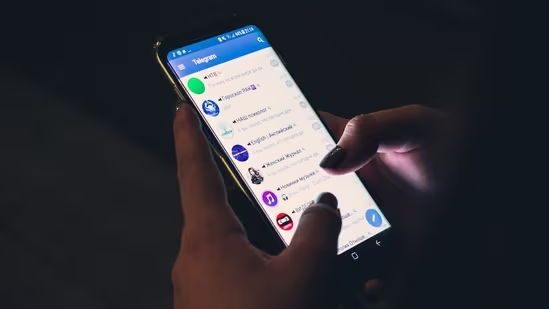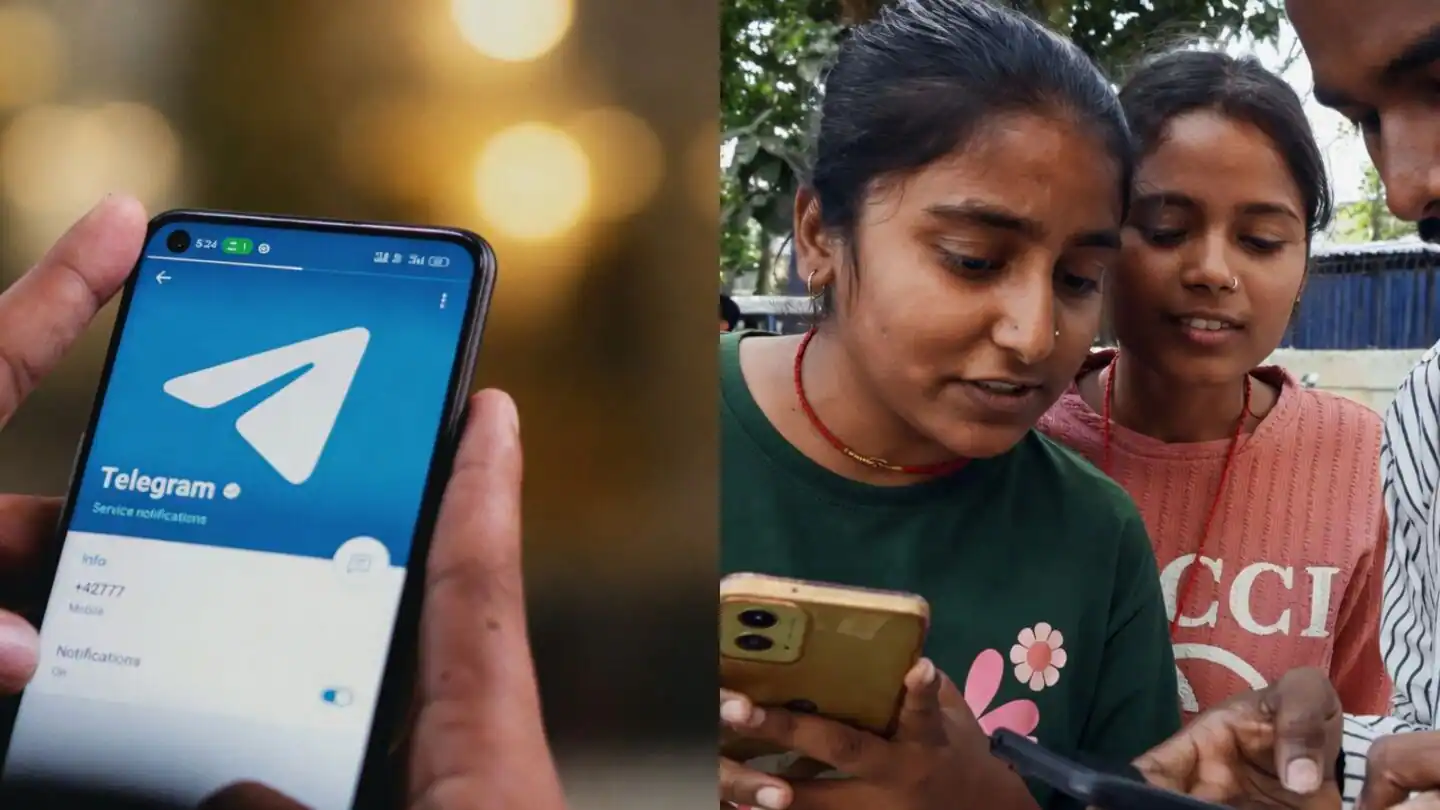
New Delhi: Five days ahead of the high-stake NEET-UG 2026 re-examination, the Centre has barred all access to Telegram until June 22 and has disabled its message editing feature until June 30 citing a "public order" concern caused due to "organised use" of the platform to "defraud" candidates appearing for the June 21 exam.Incidentally, the exam, originally held on May 3, was cancelled after the National Testing Authority (NTA) discovered that several questions were allegedly in circulation over Telegram, before the exam.Also Read: Panel pushes NTA reset, flags CUET limits for JNUNTA, on Tuesday, announced that MEITY had issued a direction under Section 69 A of the Information Technology Act, 2000 to bring in Telegram specific restrictions and the same was done as a measure of "last resort".In its press statement, NTA conceded that intermediate remedies, including the take-down action coordinated by Indian Cyber Crime Coordination Centre (I4C), had been pursued and had not produced "the response required to protect candidates" in the runup to the examination, warranting the fresh restrictions.NTA's statement pointed to the mushrooming of several channels on Telegram openly advertising themselves with names like "PAPER LEAKED NEET", "Re-NEET 2026", "Private Mafia", "REE NEET MAFIAA" and similar formulations.These, NTA's press statement said, demanded sums ranging from a few thousand to several lakhs of rupees from candidates and their families, in exchange for purported access to the re-examination paper.NTA underlined that this is a "fraud" and that there is no such paper available outside the secured examination chain.Accordingly, references were made to MEITY by NTA and the Department of Higher Education pointing to limitation of channel-by-channel take down/restriction and the need for "platform-level compliance" leading to the stringent Section 69A direction.It added that the message editing feature was barred until June 30 because of a separate but related concern on how Telegram was being used across various recent examinations to fabricate after the event "paper leak" evidence.Currently, the message editing feature permits a channel administrator to edit the content of a previously posted message, including substitution of attached files such as PDFs, while the original send-time stamp is retained.This feature, NTA said, was frequently being used to edit an older, innocuous message to insert the actual question paper after the examination has been conducted, and the resulting chat is then circulated as purported "evidence" that the paper was in circulation before the examination.IIT Kanpur director Manindra Agarwal added on X that such a fraudulent strategy was also used in the recent JEE Advanced exam case.NTA cited Ahmedabad City Cyber Crime Branch's recent arrests of gang members promising advance access to exam papers over Telegram besides the June 9 advisory by the Bihar Police Economic Offences Unit cautioning against the same.Even as the Telegram ban sparked a furore, NTA DG Abhishek Singh defended it stating that while several platforms were on the radar and due action was being taken, this platform was being "abused the most" due to the features of editing warranting a restriction."As far as action on Telegram is concerned, it may appear to be a sledgehammer, but when it is the interest of the students, when the interest of lives of students, when it is the interest of the careers of about 22 lakh young minds, every step will be taken. The strong arm of the law will come down when it is required. We are not there to just issue warnings and threats, but to also act when it is needed in the interest of our young students," Singh told reporters.NTA put out a video advisory on X cautioning parents against Telegram channels promising a "leaked paper" for a sum of money and putting out fake videos of "proof" showing chats from before the exam.
Telegram blocked, edit feature disabled before NEET re-exam
Incidentally, the exam, originally held on May 3, was cancelled after the National Testing Authority (NTA) discovered that several questions were allegedly in circulation over Telegram, before the exam.
619 words~3 min read