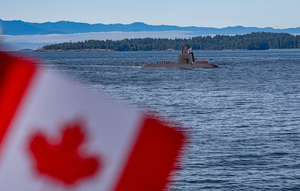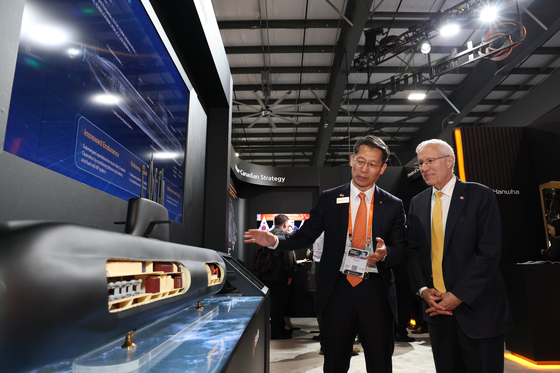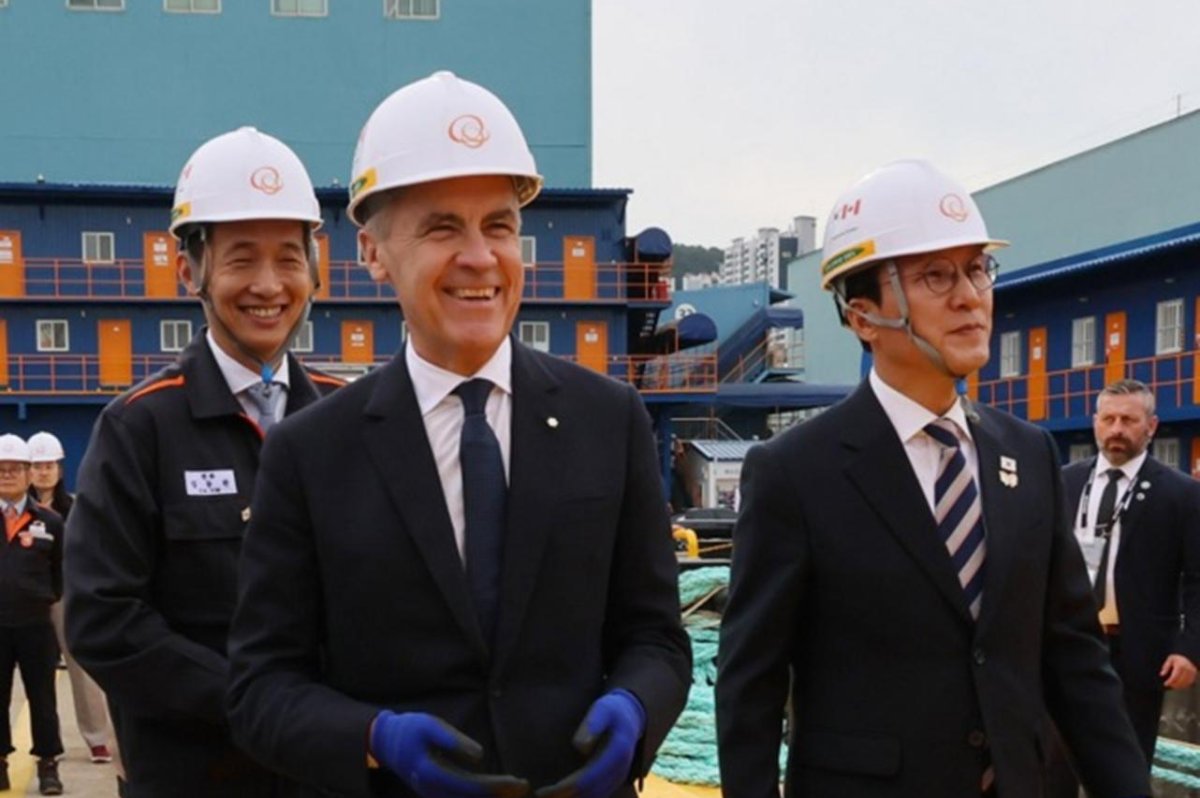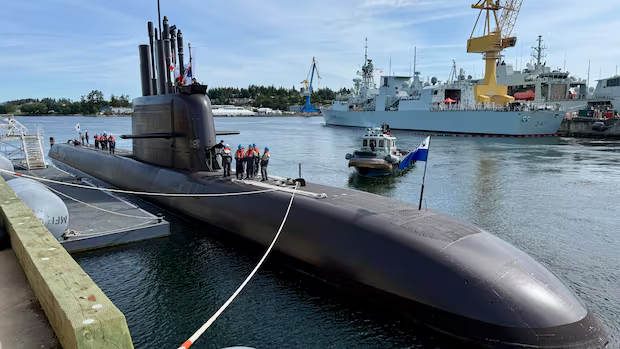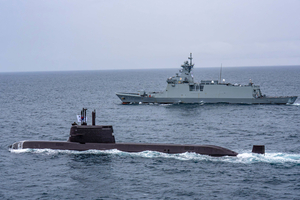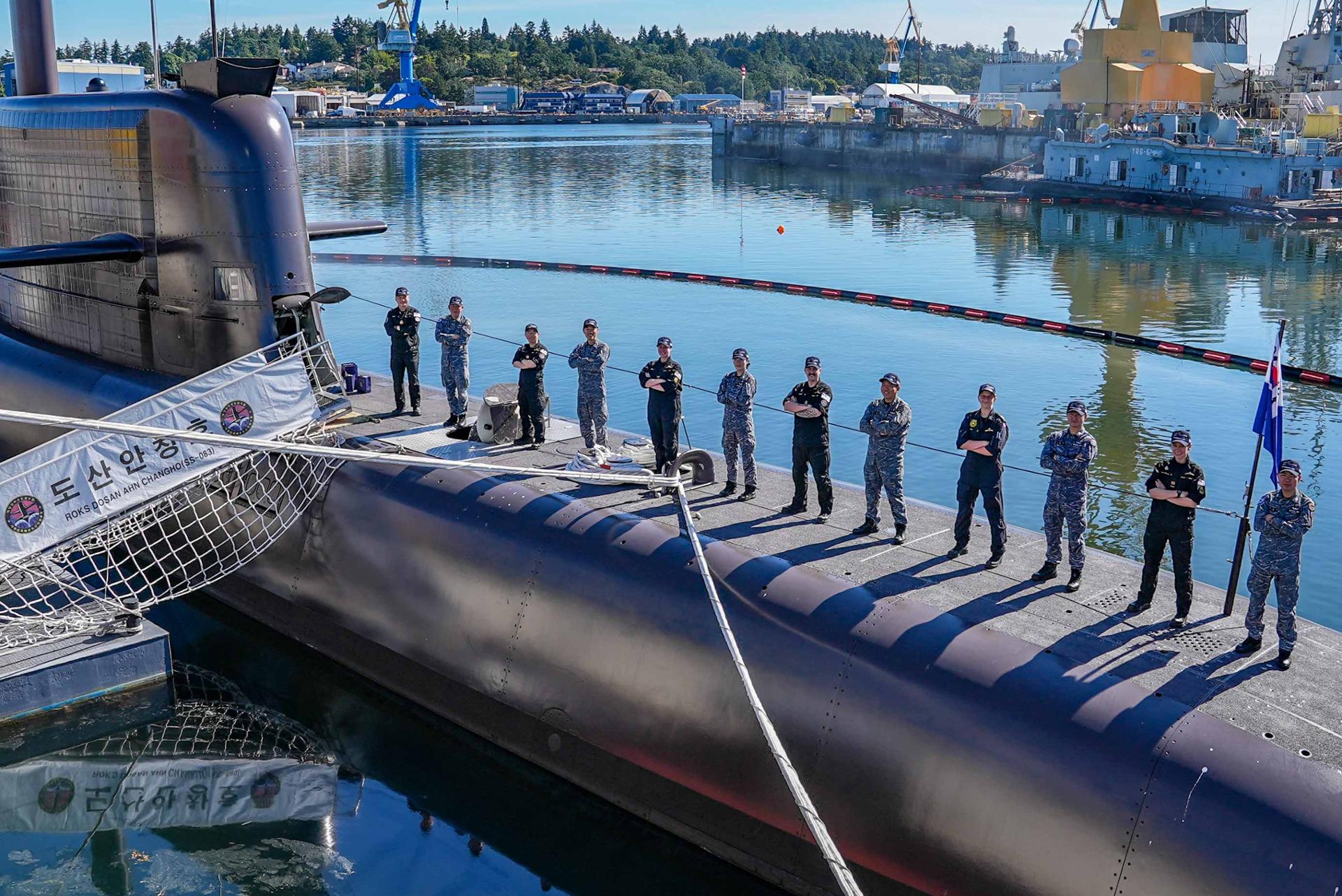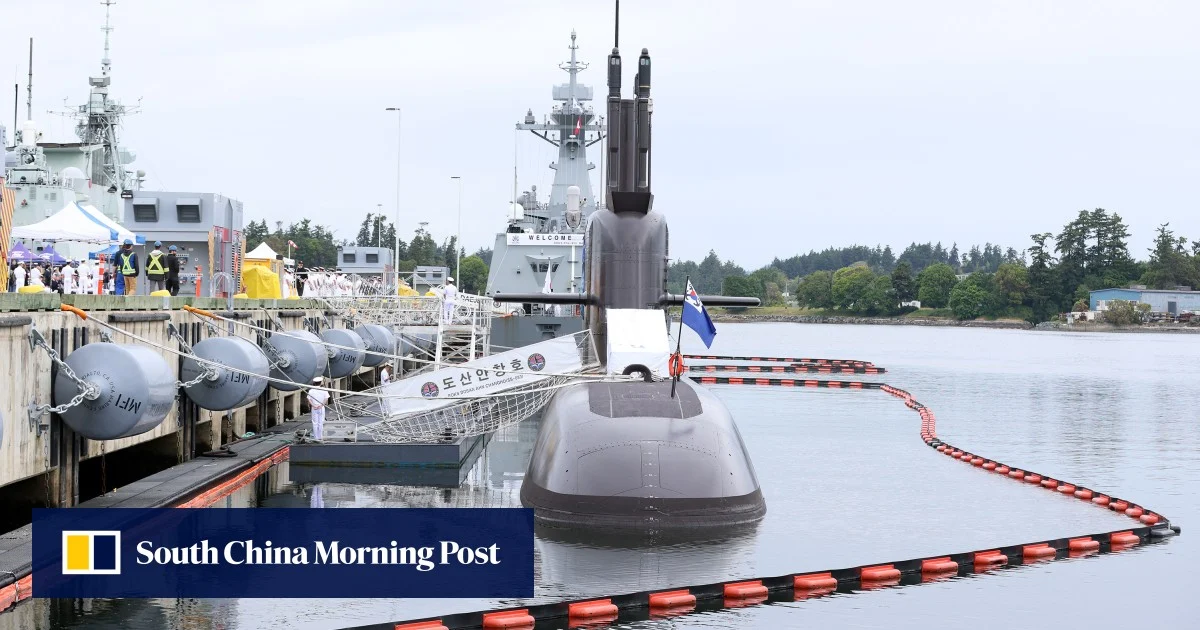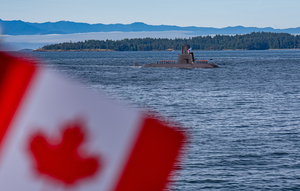
Hanwha Ocean touts proven submarines, faster delivery, economic benefits in race for one of world's largest naval contracts The Dosan Ahn Chang-ho, a 3,000-ton KSS-III submarine operated by the South Korean Navy, arrives at Canada's Esquimalt Naval Base in Victoria on May 24. (ROK Navy via Yonhap) South Korea’s naval ambitions are facing their most significant overseas test yet as Hanwha Ocean vies for a deal that could be worth up to 60 billion Canadian dollars ($42.88 billion).The Canadian Patrol Submarine Project, or CPSP, aims to acquire up to 12 diesel-electric submarines for the Royal Canadian Navy, operating across the Arctic, Atlantic and Pacific oceans. South Korea’s Hanwha Ocean-led consortium is up against Germany’s Thyssenkrupp Marine Systems as finalists, with industry officials expecting the decision to be announced soon before mid-July.The winner will not only build the submarines but also provide decades of maintenance, repair and overhaul services, making it one of the largest defense procurements in Canadian history and the biggest potential overseas defense export for South Korea.Korea's proven platform vs. Germany's new technologyThe competition has narrowed to a decision between South Korea’s emphasis on operational readiness and reliable delivery timelines versus Germany’s focus on next-generation submarine technology, experts say.Hanwha Ocean is putting forward a variant of its KSS-III submarine, with its Dosan Ahn Changho-class vessels already deployed by the South Korean Navy. TKMS, meanwhile, has proposed the Type 212CD submarine jointly developed with Norway, a platform designed to incorporate the latest European submarine technologies.Hanwha Ocean has been highlighting the KSS-II’s operational record, arguing that Canada would be purchasing a submarine already proven at sea rather than one still awaiting full deployment.South Korea recently dispatched the ROK Navy’s 3,000-ton-class submarine Dosan Ahn Changho to Canada, where it conducted demonstrations and joint exercises with the Royal Canadian Navy. The voyage from Busan through Guam and Hawaii to Canada’s Esquimalt naval base was designed to prove the vessel’s long-range deployment capability, a critical requirement for a country seeking to monitor the Arctic, Atlantic and Pacific oceans simultaneously.Hanwha said its vessels are proven in-service and fully meet and exceed all of the requirements for the project.“These include superior underwater surveillance capability and deployability in the Arctic with extended range and endurance that will provide stealth, persistence and lethality to ensure that Canada can detect, track, deter and, if necessary, defeat adversaries in all three of its oceans,” the group said.The latest voyage also showed the submarine’s full capability to operate with key NATO allies such as Canada, it added.A recent report by James Kim, director of the Korea Program at The Stimson Center, also echoed this view, saying the KSS-III leads with “reliable delivery timeline and proven performance,” reducing technical, financial and operational risk from Canada’s point of view. Meanwhile, Germany's 212CD’s “defining characteristic is its novelty — a new hull form and combat systems," the report said.TKMS counters with the Type 212CD — a platform co-developed with Norway’s Kongsberg Defense and Aerospace — touting it as one of the most advanced conventional submarine platforms in Europe.The German company stressed that the new platform comes with excellent stealth capability, the powerful ORCCA combat management system, and advanced sensor technology and weapon systems.TKMS’ strongest selling point may be its position within the NATO defense ecosystem. The German shipbuilder supplies more than 70 percent of NATO’s conventional submarine fleet, giving Canada access to an established network of allied operators, a shared training framework and logistics support.For Ottawa, whose maritime strategy is closely tied to coalition operations, the prospect of seamless interoperability with NATO and US forces could prove a significant lead.Delivery schedule: a critical factorBeyond technology, delivery time is expected to be one of the most critical criteria as Canada’s aging fleet approaches retirement.Hanwha has proposed delivering the first submarine in 2032, while supplying four boats before Canada’s fleet is scheduled for retirement in 2035. The complete fleet of 12 submarines will be delivered by 2043.Meanwhile, TKMS has recently pledged to deliver four submarines to Canada by 2036 by reallocating production slots originally intended for German and Norwegian orders, according to Germany’s defense minister in a report by CBC.The move was widely seen as a direct response to Hanwha Ocean’s pitch of faster and more predictable delivery schedules, which is seen as a key advantage for the South Korean bidder.Industrial packages at the centerAs both companies meet Canada’s military requirements and timeline, observers say the outcome may hinge on industrial benefits, as Canadian officials have stressed that industrial participation and domestic job creation will be major factors in the final decision."The competition is no longer being decided solely by submarine performance," said Retired Capt. Moon Keun-sik, a professor at Hanyang University’s Graduate School of Public Policy and a former submarine captain in South Korea's Navy."Both sides have credible platforms. The key question now is which bidder can offer greater long-term economic benefits and industrial cooperation for Canada's shipbuilding and defense sectors."Hanwha, along with its partner HD Hyundai Group, has assembled one of the most ambitious industrial packages. Hanwha has partnered with Canadian organizations, including steelmaker Algoma Steel and the Automotive Parts Manufacturers' Association, while promoting broader cooperation in defense, energy, steel, batteries and aerospace.The Korean side has also proposed "Project Beaver," a CA$3.1 billion initiative to develop hydrogen-powered freight trucks and fueling infrastructure, which could create roughly 9,000 jobs.Hanwha says its overall package could generate more than 22,500 jobs annually and deliver economic benefits totaling about CA$94 billion over the life of the project.TKMS has centered its proposal on giving Canada greater control over its submarine fleet through extensive technology transfer and domestic industrial participation.It pledged a full transfer of intellectual property and know-how related to the Type 212CD program, giving greater independence to Canada over the vessel’s long service life.TKMS has also partnered with Canadian companies including Seaspan Shipyards, Magellan Aerospace and Finkl Steel, expanding cooperation across shipbuilding, aerospace, battery, advanced manufacturing and defense supply chains.TKMS’ bid is expected to generate around CA$86 billion in economic benefits to the country’s gross domestic product, while supporting thousands of jobs, according to industry estimates.
Canada's $43b submarine choice: Korean readiness or German innovation?
South Korea’s naval ambitions are facing their most significant overseas test yet as Hanwha Ocean vies for a deal that could be worth up to 60 billion Canadian
1,010 words~5 min read