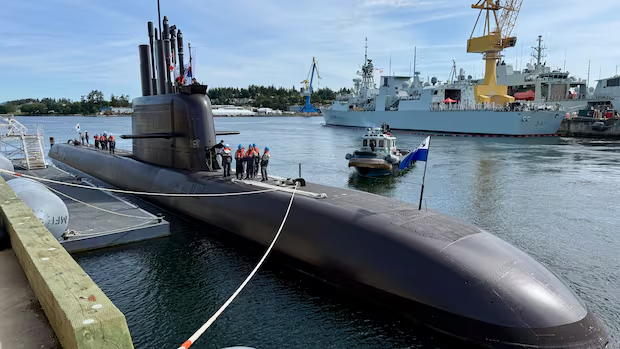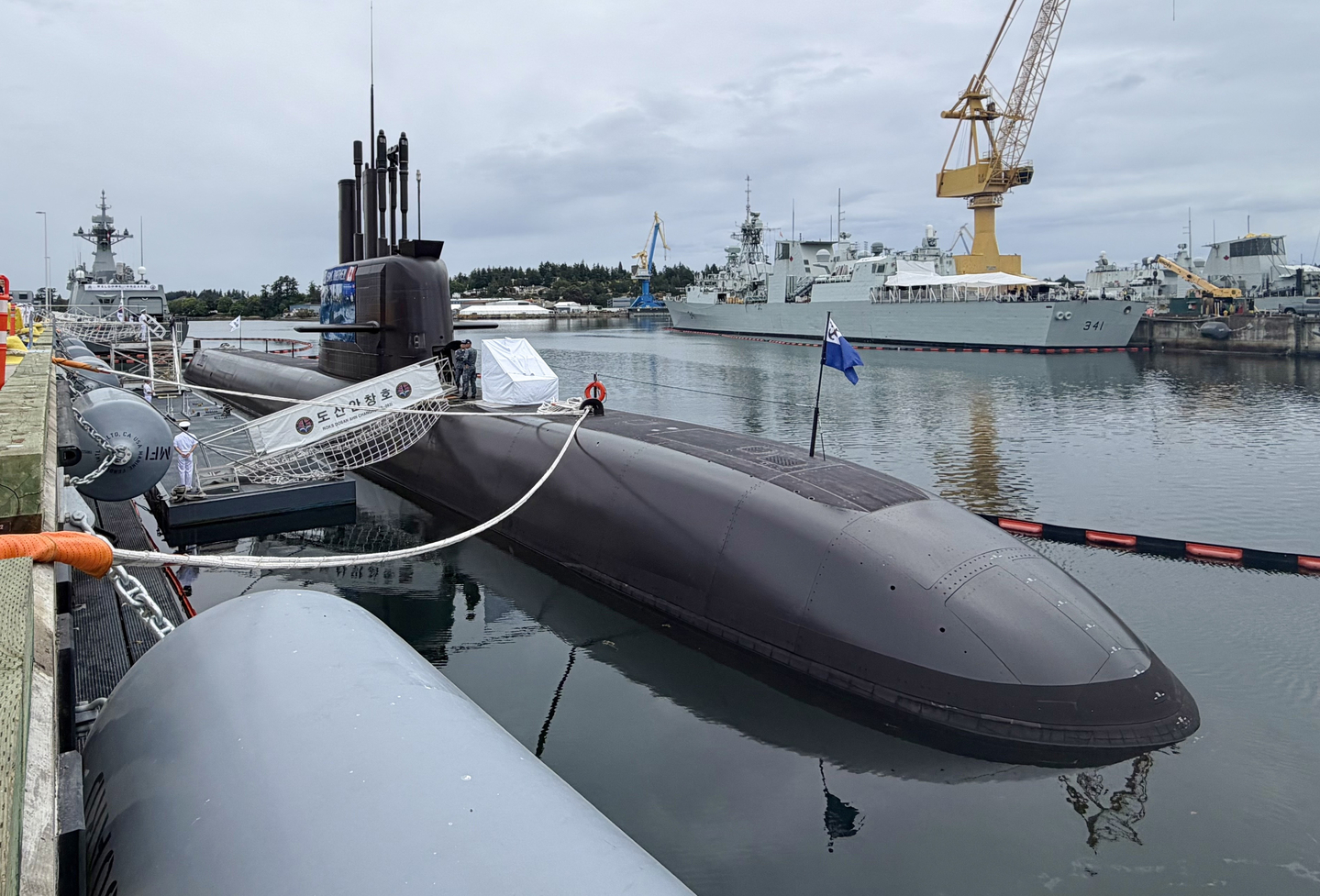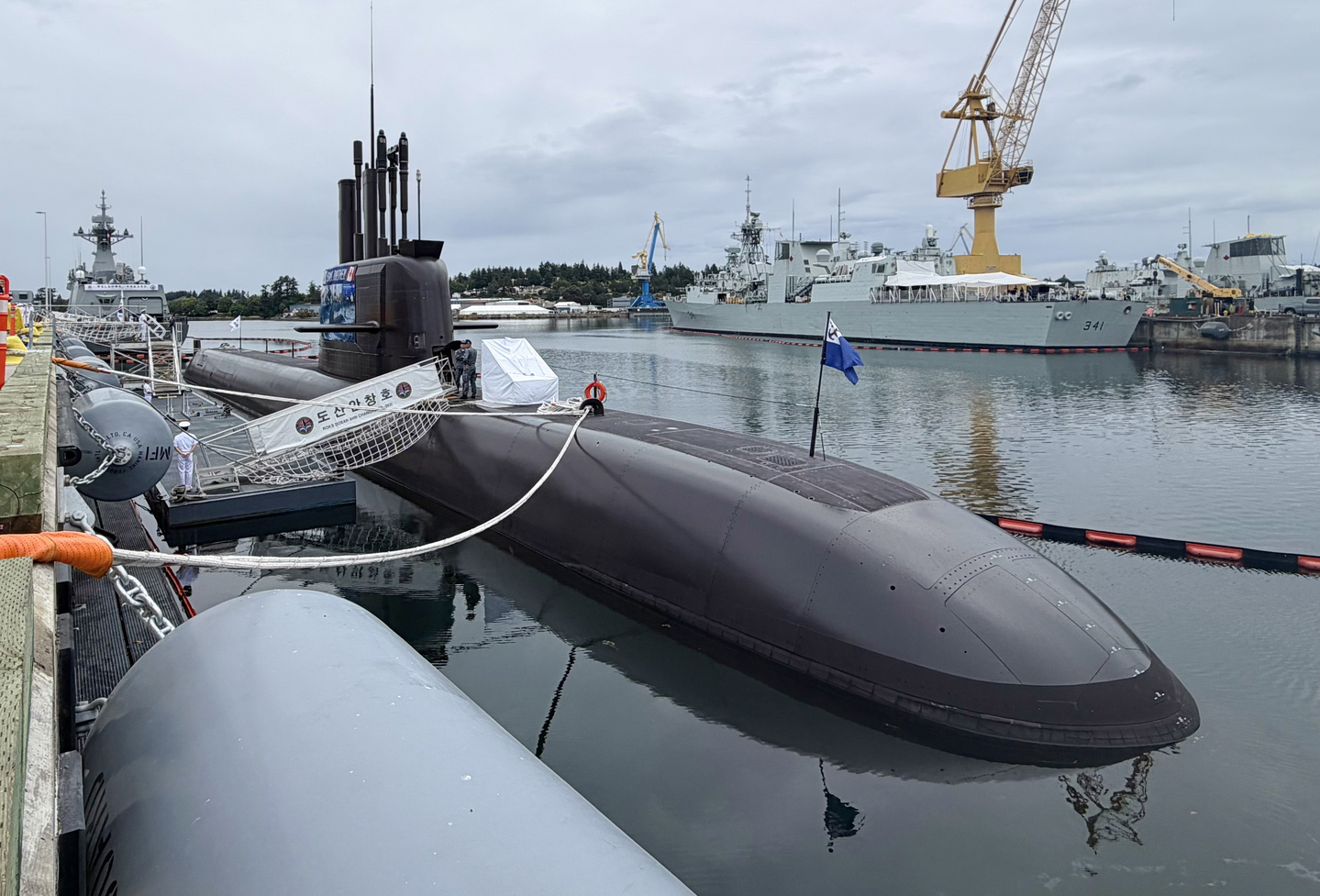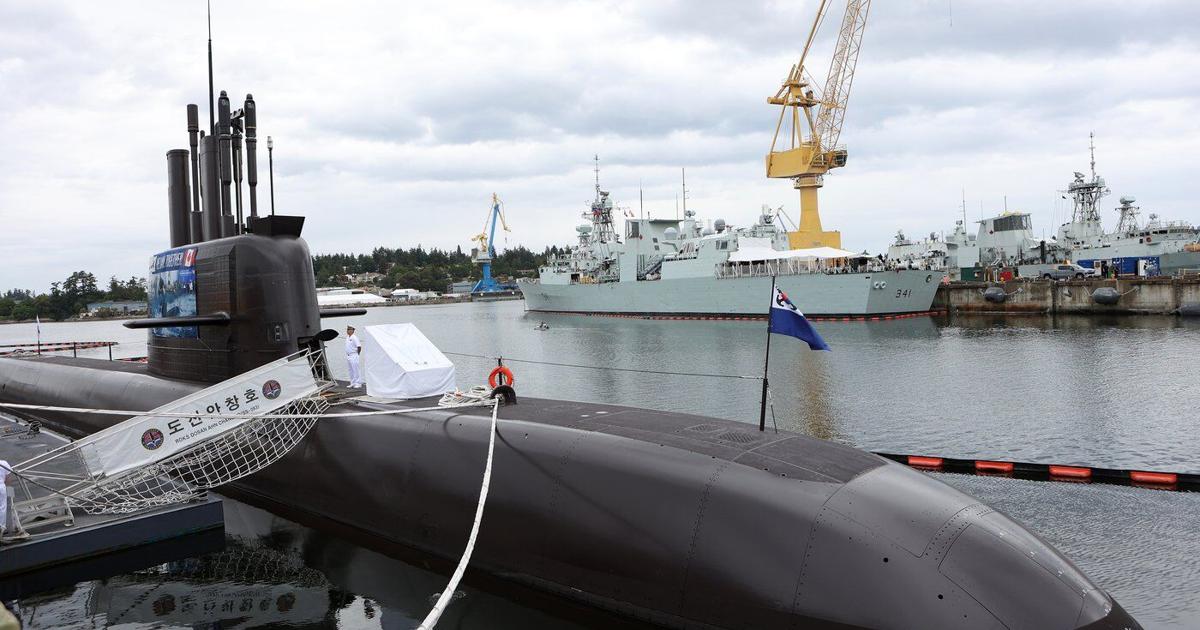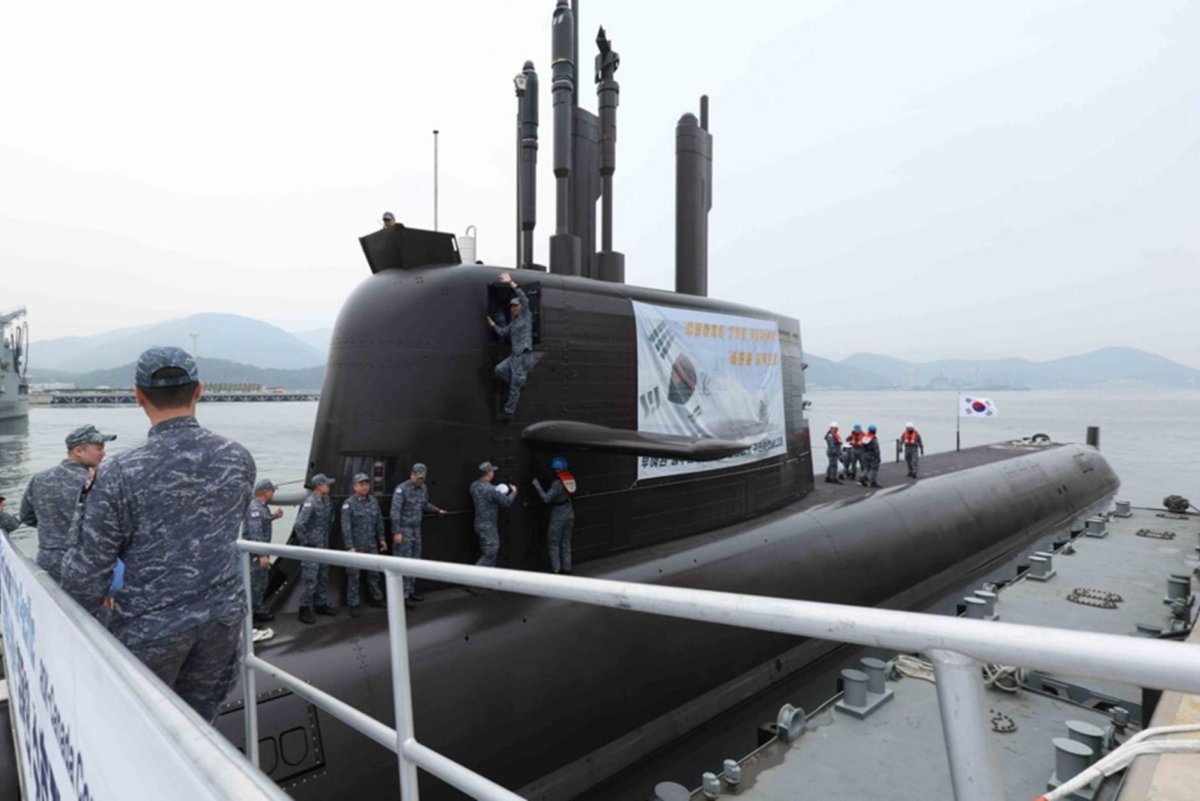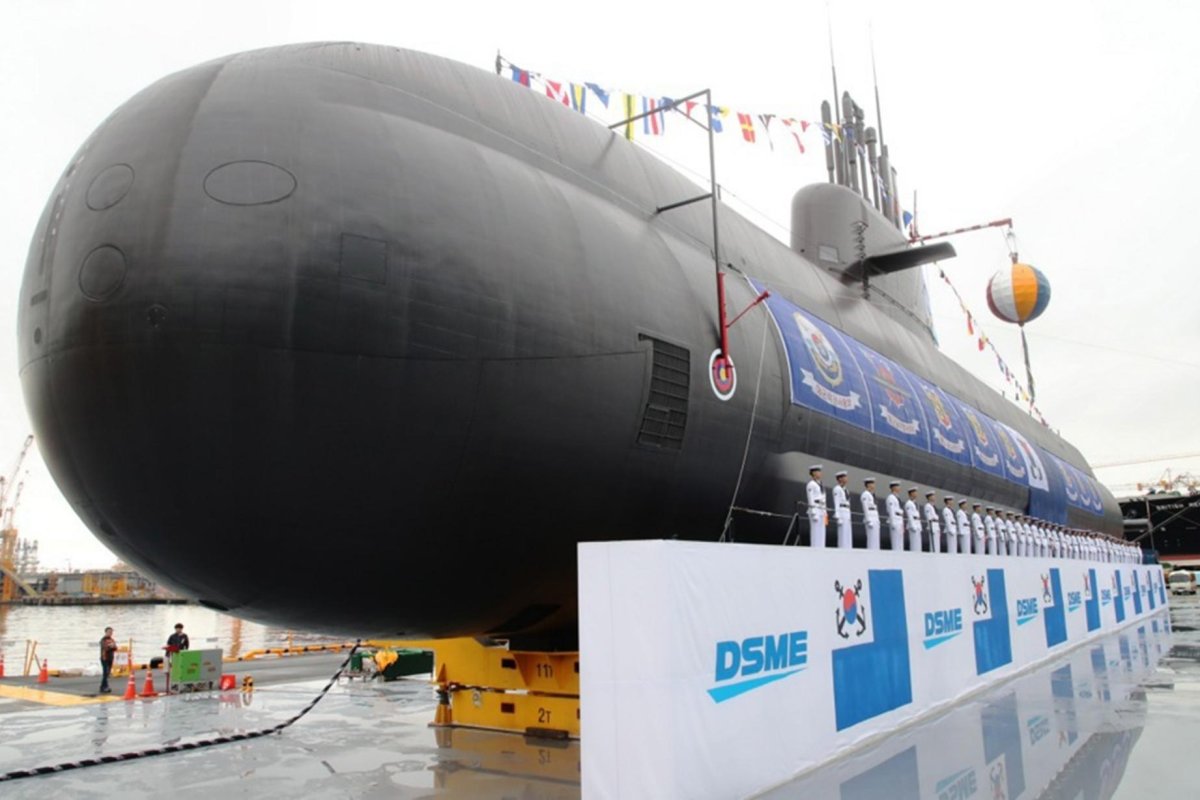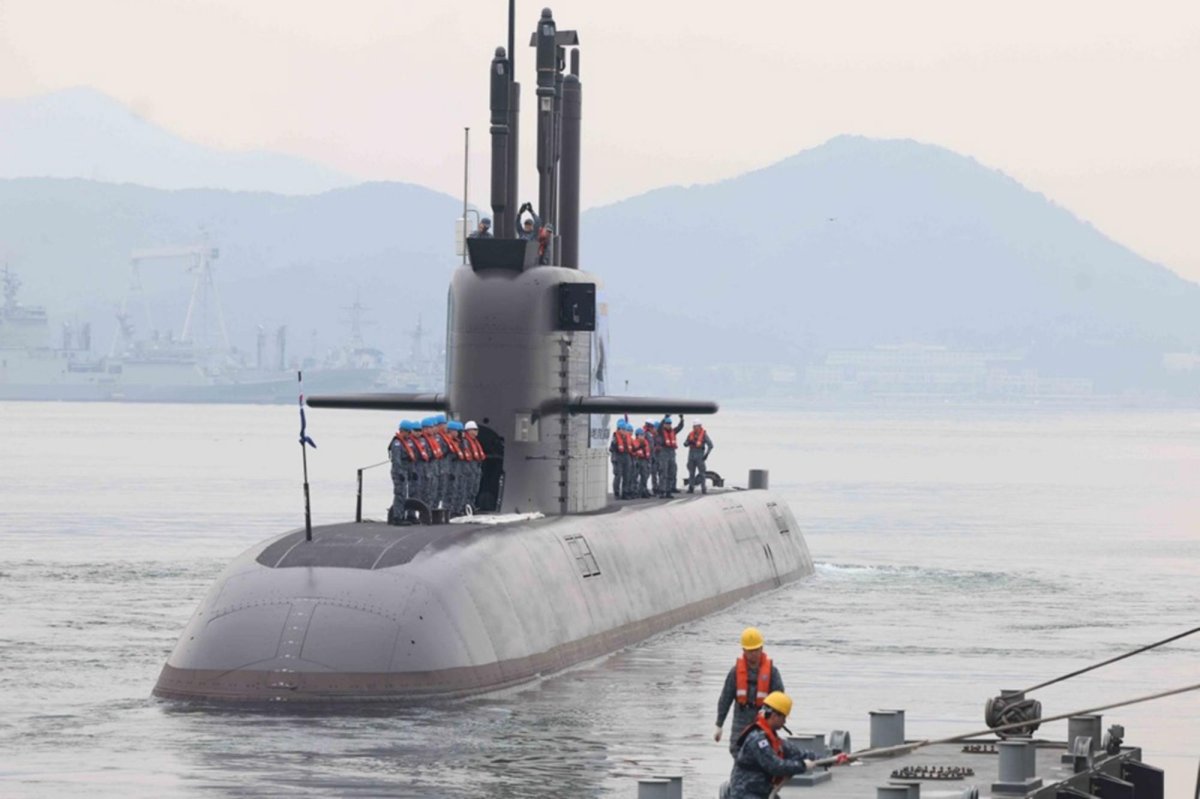
The South Korean-built submarine ROKS Dosan Ahn Chang-ho (KSS-III, 3,000 tons) enters the Royal Canadian Navy’s Esquimalt naval base in Victoria, Canada, on May 23 (local time) to participate in joint South Korea-Canada naval cooperation drills. (Republic of Korea Navy) South Korea is stepping up its push to win Canada’s multibillion dollar submarine procurement project by combining a high-profile naval demonstration with expanded industrial partnerships and government-level diplomacy ahead of the expected June decision.The 3,000-ton ROKS Dosan Ahn Chang-ho arrived at Canadian Forces Base Esquimalt in Victoria, British Columbia, on Saturday after traveling some 14,000 kilometers from a major naval base in Jinhae, South Gyeongsang Province, via Guam and Hawaii. It marked the first trans-Pacific voyage ever undertaken by a South Korean submarine, according to the Navy.The submarine, accompanied by the 3,100-ton ROKS Daejeon frigate, was welcomed by the Royal Canadian Navy during a ceremony Monday. Two Canadian submariners joined the South Korean crew in Hawaii for the final leg of the journey to Victoria.The voyage comes as a South Korean consortium led by Hanwha Ocean, with support from HD Hyundai Heavy Industries, is competing against Germany’s Thyssenkrupp Marine Systems for Canada’s Canadian Patrol Submarine Project, or CPSP. The project seeks to replace Canada’s four aging Victoria-class submarines with up to 12 conventionally powered submarines, with the total value estimated at around 60 trillion won ($39.6 billion), including maintenance, repair and overhaul.A winning bidder is expected to be selected in June.South Korea seeks to highlight the operational readiness of its submarine platform with the Dosan Ahn Chang-ho’s arrival. The vessel, a Jangbogo-III Batch-I submarine built with South Korean technology, serves as the base platform for the upgraded 3,600-ton Jangbogo-III Batch-II model Hanwha Ocean is proposing for Canada.“The voyage demonstrates the ability of domestically built naval submarines to carry out long-term missions,” the Navy said, adding that it highlights the submarine’s operational capabilities, onboard living conditions and system reliability.A media tour conducted after the welcome ceremony showcased the submarine’s crew quarters, combat information center, steering room and machinery control room. Officials emphasized its air-independent propulsion system, which allows extended underwater operations without snorkeling by generating electricity using onboard oxygen and fuel.The Dosan Ahn Chang-ho reportedly continued operations using the system after encountering a typhoon near Guam and passed through tropical waters near Hawaii and Guam without major issues affecting sensitive electronic and mechanical equipment.South Korean officials also underscored the vessel’s crew accommodations, saying they were designed for long missions and offer more space than Canada’s current submarines.The demonstration is seen as a key advantage for Seoul, as Germany’s proposed Type 212CD submarine remains largely at the design stage. South Korea is also stressing faster delivery, with Hanwha Ocean and HD Hyundai Heavy Industries proposing to deliver the first submarine by 2032 and four by 2035.The vessels are scheduled to conduct joint drills with the Royal Canadian Navy before participating in the US-led Rim of the Pacific exercise in Hawaii in late June, where Seoul hopes to further demonstrate interoperability with allied naval forces.Alongside the naval showcase, Hanwha affiliates have been expanding industrial outreach in Canada. Hanwha Power said Monday it signed a memorandum of understanding with the University of Alberta last week for joint research and development in green energy technologies, including waste heat recovery systems, turbo expander generators, and carbon capture, utilization and storage.Hanwha Ocean also signed an MOU on May 21 with Canadian aerospace firm Reaction Dynamics to explore strategic investment opportunities aimed at strengthening Canada’s launch capabilities. The company said it plans to review investments and business partnerships with Canadian innovation firms through a venture capital fund it intends to establish.The moves are linked to Canada’s industrial and technological benefits program, a key component of major defense procurement projects.Hanwha Ocean has also hosted a “CPSP Partners Day” in Canada and reportedly formed a 30-member task force to engage with local industry and government officials. Hanwha Ocean CEO Kim Hee-cheul recently visited Canada to review the project and is expected to attend CANSEC 2026, Canada’s largest defense exhibition, in Ottawa later this month.The South Korean government has also intensified support for the bid.Earlier this month, Industry Minister Kim Jung-kwan met in Ottawa with Canadian Industry Minister Melanie Joly and Energy and Natural Resources Minister Tim Hodgson to discuss the submarine project and seek support for the South Korean consortium’s bid. Kim had previously visited Canada in January and March as part of Seoul’s broader push to back the bid.Presidential Chief of Staff Kang Hoon-sik is also considering a visit to Canada early next month as a special presidential envoy for strategic economic cooperation, in a move seen as part of broader efforts to elevate shipbuilding and defense cooperation into a key bilateral agenda.Despite Seoul’s push, the race remains tight. Germany is leveraging its long-standing submarine-building record, NATO-linked defense networks and broader industrial cooperation package.Industry watchers say the final outcome may depend not only on submarine performance and delivery timelines, but also on which side can offer Canada a more comprehensive security and industrial partnership.
Korean submarine makes historic Pacific crossing as Seoul eyes Canada’s $39.6b deal
South Korea is stepping up its push to win Canada’s multibillion dollar submarine procurement project by combining a high-profile naval demonstration with expan
836 words~4 min read