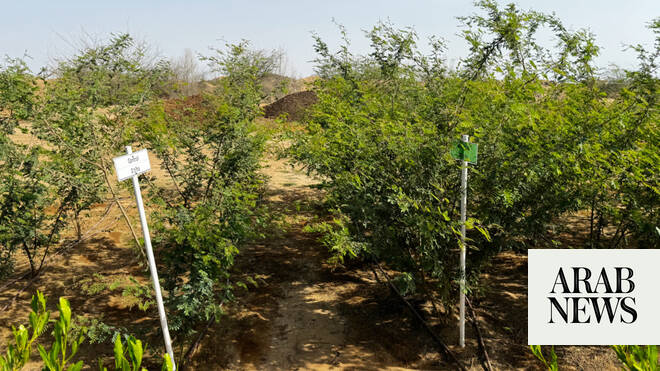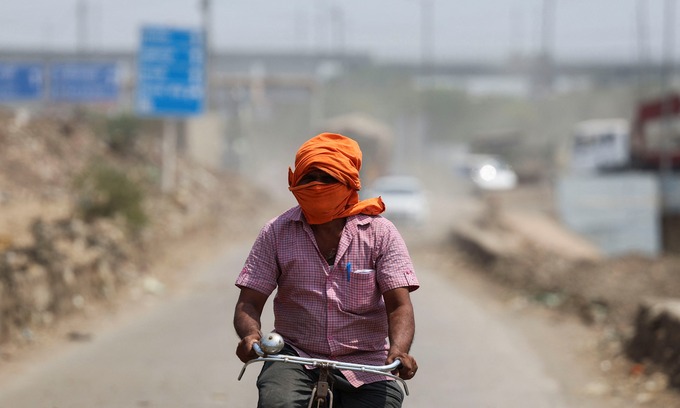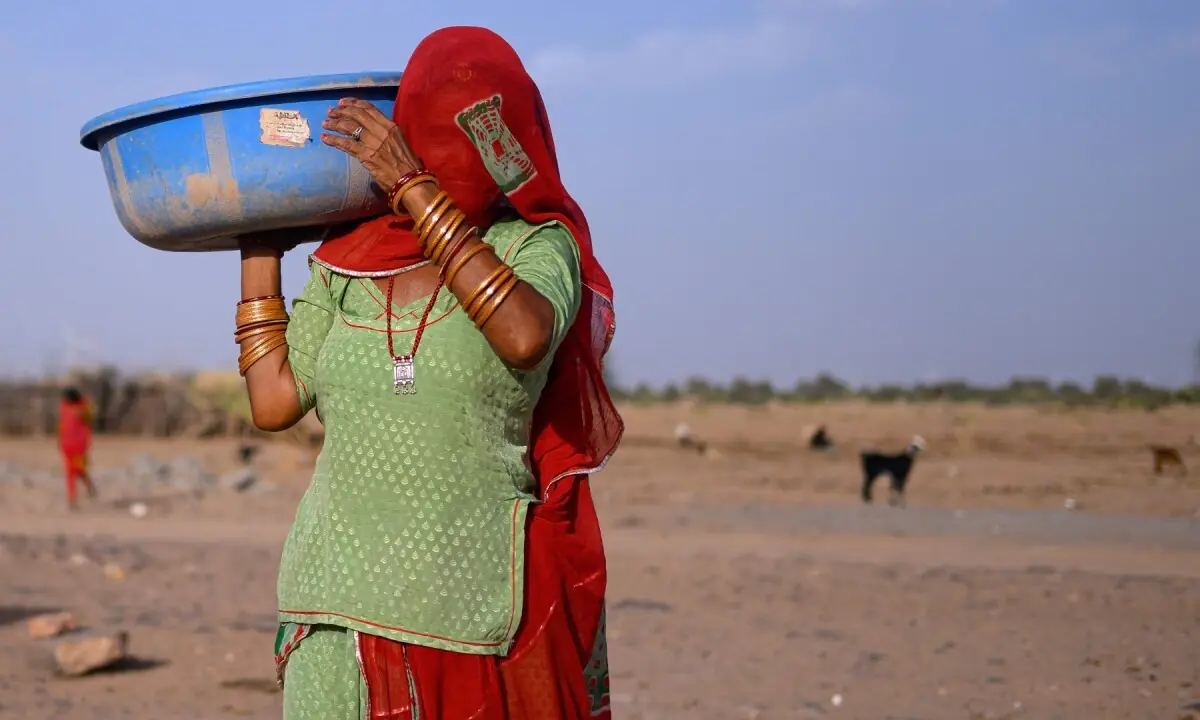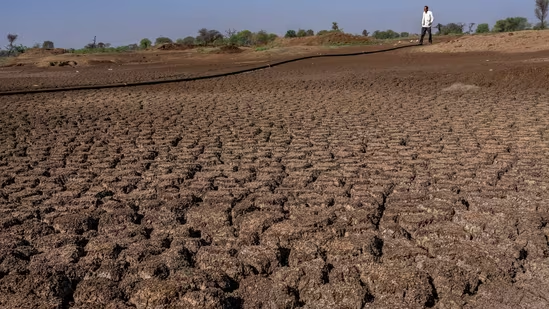
Every summer, as temperatures soar above 40°C across India, attention turns to heatwaves, dry spells, water shortages, and power cuts. What rarely makes its way into mainstream conversations is the slow and persistent process that feeds all these crises: land degradation and desertification. So, let us mark the World Day to Combat Desertification and Drought (observed each year on June 17) by turning our attention to the threat India faces on this front.Land degradation and climate change pose an enormous risk to food security. ((AP Photo/Rafiq Maqbool))According to the Desertification and Land Degradation Atlas of India published by Isro’s Space Applications Centre, about 30% of India’s geographical area — spanning 97.85 million hectares — is undergoing land degradation. Of this, a staggering 25% is experiencing desertification. This is not merely an environmental problem. Land degradation can manifest in various ways across agro-ecological systems: structural changes in forest cover and biomass reduction, salinisation of irrigated drylands, and soil nutrient decline in croplands due to erosion. Given the intertwined nature of social and ecological systems, land degradation typically reduces resilience, stripping a system of the ability to maintain its structure and sustain basic functions under stress. This, in turn, increases pressure on ecological systems, creating a spiral of degradation as soil resources deplete and vegetation deteriorates.Also Read: Bitter harvest: Yields and the illusion of farm productivityLand degradation and climate change pose an enormous risk to food security. Degradation exacerbates the vulnerability of agro-ecological systems to climate-crisis impacts while eroding the effectiveness of adaptation options. The human cost is already visible. More than half of India’s degraded land consists of rain-fed farmland and forest cover — the very foundation of food security and climate resilience. As a result, migration from arid zones to already-strained cities is rising, feeding urban poverty.Of the 31 states and Union Territories assessed between 2011–13 and 2018–19, 28 recorded an increase in land degradation and desertification. While Rajasthan, home to the vast Thar Desert, accounts for over 60% of India’s desertified land, the challenge extends far beyond a single state. Land degradation and desertification in Rajasthan, Maharashtra, Gujarat, Jammu & Kashmir, Karnataka, Jharkhand, Odisha, Madhya Pradesh, and Telangana account for nearly 24% of India’s total geographic area.Also Read: Reimagining climate resilience for India’s farmersThe drivers are both natural and anthropogenic. Deforestation, overgrazing, unsustainable farming, waterlogging from poorly managed irrigation canals, and unchecked urbanisation are stripping soils of their productivity. The climate crisis compounds it all: Erratic monsoons, extended dry spells and droughts, and extreme heat events are not distant threats but a lived reality of millions of farmers already at the margins.The National Action Plan to Combat Desertification, updated in 2023, sets a target to restore 26 million hectares of degraded land by 2030, aligning with the UN Convention to Combat Desertification. The revised Green India Mission (GIM), 2025, targets afforestation across 10 million hectares and integrates forest cover improvement, urban greening, ecosystem restoration, agroforestry, social forestry, and wetland restoration. Schemes such as the National Afforestation Programme (now merged with GIM), Nagar Van Yojana, the Compensatory Afforestation Fund (CAMPA), and multi-departmental convergence approaches are being leveraged for land restoration. So far, India has restored about 18.94 million hectares.Yet, the gap between targets and implementation is large. Efforts remain fragmented across ministries, with state-level capacity and data tracking widely uneven. Many degraded lands identified for restoration continue to remain degraded even years after being mapped. Funding for land restoration under even flagship schemes remains insufficient relative to the scale of the problem.Meeting the goal of restoring 26 million hectares by 2030 requires the right institutional and policy architecture. India has policy instruments, institutional structures, and technological capacity; what has historically been missing is coherence. A reorientation of existing efforts towards accountability and scale could help realise these targets.Four priorities stand out.First, land restoration must be recognised as critical infrastructure, not a peripheral environmental concern. Projects under PM Gati Shakti, Jal Jeevan Mission, and Smart Cities Mission must adopt land-neutral norms as a baseline, and infrastructure that degrades land without remediation must incur a cost.Second, community-based stewardship should be at the centre of restoration efforts. Joint Forest Management Committees and panchayats have shown that when communities have ownership and are incentivised, restoration succeeds.Third, India must embrace precision agronomy and regenerative farming at scale: Drip irrigation, crop rotation, organic soil enrichment, and native vegetation cover can rebuild soil health while sustaining farmer incomes.Fourth, Isro’s remote sensing and Geographic Information System (GIS) capabilities must feed into a real-time, publicly accessible land degradation dashboard. Without a disaggregated picture of what is degrading and what is recovering, resources will continue to be misallocated.Underlying all four is an opportunity to build a new restoration economy wherein ecology and livelihoods reinforce each other. Effective restoration is inherently local and can be delivered through agroforestry, grassland restoration, and natural regeneration. The government of India is already moving in this direction with policies focused on green growth, climate-resilient rural economies, and reversal of land degradation. The task now is to scale what is already working.India’s aspiration to become the world’s third-largest economy by 2030 and a developed economy by 2047 cannot be achieved on a foundation of land degradation. With nearly 60% of India’s workforce dependent on agriculture and natural resources, land degradation is a threat the country cannot afford to ignore. Bridging finance and capacity gaps through collective action can turn land restoration into a win for nature, communities, and the economy.Indu K Murthy heads the climate, environment and sustainability sector at the Center for Study of Science, Technology and Policy (CSTEP), a research-based think tank. The views expressed are personal
‘Enormous risk to food security’: Land degradation can’t be the price India pays
Nearly 30% of India's geographical area is undergoing land degradation, with 25% experiencing desertification.
933 words~4 min read