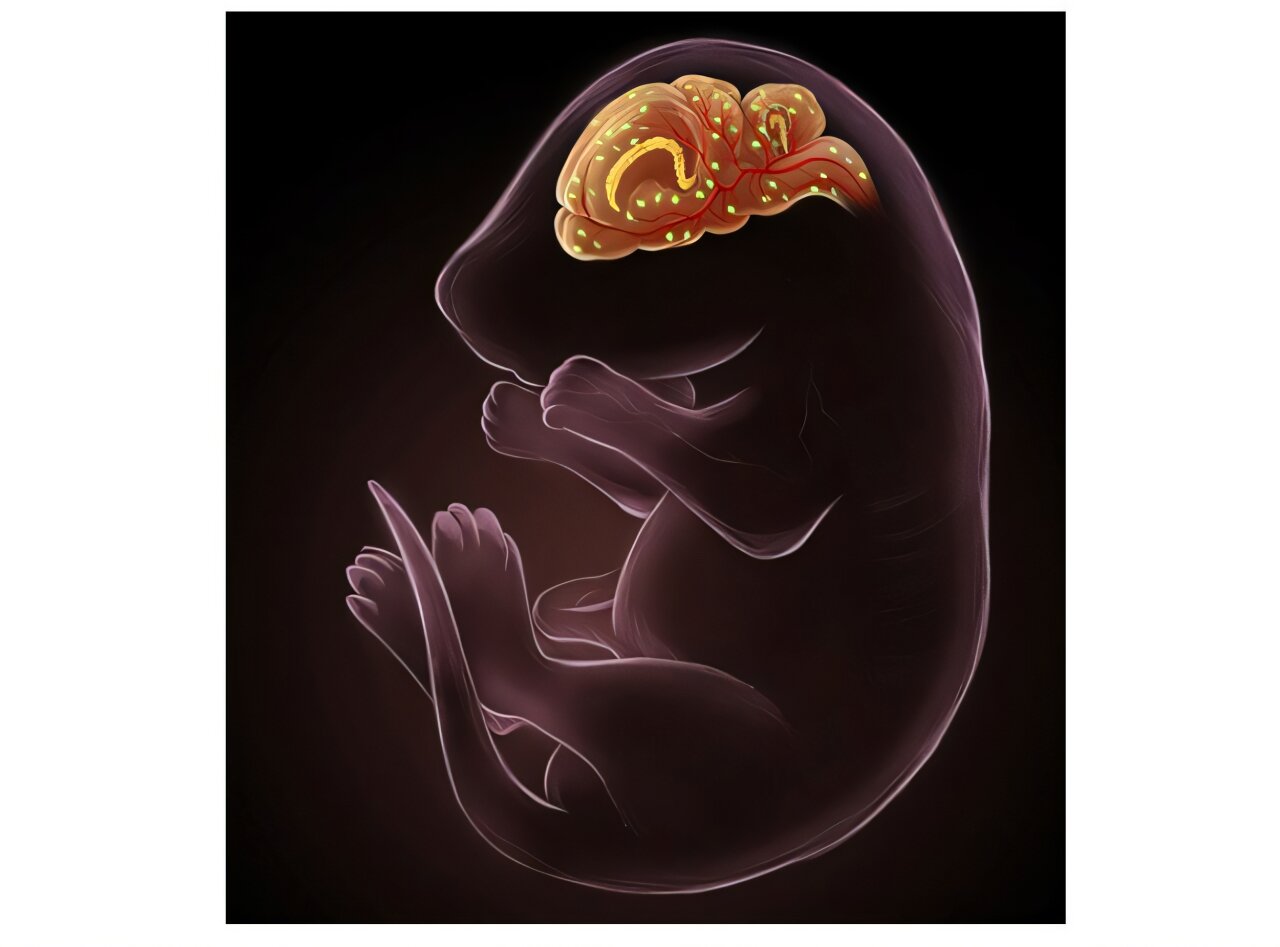
Researchers found that three cell types enter a senescent state during development: vascular endothelial cells (red), brain-resident macrophages (green) and choroid plexus epithelial cells (yellow). Credit: Ella Maru Studio, conceptualized by Ashley Watson and Hiruy Meharena
Among the body's most crucial protective features are the brain barrier systems, including the blood-brain and blood-cerebrospinal fluid (CSF) barriers. These barriers are made of highly specialized cells that allow essential nutrients to enter yet repel dangerous toxins and pathogens that may be circulating in the bloodstream. Scientists have long known what these barriers do, but less about how they are built during development.
A new study led by University of California San Diego researchers and published in the journal Cell has uncovered a key contributor: senescent cells. Often associated with aging and disease, these cells instead appear to help construct and support the brain's protective barriers during development.
Central to the new insights is an evolving understanding of senescent cells, which traditionally have been labeled as "zombie" cells because they are no longer able to divide yet don't fully die off. Senescent cells accumulate with age and have been linked to tissue dysfunction, chronic inflammation and cognitive decline, making them an attractive target for therapies aimed at slowing age-related decline.