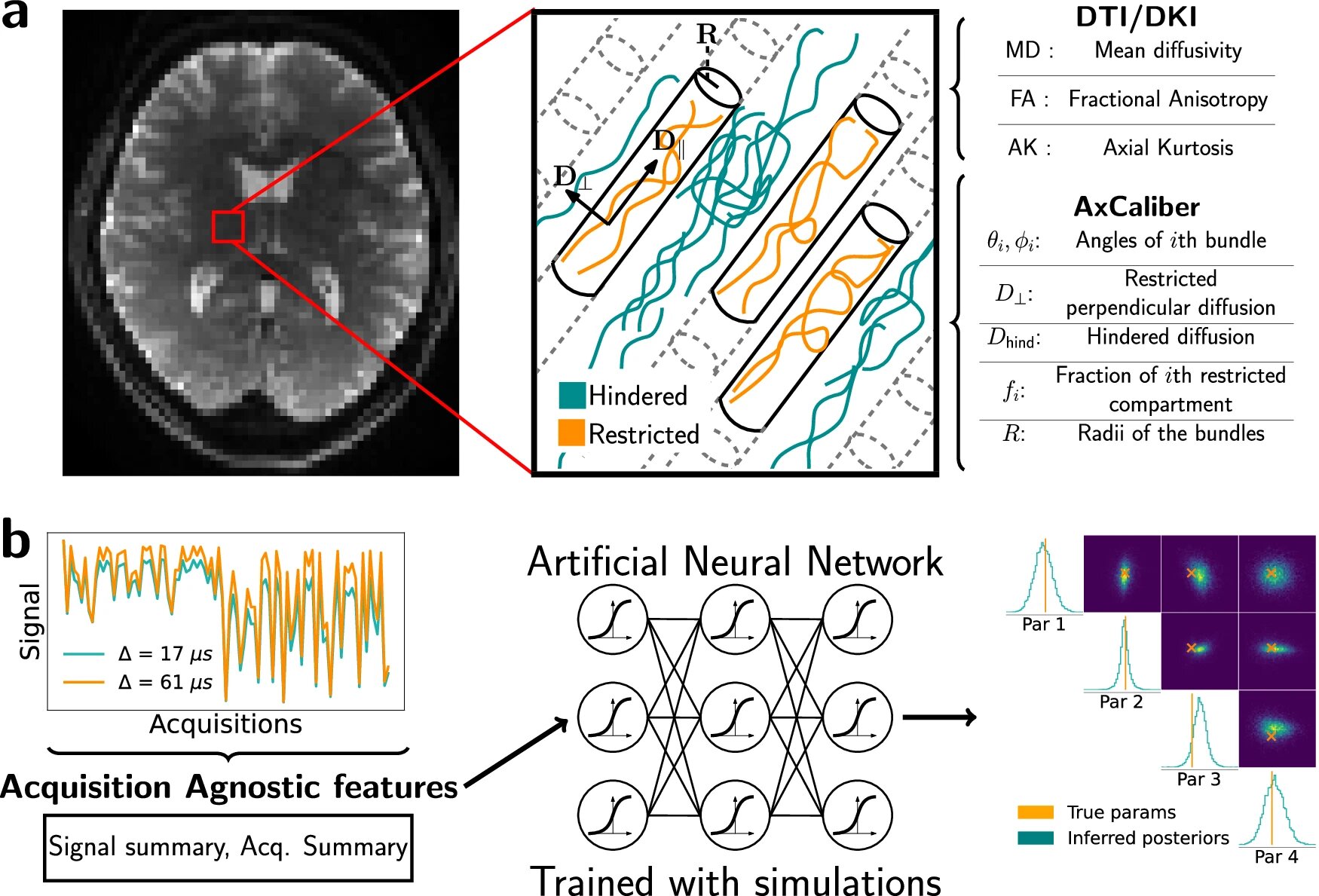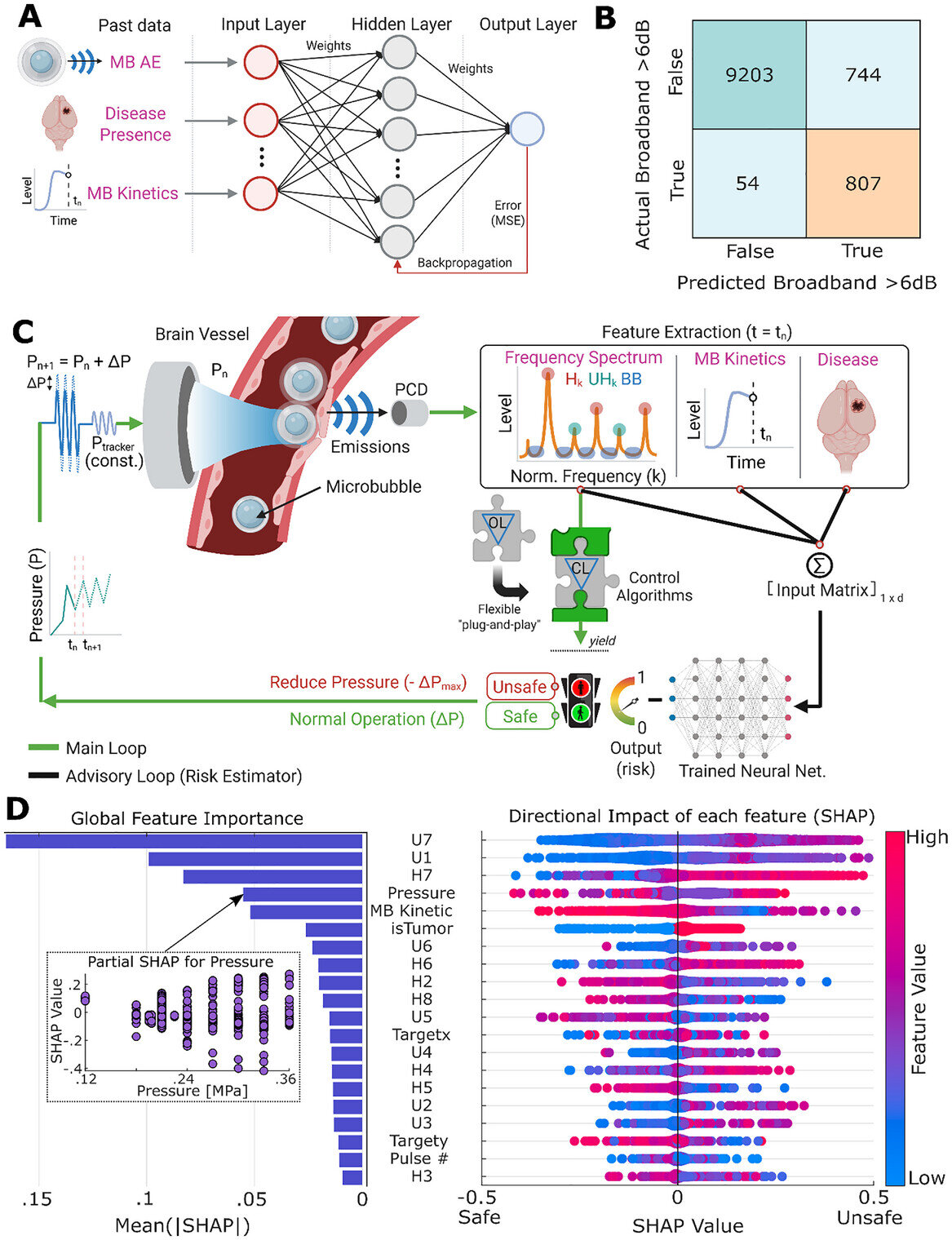
Multilayer perceptron model training, interpretation, and its integration with the controller. Credit: Advanced Science (2026). DOI: 10.1002/advs.202517834
A study led by Georgia Institute of Technology's Associate Professor Costas Arvanitis takes a major step toward safer and more effective treatment and diagnosis of brain diseases. His team's research, published in Advanced Science, shows how combining artificial intelligence (AI) with focused ultrasound can safely deliver therapies and improve diagnostic interventions to the brain.
The study addresses one of medicine's toughest challenges: the blood–brain barrier (BBB). The BBB is a thin, microscopic interface that protects the brain but also blocks most drugs and diagnostic molecules. This makes treating and monitoring brain tumors and neurological diseases extremely difficult.
Strategies to safely and effectively overcome the BBB are critical for the diagnosis, treatment, and monitoring of central nervous system diseases.
Teaching an ultrasound system to predict risk