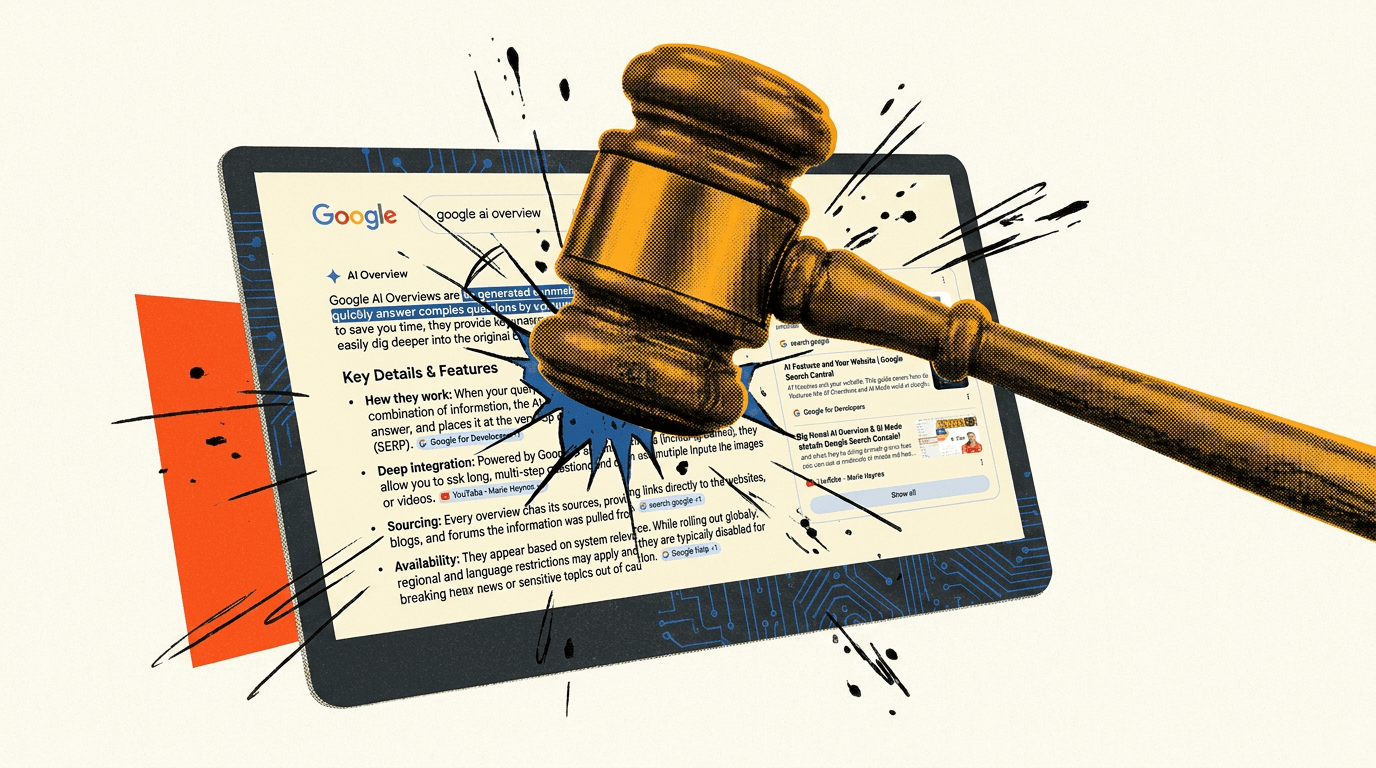
When does a search engine become capable of making its own statements? Munich treats Google's AI summaries as independent claims. Berlin sees them as just a new way to display search results. The contradiction shows that the core question of liability in generative search is still wide open.
After a notable ruling by a Munich court that held Google responsible for incorrect AI responses, a Berlin court reached the opposite conclusion in early June.
The Berlin court treated the AI responses as nothing more than a "new search result format" that pulls together content from other websites. The search engine doesn't present AI-generated text as its own statements and has no "decisive influence" over what the answers say. An average user, the court argued, would recognize that the AI is just aggregating information from other sources.
The case started with a lawsuit from a perfume company. When users searched for fragrance imitations, the search engine listed brand names and linked to websites selling cheaper alternatives. The court didn't see this as trademark infringement; the search engine was just surfacing information already available on other sites.
Munich holds Google directly liable for AI-generated claims