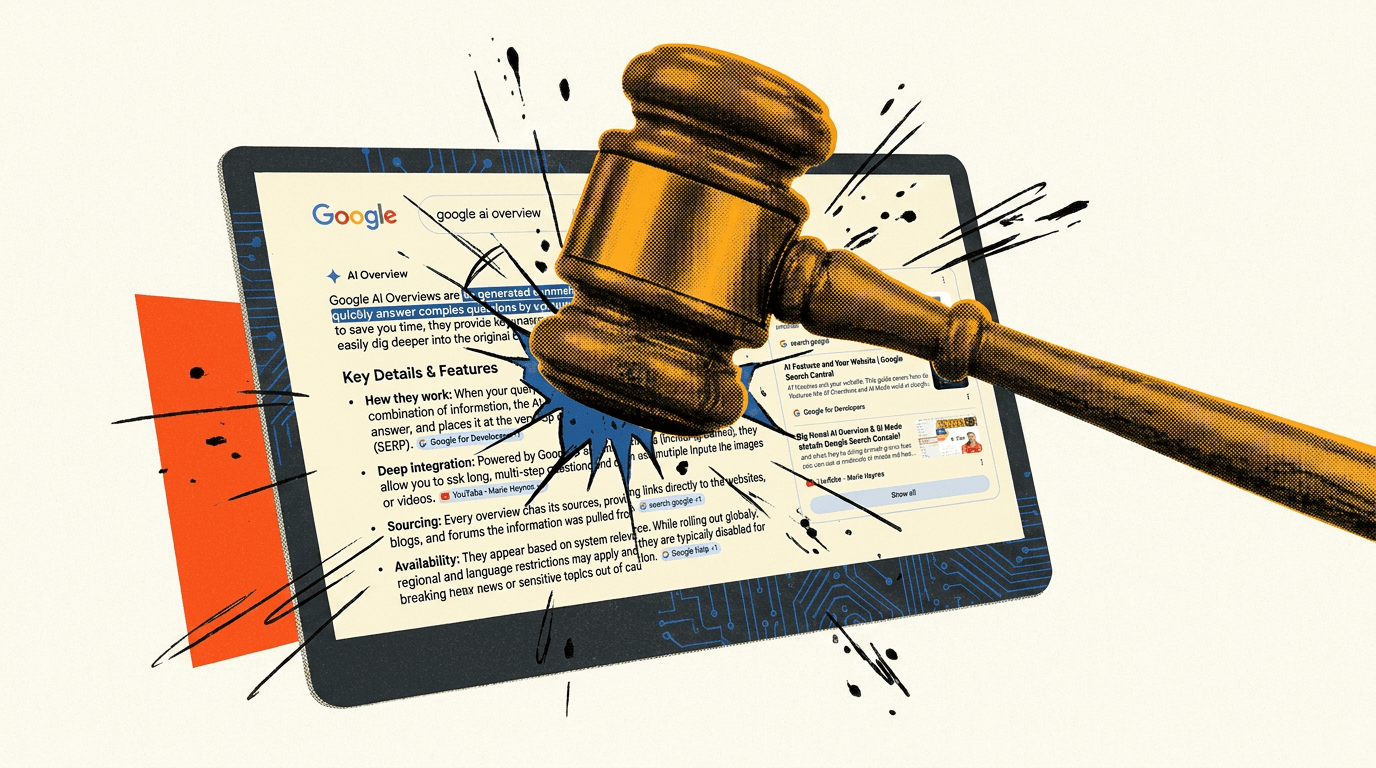
A German court has ruled that Google is directly liable for false claims its AI Overviews make, treating the AI-written summaries as Google’s own speech rather than ordinary search results. It is one of the first rulings to test who is responsible when a generative-AI system gets it wrong, and the answer it gives is blunt: the company that built it.
The Regional Court of Munich issued a temporary injunction barring Google from repeating false statements about two Munich publishers, whose names its AI Overviews had wrongly tied to scams, subscription traps, and “dubious business practices”.
According to the court, the AI had invented connections that appeared in none of the linked sources, mixing the publishers up with genuinely shady firms. The publishers sent a cease-and-desist letter, and Google did not respond adequately.
Not a search engine, a publisher
The crux is a legal reclassification. German search engines have long had limited liability because they merely point to third-party pages. AI Overviews, the court found, do something different: they generate “independent, new, and substantive statements” in Google’s own words, so Google “alone has influence” over them and owns what they produce.