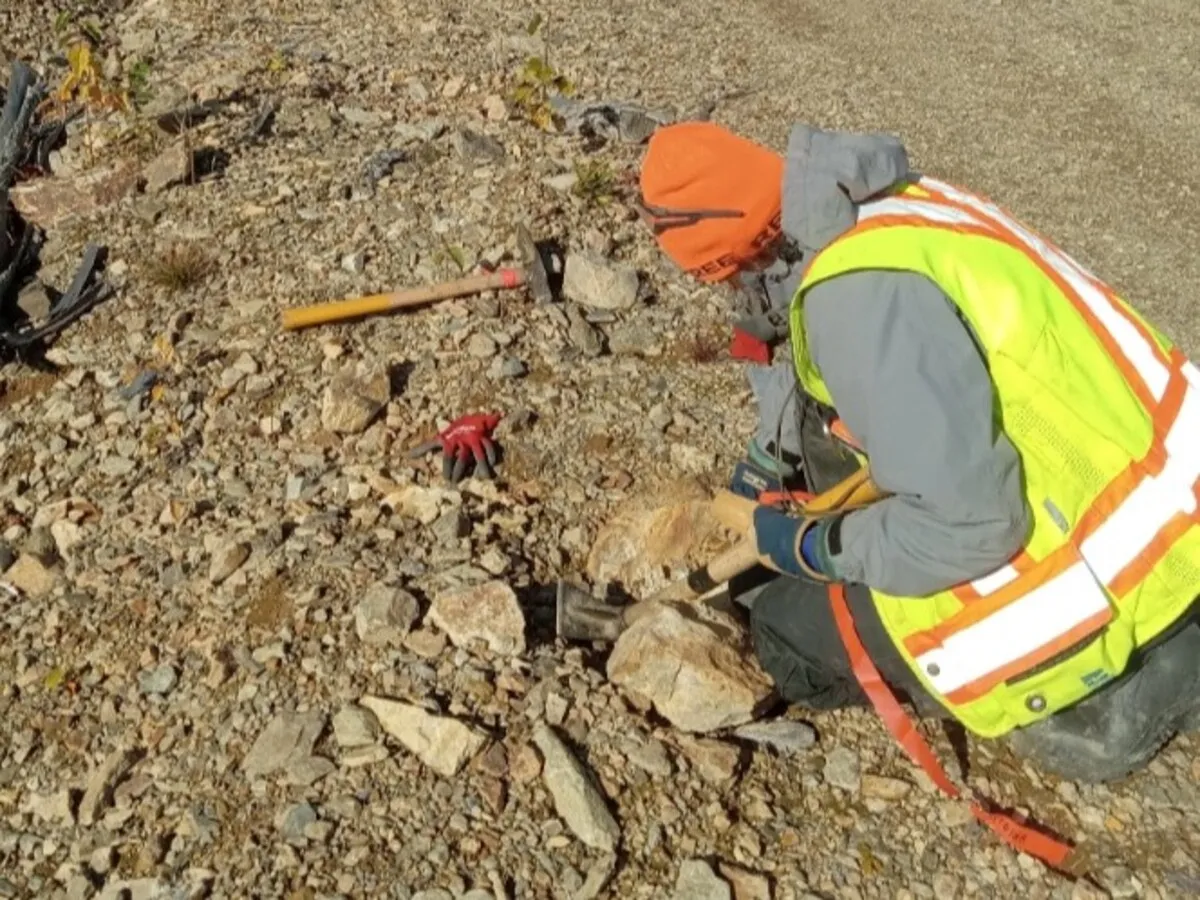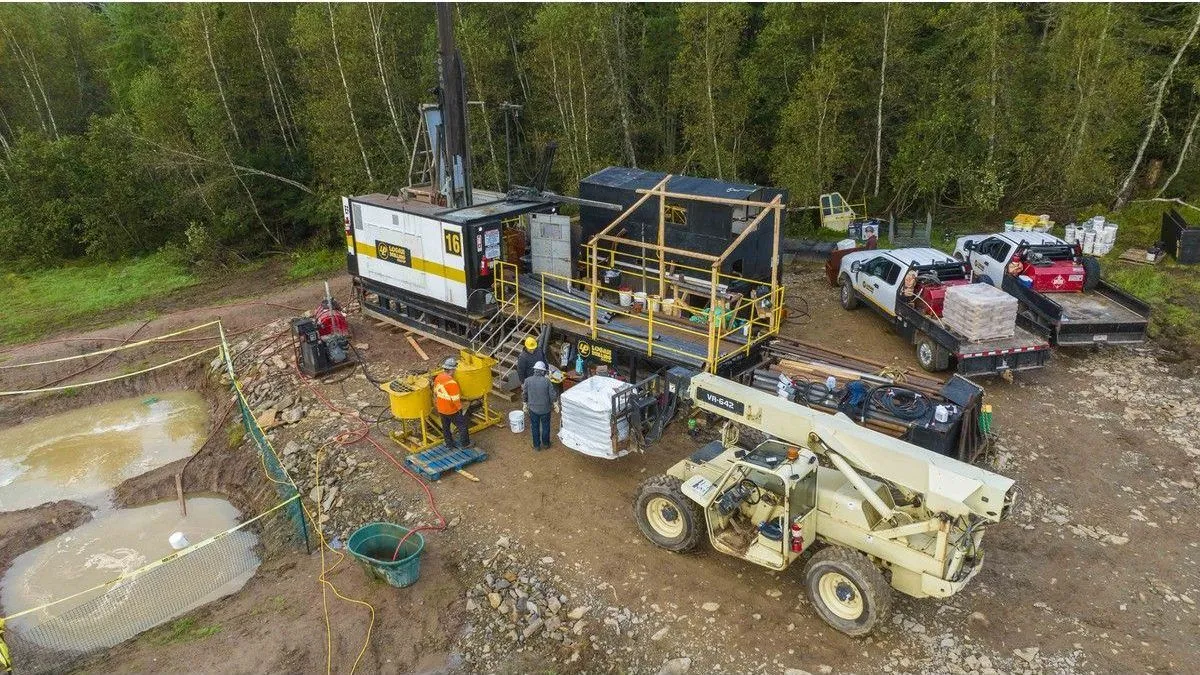
Skip to Content News Archives Economy Energy Oil & Gas Renewables Electric Vehicles Mining Commodities Agriculture Real Estate Mortgages Mortgage Rates Finance Banking Insurance Fintech Cryptocurrency Work Wealth Smart Money Wealth Management Investor Personal Finance Family Finance Retirement Taxes High Net Worth FP Comment Executive Women Puzzmo Newsletters Financial Times Business Essentials More Innovation Information Technology FP500 Podcasts Small Business Lives Told Tails Told Shopping Financial Post Store Obituaries Place a Notice Advertising Advertising With Us Advertising Solutions Postmedia Ad Manager Sponsorship Requests Classifieds Place a Classifieds ad Working Profile Settings My Subscriptions Saved Articles My Offers Newsletters Customer Service FAQ News Economy Energy Mining Real Estate Finance Work Wealth Investor FP Comment Executive Women Puzzmo Newsletters Financial Times Business Essentials HomeMiningLocation, location, location: Why proposed New Brunswick potash mine has edge on western rivalsMine near Port Saint John would be able to ship directly overseas unlike Saskatchewan producersLast updated 4 hours ago You can save this article by registering for free here. Or sign-in if you have an account.Atlantic Potash Millstream Corporation will begin drilling this year as part of a rock mechanics analysis planned to support a pre-feasibility study. SUBMITTEDWhile Saskatchewan has been a potash powerhouse for years, a proposed New Brunswick mine would have an advantage over that province’s producers because of its ability to ship directly overseas.Subscribe now to read the latest news in your city and across Canada.Exclusive articles from Barbara Shecter, Joe O'Connor, Gabriel Friedman, and others.Daily content from Financial Times, the world's leading global business publication.Unlimited online access to read articles from Financial Post, National Post and 15 news sites across Canada with one account.National Post ePaper, an electronic replica of the print edition to view on any device, share and comment on.Daily puzzles, including the New York Times Crossword.Subscribe now to read the latest news in your city and across Canada.Exclusive articles from Barbara Shecter, Joe O'Connor, Gabriel Friedman and others.Daily content from Financial Times, the world's leading global business publication.Unlimited online access to read articles from Financial Post, National Post and 15 news sites across Canada with one account.National Post ePaper, an electronic replica of the print edition to view on any device, share and comment on.Daily puzzles, including the New York Times Crossword.Create an account or sign in to continue with your reading experience.Access articles from across Canada with one account.Share your thoughts and join the conversation in the comments.Enjoy additional articles per month.Get email updates from your favourite authors.Create an account or sign in to continue with your reading experience.Access articles from across Canada with one accountShare your thoughts and join the conversation in the commentsEnjoy additional articles per monthGet email updates from your favourite authorsSign In or Create an AccountorAtlantic Potash Millstream Corporation CEO and director Keith Attoe said having a deposit in rural Kings County, near the town of Sussex, located just 70 kilometres from the Port of Saint John is a “huge advantage.”Erin Weir, a Saskatchewan-based consulting economist with Silo Strategy, agrees.Get the latest headlines, breaking news and columns.By signing up you consent to receive the above newsletter from Postmedia Network Inc.A welcome email is on its way. If you don't see it, please check your junk folder.The next issue of Top Stories will soon be in your inbox.We encountered an issue signing you up. Please try againHe said Atlantic Potash won’t have to deal with the same transportation hurdles as its western counterpart, which transports the bulky commodity thousands of kilometres by rail to reach a port.“The real advantage for New Brunswick potash would be the access to ports and overseas markets,” he said. “Saskatchewan is better positioned to put potash on trains to the American corn belt… Atlantic Potash would probably want to access all the markets that it can, but I think its business model would really be to get the potash quickly to a port and then be able to sell it overseas.”In 2023, 2.2 million tonnes of Saskatchewan potash were shipped through the Port of Saint John’s Barrick Point potash terminal. Saskatchewan is the world leader in production of the mineral, an important plant nutrient used in fertilizers.The proposed New Brunswick mine, located at Millstream, is five to seven years away from operation.Earlier this month, the company announced that after more than a decade of work and millions of dollars invested, it had reached another milestone – the archaeological impact assessment is complete, and it identified no issues.It’s taken several years to reach this point.According to Attoe, the effort started in 2010, when the company began digitizing the exploration work done by British Petroleum Resources Canada Inc. It studied the potash deposit at Millstream in the 1980s.Since then, Attoe said more than $17 million has been invested in the project.Drilling began in 2014 to determine the size of the deposit, which Atlantic Potash estimates to be more than 52 million tonnes.The site is now being prepared for further drilling this year as part of a rock mechanics analysis to support a pre-feasibility study.The core samples will be analyzed by ERCOSPLAN, a German engineering consultancy specializing in potash engineering for extraction, processing, and environmental protection.Attoe said working with the German company makes sense because the site’s geology is more similar to German potash deposits than to Saskatchewan’s.The current timeline means the mine could open at the same time as the second phase as BHP’s Jansen potash project in Saskatchewan. The mine is expected to produce approximately 8.5 million tonnes of potash per year.Weir said two mines coming online at the same time could undercut price.“Potash prices are higher now, and there is this attraction of being able to get the potash to the coast and ship it to Brazil or other markets around the world,” he said.Weir noted that Brazil is the world’s largest potash importer.Attoe said proximity could also make for a more competitive price. He said the company estimates $75 per tonne in savings from trucking potash loads to Saint John for export.Along with the summer drill program, Atlantic Potash is initiating engagement with First Nations, coordinated by Stantec, and has opened dialogue with both municipalities in the project area.“This engagement is designed to encourage community input so as to inform the project’s development from an early stage,” the company’s release says.The results of the archaeological impact assessment have been filed with the province. This comes after government introduced its Mineral Resources Act, which “would allow the government to streamline approval processes, strengthen environmental protections, enhance reclamation requirements and reinforce financial assurance measures to prevent abandoned mine sites in the future.”Diana Chávez, spokesperson for New Brunswick’s Department of Environment and Local Government, said following the archaeological impact assessment, a final report was submitted to the department in spring.“The report identifies specific areas within the project footprint where there is potential to encounter archaeological resources and recommends additional assessment only if those areas are disturbed. If those areas are avoided, no further archaeological work would be required,” she said.“The project will require an Environmental Impact Assessment registration and review before a decision can be made on whether it can proceed.”When asked about the project, New Brunswick’s Natural Resources Minister John Herron said in a statement sent to Financial Post that the province’s mining sector will play an important role in supporting jobs, economic growth and regional development and that he supports the responsible development of natural resources and recognizes the opportunities that resource projects can bring to communities across the province.“The province recently launched its new Comprehensive Minerals Strategy to help identify and support opportunities for responsible mineral development, attract investment and strengthen the sector’s contribution to New Brunswick’s economy. Proposed developments such as Atlantic Potash’s Millstream project reflect the type of opportunities the strategy is intended to help advance,” he said.“New Brunswick remains committed to fostering a competitive and sustainable natural resources sector that supports economic growth while maintaining strong environmental standards.”Attoe said the construction of the mine is estimated to create more than 200 jobs, and once in operation, the mine would employ between 250 and 300 people. The deposit is projected to have a 25-year mine life, producing two million tonnes per year.In the 1970s, three deposits were discovered in the Sussex area. Two of them, the Penobsquis and Cassidy Lake deposits, were developed into mining operations in the 1970s and 1980s. New Brunswick’s first potash production came online in 1983 at the Penobsquis mine.Originally developed by Potash Corporation of America, the Penobsquis mine changed hands in 1993, when the company was acquired by the Potash Corporation of Saskatchewan (later to be known as PotashCorp). As for the Cassidy Lake mine near Norton, about 20 kilometres southwest of Sussex, it closed in 1997. The third deposit is near Lower Millstream.In the mid-2000s, water inflow problems at the Penobsquis mine pushed PotashCorp to develop a new mining facility across the road in Picadilly, at a cost of more than US$2 billion. The latter, however, was shut down in 2016, almost immediately after it opened. The owner cited market softness and the fact that the New Brunswick site was more expensive to operate than its five other mines, all of which are located in Saskatchewan.More recently Nutrien, which was formed on Jan. 1, 2018, when the merger of PotashCorp and agricultural company Agrium was finalized, missed an end-of-year deadline set by Herron to lay out why its Picadilly mine remains shuttered and what it would take to reopen.Herron then issued a letter to the company referencing the overhaul of the legislation governing the province’s mining industry. Introduced in May, that legislation includes a “use it or lose it” clause.Nutrien confirmed to Brunswick News in January that the company has no near-term path to safely and competitively mine potash at the Picadilly facility.The company still operates a salt mine at the site that employs roughly 80 people. In a statement, the company said the site’s geology, current economics, and cost structure make it impractical to resume potash production.When asked about Nutrien’s decision to close its potash mine, Attoe noted that just because two mines are in the same region, does not mean they share similar economic factors.“Penobsquis and Picadilly were across the road from each other, and Penobsquis was very successful,” he said.Weir said Nutrien can access better potash reserves at lower cost out west, but said since the closure of Picadilly, potash prices have increased quite a bit, so it makes sense that there is interest in the region.-With files from Adam Huras Join the Conversation This website uses cookies to personalize your content (including ads), and allows us to analyze our traffic. Read more about cookies here. By continuing to use our site, you agree to our Terms of Use and Privacy Policy.
Location, location, location: Why proposed New Brunswick potash mine has edge on western rivals
Mine's location near Port Saint John means it doesn't have same transportation hurdles as its Western counterpart
1,784 words~8 min read