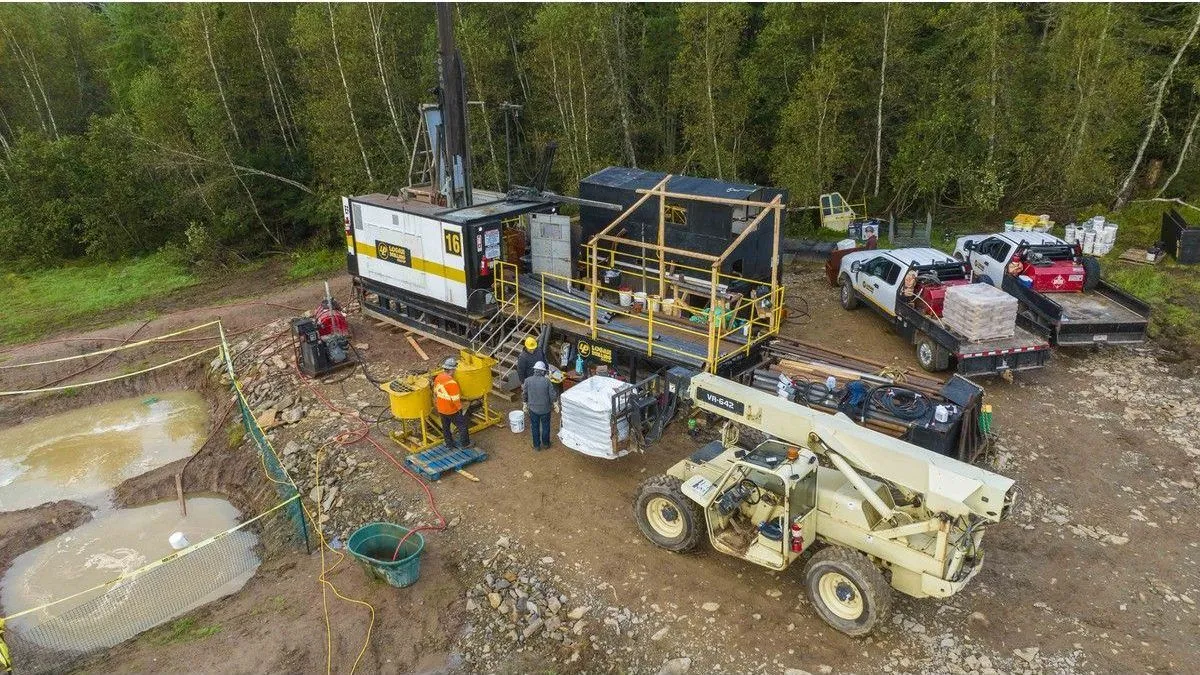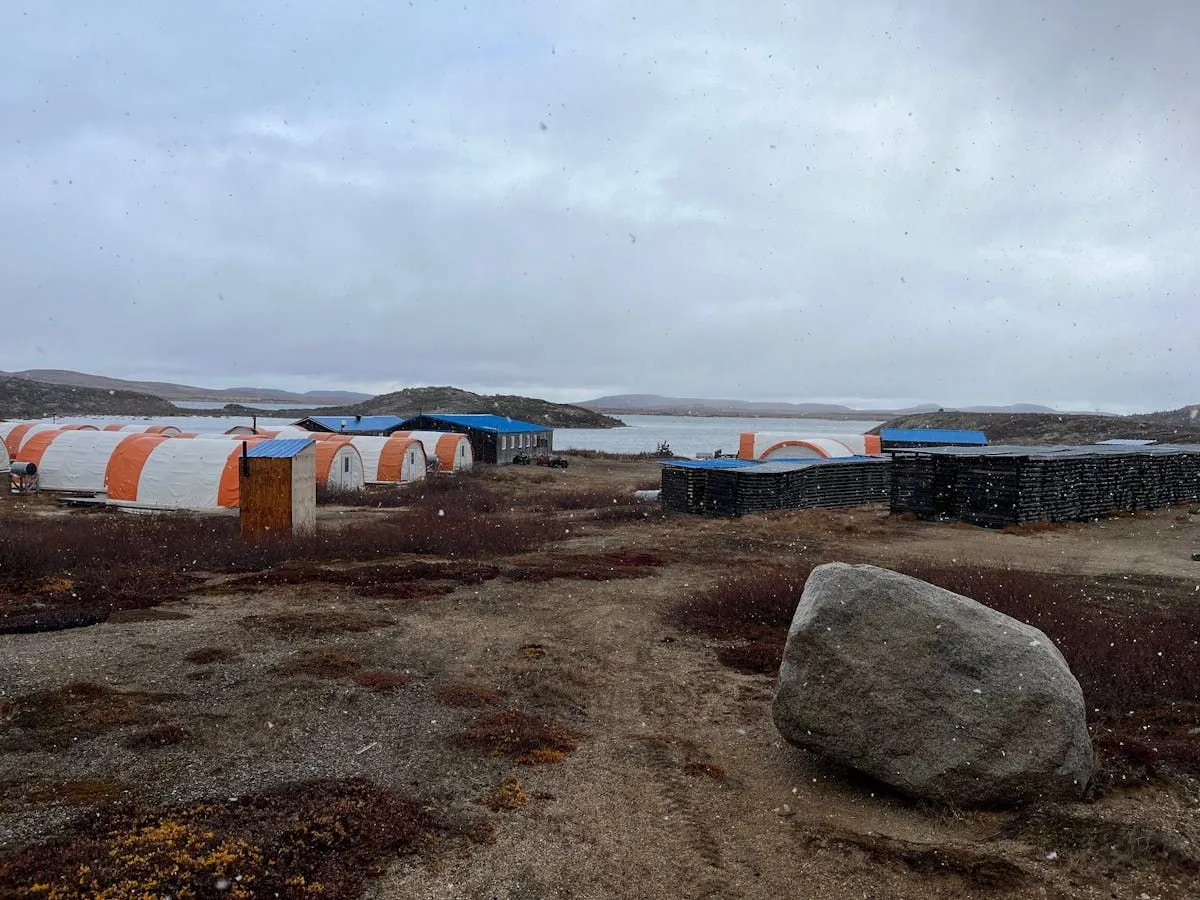
Skip to Content News Archives Economy Energy Oil & Gas Renewables Electric Vehicles Mining Commodities Agriculture Real Estate Mortgages Mortgage Rates Finance Banking Insurance Fintech Cryptocurrency Work Wealth Smart Money Wealth Management Investor Personal Finance Family Finance Retirement Taxes High Net Worth FP Comment Executive Women Puzzmo Newsletters Financial Times Business Essentials More Innovation Information Technology FP500 Podcasts Small Business Lives Told Tails Told Shopping Financial Post Store Obituaries Place a Notice Advertising Advertising With Us Advertising Solutions Postmedia Ad Manager Sponsorship Requests Classifieds Place a Classifieds ad Working Profile Settings My Subscriptions Saved Articles My Offers Newsletters Customer Service FAQ News Economy Energy Mining Real Estate Finance Work Wealth Investor FP Comment Executive Women Puzzmo Newsletters Financial Times Business Essentials HomeMiningNewsFuture uncertain for massive, rare-earth mineral deposit straddling the Quebec and Labrador borderThe Quebec side is poised for major development, but the other half in Labrador could be left untouchedLast updated 1 day ago You can save this article by registering for free here. Or sign-in if you have an account.The Torngat Metals exploration base near the proposed Strange Lake rare earth mine in Quebec, with the Labrador side of the Strange Lake deposit visible on the horizon. On the right are stacks of core samples. Photo by Torngat MetalsA massive, rare-earth mineral deposit straddling the Quebec and Labrador border faces two very different outcomes: one half could become one of the first commercial rare-earth mines in Canada, while the other half could be left untouched.Subscribe now to read the latest news in your city and across Canada.Exclusive articles from Barbara Shecter, Joe O'Connor, Gabriel Friedman, and others.Daily content from Financial Times, the world's leading global business publication.Unlimited online access to read articles from Financial Post, National Post and 15 news sites across Canada with one account.National Post ePaper, an electronic replica of the print edition to view on any device, share and comment on.Daily puzzles, including the New York Times Crossword.Subscribe now to read the latest news in your city and across Canada.Exclusive articles from Barbara Shecter, Joe O'Connor, Gabriel Friedman and others.Daily content from Financial Times, the world's leading global business publication.Unlimited online access to read articles from Financial Post, National Post and 15 news sites across Canada with one account.National Post ePaper, an electronic replica of the print edition to view on any device, share and comment on.Daily puzzles, including the New York Times Crossword.Create an account or sign in to continue with your reading experience.Access articles from across Canada with one account.Share your thoughts and join the conversation in the comments.Enjoy additional articles per month.Get email updates from your favourite authors.Create an account or sign in to continue with your reading experience.Access articles from across Canada with one accountShare your thoughts and join the conversation in the commentsEnjoy additional articles per monthGet email updates from your favourite authorsSign In or Create an AccountorSuch is the strange situation at Strange Lake, a northern mineral deposit named after peculiar-looking rocks, not a body of water.On the Quebec side, the deposit is poised for major development. But the other half in Labrador is classed as an exempt mineral land, owned by Indigenous people unsure of mining it.Get the latest headlines, breaking news and columns.By signing up you consent to receive the above newsletter from Postmedia Network Inc.A welcome email is on its way. If you don't see it, please check your junk folder.The next issue of Top Stories will soon be in your inbox.We encountered an issue signing you up. Please try again“We have a big deposit there (in Labrador) that’s sort of frozen in time,” said Derek Wilton, an honourary research professor at Memorial University who has analyzed core samples from the main zone.Rare earth metals have a diverse range of uses, including the production of magnets needed for high-efficiency electric vehicle motors, wind turbines, robotics, drones and other cutting-edge technologies.Despite the demand, there are no commercial rare earth mines in Canada.Strange Lake, like an old 45 vinyl record, has an A side (Labrador) and a B side (Quebec), both with large amounts of these minerals.“Taken together, the main and B zones have been described as one of the world’s largest deposits of yttrium, zirconium and heavy rare earth elements,” said Wilton.The B side, in Quebec, appears to have a brighter immediate future. It contains elements like neodymium, praseodymium, dysprosium, and terbium. Montreal-based Torngat Metals Ltd. is in the process of developing the property.Pegged to cost around $2 billion, the company’s plans would involve a 59-hectare open-pit mine with a concentration plant to reduce the volume of mined material that would be transported to a separation facility at Sept-Iles in southern Quebec.“Once in operation, the project would be one of the world’s important suppliers of dysprosium outside China,” the company’s value proposition states. Innu Nation and Nunatsiavut Government leaders toured the Torngat Metals exploration camp at the proposed Strange Lake rare earth mine in Quebec, located near the border with Labrador on Oct. 3, 2023. Here, Ed Walker (standing), a geologist with Torngat Metals, discusses the project with, from left, Luke Rich, an Innu Nation advisor; Innu Nation Grand Chief Simon Pokue; Prote Poker, an Innu Nation advisor; Roxanne Barbour, the Nunatsiavut government’s Ordinary Assembly Member for Nain; Nunatsiavut Lands and Natural Resources Minister Terry Vincent; and Nunatsiavut President Johannes Lampe. Photo by Torngat MetalsDysprosium and its rare earth cousins on the periodic table weren’t such hot commodities when Strange Lake was first staked and explored by the Iron Ore Company of Canada (IOC) in 1979.The company drilled 244 holes in Labrador and another 129 in Quebec.However, with a poor market for the minerals, IOC wasn’t interested in developing what it discovered and walked away from the site in 1987.Fast-forward to 2026. Rare earth elements are in demand around the world due to the explosion of technology and defense industry requirements.Torngat Metals — which didn’t respond to an interview request — believes its side of Strange Lake can meet some of the growing demands.Through assessment and exploration, the miner has determined the property would extract between five and 13 million metric tonnes of material annually and have a lifespan of 30-plus years.The company’s intent is currently under environmental assessment at both the federal and provincial levels.On the Labrador side, because IOC chose not to develop Strange Lake, the rights were returned to the Crown and deemed exempt mineral land, which the Newfoundland and Labrador government defines as “properties where there is known mineral potential, an anticipated high level of mineral industry interest, and a previous owner’s mineral rights no longer exist.”If the Labrador side were to be further explored and developed, it would need to be released from exemption by the province and get Nunatsiavut’s approval.How construction and mining would affect the George River caribou herd — which doesn’t observe the Quebec-Labrador border and has seen its numbers plummet in recent times — might dictate development.Nunatsiavut is also concerned about Arctic char and salmon habitats.Still, Goudie said these parameters don’t necessarily mean a mine will never happen.“We would be in control from Day 1,” he said. “If we decided to do that, we would have to see some much higher-level pieces put in place to protect the environment and protect the caribou migration routes. I think there’s options out there. They’re expensive, but you have to solve those, or you just don’t have access.“So, I wouldn’t say the door is shut. I wouldn’t say the door is open.”A decision to develop may also hinge on a land use plan Nunatsiavut submitted to the Newfoundland and Labrador government. That process began in 2013, and the two sides have been at odds over some details.Goudie said progress has been made in the past two years, and he hopes the plan will be finalized soon. He said, first and foremost, any kind of development in Nunatsiavut must ensure Inuit people are the prime beneficiary.“I think the possibility is there,” he said. “As Lands and Natural Resources, we’re actively trying to get the land use plan done and to be able to give our minister the options to explore this.”Torngat Metals’ plan for Strange Lake’s Quebec side will actually run through Labrador, but not Nunatsiavut.To transport mined material to Sept-Iles, the company is proposing a 170-kilometre road across northern Labrador to a proposed port facility in Voisey’s Bay, just south of Vale S.A.’s nickel mine.That needs approval by the Newfoundland and Labrador government.Nunatsiavut had initially been part of the environmental assessment process because Torngat Metals’ original route crossed Labrador Inuit Lands.The company has since modified the path to avoid that area, thereby removing the road from Nunatsiavut’s jurisdiction. Stretching for nearly 180 kilometres, a single-lane access road will be used to transport ore on the Quebec side of Strange Lake to a port facility on the east coast of Labrador. It will then be transported by ship to Sept-Îles as part of Torngat’s plan for the site.While Nunatsiavut no longer has an official voice on the road, it remains concerned about the same issues — the impact on caribou, char and salmon.Goudie is also wondering what benefits Newfoundland and Labrador expects from the access road. He said Quebec will get the resource royalties, there’s no secondary production planned for Nunatsiavut or Newfoundland and Labrador, and there won’t be much employment generated in the province.“If there’s no benefit to the Nunatsiavut Government or the province of Newfoundland (and Labrador) — and if we benefit, the province of Newfoundland benefits — why would anyone ever say yes to this?”In Quebec, Torngat Metals has been consulting and reaching agreements with several Indigenous communities.One pact made earlier this year, with the Naskapi Nation of Kawawachikamach, pledges to ensure exploration and pre-development are carried out with full respect for traditional territory, the environment, and local wildlife, including the transitory George River caribou herd.While there are no hard estimates of how much rare earth minerals Strange Lake’s main zone could produce if mined, Wilton said the deposit on the Labrador side may be just as good as the one being developed by Torngat Metals.Goudie seems well aware, but firm on Nunatsiavut’s priorities.“Obviously (mining the deposit) would be a financial boom,” he said, “but you have to look at the impacts to our culture and our society.” Join the Conversation This website uses cookies to personalize your content (including ads), and allows us to analyze our traffic. Read more about cookies here. By continuing to use our site, you agree to our Terms of Use and Privacy Policy.
Future uncertain for massive, rare-earth mineral deposit straddling the Quebec and Labrador border
The Strange Lake deposit straddles northern Quebec and Labrador borders and a project is in the works to develop the Quebec side
1,750 words~8 min read