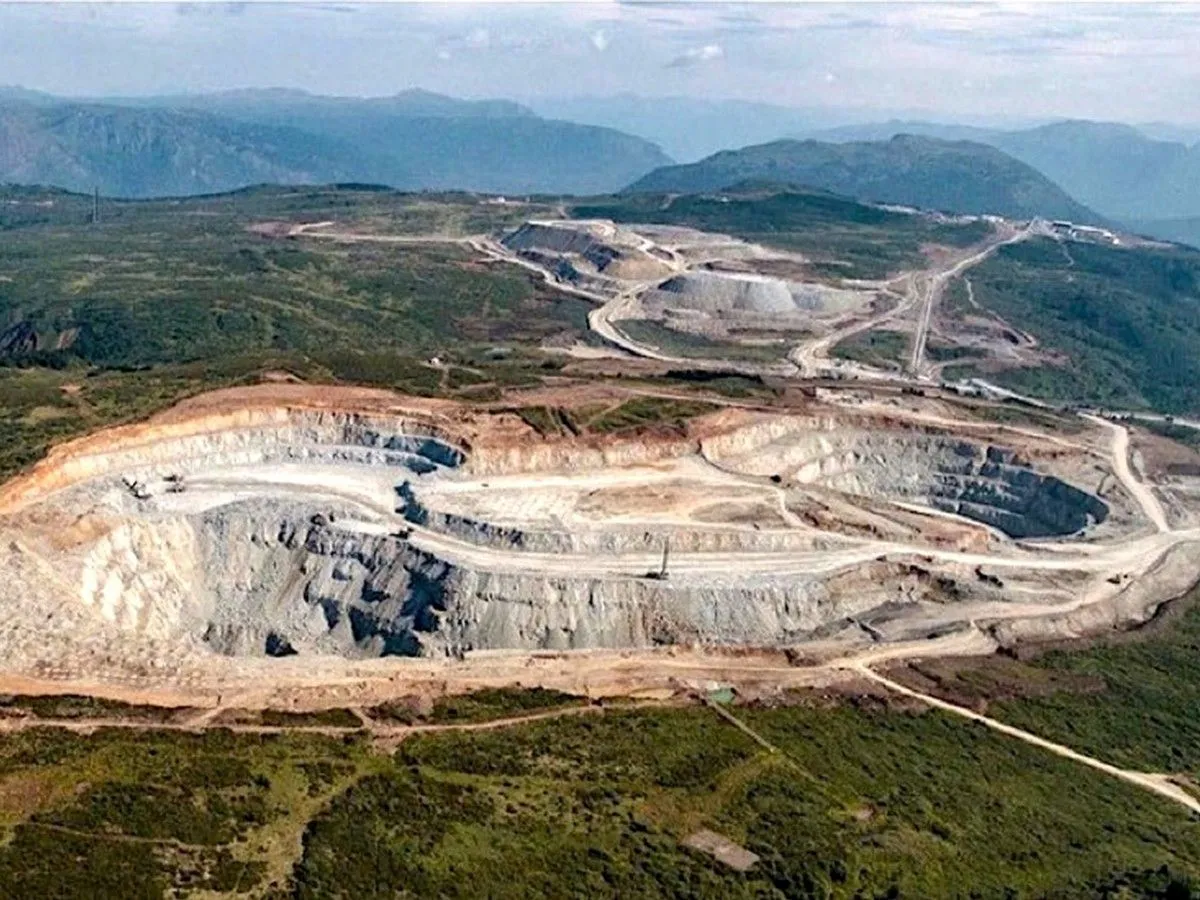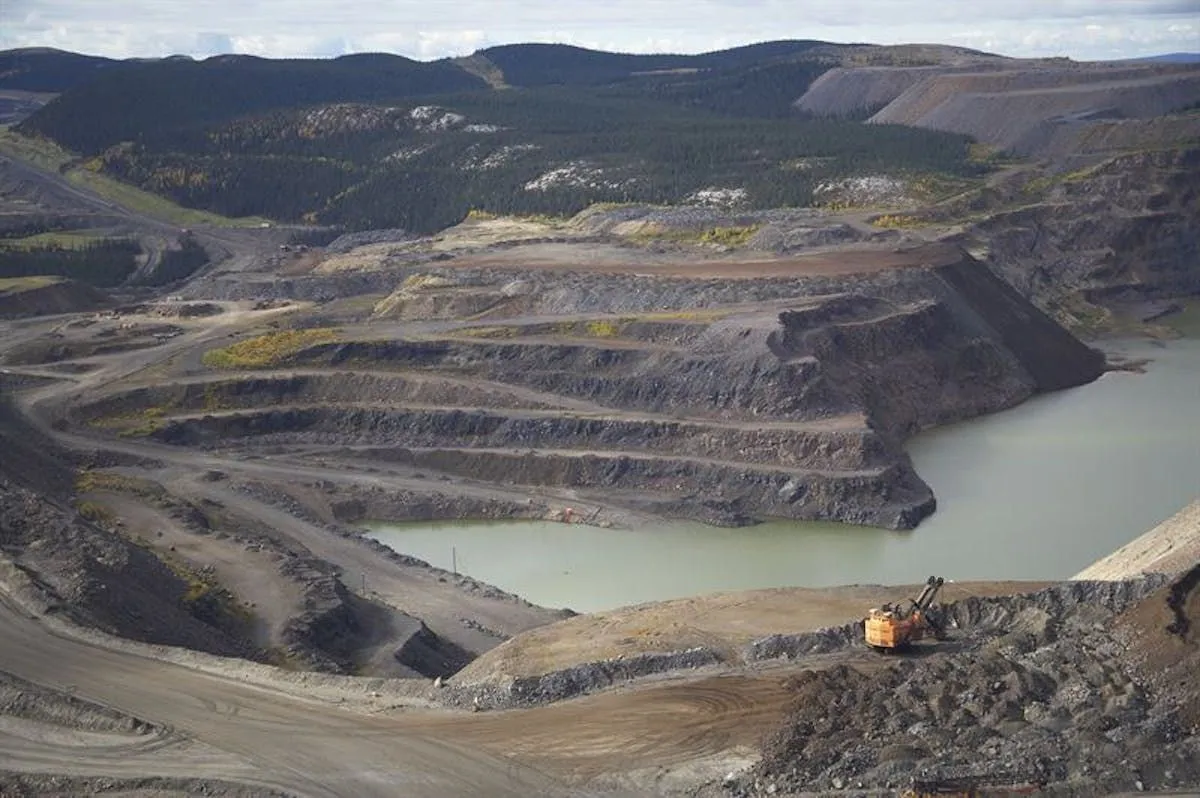
Skip to Content News Archives Economy Energy Oil & Gas Renewables Electric Vehicles Mining Commodities Agriculture Real Estate Mortgages Mortgage Rates Finance Banking Insurance Fintech Cryptocurrency Work Wealth Smart Money Wealth Management Investor Personal Finance Family Finance Retirement Taxes High Net Worth FP Comment Executive Women Puzzmo Newsletters Financial Times Business Essentials More Innovation Information Technology FP500 Podcasts Small Business Lives Told Tails Told Shopping Financial Post Store Obituaries Place a Notice Advertising Advertising With Us Advertising Solutions Postmedia Ad Manager Sponsorship Requests Classifieds Place a Classifieds ad Working Profile Settings My Subscriptions Saved Articles My Offers Newsletters Customer Service FAQ News Economy Energy Mining Real Estate Finance Work Wealth Investor FP Comment Executive Women Puzzmo Newsletters Financial Times Business Essentials HomeMiningNewsWhy a Labrador mine is scaling back production of a critical mineralRio Tinto's iron ore mine in Labrador City is one of the largest in Canada You can save this article by registering for free here. Or sign-in if you have an account.Rio Tinto's Iron Ore Company of Canada extracts high-grade and low-impurity iron ore from five mine processing plants in Labrador City. CONTRIBUTEDIron ore is on Canada’s critical minerals list, but one of the country’s largest mines has been scaling back operations.Subscribe now to read the latest news in your city and across Canada.Exclusive articles from Barbara Shecter, Joe O'Connor, Gabriel Friedman, and others.Daily content from Financial Times, the world's leading global business publication.Unlimited online access to read articles from Financial Post, National Post and 15 news sites across Canada with one account.National Post ePaper, an electronic replica of the print edition to view on any device, share and comment on.Daily puzzles, including the New York Times Crossword.Subscribe now to read the latest news in your city and across Canada.Exclusive articles from Barbara Shecter, Joe O'Connor, Gabriel Friedman and others.Daily content from Financial Times, the world's leading global business publication.Unlimited online access to read articles from Financial Post, National Post and 15 news sites across Canada with one account.National Post ePaper, an electronic replica of the print edition to view on any device, share and comment on.Daily puzzles, including the New York Times Crossword.Create an account or sign in to continue with your reading experience.Access articles from across Canada with one account.Share your thoughts and join the conversation in the comments.Enjoy additional articles per month.Get email updates from your favourite authors.Create an account or sign in to continue with your reading experience.Access articles from across Canada with one accountShare your thoughts and join the conversation in the commentsEnjoy additional articles per monthGet email updates from your favourite authorsSign In or Create an AccountorThe Iron Ore Company of Canada (IOC) mine and processing plant in Labrador City, which is owned by Rio Tinto Group, still has lots of ore in the ground, but it is currently taking measures to stabilize operations.The site produced 16.1 million of the 70 million tonnes of ore mined in Canada in 2024.The year before that, according to the website Mining Technology, it was the third highest producing iron ore mine in the country, behind two Quebec mines, Bloom Lake (owned by Champion Iron Ltd.) and Mont-Wright (owned by ArcelorMittal S.A.)Get the latest headlines, breaking news and columns.By signing up you consent to receive the above newsletter from Postmedia Network Inc.A welcome email is on its way. If you don't see it, please check your junk folder.The next issue of Top Stories will soon be in your inbox.We encountered an issue signing you up. Please try againHere, Postmedia breaks down what’s behind the company’s decision to scale back.According to Rio Tinto, IOC has been in the midst of a transformation at the mine since September 2025.The project, said a Rio Tinto IOC spokesperson via an emailed response to an interview request by Postmedia, is “aimed at strengthening the long-term resilience and competitiveness of the business, in a context of higher operating costs, mine pit health challenges and a more complex operating environment.”In order to access ore, noted the company, current pit conditions require more movement of waste material.“We are adjusting our mining sequences and continuing work to improve pit conditions to support safe, reliable and efficient operations over the long term,” stated the email. A rendering shows an aerial view of the Labrador City mine. Photo by Hand-out /IRON ORE COMPANY OF CANADAIOC emphasized that the quality of its ore remains high and its goal for production in 2026 remains in the range of 15 to 18 million tonnes, as had been previously communicated by the company.In first quarter results reported on May 4, 2026, IOC noted 2026 production would likely be towards the lower end of the range.Production in the first quarter amounted to 3.7 million tonnes, 14 per cent lower than the same quarter of 2025, and four per cent lower than the fourth quarter of 2025.“Performance was primarily constrained by reduced haul truck availability, mainly due to structural frame failures identified in the fourth quarter of 2025, longer than planned cycle times and lower payloads,” explained the report.The truck troubles resulted in a 26 per cent drop in the amount of material moved in the first three months of 2026, compared to the same period a year ago.Nameplate capacity — a measure of full sustained production of an operation under ideal conditions — at IOC is more in the range of 23 to 24 million tonnes.The mine has not achieved nameplate capacity in years. According to a January 2026 presentation by IOC’s investment entity — the Labrador Iron Ore Royalty Corporation— peak production since 2013 was 19 million tonnes in 2017.Total saleable production for 2025 was 15.9 million tonnes, down from 16.1 million tonnes in 2024.Production was lower, stated the report, because of pit health and mine equipment reliability challenges, which resulted in reduced ore feed to the concentrator.Recognizing the substantial challenges with pit health and asset reliability, Rio Tinto said it has made significant changes to improve the operating performance of IOC.It has increased integration with Rio Tinto’s global iron ore operations and has made changes in the corporate leadership structure. Senior IOC management is now comprised of career Rio Tinto employees with extensive operational experience.In a recent media scrum, Newfoundland and Labrador Mines and Energy Minister Lloyd Parrott said there have been some job cuts in Labrador City, both through attrition and layoffs. The minister did not mention the number of workers affected.IOC said it will not be commenting at this stage of the process on any potential effects on its workforce.“As part of the ongoing transformation, we are focused on aligning the business with operational realities in a structured and disciplined way,” stated a follow-up emailed reply from Rio Tinto IOC.Parrott did say he was of the understanding that as many as 50 or 60 drivers had been hired as part of the mine cleanup operations to restore pit health.According to the outlook in the company’s first-quarter results posted in May, IOC has budgeted for the purchase of six new haul trucks to help facilitate the removal of increased waste material.In its January report, the Labrador Iron Ore Royalty Corporation recognized that “multi-year improvements are required before nameplate capacity is a realistic goal.”Parrott said his department has been in communication with IOC management, and he is confident the company will get back on track in due time.“They have a very good grasp on what they need to do,” said the minister. “It’s going to take time.”According to the World Steel Association, global steel production was down two per cent — down by five per cent in China — in the first quarter of 2026 compared to the first quarter of 2025.“This decline was worsened by high energy costs and new carbon regulations that squeezed production margins across Europe,” John F. Tuer, Labrador Iron Ore Royalty Corporation’s president and chief executive officer, wrote in the corporation’s quarterly report in May.Despite that, iron ore prices improved modestly during the first quarter.In 2025, IOC achieved an average realized price of US$109 per tonne for its iron ore pellets and concentrate. In the opening quarter of 2026, it was able to get an average of US$110 for its products.On the supply side, continued Tuer, iron ore production remained robust. Combined sales from the world’s three largest seaborne producers — Rio Tinto, Vale S.A, and BHP Group Ltd. — increased by two per cent for the quarter ended March 31, 2026, over the same quarter in the prior year.In 2024, Canada produced 70 million tonnes of iron ore, most of it coming through the Labrador trough, which borders Quebec and Labrador.The corporation reported $35.4 million in royalty revenue in the first quarter of 2026, which was similar to the first quarter of 2025 but a nine per cent drop from Q4 of 2025.According to the corporation, IOC’s equity earnings totaled a loss of $6.4 million in the opening quarter of 2026, compared to gains of $3.3 million and $1.7 million in the first and fourth quarters of 2025, respectively.Net income per share for the first quarter of 2026 was $0.21 per share, a 36 per cent decrease from the same period in 2025 and a 40 per cent decrease from the fourth quarter of 2025. Join the Conversation This website uses cookies to personalize your content (including ads), and allows us to analyze our traffic. Read more about cookies here. By continuing to use our site, you agree to our Terms of Use and Privacy Policy.
Why a Labrador mine is scaling back production of a critical mineral
Iron Ore Company of Canada says it needs to address the health of the Labrador City mine in order to reinvigorate production
1,572 words~7 min read