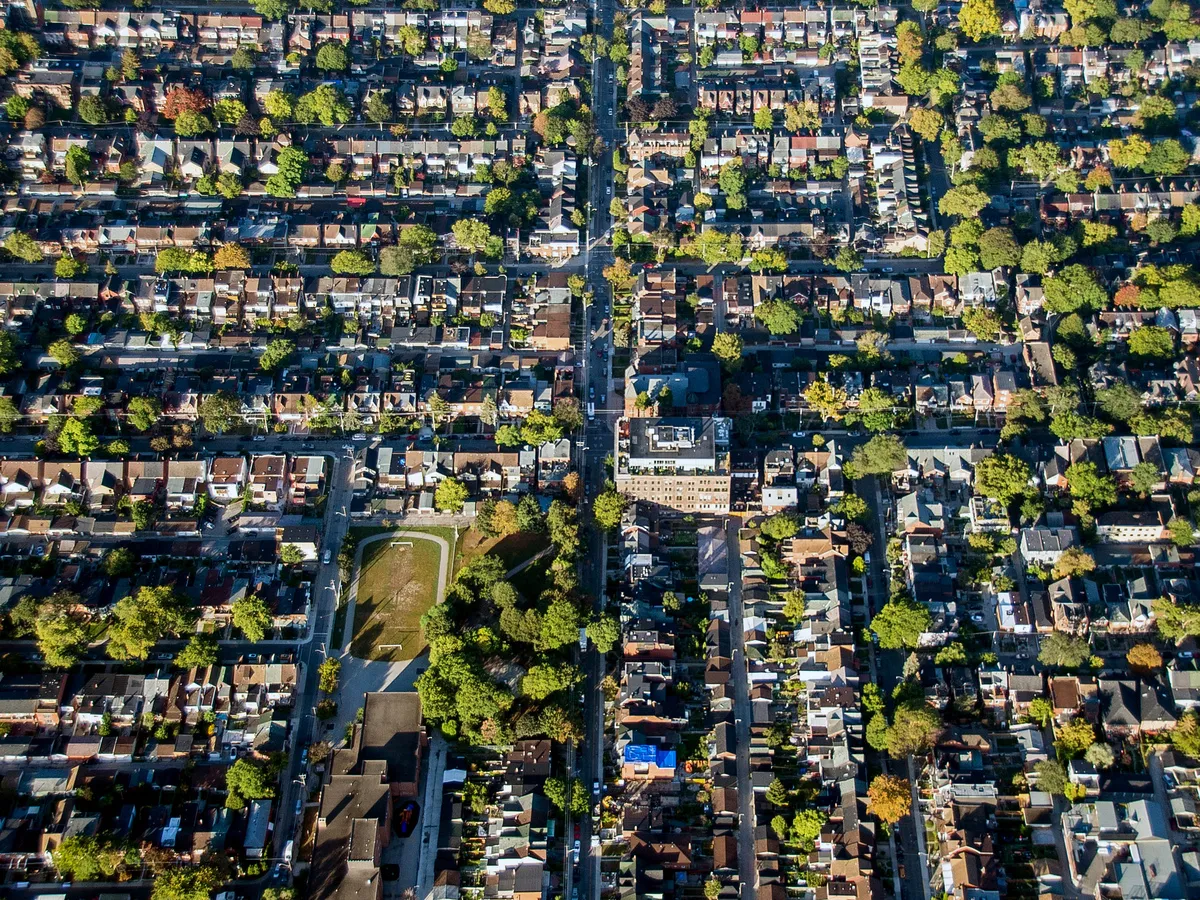
Skip to Content News Archives Economy Energy Oil & Gas Renewables Electric Vehicles Mining Commodities Agriculture Real Estate Mortgages Mortgage Rates Finance Banking Insurance Fintech Cryptocurrency Work Wealth Smart Money Wealth Management Investor Personal Finance Family Finance Retirement Taxes High Net Worth FP Comment Executive Women Puzzmo Newsletters Financial Times Business Essentials More Innovation Information Technology FP500 Podcasts Small Business Lives Told Tails Told Shopping Financial Post Store Obituaries Place a Notice Advertising Advertising With Us Advertising Solutions Postmedia Ad Manager Sponsorship Requests Classifieds Place a Classifieds ad Working Profile Settings My Subscriptions Saved Articles My Offers Newsletters Customer Service FAQ News Economy Energy Mining Real Estate Finance Work Wealth Investor FP Comment Executive Women Puzzmo Newsletters Financial Times Business Essentials HomeReal EstateMortgagesThe straight line running from Hormuz to Canada's housing marketRobert McLister: Downing in doom over real estate is a fool's errand, and certainly not smart over the long runLast updated 11 hours ago You can save this article by registering for free here. Or sign-in if you have an account.Houses are seen in this aerial photograph taken above Toronto, Ont. Photo by James MacDonald/Bloomberg filesLeading up to the Bank of Canada’s first rate cut in June 2024, every real estate watercooler in Canada was humming with chatter about a looming mortgage “renewal shock” or “renewal cliff.”Subscribe now to read the latest news in your city and across Canada.Exclusive articles from Barbara Shecter, Joe O'Connor, Gabriel Friedman, and others.Daily content from Financial Times, the world's leading global business publication.Unlimited online access to read articles from Financial Post, National Post and 15 news sites across Canada with one account.National Post ePaper, an electronic replica of the print edition to view on any device, share and comment on.Daily puzzles, including the New York Times Crossword.Subscribe now to read the latest news in your city and across Canada.Exclusive articles from Barbara Shecter, Joe O'Connor, Gabriel Friedman and others.Daily content from Financial Times, the world's leading global business publication.Unlimited online access to read articles from Financial Post, National Post and 15 news sites across Canada with one account.National Post ePaper, an electronic replica of the print edition to view on any device, share and comment on.Daily puzzles, including the New York Times Crossword.Create an account or sign in to continue with your reading experience.Access articles from across Canada with one account.Share your thoughts and join the conversation in the comments.Enjoy additional articles per month.Get email updates from your favourite authors.Create an account or sign in to continue with your reading experience.Access articles from across Canada with one accountShare your thoughts and join the conversation in the commentsEnjoy additional articles per monthGet email updates from your favourite authorsSign In or Create an AccountorThe phrases caught fire in October 2023, when RBC Capital Markets analyst Darko Mihelic estimated that roughly six in 10 bank mortgages would renew through 2026, with payments climbing as much as 48 per cent.Mercifully, defaults refrained from spiralling, thanks to a convenient cocktail of falling rates, rising incomes, government mortgage limits, accumulated home equity (a chunk of which later evaporated) and government-pushed lender forbearance.Get the latest headlines, breaking news and columns.By signing up you consent to receive the above newsletter from Postmedia Network Inc.A welcome email is on its way. If you don't see it, please check your junk folder.The next issue of Top Stories will soon be in your inbox.We encountered an issue signing you up. Please try againAll of this helped stabilize Canadian real estate values after a painful dip from the highs of winter 2022.In the end, almost everyone survived the 2022-23 real estate earthquake, albeit with a hit to their home equity.But what if that quake wasn’t the only one? What if it was just a foreshock to the next tremor — one that’s building beneath our feet today?And for the record, I’m no housing bear who likes to write drama for clicks. Nor do I enjoy being the Debbie Downer on a day when Canadian Real Estate Association (CREA) data shows that last month’s average home prices just rose double the typical April move. (CREA’s main price measure, the MLS Home Price Index, slipped 0.1 per cent month over month in April.)But it’s also nice to be realistic. Beyond improving affordability and pent-up demand, most of the fundamentals have looked decidedly unwell:Shrinking population (mostly due to Canada’s expulsion of temporary residents — who generally rent, albeit rental demand drives home values, too)Well-publicized condo weaknessGovernment supply initiatives (which, granted, have yet to produce much fruit in the owner-occupied market)Stretched household debt and an oppressive cost of livingFull-time employment that looks like it’s topping outSurging housing completions (mostly rentals, which affect home values due to the substitution effect)General economic uncertaintyBut all of that takes a back seat to the heavyweight cyclical driver of price moves: interest rates. Nothing flatlines housing demand faster than mortgage rates on the march.And interest rates answer to one master above all others: inflation.Most inflation metrics that matter have been pointing straight up the last two months, courtesy of Iran’s chokehold on oil shipping through the Strait of Hormuz.Central bankers are hoping (praying?) that Iran will give in and let oil start flowing again soon. But after Wednesday’s U.S. producer prices print landed at nearly triple the estimates, that prayer is starting to look unanswered.So far, Canada’s inflation has been slower to respond to the global energy shock than the U.S., but it might catch up a bit after next Tuesday’s CPI reading.Growth from fiscal stimulus and AI capital expenditures is also propping up rates, as are cross-border updrafts as investors demand fatter term premia on U.S. bonds to compensate for rising risk. Those premiums are now at multi-year highs for five-year Treasuries. Even Canadian term premia have recently traded near decade highs.If the Bank of Canada actually pulls the trigger and hikes, housing would feel the sting straightaway. A 100 basis point bump in mortgage rates, for instance, lops roughly 8.5 per cent off buying power. That immediately limits what most people can pay for homes.On top of that, all else being equal, steeper mortgage rates on renewals typically mean higher default rates, more real estate listings and somewhat greater systemic losses if home prices make a new low.Worst of all, back-to-back rate hike cycles, if we indeed get one, would deplete resources for some of the 36 per cent of homeowners who say they already find it challenging to make mortgage payments. And by my arithmetic, almost a quarter of that group has a renewal date in the next 12 months.And let’s not forget the head of the Office of the Superintendent of Financial Institutions (OSFI), Peter Routledge, who estimated this year that as many as 30,000 to 150,000 households could be particularly vulnerable at renewal.Most of those wouldn’t default, but only 13,749 bank mortgage holders are in arrears today, so it wouldn’t take much to boost the default rate noticeably.All this is to say, this humble author wouldn’t bet the kids’ college fund on home prices surging in 2026. And no one should be borrowing to the gills to buy at this moment.For all anyone knows, those green shoots sprouting in Canada’s real estate garden could turn out to be weeds in disguise.Ultimately, drowning in doom over real estate is a fool’s errand, and certainly not smart over the long run.Longer term, the fundamentals are still in housing’s corner, for multiple reasons:Sooner or later, Ottawa will turn the immigration tap back to a normal flow. (It has no real option, as Canadians aren’t churning out babies at a sustainable rate.)Newcomers tend to settle in urban hubs, which only turns the heat up on prices in major markets.The current dearth of owner-occupied homebuilding should come back to bite us in a few years.The senior population keeps growing, and a growing share want to age in place, which takes supply off the market.Construction costs aren’t exactly trending down.Restrictive land-use regulations/zoning won’t significantly improve, and, most importantly…Interest rates will fall again once a recession seems likely.With all that on the table, there may still be one more tremor before Canada’s real estate dust settles.That’s especially likely if inflation expectations become unanchored and/or average core inflation runs well past three per cent, at which point the Bank of Canada is almost contractually obligated to hike.Robert McLister is a mortgage strategist, interest rate analyst and editor of MortgageLogic.news. You can follow him on X at @RobMcLister.For the best national insured and uninsured mortgage rates, updated daily, please visit our mortgage rate page here. Join the Conversation This website uses cookies to personalize your content (including ads), and allows us to analyze our traffic. Read more about cookies here. By continuing to use our site, you agree to our Terms of Use and Privacy Policy.
The straight line running from Hormuz to Canada's housing market
Downing in doom over real estate is a fool's errand, and certainly not smart over the long run, writes Robert McLister. Find out more.
1,458 words~7 min read