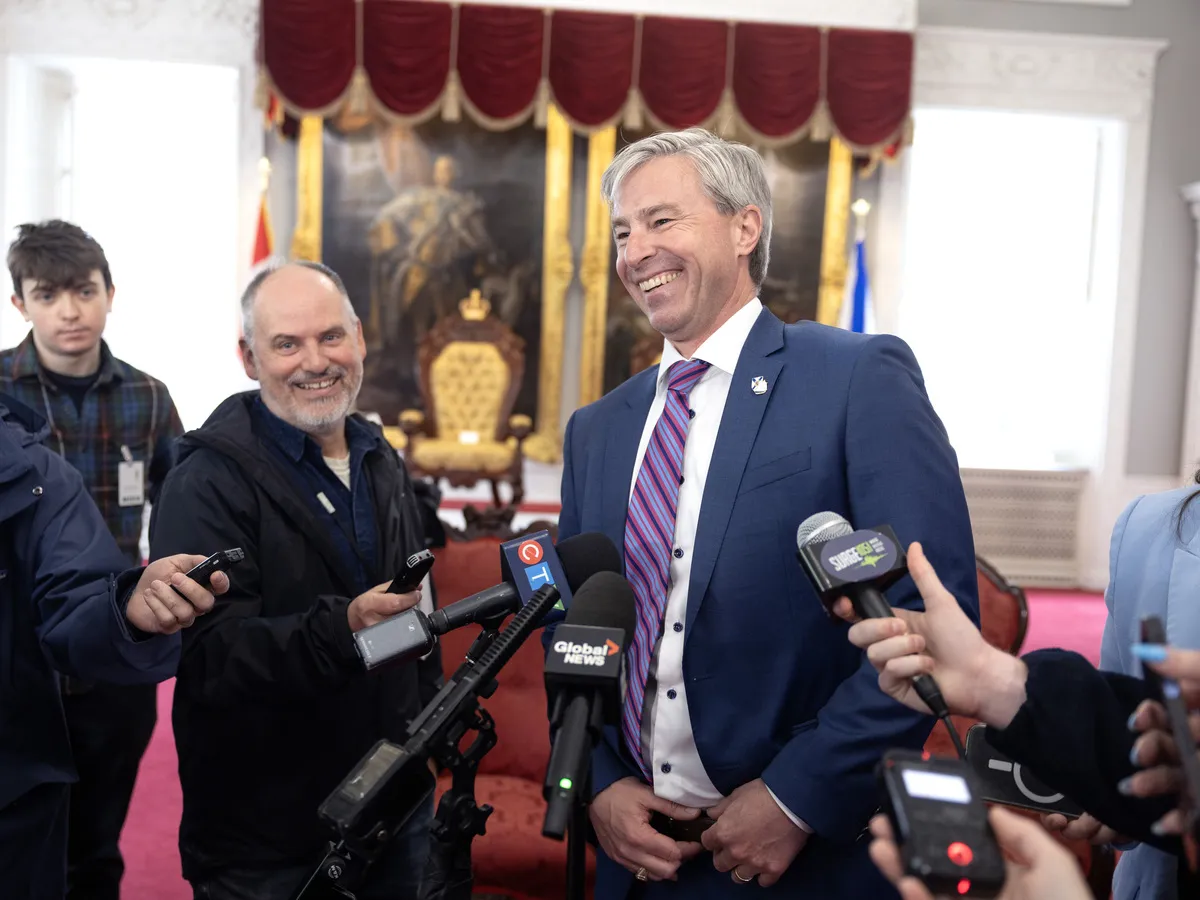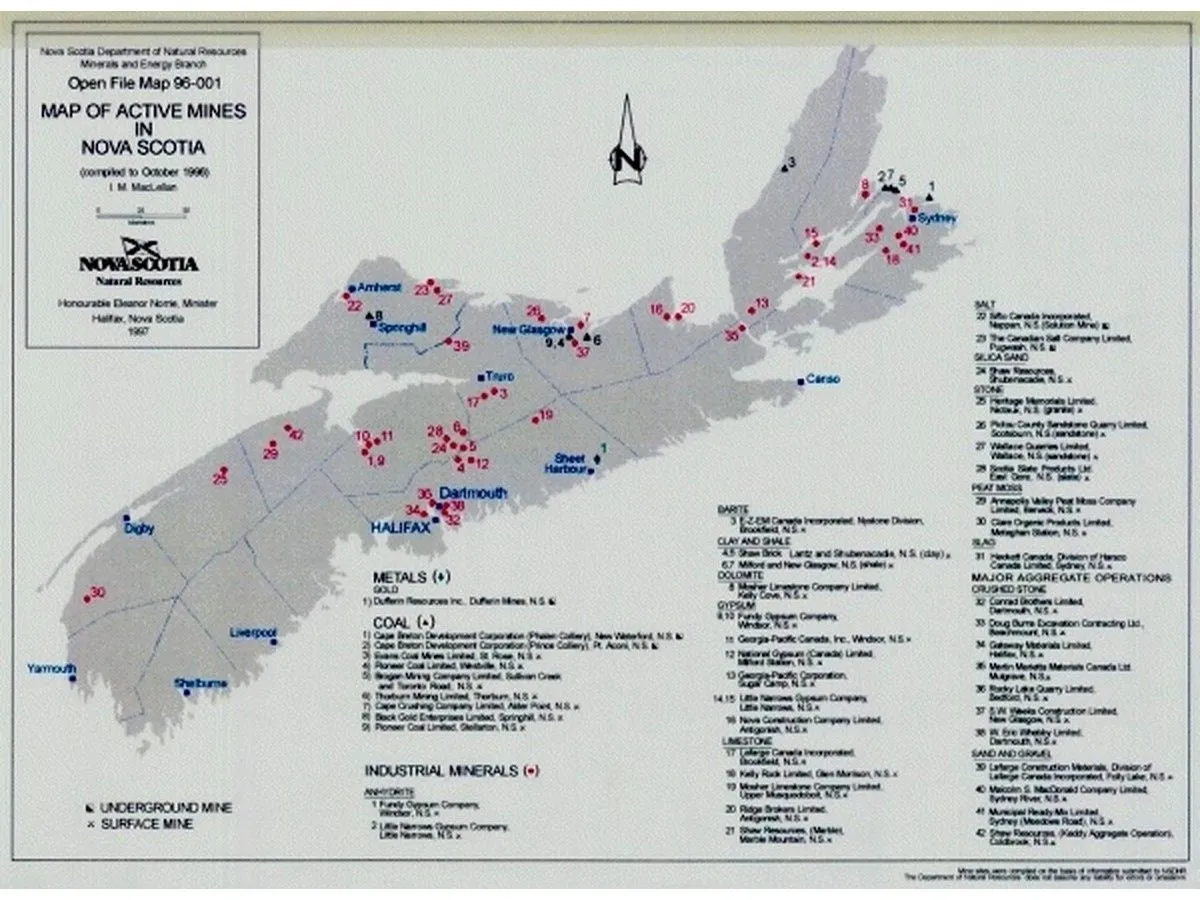
Skip to Content News Archives Economy Energy Oil & Gas Renewables Electric Vehicles Mining Commodities Agriculture Real Estate Mortgages Mortgage Rates Finance Banking Insurance Fintech Cryptocurrency Work Wealth Smart Money Wealth Management Investor Personal Finance Family Finance Retirement Taxes High Net Worth FP Comment Executive Women Puzzmo Newsletters Financial Times Business Essentials More Innovation Information Technology FP500 Podcasts Small Business Lives Told Tails Told Shopping Financial Post Store Obituaries Place a Notice Advertising Advertising With Us Advertising Solutions Postmedia Ad Manager Sponsorship Requests Classifieds Place a Classifieds ad Working Profile Settings My Subscriptions Saved Articles My Offers Newsletters Customer Service FAQ News Economy Energy Mining Real Estate Finance Work Wealth Investor FP Comment Executive Women Puzzmo Newsletters Financial Times Business Essentials HomeMiningNewsNova Scotia launches geological mapping project to search for new minesMining industry applauds province’s attempts to modernize explorationLast updated 2 hours ago You can save this article by registering for free here. Or sign-in if you have an account.A 1996 map of active mines in Nova Scotia. The province has issued a request for proposals for the Provincial Geophysical Assessment and Data Acquisition Project which will identify where potential mines could be located. Photo by Province of Nova ScotiaAs national and global demand surges for critical minerals tied to electric vehicles, defence and clean energy, Nova Scotia’s mining industry is enthused by the province’s attempts to modernize exploration.Subscribe now to read the latest news in your city and across Canada.Exclusive articles from Barbara Shecter, Joe O'Connor, Gabriel Friedman, and others.Daily content from Financial Times, the world's leading global business publication.Unlimited online access to read articles from Financial Post, National Post and 15 news sites across Canada with one account.National Post ePaper, an electronic replica of the print edition to view on any device, share and comment on.Daily puzzles, including the New York Times Crossword.Subscribe now to read the latest news in your city and across Canada.Exclusive articles from Barbara Shecter, Joe O'Connor, Gabriel Friedman and others.Daily content from Financial Times, the world's leading global business publication.Unlimited online access to read articles from Financial Post, National Post and 15 news sites across Canada with one account.National Post ePaper, an electronic replica of the print edition to view on any device, share and comment on.Daily puzzles, including the New York Times Crossword.Create an account or sign in to continue with your reading experience.Access articles from across Canada with one account.Share your thoughts and join the conversation in the comments.Enjoy additional articles per month.Get email updates from your favourite authors.Create an account or sign in to continue with your reading experience.Access articles from across Canada with one accountShare your thoughts and join the conversation in the commentsEnjoy additional articles per monthGet email updates from your favourite authorsSign In or Create an AccountorThe province recently announced it was turning to data, geological modeling and other technology to discover new mines and issued a request for proposals for a geophysical assessment and data acquisition project.The executive director of the Mining Association of Nova Scotia, Sean Kirby, called it “fantastic news.”Get the latest headlines, breaking news and columns.By signing up you consent to receive the above newsletter from Postmedia Network Inc.A welcome email is on its way. If you don't see it, please check your junk folder.The next issue of Top Stories will soon be in your inbox.We encountered an issue signing you up. Please try again“It’s a huge help to our industry to help us find the mines and quarries of tomorrow and help attract interest in our geology,” he said. “Nova Scotia is a mineral rich province. We’ve been a mining jurisdiction for literally three centuries.“It’s very common in other jurisdictions across the country and around the world for governments to invest in geophysical surveys in order to gain better understanding of their geology, to help understand the sorts of geological anomalies that can lead to mineral deposits and potential mines, and a really important way to attract investment.” Sean Kirby, executive director of the Mining Association of Nova Scotia. Photo by Tim KrochakThe $19.5-million initiative will map Nova Scotia’s underground mineral potential, creating a geophysical database, which could be used as a tool to attract investment and job creation to the province and help identify possible geohazards.Helicopters or small planes will be used to conduct aerial surveys. Mapping for a specific site, like a mine, could be done with drones.Once the surveying has been completed, mining companies would come in for more detailed site-specific work to gain a full understanding of the geology in the area.“In 2018, we had geophysical experts prepare a report on how Nova Scotia should do airborne geophysical surveys across the province to help us understand our geology better and to help find future mines and quarries,” Kirby said.“Since we prepared that report in 2018, we have been calling on the provincial government ever since to fund it and follow through on it.”The 2018 report is the airborne geophysical survey project known as Minerals Play Fairway.Much of the data maintained by the province dates from the 1980s. The technology to conduct surveys and process the data has improved immeasurably decades later.In the Minerals Play Fairway report, the Mining Association of Nova Scotia said the province’s geophysical database is “like a rotary telephone in a wireless world. We need to modernize it.” Premier Tim Houston has signalled that the government of Nova Scotia intends to place greater emphasis on supporting resource industries like mining as part of its economic development efforts. Photo by Ryan TaplinMinerals Play Fairway is modelled on the successful Nova Scotia oil and gas Play Fairway Analysis.In 2008, the Department of Energy commissioned a $15-million analysis and geoscience data package program with the goal of stimulating offshore petroleum exploration activity.The resulting data was made available for free to the global oil and gas industry and attracted over $2 billion in investment in Nova Scotia’s offshore.“The provincial government invested $15 million in offshore seismic geophysical surveys and then used that data to market it to the global oil and gas industry,” Kirby said. “That resulted in over $2 billion in expenditures in Nova Scotia’s offshore. It was probably the most successful economic development initiative ever undertaken in the province.“We want the government to do a minerals equivalent. That will be really helpful to us in understanding our geology better and in attracting more interest in Nova Scotia’s potential for minerals and critical minerals, in particular.”Mining advocates have long said that new critical mineral strategies and major project approvals in Nova Scotia could create hundreds of jobs and generate billions of dollars in economic activity.In January 2025, early into his government’s second mandate, Nova Scotia Premier Tim Houston launched an aggressive push for natural resource development as a path to greater economic prosperity. Houston also serves as the province’s energy minister.“At the end of the day, it’s going to help us create more jobs and opportunities for Nova Scotians. It’s going to help give our kids more opportunities to stay in the province,” said Kirby. “It’s going to help generate more government revenues that help pay for programs like health and education. So, this is all good news for Nova Scotia and Nova Scotians.”Dalhousie University will administer the work for the Provincial Geophysical Assessment and Data Acquisition Project, with information made public once it is complete. The deadline for submissions is June 1.“By strengthening the province’s understanding of its geology and mineral potential, this initiative will help inform future development, support long term economic opportunity and advance research across Nova Scotia,” Laura Hynes Jenkins, assistant vice-president of government relations at Dal, said in a news release. Join the Conversation This website uses cookies to personalize your content (including ads), and allows us to analyze our traffic. Read more about cookies here. By continuing to use our site, you agree to our Terms of Use and Privacy Policy.
Nova Scotia launches geological mapping project to search for new mines
Province plans to use data analytics, geological modeling and other technology to identify where potential mines could be located
1,309 words~6 min read