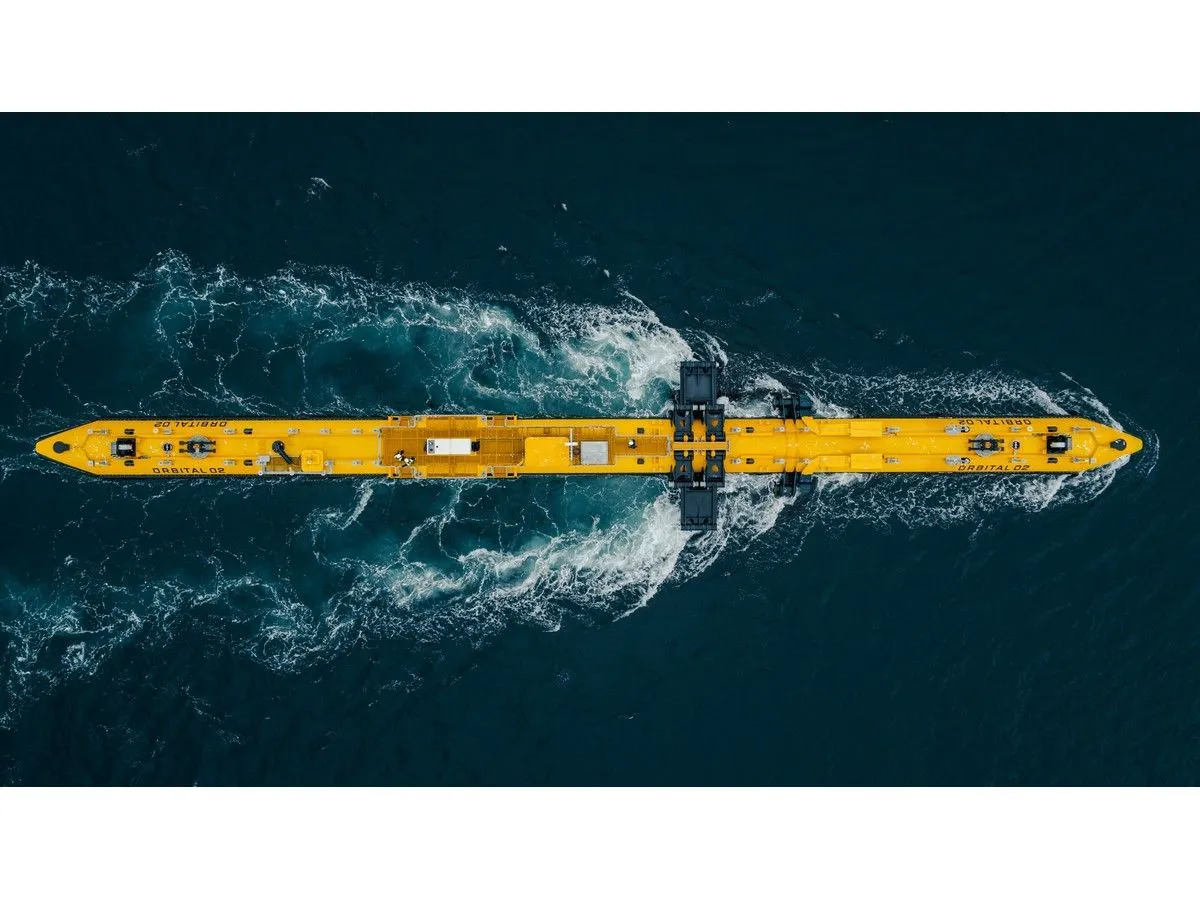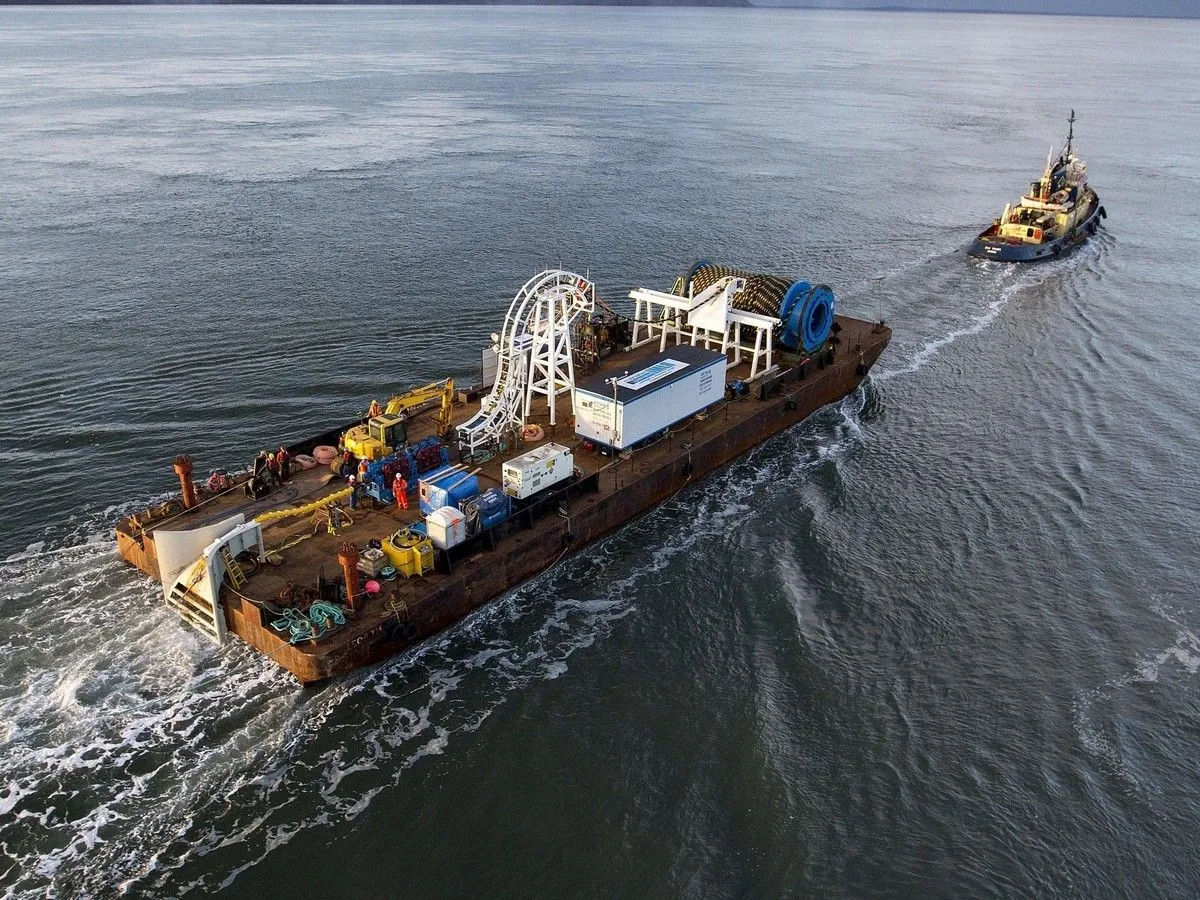
Skip to Content News Archives Economy Energy Oil & Gas Renewables Electric Vehicles Mining Commodities Agriculture Real Estate Mortgages Mortgage Rates Finance Banking Insurance Fintech Cryptocurrency Work Wealth Smart Money Wealth Management Investor Personal Finance Family Finance Retirement Taxes High Net Worth FP Comment Executive Women Puzzmo Newsletters Financial Times Business Essentials More Innovation Information Technology FP500 Podcasts Small Business Lives Told Tails Told Shopping Financial Post Store Obituaries Place a Notice Advertising Advertising With Us Advertising Solutions Postmedia Ad Manager Sponsorship Requests Classifieds Place a Classifieds ad Working Profile Settings My Subscriptions Saved Articles My Offers Newsletters Customer Service FAQ News Economy Energy Mining Real Estate Finance Work Wealth Investor FP Comment Executive Women Puzzmo Newsletters Financial Times Business Essentials HomeEnergyNewsCould the world's strongest tides turn Nova Scotia into an energy powerhouse?The Bay of Fundy is home to some of the strongest tidal currents on the planet. The trick is harnessing itLast updated 6 hours ago You can save this article by registering for free here. Or sign-in if you have an account.Equipment is transported to the FORCE site in the Minas Passage off the shore of Parrsboro, N.S. Photo by Len Wagg /Communications Nova ScotiaThe Bay of Fundy, long known for the world’s highest tides, could some day generate enough energy to power a city the size of Montreal.Subscribe now to read the latest news in your city and across Canada.Exclusive articles from Barbara Shecter, Joe O'Connor, Gabriel Friedman, and others.Daily content from Financial Times, the world's leading global business publication.Unlimited online access to read articles from Financial Post, National Post and 15 news sites across Canada with one account.National Post ePaper, an electronic replica of the print edition to view on any device, share and comment on.Daily puzzles, including the New York Times Crossword.Subscribe now to read the latest news in your city and across Canada.Exclusive articles from Barbara Shecter, Joe O'Connor, Gabriel Friedman and others.Daily content from Financial Times, the world's leading global business publication.Unlimited online access to read articles from Financial Post, National Post and 15 news sites across Canada with one account.National Post ePaper, an electronic replica of the print edition to view on any device, share and comment on.Daily puzzles, including the New York Times Crossword.Create an account or sign in to continue with your reading experience.Access articles from across Canada with one account.Share your thoughts and join the conversation in the comments.Enjoy additional articles per month.Get email updates from your favourite authors.Create an account or sign in to continue with your reading experience.Access articles from across Canada with one accountShare your thoughts and join the conversation in the commentsEnjoy additional articles per monthGet email updates from your favourite authorsSign In or Create an AccountorTwice each day, 14 billion tonnes of water moving at speeds over five metres a second is funnelled through the Minas Passage, a narrow channel in the eastern part of the Bay of Fundy, creating some of the strongest tidal currents on the planet.Industry estimates suggest the passage could eventually generate up to 2,500 megawatts of renewable energy, a resource too large for governments, utilities and energy developers to ignore as Canada works toward a lower-carbon future.Breaking business news, incisive views, must-reads and market signals. Weekdays by 9 a.m.By signing up you consent to receive the above newsletter from Postmedia Network Inc.A welcome email is on its way. If you don't see it, please check your junk folder.The next issue of Posthaste will soon be in your inbox.We encountered an issue signing you up. Please try againAt the centre of that opportunity is the Fundy Ocean Research Centre for Energy (FORCE), a not-for-profit research and testing facility for tidal stream energy located near Parrsboro, some 120 kilometres from Halifax. The Fundy Ocean Research Centre for Energy visitor centre near Parrsboro, N.S. Photo by FORCEEstablished in 2009, FORCE provides the specialized infrastructure needed to connect tidal energy devices to Nova Scotia’s power grid, while serving as North America’s leading test site for tidal stream energy technologies.FORCE executive director Lindsay Bennett told The Chronicle Herald in 2024 that “tidal projects are particularly complex. It’s tough to meet the engineering, financing and regulatory demands to get a project in the water. Not every company is going to succeed here; the bar is high.”While it has its challenges, interest in the sector remains strong. Unlike wind and solar power, tidal energy is entirely predictable, offering a potential advantage as power grids seek reliable sources of renewable electricity.The Financial Post recently caught up with Bennett, who discussed the opportunities and obstacles that face tidal energy development in Nova Scotia. Staff from the Fundy Ocean Research Centre for Energy head out in advance of camera frame testing in the Minas Passage. Photo by FORCEFP: Why is FORCE — and the potential of tidal energy — important to Nova Scotia?Bennett: Tidal energy has really been part of our region’s identity for millions of years. Mi’kmaq stories teach that Kluskap created the tides by stirring the waters with his great paddle, a reminder that tidal forces are not just natural phenomena but part of a living cultural landscape. And Acadian settlers later built tidal mills powered by wooden gates and gravity.The Bay of Fundy has enormous potential to help us respond to the impacts of climate change. Canada’s goal of getting to net-zero emissions by 2050 will require a range of solutions, not just tidal but other new clean energy solutions. But tidal energy is unique – it delivers guaranteed power four times a day and represents a lasting opportunity for energy security and local economic growth.In terms of economic impact, according to recent Atlantic Economic Panel research, tidal power stands out as one of Atlantic Canada’s most supported economic opportunities. In their research, 67 per cent of Atlantic Canadians support developing the sector, while only seven per cent are opposed. We have access to a natural energy advantage that few places anywhere can match.Bennett: There is a lot of complexity to meet the engineering, financing and regulatory demands to get a project in the water. And as the industry began, some projects were going to fail. But generally, around the world, tidal energy is starting to move from demonstration to deployment, from single devices to multiple.We now have far more knowledge than we did a decade ago. In the Bay of Fundy, we’ve gained experience with deployment, operations, environmental monitoring and regulation, and we have a much clearer understanding of the conditions needed for projects to succeed.Internationally, there is also a growing record of device performance and reliability based on years of operating experience. Orbital Marine Power Inc.’s O2 turbine has logged thousands of operational hours at EMEC (the European Marine Energy Centre in Orkney, Scotland) since 2021, delivered consistent grid power and set the stage to move to larger scale.The technology works. Not every solution is equal, but the technology can deliver power continuously over long periods. A view of the Minas Passage from the Fundy Ocean Research Centre for Energy site near Parrsboro, N.S. Photo by FORCEWe’re also looking closer at what it offers: guaranteed output windows. We can plan an electricity system around it. Every grid with a growing share of renewables faces the same challenge – variability. Wind and solar generation can fluctuate from hour to hour, depending on weather and daylight. Tidal currents, on the other hand, are steady and predictable, delivering energy four times a day, not tied to wind and sunlight. Because tidal power produces when other renewables may not, it helps smooth overall supply and supports a more stable and resilient grid.Even a modest share of tidal energy in a regional mix, on the order of 10 per cent – or about 300 megawatts in Nova Scotia’s case – can play a meaningful role in reducing balancing and storage costs in system models. No other renewable offers that level of predictability.Bennett: We are feeling positive about the direction of the sector.It’s great to see a Canadian company (Eauclaire Tidal Ltd.) and one of the world’s leading tidal technologies ((Orbital Marine Power) making a long-term commitment to Nova Scotia. (The companies have a partnership, occupy a berth at FORCE, and are adding two more berths)The industry today is operating with far more knowledge, experience and regulatory clarity than it had a decade ago. In the Bay of Fundy, we’ve learned a tremendous amount about deployment, marine operations, environmental monitoring and the conditions needed to support successful projects. None of that guarantees success for any individual project, but it does mean the sector is building from a much stronger foundation than it was even just a few years ago.Bennett: Yes. We’re already a leading centre for marine renewables. But I think Canada has what it takes to move to the front. The Bay of Fundy (has) power potential equal to the province’s entire electricity demand, four times a day.As we move towards multiple devices, there are many partners that will play an important role.Ongoing research and monitoring to demonstrate that effects are acceptable, not absent, but understood and managed. Indigenous participation, the Mi’kmaq have an inherent, treaty and legal right to the governance of the Bay of Fundy. Economies of scale are needed to reduce cost and risk. Close collaboration among regulators, rights holders, scientists and developers guided by an adaptive management approach. Continued commitment and clear market signals from both provincial and federal governments.And there’s infrastructure. At FORCE, we’re ready. We can host 30 megawatts, roughly twice the size of Eauclaire and Orbital’s current project scope. Filling all 30 megawatts won’t happen overnight. But the pieces are increasingly in place: the resource, the grid connection, the technology, the research, the partners and the voices around the table.The question is no longer whether Nova Scotia has the ingredients to lead in tidal energy. The opportunity now is to put those ingredients together in a way that works for communities, rights holders, developers and the environment. Join the Conversation This website uses cookies to personalize your content (including ads), and allows us to analyze our traffic. Read more about cookies here. By continuing to use our site, you agree to our Terms of Use and Privacy Policy.
Could the world's strongest tides turn Nova Scotia into an energy powerhouse?
Q&A with Fundy Ocean Research Centre for Energy executive director Lindsay Bennett
1,696 words~8 min read