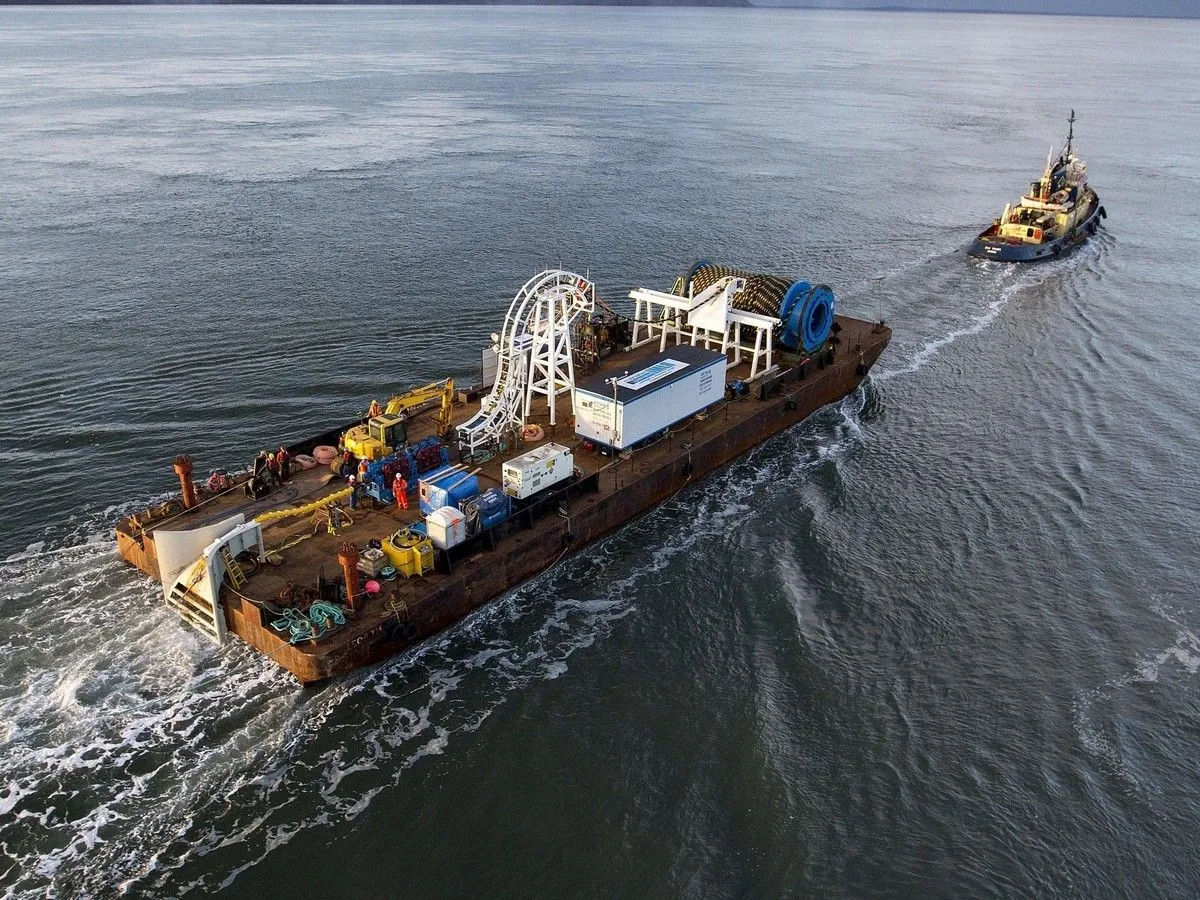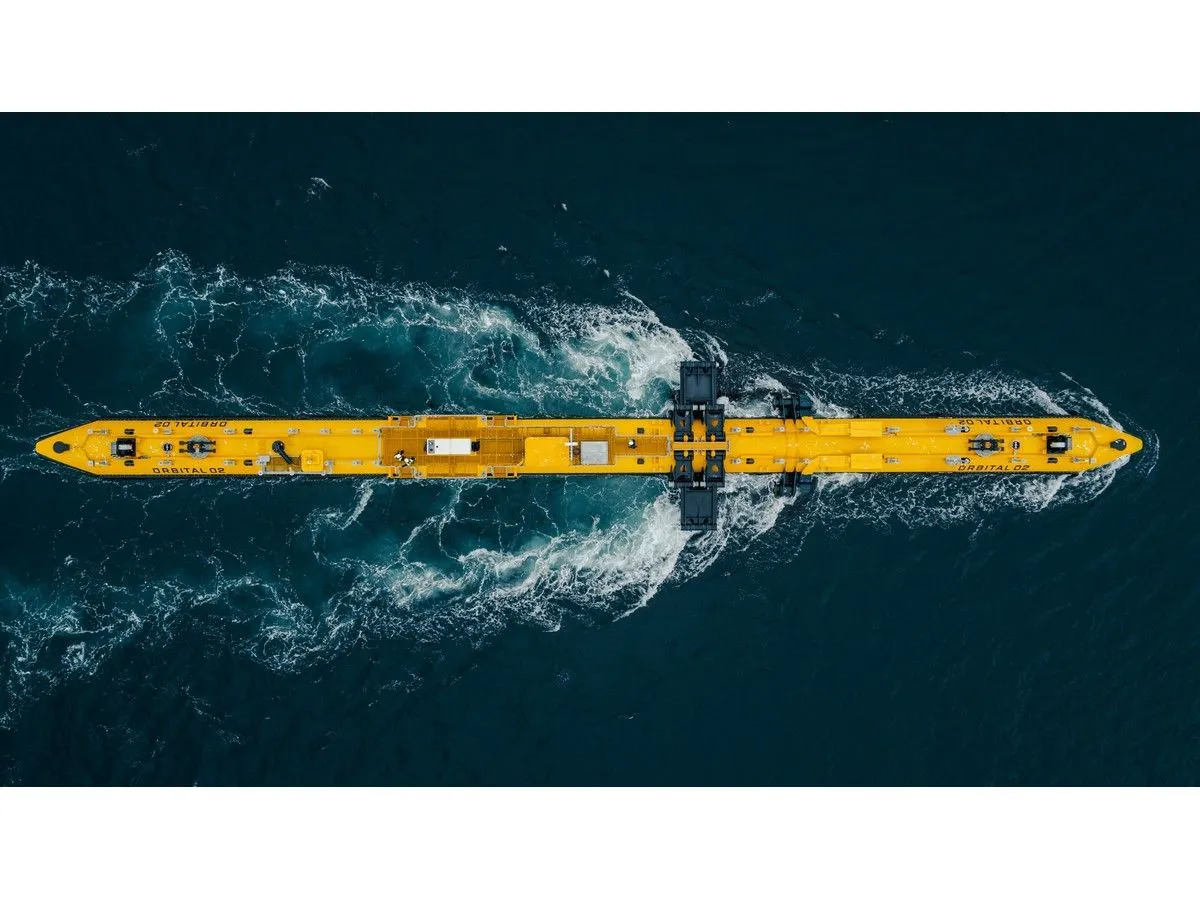
Skip to Content News Archives Economy Energy Oil & Gas Renewables Electric Vehicles Mining Commodities Agriculture Real Estate Mortgages Mortgage Rates Finance Banking Insurance Fintech Cryptocurrency Work Wealth Smart Money Wealth Management Investor Personal Finance Family Finance Retirement Taxes High Net Worth FP Comment Executive Women Puzzmo Newsletters Financial Times Business Essentials More Innovation Information Technology FP500 Podcasts Small Business Lives Told Tails Told Shopping Financial Post Store Obituaries Place a Notice Advertising Advertising With Us Advertising Solutions Postmedia Ad Manager Sponsorship Requests Classifieds Place a Classifieds ad Working Profile Settings My Subscriptions Saved Articles My Offers Newsletters Customer Service FAQ News Economy Energy Mining Real Estate Finance Work Wealth Investor FP Comment Executive Women Puzzmo Newsletters Financial Times Business Essentials HomeNewsCan tidal power turbines and fish co-exist? New Nova Scotia project aims to find outBay of Fundy channel could deliver 2,500 megawatts of renewable energy to Canada’s power gridLast updated 2 hours ago You can save this article by registering for free here. Or sign-in if you have an account.A long floating platform carries tidal turbines on the Bay of Fundy in Nova Scotia. Photo by OrbitalTidal power is an emerging sector globally and the immense tidal resource of a narrow channel in Nova Scotia could eventually deliver an estimated 2,500 megawatts of renewable energy to Canada’s power grid.Subscribe now to read the latest news in your city and across Canada.Exclusive articles from Barbara Shecter, Joe O'Connor, Gabriel Friedman, and others.Daily content from Financial Times, the world's leading global business publication.Unlimited online access to read articles from Financial Post, National Post and 15 news sites across Canada with one account.National Post ePaper, an electronic replica of the print edition to view on any device, share and comment on.Daily puzzles, including the New York Times Crossword.Subscribe now to read the latest news in your city and across Canada.Exclusive articles from Barbara Shecter, Joe O'Connor, Gabriel Friedman and others.Daily content from Financial Times, the world's leading global business publication.Unlimited online access to read articles from Financial Post, National Post and 15 news sites across Canada with one account.National Post ePaper, an electronic replica of the print edition to view on any device, share and comment on.Daily puzzles, including the New York Times Crossword.Create an account or sign in to continue with your reading experience.Access articles from across Canada with one account.Share your thoughts and join the conversation in the comments.Enjoy additional articles per month.Get email updates from your favourite authors.Create an account or sign in to continue with your reading experience.Access articles from across Canada with one accountShare your thoughts and join the conversation in the commentsEnjoy additional articles per monthGet email updates from your favourite authorsSign In or Create an AccountorBut first, a group of researchers want to know if underwater turbines can generate clean energy without harming the Bay of Fundy’s marine ecosystem.The Fundy Ocean Research Centre for Energy (FORCE) is retrofitting a former tidal power platform into a research station designed to monitor fish and marine life in the Bay of Fundy’s Minas Passage.That channel is one of the most powerful tidal energy sites on the planet, with 14 billion tonnes of water moving at speeds over five metres a secondBreaking business news, incisive views, must-reads and market signals. Weekdays by 9 a.m.By signing up you consent to receive the above newsletter from Postmedia Network Inc.A welcome email is on its way. If you don't see it, please check your junk folder.The next issue of Posthaste will soon be in your inbox.We encountered an issue signing you up. Please try again“For tidal energy to grow responsibly, we need good data about how tidal turbines interact with the marine environment,” Lindsay Bennett, FORCE’s executive director, said in an email.“Regulators need it, investors need it, the sector needs it to earn the respect and trust of communities who live, work and depend on the Bay of Fundy.“It’s very much a shared opportunity, giving researchers, partners, regulators and technology suppliers a common space to test tools, compare results and help build consensus around effective environmental assessment methods.” The Fundy Ocean Research Centre for Energy research and test centre for tidal stream energy near Parrsboro, N.S. Photo by FORCEFORCE is the research and test centre for tidal stream energy, providing offshore and onshore electrical equipment to connect devices to the power grid. It’s located about 10 kilometres west of Parrsboro.The 32-metre-long former Sustainable Marine Energy floating tidal platform, known as PLAT-I 6.40, will become a key component of FORCE’s Ocean Sensor Innovation Platforms (OSIP) project, a multi-year initiative aimed at improving environmental monitoring around tidal energy devices.“The PLAT-I was the first floating device in Canada to deliver electricity to the grid,” Bennett recalled. “That project failed to secure a regulatory approval to come to FORCE. That prompted a federal task force to ask how Canada could provide a clearer regulatory pathway for tidal energy projects while maintaining strong environmental protections.“One of the task force’s resulting actions was to advance research in support of a new staged permitting process. The Bay of Fundy is a staggering renewable energy resource, but it’s also a complex ecosystem and a sacred Mi’kmaw watershed. To harness it responsibly, we’ve got to ground our efforts in both rigorous science and respectful collaboration. And that’s how the OSIP project came to be.”The OSIP project — a collaborative effort with Acadia University, the Confederacy of Mainland Mi’kmaq, Ocean Tracking Network, the U.S.-based Pacific Northwest National Lab and other industry and government partners — is intended to gather critical data about fish movement and behaviour in one of the world’s most active marine environments. FORCE’s tidal power demonstration site at Black Rock in the Minas Basin near Parrsboro. Photo by FORCEThe Bay of Fundy’s powerful currents have long attracted interest from renewable energy developers hoping to harness the tides to generate electricity.But concerns about the potential effects of turbines on fish and marine life have remained one of the industry’s biggest regulatory hurdles.The OSIP project, which received $8.2 million in funding from Natural Resources Canada in September, is designed to address those concerns directly. The floating and seafloor platforms, specifically designed for the Bay of Fundy’s high flows, will deploy submersible sensor systems, underwater optical cameras, imaging sonars and acoustic receivers that track fish movement. Additional instruments will collect data on water speed, turbulence, temperature, and other environmental conditions.The refitted platform, which at one point had six marine turbines used to generate electricity from tidal flows, is expected to be launched sometime this summer.The information gathered will help researchers determine which monitoring approaches are most effective for studying fish-turbine interactions in the challenging conditions of the Minas Passage.FORCE said data from the sensors will be collected and analyzed over the next three years.“It will address one of our sector’s key questions: how fish interact with tidal turbines in high flow conditions,” Bennett said. “So far, the international research is encouraging — the few observed fish interactions have not resulted in obvious harm, and marine mammals appear to have adapted without harm to turbine installation.“But we have to build evidence for the Minas Passage, to support Canadian regulatory confidence that the sector can move forward responsibly and, ultimately, grow a local industry, improve our energy security, and build an additional solution to the growing challenge of climate change.”Bennett said the reason the Bay of Fundy is such a compelling renewable energy resource is the same reason it’s an extremely challenging place to collect data.“OSIP is allowing us to do more than we’ve been able to before — a stable, floating, purpose-built structure to test sensors, improve monitoring methods and support the kind of evidence we need to move responsibly to larger arrays of devices.”For Bennett, the connection between ocean conservation and renewable energy development is a natural one and a sentiment that aligns with Ocean Week Canada and World Ocean Day on June 8.World Ocean Day was first proposed during the 1992 Earth Summit and gained early momentum through activities at the Maritime Museum of the Atlantic in Halifax before being officially recognized by the United Nations in 2008.“World Ocean Day is a reminder that the ocean is not separate from our lives, especially in Nova Scotia,” she said.“The Bay of Fundy shapes our economy, our climate, our communities, our culture, and our sense of place. People fish here, work here, live along these shores and depend on the health of our coastal waters. And the energy within its tides has enormous potential to help us respond to the impacts of climate change, including to the ocean itself (like) acidification, sea level rise and coastal erosion.” Join the Conversation This website uses cookies to personalize your content (including ads), and allows us to analyze our traffic. Read more about cookies here. By continuing to use our site, you agree to our Terms of Use and Privacy Policy.
Can tidal power turbines and fish co-exist? New Nova Scotia project aims to find out
Researchers on the coast of Nova Scotia’s Bay of Fundy are preparing to repurpose a former tidal power platform into a floating laboratory.
1,475 words~7 min read