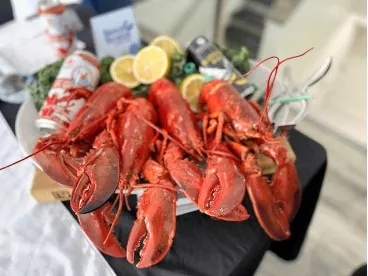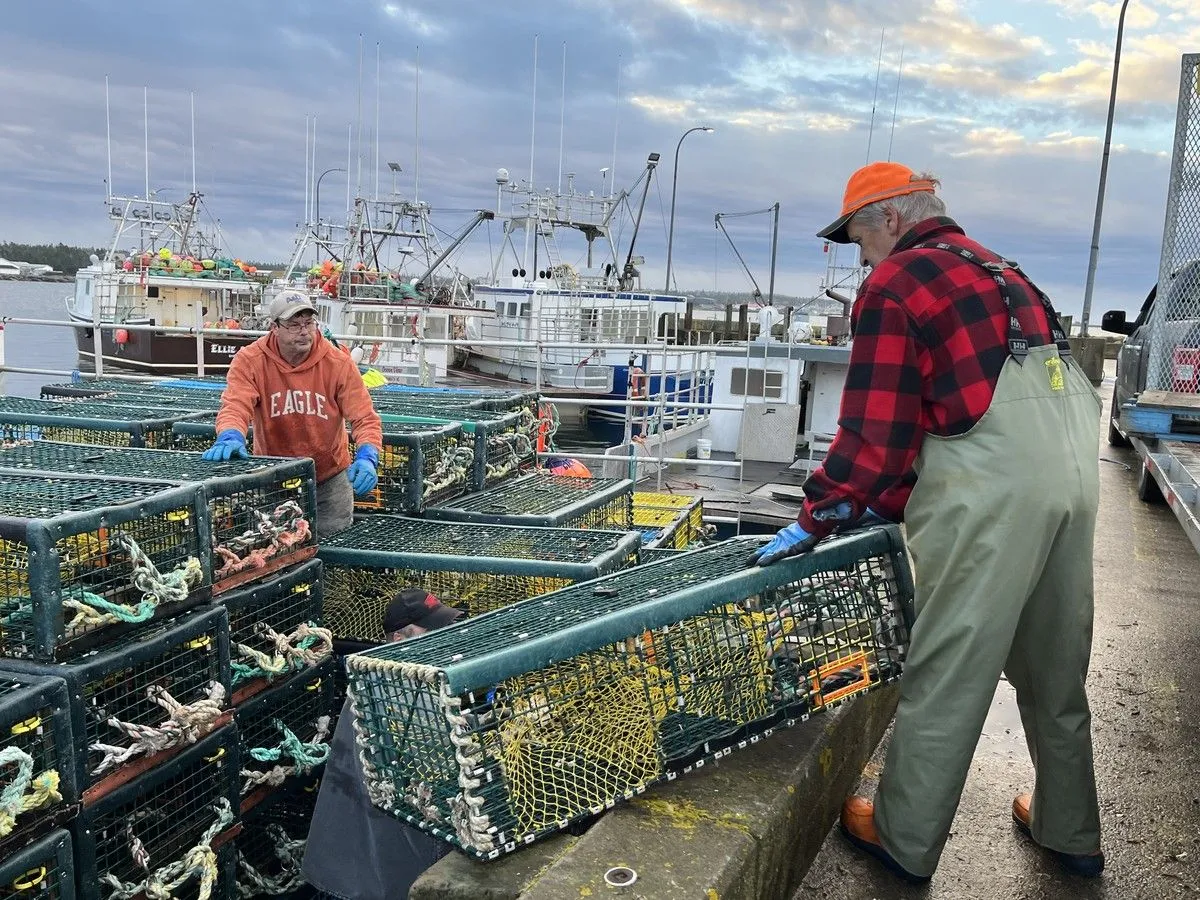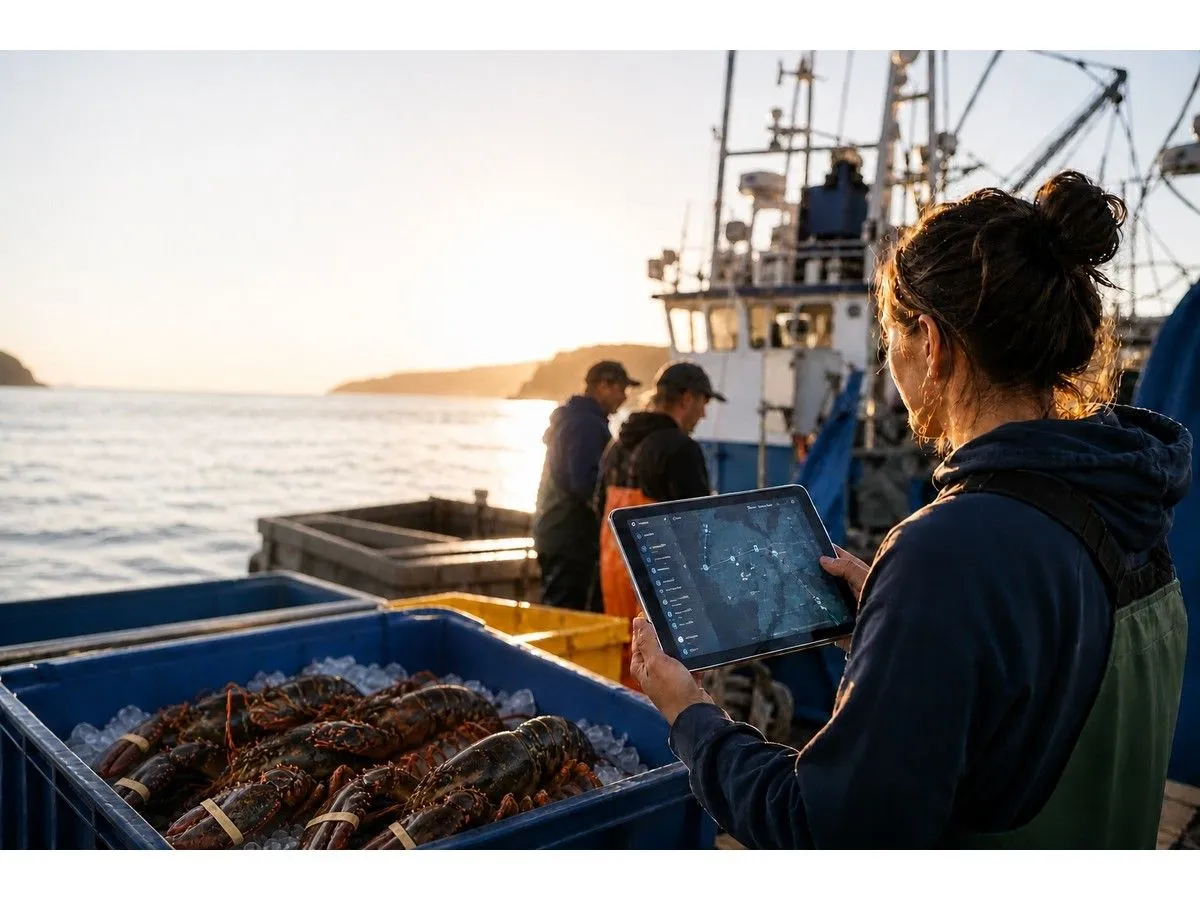
Skip to Content News Archives Economy Energy Oil & Gas Renewables Electric Vehicles Mining Commodities Agriculture Real Estate Mortgages Mortgage Rates Finance Banking Insurance Fintech Cryptocurrency Work Wealth Smart Money Wealth Management Investor Personal Finance Family Finance Retirement Taxes High Net Worth FP Comment Executive Women Puzzmo Newsletters Financial Times Business Essentials More Innovation Information Technology FP500 Podcasts Small Business Lives Told Tails Told Shopping Financial Post Store Obituaries Place a Notice Advertising Advertising With Us Advertising Solutions Postmedia Ad Manager Sponsorship Requests Classifieds Place a Classifieds ad Working Profile Settings My Subscriptions Saved Articles My Offers Newsletters Customer Service FAQ News Economy Energy Mining Real Estate Finance Work Wealth Investor FP Comment Executive Women Puzzmo Newsletters Financial Times Business Essentials HomeCommoditiesWonder where your seafood comes from? Nova Scotian software can trace it from boat to plateHalifax data analytics company has developed a platform to help seafood companies comply with tighter international regulationsLast updated 7 hours ago You can save this article by registering for free here. Or sign-in if you have an account.Cyan Analytics Inc. has developed cloud-based software to help seafood companies comply with tightening international regulations on the traceability of their products. Photo by Cyan Analytics Inc.A Halifax data analytics company has developed a platform to help seafood companies comply with tightening international regulations on the traceability of their products.Subscribe now to read the latest news in your city and across Canada.Exclusive articles from Barbara Shecter, Joe O'Connor, Gabriel Friedman, and others.Daily content from Financial Times, the world's leading global business publication.Unlimited online access to read articles from Financial Post, National Post and 15 news sites across Canada with one account.National Post ePaper, an electronic replica of the print edition to view on any device, share and comment on.Daily puzzles, including the New York Times Crossword.Subscribe now to read the latest news in your city and across Canada.Exclusive articles from Barbara Shecter, Joe O'Connor, Gabriel Friedman and others.Daily content from Financial Times, the world's leading global business publication.Unlimited online access to read articles from Financial Post, National Post and 15 news sites across Canada with one account.National Post ePaper, an electronic replica of the print edition to view on any device, share and comment on.Daily puzzles, including the New York Times Crossword.Create an account or sign in to continue with your reading experience.Access articles from across Canada with one account.Share your thoughts and join the conversation in the comments.Enjoy additional articles per month.Get email updates from your favourite authors.Create an account or sign in to continue with your reading experience.Access articles from across Canada with one accountShare your thoughts and join the conversation in the commentsEnjoy additional articles per monthGet email updates from your favourite authorsSign In or Create an AccountorCyan Analytics Inc. spent the past year developing SeaTrace, a cloud-based software created in response to new regulations in the United States and Europe.Those standards require seafood suppliers to track products through the supply chain, from harvest to export.“In other words, the full record from the ocean to the plate had to be documented digitally, and regulations are in place now for companies to comply with,” Dennis Young, Cyan Analytics co-founder and chief executive, said in a recent interview.“Companies need to have a solution to help them do that. So that was the genesis of why we got involved.” Cyan Analytics co-founder and CEO Dennis Young. Photo by Cyan Analytics Inc.Traceability has become a critical issue globally as governments and consumers push for stronger oversight of seafood-sourcing practices.Global trade has rapidly shifted toward mandatory digital traceability, requiring seafood to be tracked back to the specific vessel from which it was caught.In Nova Scotia, those boats are registered with Fisheries and Oceans Canada (DFO). Young said that registration information is inputted into SeaTrace.“If a licenced buyer buys from one of those boats, we have their harvest information already preloaded,” he said. “We take the quantity of what was purchased, grade it and store it as inventory.“When an exporter decides to purchase some of that inventory for a sale in Denmark, our information is already preloaded. We simply grab that and add it to the exporter’s information. We now have full traceability of that product from the buyer on the wharf who bought it from the boat itself. We’ll have the full history.”The new requirements are all part of an effort to combat illegal, unreported and unregulated fishing.“The regulations require everybody in the industry. If you’re an exporter selling lobster, this is traced all the way back to the harvesters who catch the lobster,” Young said.“The main driver is Europe. They’re the largest buyer of seafood in the world, and they want to make sure the product they’re buying is legal. Any Canadian exporter using our software will be able to prove that their product they’re selling in Europe is legal right down to the boat.”The supply chain in the $8-billion global seafood industry is complex. One licenced buyer could work with a dozen harvesters and often handle large volumes of product at the same time.Inventory must be properly graded, sorted, handled and stored before selling. All intermediaries must properly document, handle, get approvals and ship product efficiently and with care.Young saw a need for an electronic system that collected information on vessel registration, licensing, harvest location, catch areas, product transformation and export documentation. That system had to be simple, easy to use and efficient.“We actually went to the companies and built it from the ground up,” recalled Young. “We worked directly with the fishermen and the fishing companies. We went into their offices, we sat down with their staff, we looked at all of the paper process and figured out ways of automating it. We got DFO involved. We had the EU involved, so we made sure we were compliant. And then we started processing orders. It was quite an undertaking, but we’ve had wonderful companies to work with.“Fishermen now see this as a product that was designed with fishing companies. They immediately see themselves in the product.”For now, the biggest demand has been for lobster. There are over 1,000 seafood-exporting companies in Canada and Young expects the platform will be expanded to trace other species like crab and shrimp. That could come as early as this fall.“Canada exports 200 million pounds of lobster every year. That grows to 500 million pounds if you include crab and shrimp,” he said.“There are 30,000 companies involved in this industry in North America. To have this type of digital traceability would set us apart from other countries.” Canada exports 200 million pounds of lobster every year. New regulations in the United States and Europe require seafood suppliers to track products through the supply chain, from harvest to export. Photo by Cyan Analytics Inc.Young wouldn’t disclose how many companies are using the SeaTrace tracking system due to the competitive nature of the seafood industry.One of Cyan’s customers is Tangier Lobster Company Limited on Nova Scotia’s Eastern Shore. Tangier managing director Stewart Lamont discussed the benefits of the technology on a YouTube video uploaded this week.“The need for digital platforms providing more information in a seamless, highly transparent fashion grows more and more every day. It used to be optional, (but) now it’s a requirement,” Lamont said.“We are mandated by various levels of government — the Department of Fisheries and Oceans, Transport Canada, Canadian Food Inspection Agency, the Nova Scotia Department of Fisheries and Agriculture — to provide whatever information they require on a daily, monthly and yearly basis. All of this requires seamless, efficient data. Systems that Cyan Analytics have provided … we can manage inventory more effectively than we did before (and) satisfy the requirements of our regulators.“We must be in compliance, and the EU standards, as of January, are now looking for traceability of our product back to the vessel. We must have a regiment which provides the source of the lobster, what date the lobster was purchased, when they came to our facility, and when they were shipped out to our clients.“(Cyan) had to know the operations of our industry in real time, in a practical sense, as opposed to a theoretical or academic sense. They did the leg work. It’s a win for the service provider, a win for the regulator, and ultimately a win for our clients around the globe.”Young acknowledged that the feedback, much like Lamont’s testimony, has been positive. Cyan’s clients have praised how easy it is to use the technology and how it has cut down time-consuming paperwork.“Here’s a quote from one of the companies,” Young said. “‘Our team walked away highly impressed. It will produce the traceability that the EU requires. And by helping us manage inventory electronically, it will diminish our paper burden at the same time. It will work well in our world.’“We’re helping solve a problem and that’s always a great thing to do.” Join the Conversation This website uses cookies to personalize your content (including ads), and allows us to analyze our traffic. Read more about cookies here. By continuing to use our site, you agree to our Terms of Use and Privacy Policy.
Wonder where your seafood comes from? Nova Scotian software can trace it from boat to plate
SeaTrace created in response to new regulations in U.S., Europe that require seafood suppliers to track products throughout supply chain
TL;DRAI
Cyan Analytics launched SeaTrace, cloud software for end-to-end seafood traceability under new US and EU compliance mandates. The $8B seafood chain now requires mandatory digital provenance — a compliance-driven B2B SaaS signal across commodity verticals.
1,515 words~7 min read