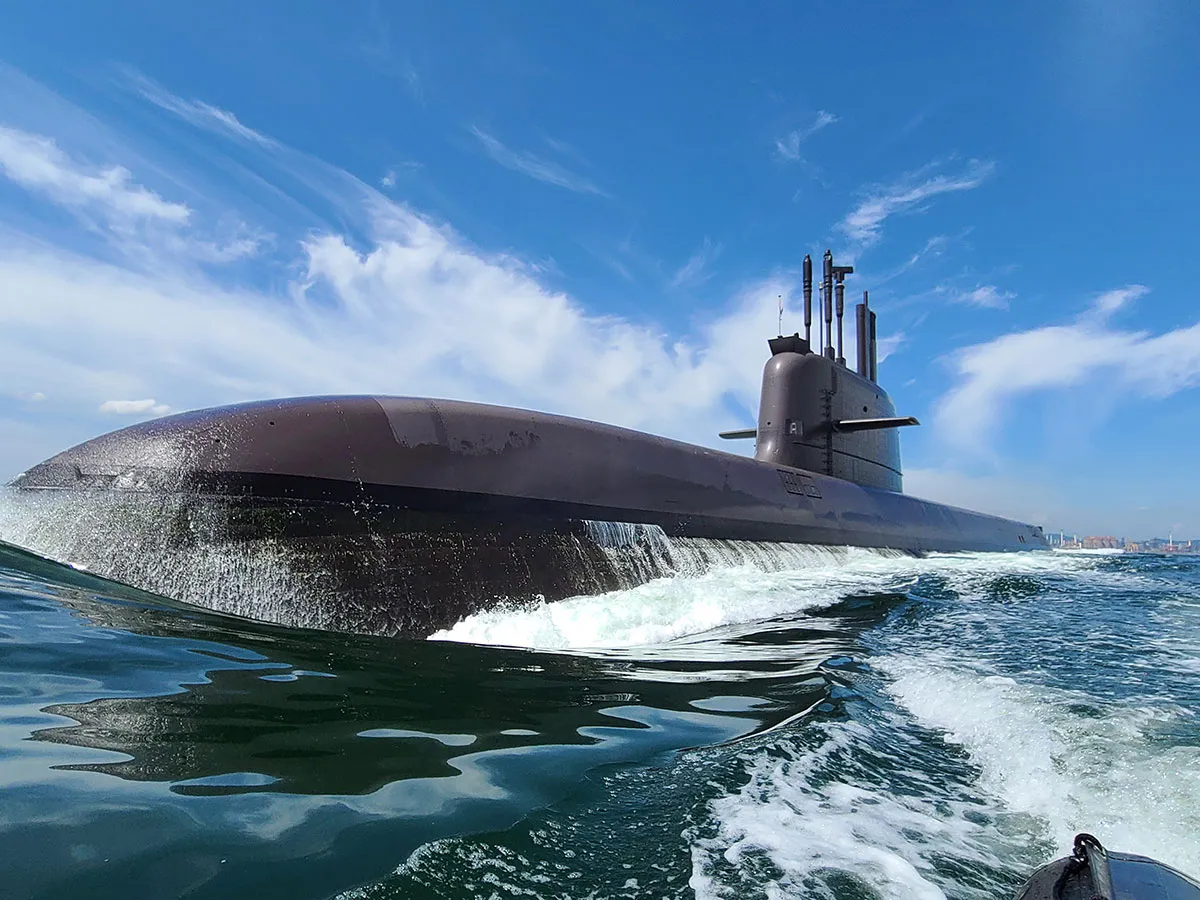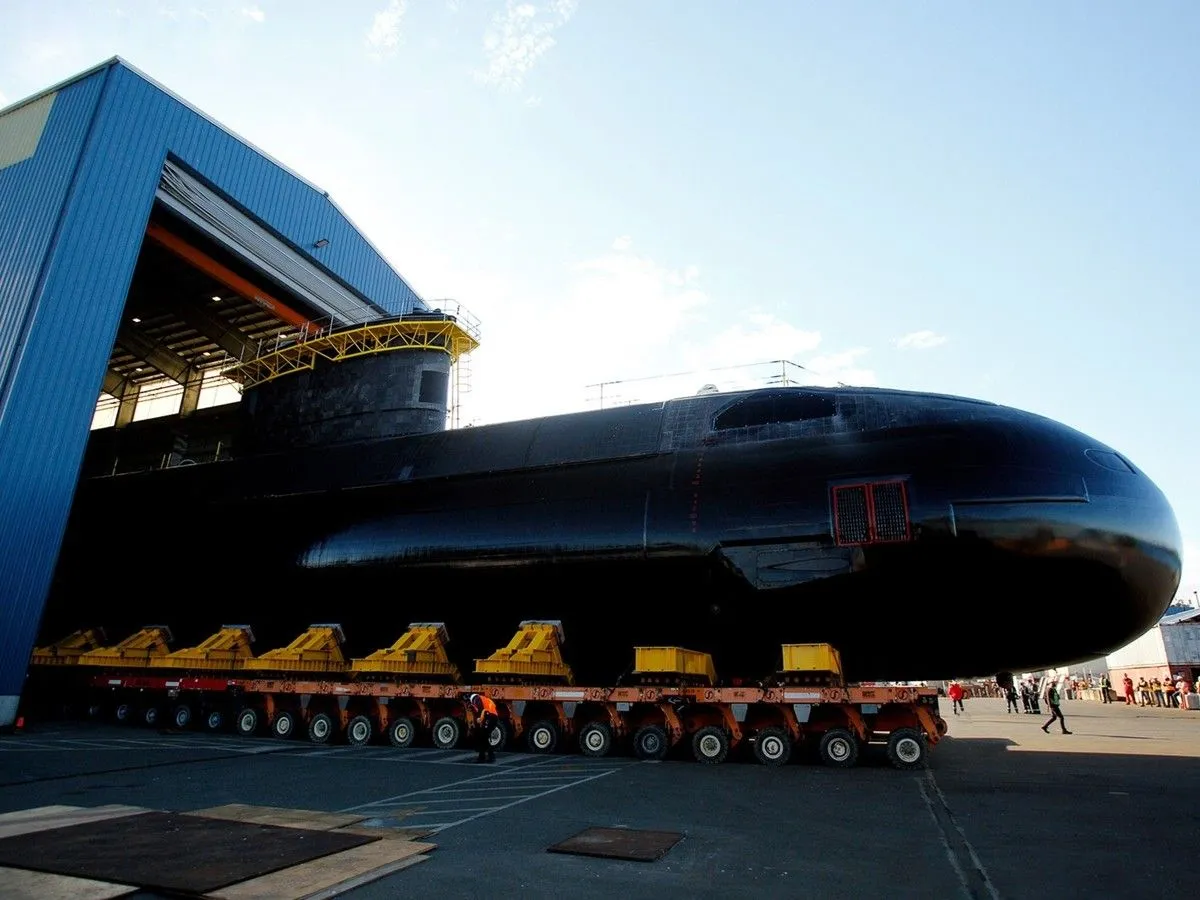
Skip to Content News Archives Economy Energy Oil & Gas Renewables Electric Vehicles Mining Commodities Agriculture Real Estate Mortgages Mortgage Rates Finance Banking Insurance Fintech Cryptocurrency Work Wealth Smart Money Wealth Management Investor Personal Finance Family Finance Retirement Taxes High Net Worth FP Comment Executive Women Puzzmo Newsletters Financial Times Business Essentials More Innovation Information Technology FP500 Podcasts Small Business Lives Told Tails Told Shopping Financial Post Store Obituaries Place a Notice Advertising Advertising With Us Advertising Solutions Postmedia Ad Manager Sponsorship Requests Classifieds Place a Classifieds ad Working Profile Settings My Subscriptions Saved Articles My Offers Newsletters Customer Service FAQ News Economy Energy Mining Real Estate Finance Work Wealth Investor FP Comment Executive Women Puzzmo Newsletters Financial Times Business Essentials HomeNewsWhy Nova Scotia could be a big winner in Canada's submarine strategyAs many as six submarines could eventually be based in HalifaxLast updated 2 hours ago You can save this article by registering for free here. Or sign-in if you have an account.HMCS Corner Brook, a Victoria-class submarine. Photo by Babcock CanadaNova Scotia is on the cusp of a defining chapter in its defence economy, says the chief executive officer of Babcock Canada, which recently secured a $1 billion, six-year contract extension to maintain Canada’s current Victoria-class submarines, bridging the gap to a new generation of subs.Subscribe now to read the latest news in your city and across Canada.Exclusive articles from Barbara Shecter, Joe O'Connor, Gabriel Friedman, and others.Daily content from Financial Times, the world's leading global business publication.Unlimited online access to read articles from Financial Post, National Post and 15 news sites across Canada with one account.National Post ePaper, an electronic replica of the print edition to view on any device, share and comment on.Daily puzzles, including the New York Times Crossword.Subscribe now to read the latest news in your city and across Canada.Exclusive articles from Barbara Shecter, Joe O'Connor, Gabriel Friedman and others.Daily content from Financial Times, the world's leading global business publication.Unlimited online access to read articles from Financial Post, National Post and 15 news sites across Canada with one account.National Post ePaper, an electronic replica of the print edition to view on any device, share and comment on.Daily puzzles, including the New York Times Crossword.Create an account or sign in to continue with your reading experience.Access articles from across Canada with one account.Share your thoughts and join the conversation in the comments.Enjoy additional articles per month.Get email updates from your favourite authors.Create an account or sign in to continue with your reading experience.Access articles from across Canada with one accountShare your thoughts and join the conversation in the commentsEnjoy additional articles per monthGet email updates from your favourite authorsSign In or Create an AccountorThe extension gives Ottawa greater flexibility to keep the aging submarines in service as Canada transitions to its future fleet. Most of the refit and maintenance work on the Victoria-class submarines will be done at Victoria Shipyards in Esquimalt, B.C.The timing is significant following the federal government’s decision to award ThyssenKrupp Marine Systems (TKMS) the contract to design, build and deliver up to 12 diesel-electric submarines to replace Canada’s aging fleet. The first four vessels are expected to be handed over by 2034.Breaking business news, incisive views, must-reads and market signals. Weekdays by 9 a.m.By signing up you consent to receive the above newsletter from Postmedia Network Inc.A welcome email is on its way. If you don't see it, please check your junk folder.The next issue of Posthaste will soon be in your inbox.We encountered an issue signing you up. Please try againFor Nova Scotia, the long-term opportunity extends well beyond the new vessels.Babcock Canada CEO Tony March said supporting an expanded submarine fleet will require major investment in Halifax’s defence ecosystem, including new maintenance infrastructure, a larger supply chain and a significant increase in skilled workers. Prime Minister Mark Carney announces the procurement for up to 12 submarines on the flight deck of HMCS Robert Hampton Gray at HMC Dockyard in Halifax on July 6. Photo by Tim KrochakAs many as six submarines could eventually be based in Halifax, with a dedicated maintenance operation expected to employ about 1,000 engineers, tradespeople, project managers and other specialists on the East Coast.“When you talk about infrastructure, there’s physical infrastructure, and then there’s human infrastructure – the people,” March said in a recent phone interview.“We’ve got some time and some runway. Canada will be building new infrastructure in Halifax, so that’s really important. Having dedicated submarine-specific infrastructure in Halifax is really important.”March said the work will ramp up gradually rather than all at once. Although the first submarines are expected to arrive in the mid-2030s, major refit work likely won’t begin until several years after delivery, enough time to build a specialized workforce.“It’s not like you flip a switch and in 2034 suddenly you need 1,000 more people,” he said. “The heavy maintenance and heavy refit work doesn’t start immediately on delivery. You get a running maintenance program first, then you need more and more people over time.”He said Nova Scotia already has a strong foundation thanks to its existing shipbuilding and ship repair sector and ongoing provincial investments in skills development, training and housing.“With the thousands of people that work in shipbuilding and ship repair in the province today, there’s a really good nucleus,” March said. “They’re building from a really strong foundation. We can’t waste any time, but I think there’s a path to get there.”In the meantime, Babcock Canada will work to keep the Victoria-class submarines afloat and prolong their operational lives.The extension, awarded by the federal government on July 20, is valued at more than $1 billion over the next six years and includes options that could extend the contract by another 12 years.“I characterize this as an important component to make sure Canada sustains the submarine industrial base through to the delivery of the new submarines in the early to mid-2030s,” March said. “The renewal of VISSC (Victoria In-Service Support Contract) provides that continuity of the workforce and a bridge to the future.”The last submarine procurement happened over a quarter of a century ago. That’s when the Royal Canadian Navy retired its Oberon-class diesel-electric submarines, which served from the 1960s until they were decommissioned in 1998 and the current Victoria-class fleet was introduced.Maintaining submarines requires highly specialized engineering, production expertise and skilled trades that cannot be developed overnight, March said.Babcock has spent the past 18 years servicing the Victoria-class subs.According to the company, its work under the VISSC has contributed more than $3.2 billion to Canada’s gross domestic product since 2008, supported more than 1,500 jobs annually and helped establish a national supply chain of more than 450 suppliers.With Ottawa now moving ahead with a much larger submarine fleet, Babcock hopes to play a similar role supporting the new vessels once they enter service.March said he is confident Babcock’s experience positions it well for whatever procurement process the federal government ultimately chooses.“Babcock has 18 years of experience delivering this work,” he said. “Submarines are unique and challenging, and we’re highly confident we’re going to be part of the long-term support solution.“Submarine work is highly specific and highly specialized. It’s different than surface ship work. The assets are more complex. They’re more mechanically dense. There’s more equipment in a smaller space. It’s harder to work on. The quality standards are higher. All these things make submarines unique, difficult and challenging.” A rendering of the submarine that ThyssenKrupp Marine Systems will design, build and deliver to replace Canada’s aging submarine fleet. Photo by ThyssenKrupp Marine SystemsBabcock currently employs about 60 people in Nova Scotia to support the Victoria-class program, including engineers, supply chain specialists, and warehouse staff based at its Burnside office.March, who lived in Halifax for six years and has worked in the submarine industry for more than two decades, said the federal government’s broader commitment to defence spending represents a once-in-a-generation opportunity for the province.“Seeing the government put the effort, the money and the resources towards that is really exciting,” he said. “It’s going to generate and sustain thousands of good-paying jobs for Canadians to sustain these submarines over the next 30-plus years.”He added that the work offers long-term career opportunities for graduates entering the workforce today.“Somebody coming out of university or NSCC (Nova Scotia Community College) today can say, ‘I want to be a submarine maintainer, a welder, an engineer.’ They can see a path to a full career working on one of the most complex pieces of equipment owned by the Government of Canada,” March said.“I look at my daughter joining the workforce in five or 10 years. People growing up in Nova Scotia can see there’s going to be good, well-paying, really interesting work available that contributes to Canada’s peace and security.” Join the Conversation This website uses cookies to personalize your content (including ads), and allows us to analyze our traffic. Read more about cookies here. By continuing to use our site, you agree to our Terms of Use and Privacy Policy.
Why Nova Scotia could be a big winner in Canada's submarine strategy
Babcock CEO said supporting expanded sub fleet will require major investment in Halifax’s defence ecosystem, including more skilled workers
1,497 words~7 min read